브라질 - Fresh Papaya is currently not available.



브라질 - Fresh Papaya
HS Code:
080720 - Fruit, edible; papaws (papayas), fresh
가격문의
/
잦은 가격 변동으로 인해 오퍼 가격을 제공하기 어렵습니다. 해당 마켓의 오퍼 가격을 확인하려면 하세요.
현재 오퍼 기본 가격
취급 상품 상세 정보:
인코텀스:
최신 업데이트:
A quote is requested by a buyer from Portugal. (12 metric ton)
2022년 2월 23일
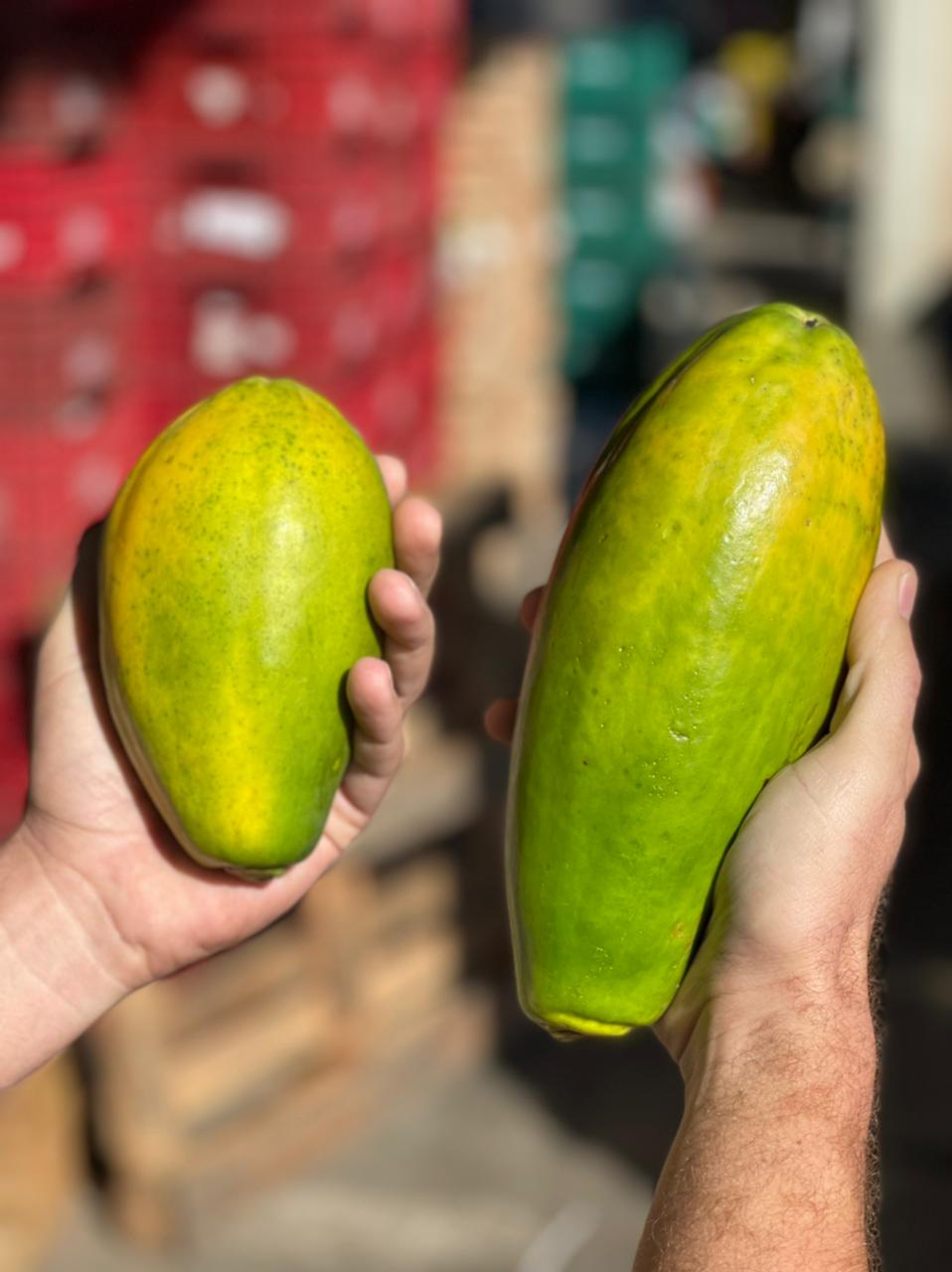
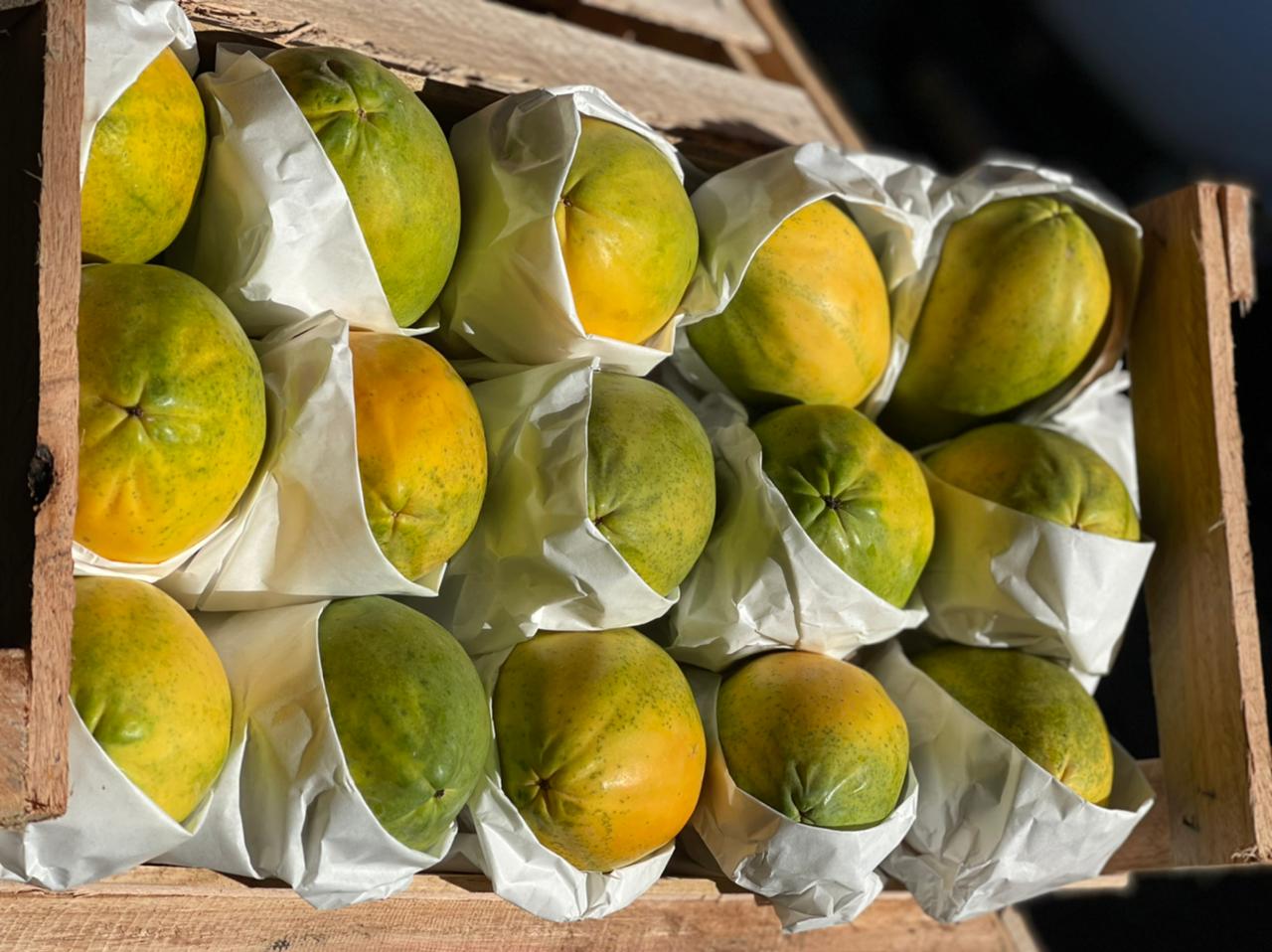
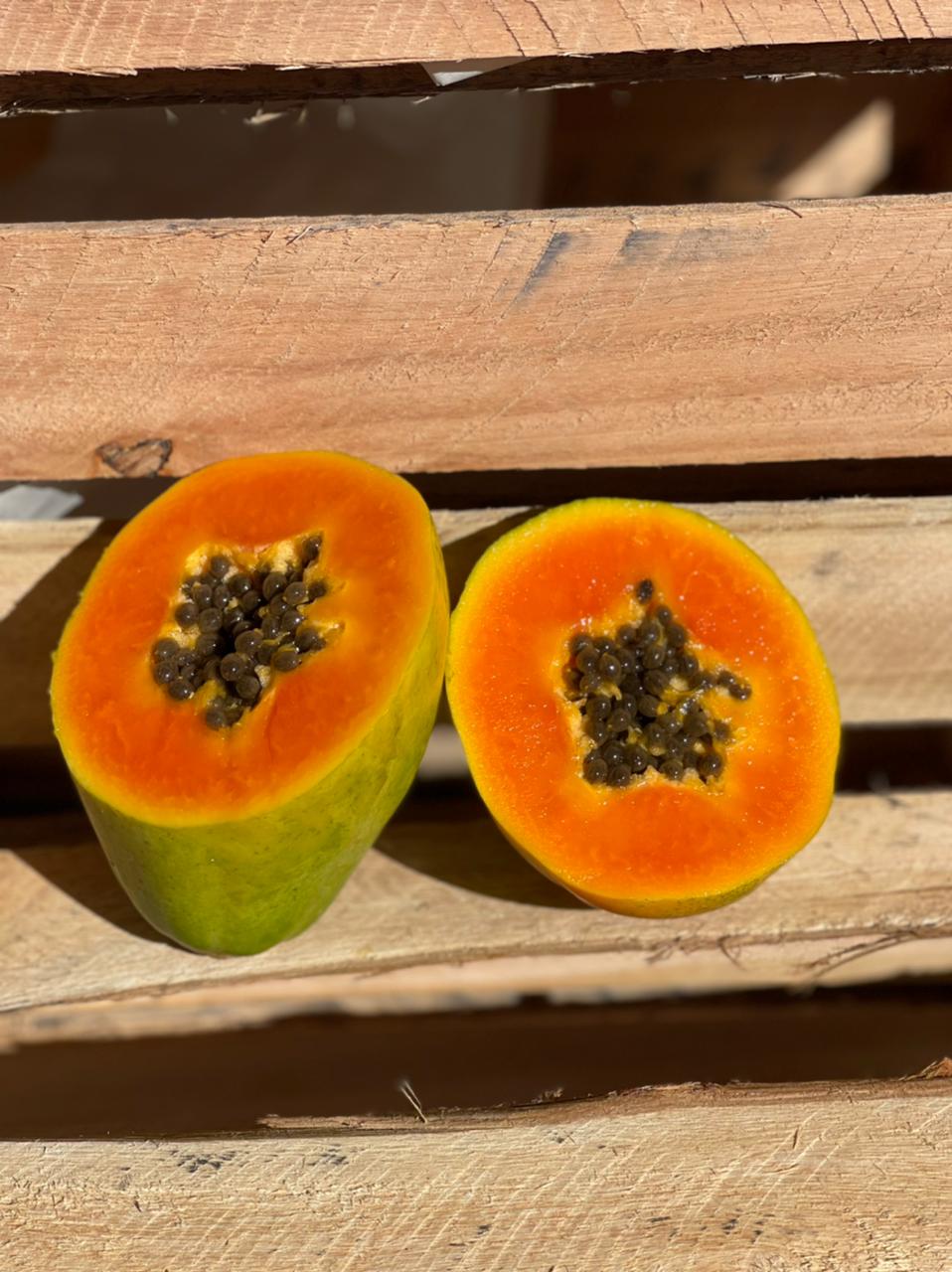
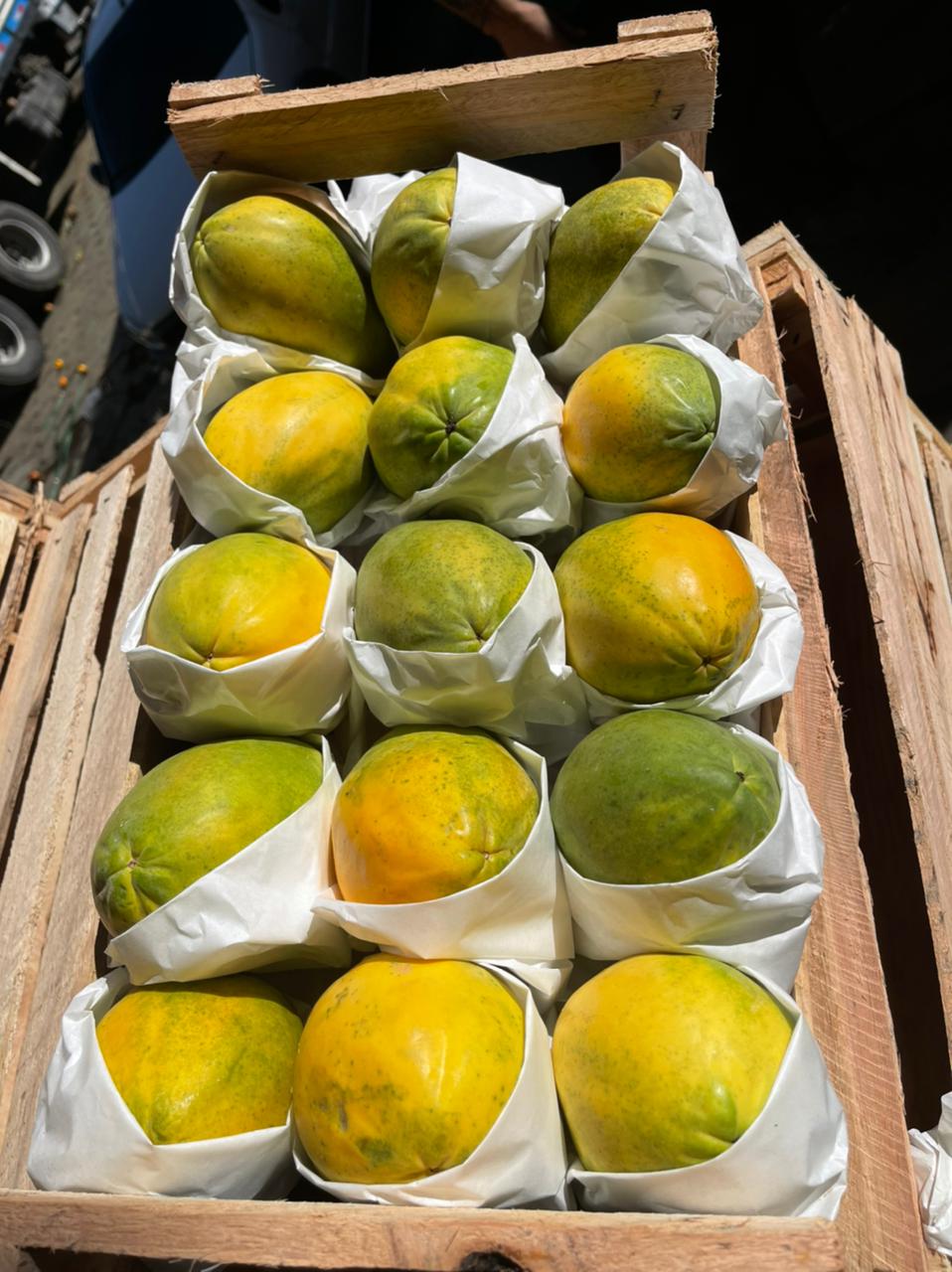
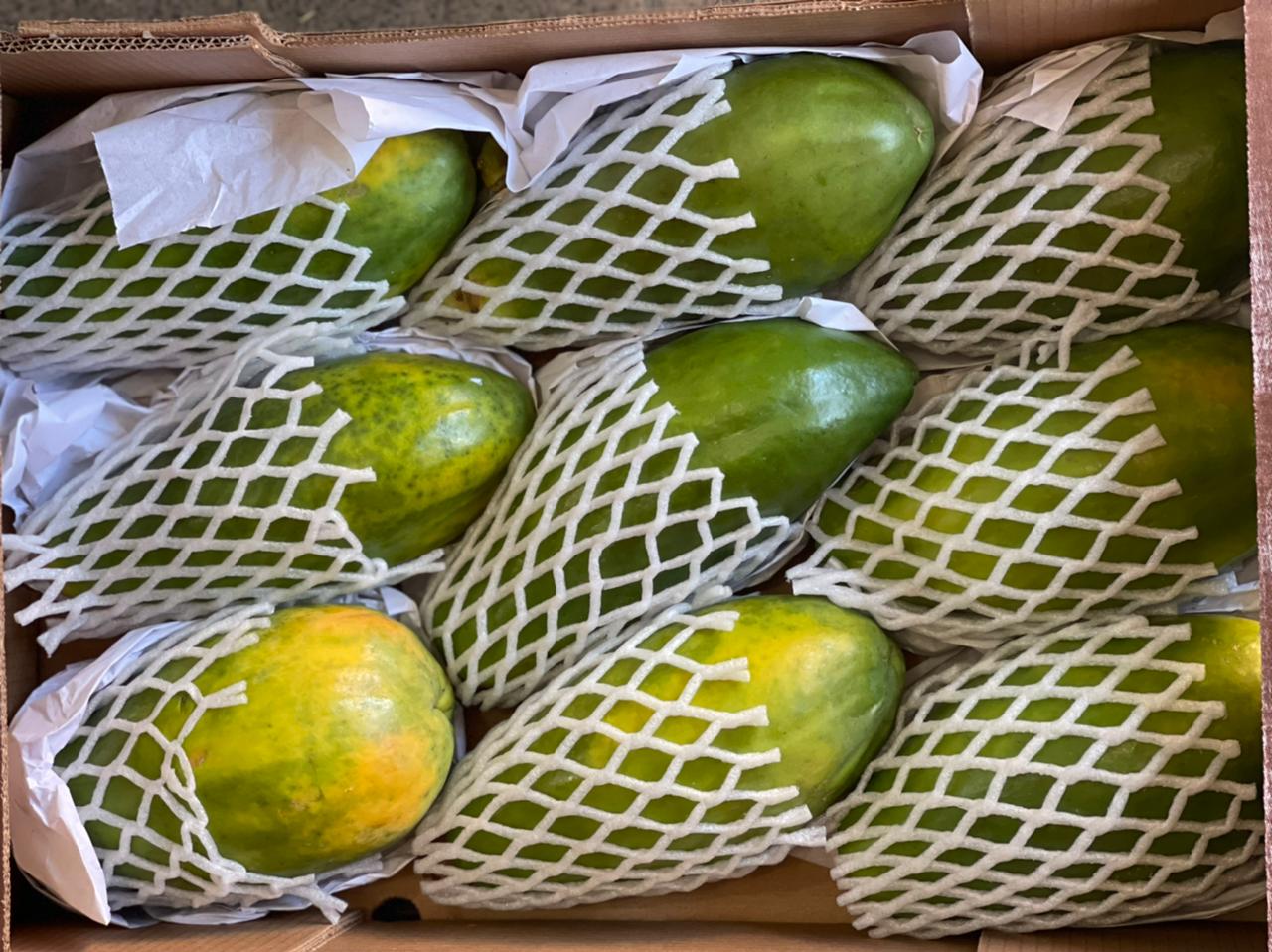
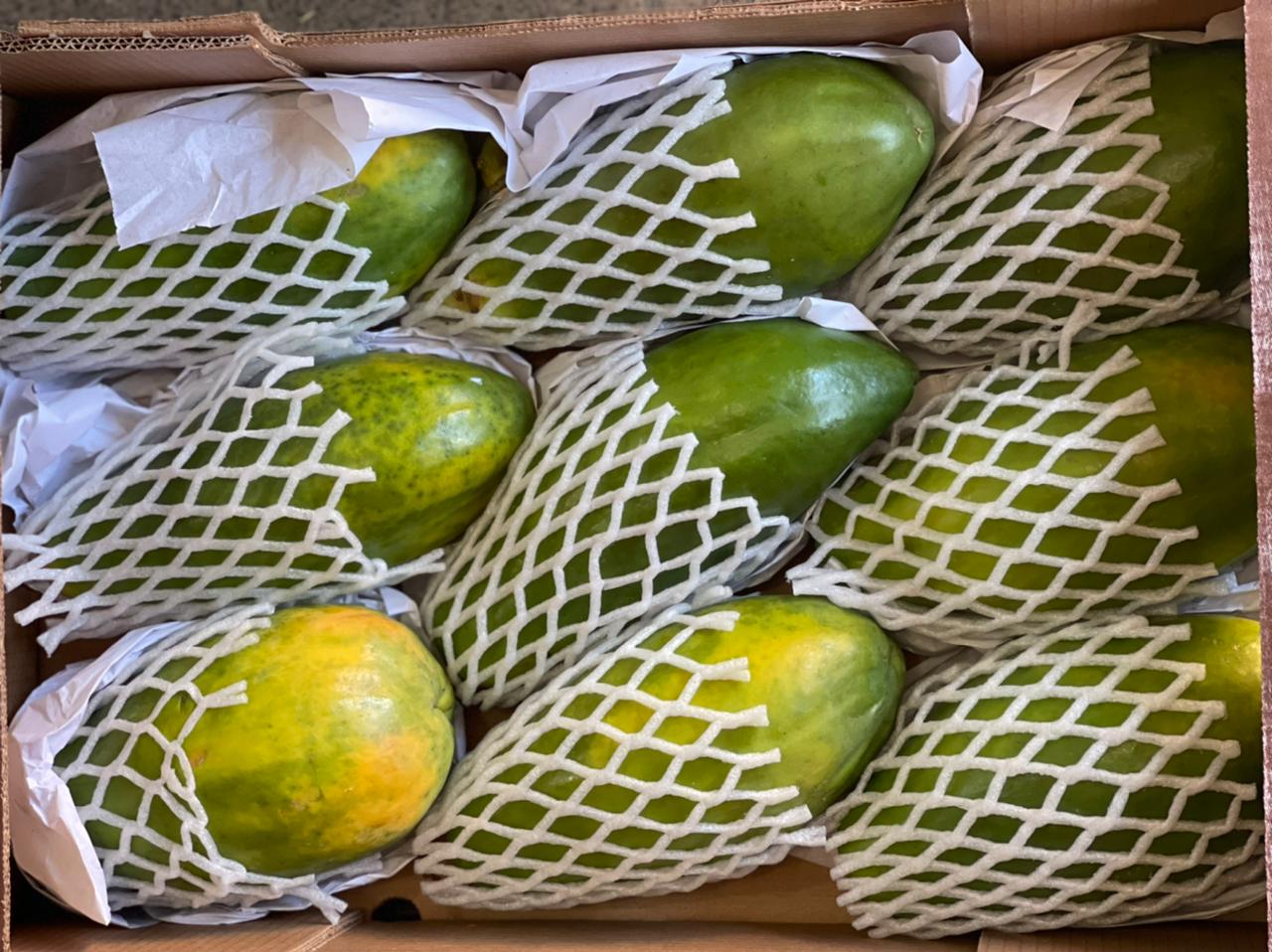
Brazilian Papaya
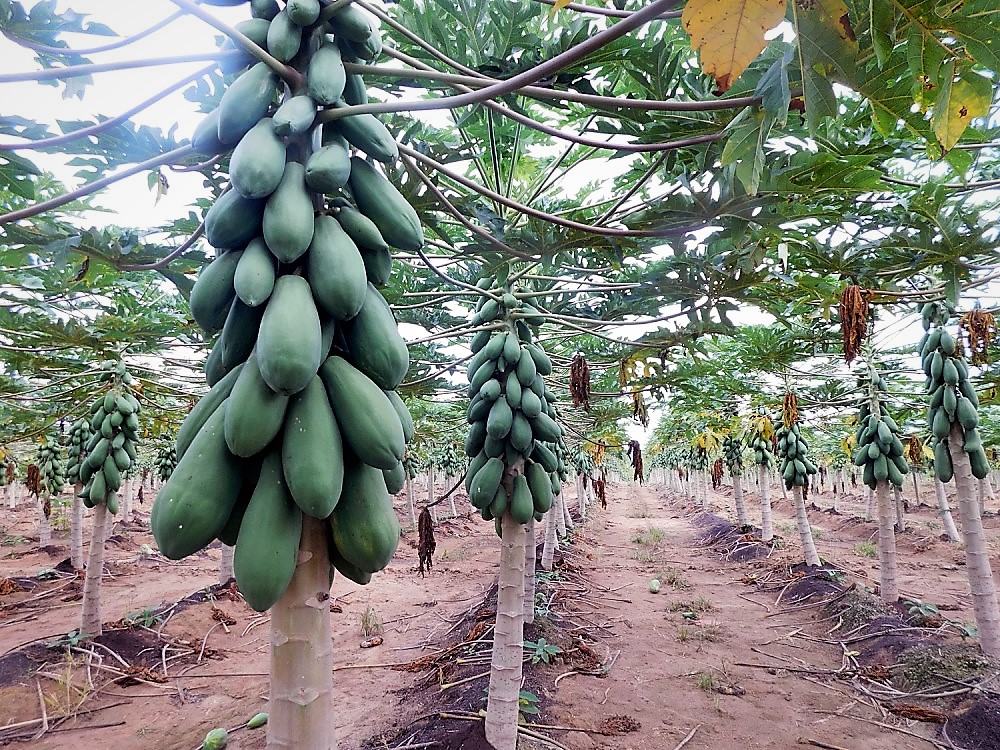
We partnered with the most qualified farmers from the Coastal producing areas of the Brazilian Northeast and Southeast regions. The extensive covering grounds allow us to better accommodate such a sensitive product export as the carica papaya culture, giving buyers the access to connect their sourcing programs to nothing but the best produce and origins, for far less risks.
About the Region
Brazil is the 2nd largest exporter of papayas globally, with an average production of 1.5 million metric tons/yr, covering an area of 32 thousand hectares, and with a nominal yielding close to 50 tons/ha. In addition to Espírito Santo & Bahia states - our main sources of supply - Rio Grande do Norte stands out in the activity, revealing a strategic factor during the peaking summer season, allowing us a logistic convenience to EU from December through March.

Harvest & Handling
For commercialization and consumption, the fruits must be harvested when they present streaks or bands with 50% yellow color. Papaya has a very thin, easily damaged husk, and small injuries during the handling process can easily be a gateway for microorganisms to migrate. Therefore, after the initial stage of the harvest is done, the fruits are redirected to the hydrothermal treatment process, of which it requires a strict control of water temperature and immersion time, in order to monitor and maintain the fruit's metabolism and properties, and eventually preventing consequent loss of palatability. The hydrothermal treatment consists of in the immersion of fruits in hot water at 48ºC (±1ºC) for 20 minutes long, followed by another cold water dip at 8ºC (±1ºC) for the same period.
The papaya is harvested, transported to the shed where it receives the hydrothermal treatment, consequently handled through phytosanitary and waxing applications, both aiming for the cleaning of the fruits and to the control of anthracnose and other diseases that occur at this stage, mainly to the elimination of eggs from the fruit flies. This procedure will depend on the phytosanitary requirements imposed by the importing countries.
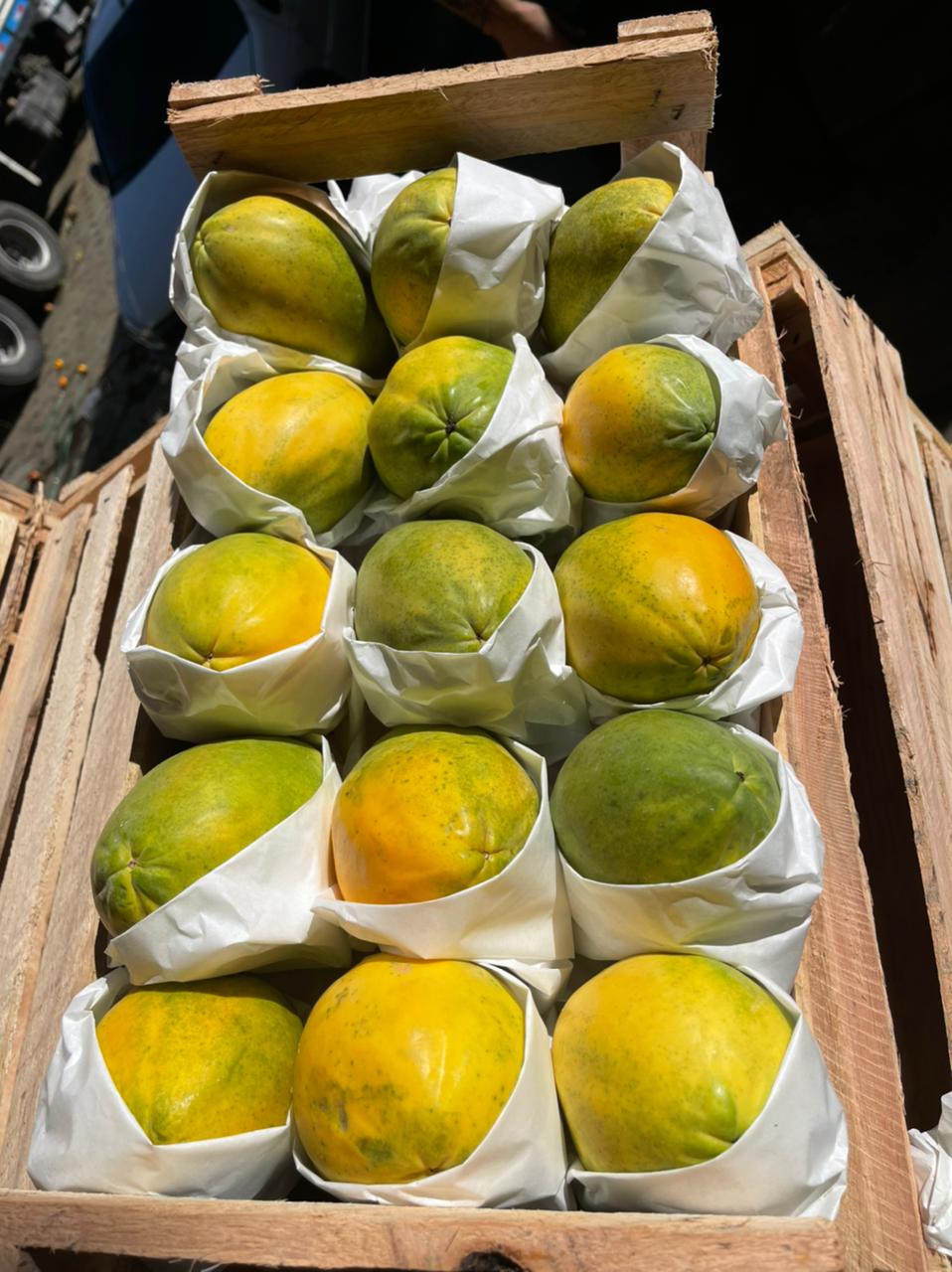
At the last stage the fruit runs into drying, selection and classification steps. Going to labeling, palletizing & cooling at 10*C, preserving the papaya for the exports.
The papaya is harvested, transported to the shed where it receives the hydrothermal treatment, consequently handled through phytosanitary and waxing applications, both aiming for the cleaning of the fruits and to the control of anthracnose and other diseases that occur at this stage, mainly to the elimination of eggs from the fruit flies. This procedure will depend on the phytosanitary requirements imposed by the importing countries.
At the last stage the fruit runs into drying, selection and classification steps. Going to labeling, palletizing & cooling at 10*C, preserving the papaya for the exports.
Variety
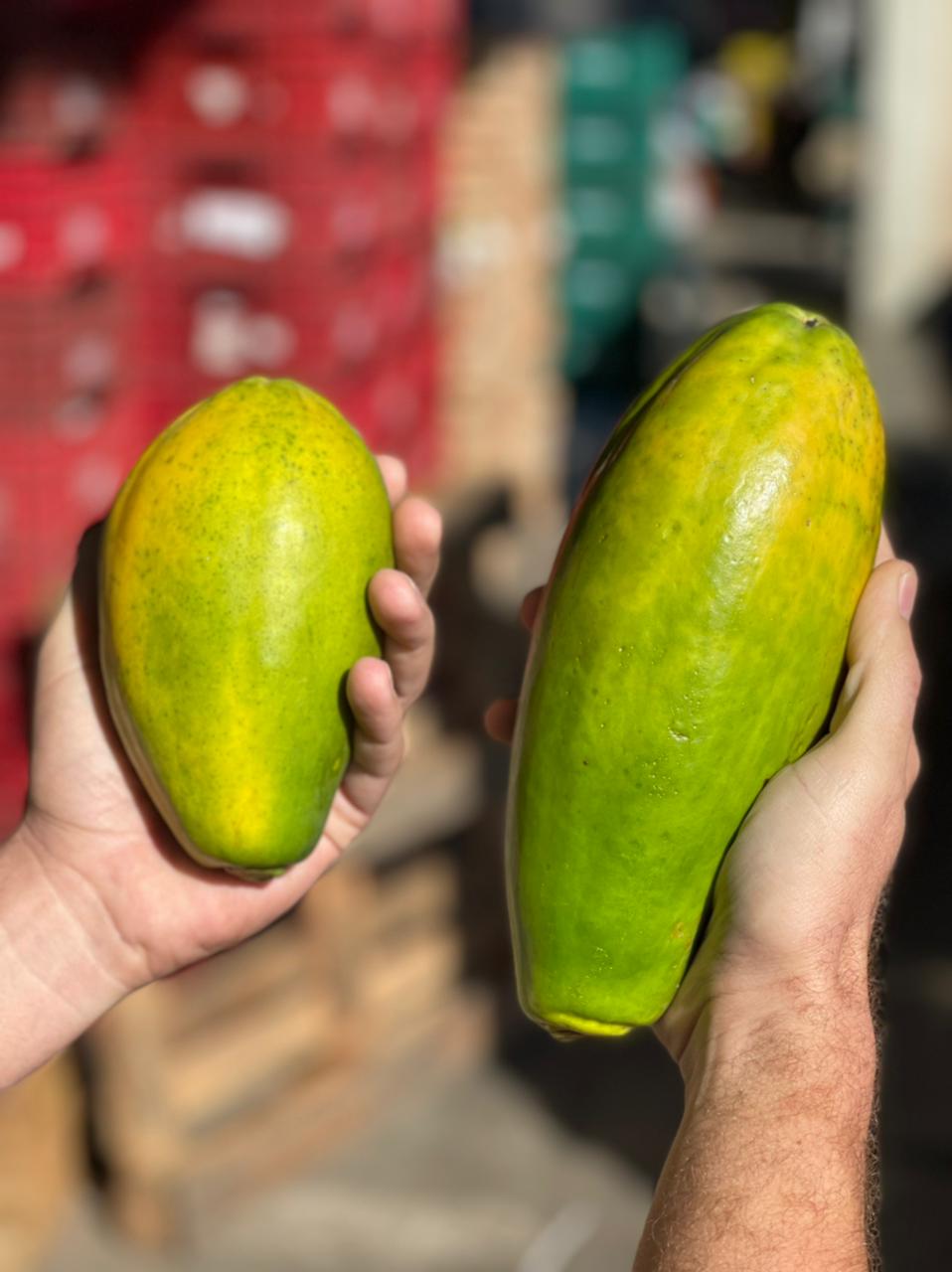
Golden
General Characteristics
Firmer textured pulp;
Longest shelf life among papayas;
Suggested consumption with the yellow skin – 90 to 100% color.
Longest shelf life among papayas;
Suggested consumption with the yellow skin – 90 to 100% color.
Color
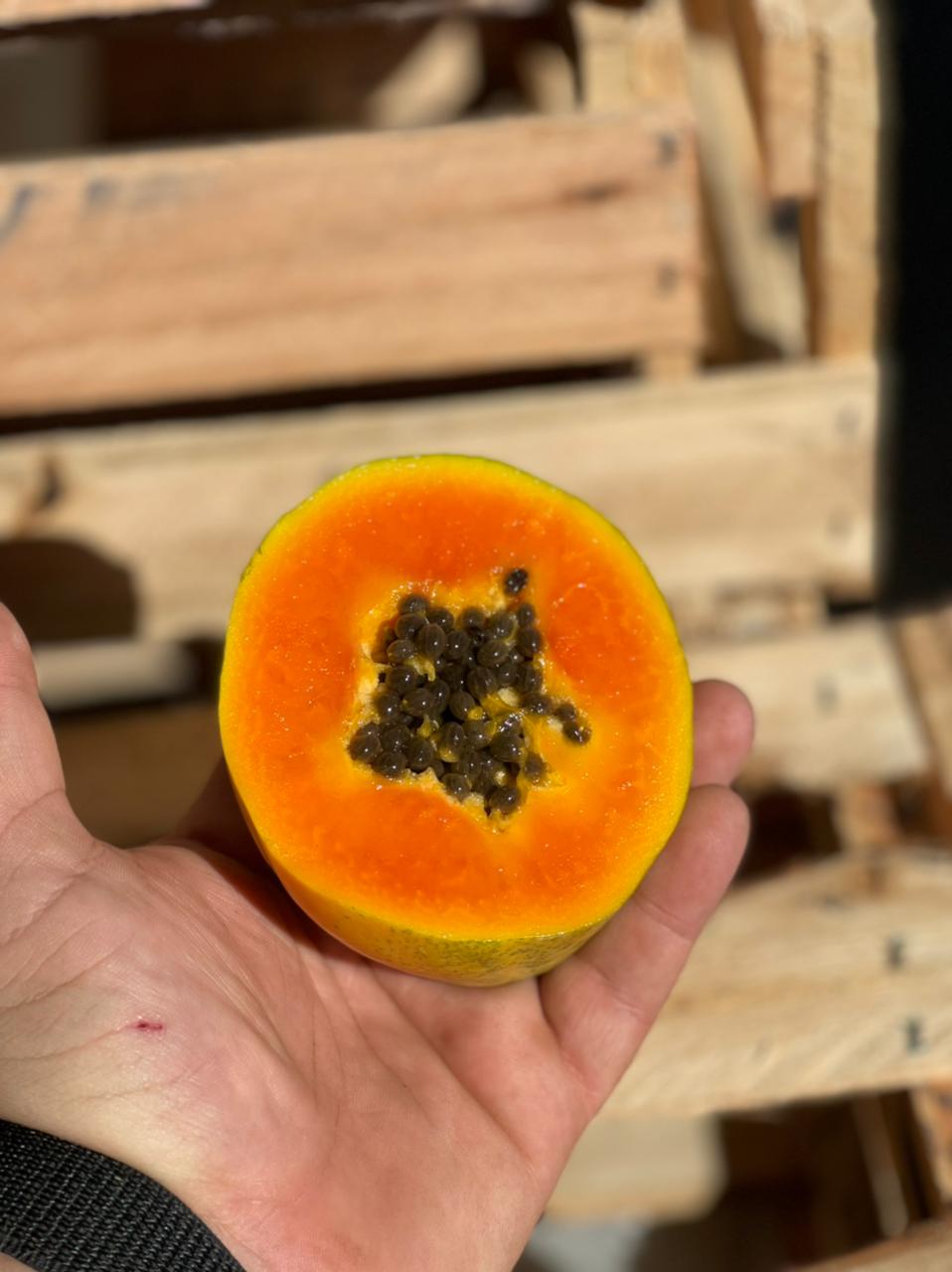
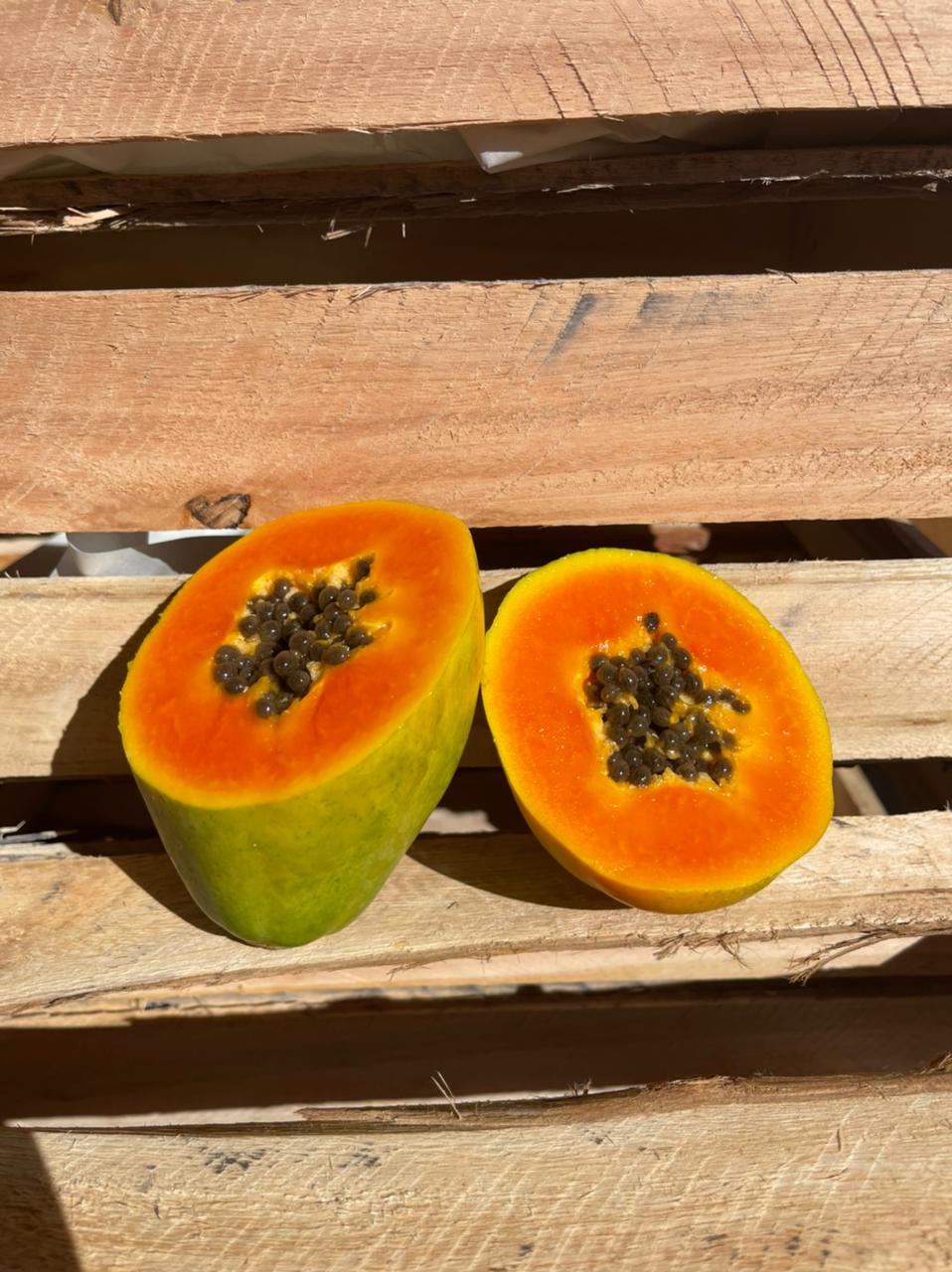
Pulp w/ light red tone
Size
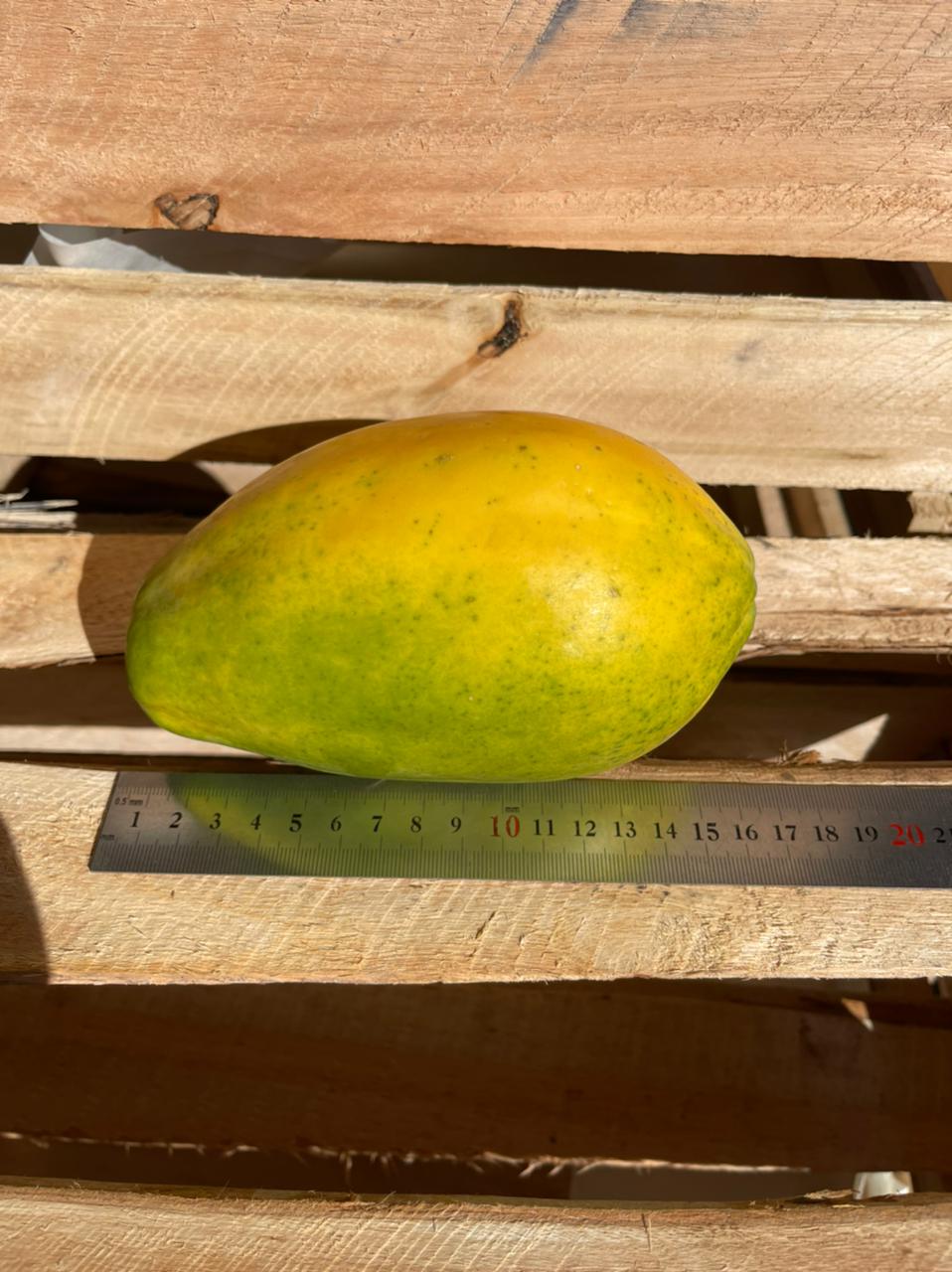
Regularly 400grs/piece
Sugar content
From 8 to 12 brix
Variety
Aliança
General Characteristics
Intermediate texture pulp between Golden and Sunrise;
Shelf-life between Golden and Sunrise average (6~7 days)
It can be consumed with the skin 70% yellow in color. Ideal point to obtain the best flavor and texture ratio.
Shelf-life between Golden and Sunrise average (6~7 days)
It can be consumed with the skin 70% yellow in color. Ideal point to obtain the best flavor and texture ratio.
Color
Pulp with red coloration
Size
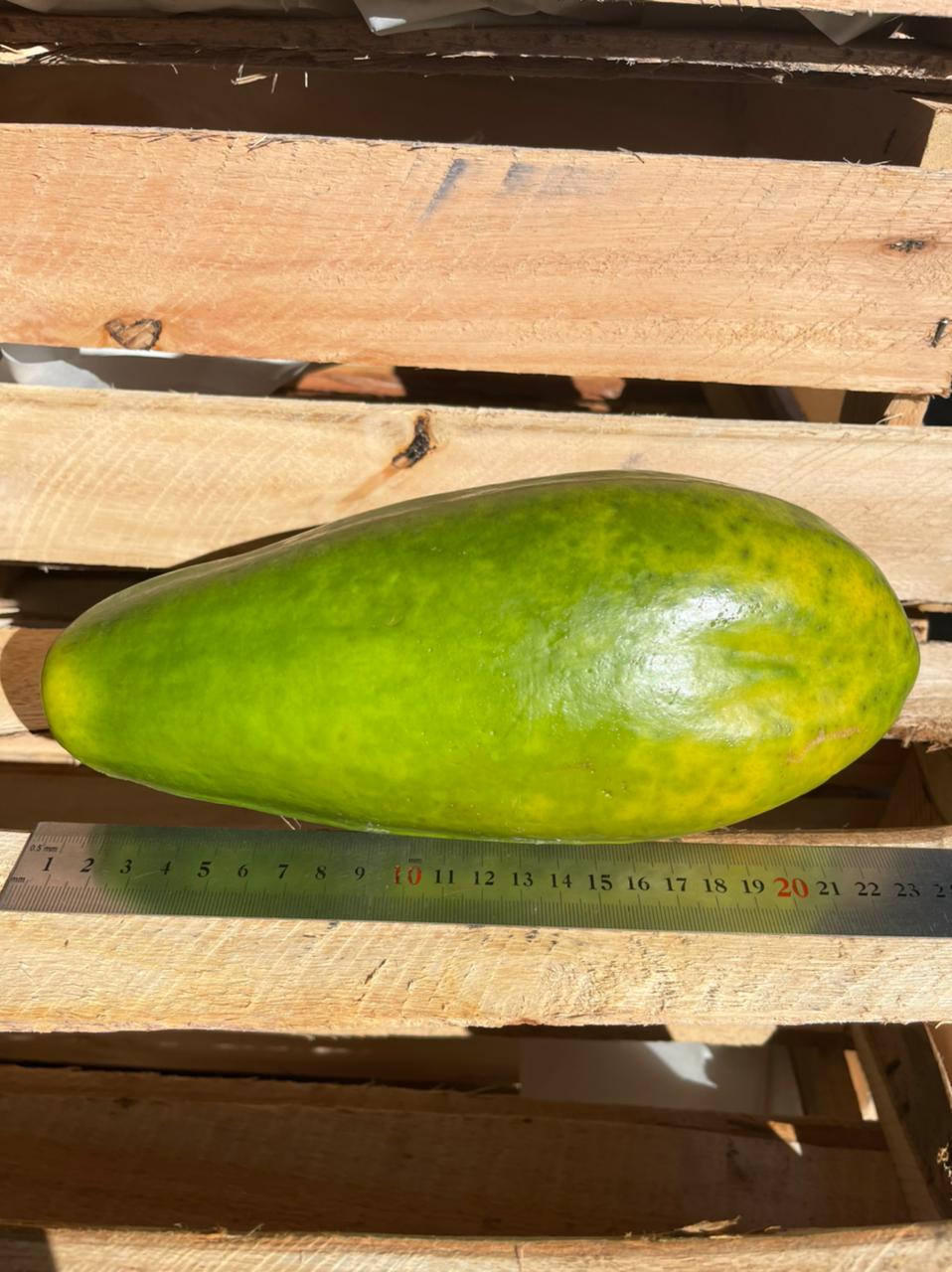
Medium-sized fruit average is 550gr/piece
Sugar Content
From 10 to 13 brix
Variety
Formosa
General Characteristics
Firm and reddish pulp;
Shelf-life averages at 7 days
It should be consumed at a ripening point where the skin is at least 80% yellow in color.
Shelf-life averages at 7 days
It should be consumed at a ripening point where the skin is at least 80% yellow in color.
Color
Reddish pulp
Size
+ 750grs/piece average, up to 2.5 kgs/piece
Sugar Content
From 11 to 14 brix
트릿지의 브라질 담당자
CJ Choi

'쿠키 허용'을 클릭하면 통계 및 개인 선호도 산출을 위한 쿠키 제공에 동의하게 됩니다.
개인정보 보호정책에서 쿠키에 대한 자세한 내용을 확인할 수 있습니다.
'쿠키 허용'을 클릭하면 통계 및 개인 선호도 산출을 위한 쿠키 제공에 동의하게 됩니다.
개인정보 보호정책에서 쿠키에 대한 자세한 내용을 확인할 수 있습니다.