Higher Apple Harvest in Poland Is Followed with Increased Energy Costs

The Central Statistical Office in Poland estimates that the apple harvest in 2022 will exceed 4.2M mt, marking a 4% YoY increase. Based on Tridge data, in W34, hailstorms struck the Grójec / Rawa Mazowiecka area, the apple heartland of Poland. The hailstorms and heavy rains that have occurred so far were mainly local. Overall, the weather conditions at the end of August and in the first half of September were favorable for the harvest maturity of late varieties. Another issue for apple producers in Poland is increasing energy costs, influencing higher prices which jumped by 16% MoM to USD 0.50/kg in W2 of September.
Apple Varieties Currently in Season
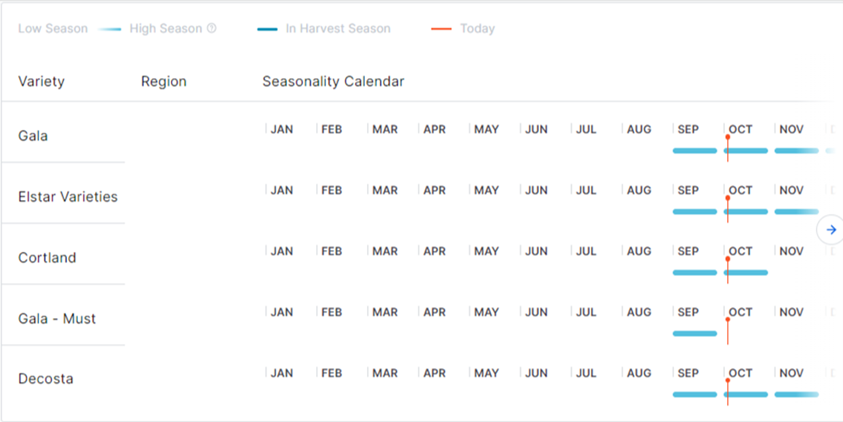
Apple harvest season in Poland is in full swing, ending with weather challenges like frost damage, prolonged droughts, and hailstorms. Adverse weather is not reflected in decreased yields in general but the size of fruits of a smaller caliber. Another factor that has shown an increasing trend in the past years is the significant lack of labor, and the Russia-Ukraine situation continues to cause labor and energy matters.
The Trend of EU Wholesale Electricity Prices in The Day-Ahead Markets
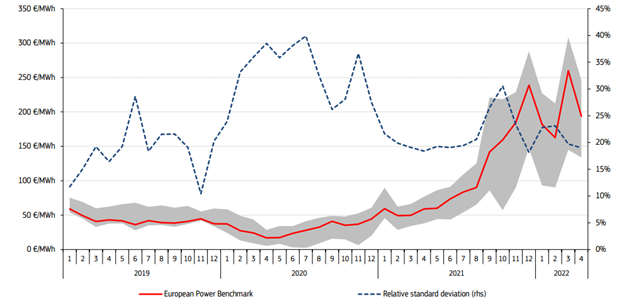
Energy bills for farmers are increasing, especially for cold storage with apples. In the observed period, the weighted average monthly electricity prices on the day-ahead market in Poland increased from 163.95 zloty/MWh in January 2018 to over 884.6 zloty/MWh (142.53 EUR/MWh) in June 2022. The increasing energy costs will burden producers, given that the cost of storing fruit for extended periods will be higher.
Fresh Apple Wholesale Prices in Poland by Different Varieties
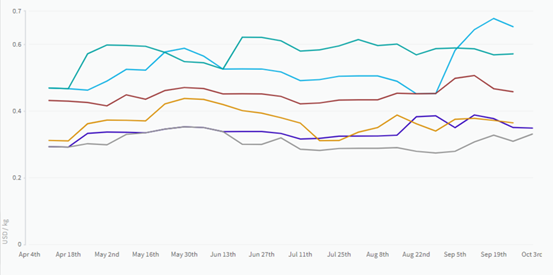
According to Tridge data in W39, the average wholesale price of apples (multiple grades and variety) in Poland was USD 1.44/kg, fueled by increased input and energy costs. It is expected that apple sales will gain momentum in the final months of the year, specifically in November and December. Despite adverse weather, the quality of Polish apples is satisfying, and demand is expected to pick up the pace. Meanwhile, farmers are under pressure to sell out current quantities to cut storage costs and anticipate a further lack of labor needed for sorting and packing fruit for export.