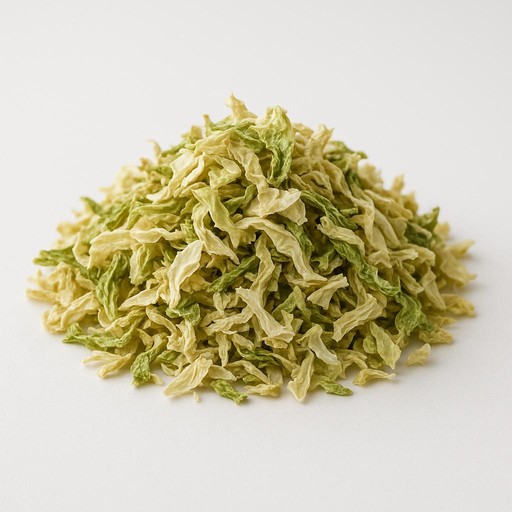
대한민국 건조 양배추 공급업체 및 가격 — 마켓 오버뷰 2026
하위 제품
자연 건조 양배추, 탈수 양배추, 건조 양배추 큐브, 건조 양배추 플레이크, +5
원재료
신선 양배추
HS 코드
071290
최종 업데이트
2026-10-19
서치 및 소싱 팀을 위한 핵심 요약
- 수출 파트너 국가 5개와 수입 파트너 국가 5개가 랭킹되어 있습니다.
- 이 페이지 데이터셋의 최신 기준 연도는 2024입니다.
- 페이지 데이터 최종 업데이트일: 2026-10-19.
대한민국 내 건조 양배추 수출 공급업체 인텔리전스, 가격 추이 및 무역 흐름
Supply Chain Intelligence 기업 프로필 및 분석으로 대한민국의 건조 양배추 수출업체 커버리지, 파트너 품질, 경로 우선순위를 검증하세요.
대한민국 내 건조 양배추의 연간 수출 금액, 물량 및 공급업체 시장 규모 (HS 코드 071290)
대한민국의 건조 양배추 수출 물량/금액 3년치를 분석해 공급 측 시장 성장, 계절성, 무역 변동성을 평가하세요.
| 연도 | 물량 | 금액 |
|---|---|---|
| 2024 | 50,944,697 | 183,653,945 USD |
| 2023 | 47,745,949 | 175,288,496 USD |
| 2022 | 44,621,591 | 159,007,241 USD |
대한민국에서 수출되는 건조 양배추의 주요 수출 대상 시장 (HS 코드 071290) 2024
2024년 기준, 대한민국발 건조 양배추 수출의 상위 목적지국 5개 전반에서 수출 물량과 금액을 비교하세요.
| 순위 | 국가 | 물량 | 금액 |
|---|---|---|---|
| 1 | 미국 | 14,628,356.8 | 57,331,883 USD |
| 2 | 일본 | 18,618,699.358 | 54,783,143 USD |
| 3 | 네덜란드 | 2,341,432.05 | 9,938,474 USD |
| 4 | 캐나다 | 2,340,263.236 | 9,093,935 USD |
| 5 | 호주 | 2,448,609.019 | 8,834,111 USD |
Tridge Ark · 수입 가능성 진단
대한민국산 건조 양배추, 우리도 들여올 수 있을까요?
필요한 스펙과 물량만 알려주세요. 실제로 소싱이 되는지, 어떤 원산지와 공급사가 맞는지 짚어드려요.
무료 가능성 진단은 가입 없이 받을 수 있습니다.
대한민국의 건조 양배추 수입 바이어 인텔리전스 및 가격 시그널: 바이어, 수요, 거래 파트너
대한민국의 건조 양배추에 대해 수입 파트너 기업 3개가 추적됩니다. 수출업체와 수입업체는 Supply Chain Intelligence 회사 프로필 및 분석을 활용해 바이어 수요, 파트너 밀도, 다운스트림 채널을 분석할 수 있습니다.
스캐터 포인트는 전체 거래 데이터셋의 42.9%에서 샘플링되었습니다. 점 하나하나가 실제 거래입니다 — 클릭해서 상세 정보를 보고, 적정한 거래였는지 AI Chat에 물어보세요.
건조 양배추의 대한민국 샘플 수입 거래 및 가격 기록
대한민국의 건조 양배추 샘플 수입 거래 5건은 가격 수준과 수요 측 거래 패턴 벤치마킹을 위한 날짜, 원산지, 무역 국가 맥락을 제공합니다.
대한민국의 건조 양배추 샘플 수입 거래 단가(일자별): 2026-10-13: 4.62 USD / kg, 2026-10-13: 4.40 USD / kg, 2026-10-08: 3.00 USD / kg, 2026-10-08: 2.43 USD / kg, 2026-10-08: 2.68 USD / kg.
| 일자 | 신고 품목 | 단가 | 수출업체 | 수입업체 | 원산지 | |
|---|---|---|---|---|---|---|
| 2026-10-13 | [과.***** **** *************** ******* *** | 4.62 USD / kg | (-) | (-) | - | |
| 2026-10-13 | [과.***** **************** ******* | 4.40 USD / kg | (-) | (-) | - | |
| 2026-10-08 | [과.***** ***** *********** ******* **** **** | 3.00 USD / kg | (-) | (-) | - | |
| 2026-10-08 | [과.***** **** *********** ******* | 2.43 USD / kg | (-) | (-) | - | |
| 2026-10-08 | [과.***** **** *********** ******* | 2.68 USD / kg | (-) | (-) | - |
이 5건은 샘플입니다 — 트릿지에 가입하고 대한민국 건조 양배추 거래를 확인하세요
기록마다 수출사·수입사·단가가 보입니다. 적정한 거래였는지 AI Chat에 묻거나, 기록을 AI Curation으로 만드세요.
가입 후 기업 인증을 하세요 — 신규 인증 회사는 Tridge Eye Business를 무료로 체험할 수 있습니다.
대한민국 내 상위 건조 양배추 바이어, 수입업체 및 수요 파트너
선도 바이어 프로필을 검토하고 대한민국의 건조 양배추에 대해 추적되는 전체 수입 파트너 기업 3개와 비교하세요. 수출업체와 수입업체는 Supply Chain Intelligence 회사 프로필 및 분석으로 수요 측 파트너 적합도를 평가할 수 있습니다.
(대한민국)
최근 수입 거래: 2026-09-19
산업군: 작물 생산, 식품 제조, 식품 포장
밸류체인 역할: 유통 / 도매, 농업 / 생산 / 가공 / 포장, 식품 제조
(대한민국)
최근 수입 거래: 2026-09-19
산업군: 작물 생산
밸류체인 역할: 농업 / 생산 / 가공 / 포장
(대한민국)
최근 수입 거래: 2026-09-19
산업군: 브로커 및 무역 대행
밸류체인 역할: 무역
트릿지 아이에서 전체 그림 보기: 가격·거래 전체 이력 · 725,009+ 기업 프로필
대한민국 수입 파트너 커버리지
3개 기업
수입 파트너 기업 수는 대한민국의 건조 양배추 수요 측 가시성을 보여줍니다.
공급망 인텔리전스 분석과 기업 프로필을 활용해 대한민국에서 활동 중인 건조 양배추 수입업체, 유통업체, 바이어 네트워크를 식별하세요.
대한민국 내 건조 양배추의 연간 수입 금액, 물량 및 수요 규모 (HS 코드 071290)
대한민국의 건조 양배추 수입 물량/금액 3년치를 추적해 수요 성장과 시장 모멘텀을 평가하세요.
| 연도 | 물량 | 금액 |
|---|---|---|
| 2024 | 430,343,238 | 372,628,045 USD |
| 2023 | 392,148,718 | 336,248,160 USD |
| 2022 | 363,099,092 | 339,015,178 USD |
대한민국에 건조 양배추를 공급하는 주요 원산지 공급국 (HS 코드 071290) 2024
2024년 기준, 대한민국로 건조 양배추를 공급하는 상위 원산 공급국 5개 전반의 수입 물량과 금액을 비교하세요.
| 순위 | 국가 | 물량 | 금액 |
|---|---|---|---|
| 1 | 중국 | 424,306,856 | 351,382,795 USD |
| 2 | 베트남 | 2,332,402.86 | 3,969,240 USD |
| 3 | 네덜란드 | 621,620.828 | 3,365,839 USD |
| 4 | 미국 | 230,863.393 | 2,692,471 USD |
| 5 | 미얀마 [버마] | 909,234.463 | 2,061,247 USD |
Tridge Ark · 수출 가능성 진단
우리 건조 양배추, 이 대한민국 바이어들에게 팔 수 있을까요?
만드시는 제품만 알려주시면 됩니다. 지금 수출할 준비가 됐는지, 어느 시장이 맞는지 봐드려요.
무료 가능성 진단은 가입 없이 받을 수 있습니다.
Classification
Product TypeProcessed Food
Product FormDried
Industry PositionProcessed Food Product
Market
Dried cabbage (양배추 건조품) in South Korea is a shelf-stable processed vegetable used as a cooking and manufacturing ingredient, and it is classified within dried-vegetable trade (HS heading 0712) with a Korea tariff-line example for cabbage under HS 0712.90.2060. The domestic market is primarily consumption and processing, with domestic raw cabbage supply (notably winter cabbage production concentrated in Jeju and Jeollanam-do) supporting processors, while imports also supply the broader dried-vegetable category. Market entry is shaped by MFDS imported food safety controls (importer/overseas manufacturer registration, risk-based import inspections, and inspection-order mechanisms) and by APQA plant quarantine requirements, including phytosanitary-certificate rules for plant imports unless exempt. Typical processing follows receipt → sorting/cleaning → cutting → drying (hot-air, cold-air, or freeze-drying) → packaging and shipment, with drying temperatures varying by method.
Market RoleDomestic consumer and processing market; imports supplement domestic processing supply (net-importer tendency at dried-vegetable category level).
Domestic RoleUsed as a shelf-stable ingredient for households, foodservice, and processed-food manufacturing inputs.
Market GrowthNot Mentioned
SeasonalityDried cabbage availability is less seasonal than fresh cabbage because drying enables storage; upstream raw cabbage supply includes winter production centered in Jeju and Jeollanam-do.
Specification
Physical Attributes
- Common commercial forms include flakes/shreds and powder (product-dependent).
Compositional Metrics
- Moisture targets vary by drying method: hot-air dried products are commonly in the ~5–10% range, while freeze-dried products can be lower (reported ~3% in a dried-produce process comparison).
Packaging
- Bulk packs (e.g., 1 kg) for foodservice/manufacturing use are commonly marketed in Korea.
- Consumer packs (e.g., 300 g) exist in Korean online grocers.
Supply Chain
Value Chain
- Raw material receipt → sorting/selection → washing → (optional) peeling → cutting → loading → drying → packaging → shipment
Temperature
- Hot-air drying is reported as typically conducted around 60–70°C (method-dependent).
- Cold-air drying is reported as typically conducted at ≤10°C (method-dependent).
- Freeze-drying (lyophilization) is reported to involve rapid freezing around -40°C to -30°C prior to moisture removal (method-dependent).
Freight IntensityMedium
Transport ModeSea
Risks
Regulatory Compliance HighImport clearance can be blocked or delayed if plant quarantine requirements are not met; APQA rules specify that imports of plants (and associated containers/packaging) should be accompanied by a phytosanitary certificate issued by the exporting government authority unless an exemption applies.Confirm APQA import requirements for the exact HS line and product form; secure a phytosanitary certificate (and any required additional declarations) before shipment, and align packaging/handling with APQA inspection expectations.
Food Safety MediumMFDS risk-based import inspection and inspection-order mechanisms can escalate documentation and testing requirements for imported foods when hazards or non-compliance risks are identified (e.g., undeclared synthetic additives or other hazards).Maintain complete ingredient/additive documentation, use compliant additives only per MFDS Food Additive Code, and prepare to provide recognized test reports if the product falls under an inspection order.
Logistics MediumFreight-rate and lead-time volatility can affect landed cost and supply continuity for imported dried-vegetable inputs commonly shipped by sea; disruptions can tighten supply for processors relying on imported inputs.Use forward freight planning, dual sourcing (domestic + import), and hold safety stock for critical manufacturing inputs.
Sustainability
- Energy use and environmental footprint vary by drying method: hot-air drying uses heated air (reported ~60–70°C), while freeze-drying requires rapid freezing (reported ~-40°C to -30°C) and is generally more energy-intensive and handling-sensitive.
FAQ
Which HS classification is commonly used for dried cabbage in South Korea’s tariff-line context?Dried cabbage is traded under HS heading 0712 (dried vegetables, not further prepared). A Korea customs classification example cited in a Korean dried-produce market report lists dried cabbage (양배추) under HS 0712.90.2060 within the broader HS 0712.90 dried-vegetable category.
What are the two main Korean compliance authorities relevant to importing dried cabbage?Imports can be subject to MFDS imported food safety management (registration and risk-based import inspections, including inspection-order tools) and to APQA plant quarantine requirements, including rules that generally require a phytosanitary certificate for plant imports unless an exemption applies.
What processing methods are typical for producing dried cabbage (flakes/shreds/powder) for the Korean market?A typical flow is receipt of raw cabbage, sorting and washing, optional peeling, cutting to size, loading, drying, then packaging and shipment. Reported drying approaches include hot-air drying, cold-air drying, and freeze-drying (with method-dependent temperature ranges).
Sources


Tridge Ark · 수출·수입 가능성 진단
대한민국 건조 양배추, 사는 쪽이세요 파는 쪽이세요?
어느 쪽이든 몇 가지만 답해주시면 됩니다. 어디서 살 수 있는지, 누구에게 팔 수 있는지 정리해서 보내드릴게요.
무료 가능성 진단은 가입 없이 받을 수 있습니다.
'쿠키 허용'을 클릭하면 통계 및 개인 선호도 산출을 위한 쿠키 제공에 동의하게 됩니다.
개인정보 보호정책에서 쿠키에 대한 자세한 내용을 확인할 수 있습니다.