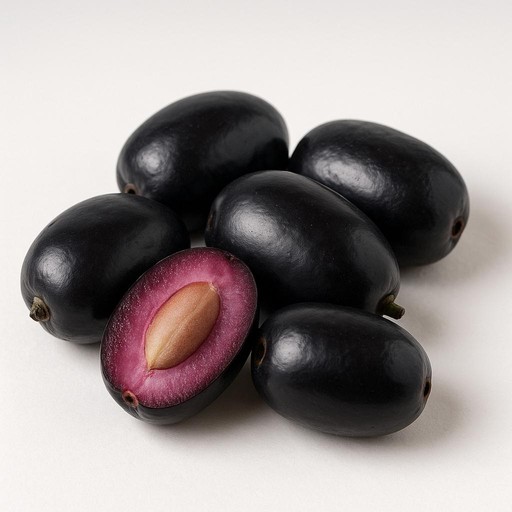
파키스탄 신선 자바 자두 가격 및 무역 — 마켓 오버뷰 2026
파생 제품
자바 자두 주스, 자바 플럼 주스 농축액, 건조 자바 자두
HS 코드
081090
최종 업데이트
2026-09-13
서치 및 소싱 팀을 위한 핵심 요약
- 수출 파트너 국가 5개와 수입 파트너 국가 1개가 랭킹되어 있습니다.
- 이 페이지 데이터셋의 최신 기준 연도는 2026입니다.
- 페이지 데이터 최종 업데이트일: 2026-09-13.
파키스탄 내 신선 자바 자두 수출 공급업체 인텔리전스, 가격 추이 및 무역 흐름
Supply Chain Intelligence 기업 프로필 및 분석으로 파키스탄의 신선 자바 자두 수출업체 커버리지, 파트너 품질, 경로 우선순위를 검증하세요.
파키스탄 내 신선 자바 자두의 연간 수출 금액, 물량 및 공급업체 시장 규모 (HS 코드 081090)
파키스탄의 신선 자바 자두 수출 물량/금액 3년치를 분석해 공급 측 시장 성장, 계절성, 무역 변동성을 평가하세요.
| 연도 | 물량 | 금액 |
|---|---|---|
| 2024 | 16,586,404 | 4,217,943 USD |
| 2023 | 10,920,428 | 3,656,355 USD |
| 2022 | 7,489,088 | 4,897,450 USD |
파키스탄에서 수출되는 신선 자바 자두의 주요 수출 대상 시장 (HS 코드 081090) 2024
2024년 기준, 파키스탄발 신선 자바 자두 수출의 상위 목적지국 5개 전반에서 수출 물량과 금액을 비교하세요.
| 순위 | 국가 | 물량 | 금액 |
|---|---|---|---|
| 1 | 아프가니스탄 | 12,494,264 | 1,790,735.909 USD |
| 2 | 카자흐스탄 | 2,825,428 | 849,922.204 USD |
| 3 | 아랍에미리트 | 418,100 | 476,723.533 USD |
| 4 | 영국 | 139,601 | 309,490.156 USD |
| 5 | 바레인 | 149,912 | 240,286.534 USD |
소싱 진단
파키스탄산 신선 자바 자두, 우리도 들여올 수 있을까요?
필요한 스펙과 물량만 알려주세요. 실제로 소싱이 되는지, 어떤 원산지와 공급사가 맞는지 짚어드려요.
무료 진단, 계정 없이 이용 가능합니다.
파키스탄의 신선 자바 자두 수입 바이어 인텔리전스 및 가격 시그널: 바이어, 수요, 거래 파트너
수출업체와 수입업체는 Supply Chain Intelligence 기업 프로필 및 분석으로 파키스탄의 신선 자바 자두 구매 수요, 파트너 밀도, 다운스트림 채널을 분석할 수 있습니다.
파키스탄 내 신선 자바 자두의 연간 수입 금액, 물량 및 수요 규모 (HS 코드 081090)
파키스탄의 신선 자바 자두 수입 물량/금액 3년치를 추적해 수요 성장과 시장 모멘텀을 평가하세요.
| 연도 | 물량 | 금액 |
|---|---|---|
| 2024 | 32,190,781 | 17,045,512 USD |
| 2023 | 36,765,988 | 19,576,868 USD |
| 2022 | 36,019,530 | 20,988,213 USD |
파키스탄에 신선 자바 자두를 공급하는 주요 원산지 공급국 (HS 코드 081090) 2024
2024년 기준, 파키스탄로 신선 자바 자두를 공급하는 상위 원산 공급국 1개 전반의 수입 물량과 금액을 비교하세요.
| 순위 | 국가 | 물량 | 금액 |
|---|---|---|---|
| 1 | 아프가니스탄 | 32,190,781.169 | 17,045,511.642 USD |
수출 진단
우리 신선 자바 자두, 이 파키스탄 바이어들에게 팔 수 있을까요?
만드시는 제품만 알려주시면 됩니다. 지금 수출할 준비가 됐는지, 어느 시장이 맞는지 봐드려요.
무료 진단, 계정 없이 이용 가능합니다.
파키스탄의 신선 자바 자두 도매 공급가 추이
파키스탄에서 신선 자바 자두의 도매 공급업체 가격 벤치마크와 최신 수출 가격 업데이트를 추적하세요.
파키스탄의 과거 신선 자바 자두 도매 공급 가격 (USD/kg)
전년 대비 변화를 포함한 신선 자바 자두의 연간 평균/하한/상한 도매 가격은 파키스탄에서의 공급업체 가격 및 수출 경쟁력 벤치마크 데이터를 제공합니다.
파키스탄의 신선 자바 자두 연도별 도매 평균 단가: 2021: 0.51 USD / kg, 2022: 0.54 USD / kg, 2023: 0.75 USD / kg, 2024: 0.67 USD / kg, 2025: 0.70 USD / kg, 2026: 0.90 USD / kg.
| 연도 | 평균 단가 | 하한 단가 | 상한 단가 | 전년 대비 변화 |
|---|---|---|---|---|
| 2021 | 0.51 USD / kg | 0.30 USD / kg | 0.68 USD / kg | - |
| 2022 | 0.54 USD / kg | 0.34 USD / kg | 0.75 USD / kg | - |
| 2023 | 0.75 USD / kg | 0.37 USD / kg | 1.20 USD / kg | - |
| 2024 | 0.67 USD / kg | 0.38 USD / kg | 0.91 USD / kg | - |
| 2025 | 0.70 USD / kg | 0.35 USD / kg | 1.13 USD / kg | - |
| 2026 | 0.90 USD / kg | 0.52 USD / kg | 1.35 USD / kg | - |
파키스탄의 최신 신선 자바 자두 도매 수출 가격 업데이트
최신 업데이트 5건을 사용하여 파키스탄에서의 현재 신선 자바 자두 도매 수출 가격 포인트와 원산지 수준 변화를 확인하세요.
파키스탄의 신선 자바 자두 최신 도매 업데이트(일자별): 2026-08-01: 66.48 USD / kg, 2026-08-01: 66.41 USD / kg, 2026-08-01: 139.32 USD / kg, 2026-08-01: 140.99 USD / kg, 2026-08-01: 63.76 USD / kg.
| 일자 | 항목명 | 단가 (USD) | 원산지 국가 | |
|---|---|---|---|---|
| 2026-08-01 | Jam** * ****** ********** | 66.48 USD / kg | - | |
| 2026-08-01 | Jam** * ****** ******** | 66.41 USD / kg | - | |
| 2026-08-01 | Jam** * ****** **** **** | 139.32 USD / kg | - | |
| 2026-08-01 | Jam** * ****** ****** | 140.99 USD / kg | - | |
| 2026-08-01 | Jam** * ****** ********** | 63.76 USD / kg | - |
가격 데이터
파키스탄 신선 자바 자두 가격, 어디까지 필요하세요?
전체 가격 히스토리와 경쟁사 벤치마크를 열어드립니다. 어떤 숫자가 필요하신지만 말씀해 주시면 함께 살펴봐 드려요.
Classification
Product TypeRaw Material
Product FormFresh
Industry PositionPrimary Agricultural Product
Raw Material
Market
Fresh java plum (jamun; Syzygium cumini) in Pakistan is an underutilized seasonal fruit consumed both fresh and in processed forms, but fresh-market marketing is strongly constrained by rapid perishability. A Pakistan horticulture review reports a limited ambient shelf life (about 3 days) and notes that marketing is largely confined to local markets, with postharvest technologies (e.g., cold storage and packaging approaches) discussed as ways to extend the marketing window. Field research in Punjab (2021–22) documents a jamun growing belt/habitat across multiple districts, indicating meaningful local availability in that province. For any cross-border movement of fresh jamun, phytosanitary compliance is a primary bottleneck because jamun is recorded as a host of quarantine-significant fruit flies, and Pakistan’s NPPO (Department of Plant Protection) regulates trade through import permits/release orders and phytosanitary export certification aligned to importing-country requirements.
Market RoleDomestic consumer market with local seasonal production; limited formal export presence due to perishability and SPS constraints
Domestic RoleSeasonal fruit marketed mainly through local/domestic channels; also used for processing into beverages and preserves
SeasonalitySeasonal early-summer availability; flowering typically reported around March–April with fruit development by May–June, so fresh supply is not year-round.
Specification
Physical Attributes
- Deep purple to black skin color at maturity with sweet–sour astringent taste profile
- Highly perishable fruit with limited ambient shelf life reported in horticulture literature
Compositional Metrics
- Reported as rich in antioxidants and associated phenolic compounds in horticulture literature; compositional emphasis often links to astringency and pigmentation
Supply Chain
Value Chain
- Harvest at maturity (tree-ripened) → sorting/handling → rapid movement to local markets → retail sale
- Where quality extension is attempted: postharvest treatments/coatings and cold storage → packaging (including modified-atmosphere concepts) → distribution
Temperature
- Ambient shelf life reported as very short (about 3 days), making rapid handling and (where feasible) temperature management critical for quality retention
- Cold storage and other postharvest interventions are discussed in horticulture literature as tools to extend the marketing window
Atmosphere Control
- Modified-atmosphere packaging (MAP) is discussed in horticulture literature as a shelf-life extension approach for jamun
Shelf Life
- Limited shelf life under ambient conditions (about 3 days) is reported in horticulture literature; this confines marketing largely to local/domestic channels
Freight IntensityMedium
Transport ModeLand
Risks
Phytosanitary HighFresh jamun is recorded as a host of quarantine-significant fruit flies (e.g., Bactrocera dorsalis and Ceratitis capitata), and EPPO reports B. dorsalis as present and widespread in Pakistan; importing countries can require specific treatments/inspections and may reject shipments if phytosanitary conditions are not met.Align pre-export orchard pest monitoring, sorting, and any required quarantine treatment with the importing country’s conditions; ensure DPP inspection/sampling is completed and a phytosanitary certificate is issued for the consignment.
Logistics HighJamun is highly perishable, with horticulture literature reporting an ambient shelf life of about 3 days and marketing largely confined to local markets; longer-distance shipment without robust cold chain/packaging materially increases spoilage and claims risk.Use expedited distribution, strict handling hygiene, and (where feasible) cold storage and protective packaging approaches discussed in horticulture literature to extend the marketing window.
Regulatory Compliance MediumPakistan’s DPP requires process compliance and documentation for phytosanitary export certification (and import permits/release orders for imports); missing or inconsistent documents can cause clearance delays, treatment holds, or rejection.Build a shipment-specific document checklist mapped to DPP requirements and the importing country’s import permit/conditions; submit applications through PSW/DPP workflows early enough for inspection and any lab/treatment steps.
Labor & Social Compliance MediumAlthough not jamun-specific, Pakistan appears on the U.S. DOL ILAB list for forced/child labor concerns in multiple goods (including some agricultural commodities), increasing the likelihood that buyers apply enhanced social-compliance screening to Pakistan agricultural sourcing.Implement supplier codes of conduct, worker age verification, grievance channels, and audit/traceability practices proportional to buyer requirements and identified country risk.
Sustainability
- Post-harvest loss and food-waste risk is structurally high due to very short ambient shelf life; shelf-life extension (cold chain/packaging) is a key sustainability lever discussed in horticulture literature
Labor & Social
- No jamun-specific labor controversy was identified in the consulted sources; however, Pakistan is listed by U.S. DOL ILAB for labor exploitation risks in several other agricultural goods, so buyers often apply broader agricultural labor due diligence in Pakistan supply chains
FAQ
Which documents are commonly required to export fresh jamun from Pakistan?Pakistan’s Department of Plant Protection (DPP) indicates exporters generally need an application for phytosanitary certification, the importing country’s import permit/market-access notification (where applicable), and core shipping documents such as a commercial invoice and packing list. Depending on commodity risk and importing-country conditions, DPP also lists documents such as a traceability certificate and treatment certificate, before issuing the phytosanitary certificate.
Why is exporting fresh jamun from Pakistan often difficult compared with selling domestically?A Pakistan horticulture review reports jamun has a very short shelf life under ambient conditions (about 3 days), which confines marketing largely to local markets and makes longer-distance shipment highly spoilage-prone without strong cold chain/packaging. In addition, jamun is recorded as a host of quarantine fruit flies, so importing countries may require specific phytosanitary measures and documentary compliance that can delay or block shipments if not met.
When is fresh jamun typically available in Pakistan?Reported phenology indicates flowering typically occurs around March–April, with fruit development by May–June, concentrating fresh-market availability in early summer rather than year-round.
Sources


수출·소싱 진단
파키스탄 신선 자바 자두, 사는 쪽이세요 파는 쪽이세요?
어느 쪽이든 몇 가지만 답해주시면 됩니다. 어디서 살 수 있는지, 누구에게 팔 수 있는지 정리해서 보내드릴게요.
무료 진단, 계정 없이 이용 가능합니다.
신선 자바 자두 연관 제품 카테고리
신선 자바 자두의 상위 제품, 하위 제품, 파생 제품, 원재료 제품 마켓 페이지를 둘러보세요.
'쿠키 허용'을 클릭하면 통계 및 개인 선호도 산출을 위한 쿠키 제공에 동의하게 됩니다.
개인정보 보호정책에서 쿠키에 대한 자세한 내용을 확인할 수 있습니다.