인도 표백 셸락 공급업체 및 가격 — 마켓 오버뷰 2026
HS 코드
130190
최종 업데이트
2026-08-23
서치 및 소싱 팀을 위한 핵심 요약
- 인도에 대한 샘플 수출 거래 5건이 요약되어 있습니다.
- 인도의 표백 셸락에 대해 수출 파트너 기업 21개와 수입 파트너 기업 91개가 매핑되어 있습니다.
- 수출 파트너 국가 5개와 수입 파트너 국가 5개가 랭킹되어 있습니다.
- 이 페이지 데이터셋의 최신 기준 연도는 2024입니다.
- 페이지 데이터 최종 업데이트일: 2026-08-23.
인도 내 표백 셸락 수출 공급업체 인텔리전스, 가격 추이 및 무역 흐름
인도의 표백 셸락에 대해 수출 파트너 기업 21개가 추적됩니다. Supply Chain Intelligence 회사 프로필 및 분석으로 수출업체 커버리지, 파트너 품질, 경로 우선순위를 검증하세요.
인도에서의 표백 셸락 수출 인텔리전스를 확인하세요. 샘플 공급업체 거래 5건, 월간 단가 범위, HS 코드 130190의 파트너 국가 무역 흐름 패턴을 포함합니다.
스캐터 포인트는 전체 거래 데이터셋의 6.9%에서 샘플링되었습니다.
표백 셸락의 인도 샘플 수출 공급업체 거래 기록
인도의 표백 셸락 샘플 거래 5건에는 수출 가격과 공급업체 거래 패턴 벤치마킹을 위한 날짜, 원산지, 파트너 국가 맥락이 포함됩니다.
인도의 표백 셸락 샘플 거래 단가(일자별): 2026-07-20: 15.15 USD / kg, 2026-07-18: 14.96 USD / kg, 2026-07-16: 8.65 USD / kg, 2026-07-10: 8.65 USD / kg, 2026-07-08: 8.48 USD / kg.
| 일자 | 신고 품목 | 단가 | 수출업체 | 수입업체 | |
|---|---|---|---|---|---|
| 2026-07-20 | 270 **** ******* *** *** ******* ** ********** ***** ******* | 15.15 USD / kg | (인도) | (독일) | |
| 2026-07-18 | SEE**** ******* *** *** *** ***** *********** *** *** | 14.96 USD / kg | (인도) | (독일) | |
| 2026-07-16 | LAC ****** | 8.65 USD / kg | (인도) | (방글라데시) | |
| 2026-07-10 | LAC ****** | 8.65 USD / kg | (인도) | (방글라데시) | |
| 2026-07-08 | LAC ****** | 8.48 USD / kg | (인도) | (방글라데시) |
인도 내 상위 표백 셸락 수출 공급업체 및 기업
선도 수출업체 프로필을 검토하고 인도의 표백 셸락에 대해 추적되는 전체 수출 파트너 기업 21개와 비교하세요. Supply Chain Intelligence 회사 프로필 및 분석으로 소싱 및 수출 파트너를 더 빠르게 선별할 수 있습니다.
(인도)
최근 수출 거래: 2026-07-23
산업군: 음료 제조작물 생산식품 제조식품 포장식품 도매기타
밸류체인 역할: 유통 / 도매농업 / 생산 / 가공 / 포장식품 제조기타무역
(인도)
최근 수출 거래: 2026-07-23
임직원 규모: 직원 11 - 50명
산업군: 기타
밸류체인 역할: 무역
(인도)
최근 수출 거래: 2026-07-23
임직원 규모: 직원 101 - 500명
매출액: 매출 USD 10M - 50M
산업군: 식품 제조기타
밸류체인 역할: 유통 / 도매무역
(인도)
최근 수출 거래: 2026-07-27
최근 수출 파트너 기업: 1
산업군: 작물 생산식품 제조식품 포장기타
밸류체인 역할: 유통 / 도매농업 / 생산 / 가공 / 포장식품 제조무역
(인도)
최근 수출 거래: 2026-06-20
최근 수출 파트너 기업: 1
임직원 규모: 직원 11 - 50명
산업군: 식품 제조식품 포장기타
밸류체인 역할: 농업 / 생산 / 가공 / 포장식품 제조기타
(인도)
최근 수출 거래: 2025-12-08
최근 수출 파트너 기업: 1
임직원 규모: 직원 11 - 50명
매출액: 매출 USD 1M - 5M
산업군: 식품 제조기타
밸류체인 역할: 무역
인도 수출 파트너 커버리지
21개 기업
총 수출 파트너 기업 수는 인도의 표백 셸락 수출 네트워크 깊이를 보여주는 핵심 신호입니다.
수출업체와 수입업체는 공급망 인텔리전스 기업 프로필 및 분석을 열어 인도 내 표백 셸락 파트너 집중도, 공급 역량 시그널, 무역 관련성을 평가할 수 있습니다.
인도 내 표백 셸락의 연간 수출 금액, 물량 및 공급업체 시장 규모 (HS 코드 130190)
인도의 표백 셸락 수출 물량/금액 3년치를 분석해 공급 측 시장 성장, 계절성, 무역 변동성을 평가하세요.
| 연도 | 물량 | 금액 |
|---|---|---|
| 2024 | 8,922,372 | 80,172,950 USD |
| 2023 | 7,605,935 | 89,370,327 USD |
| 2022 | 10,978,105 | 127,979,738 USD |
인도에서 수출되는 표백 셸락의 주요 수출 대상 시장 (HS 코드 130190) 2024
2024년 기준, 인도발 표백 셸락 수출의 상위 목적지국 5개 전반에서 수출 물량과 금액을 비교하세요.
| 순위 | 국가 | 물량 | 금액 |
|---|---|---|---|
| 1 | 미국 | 1,570,909 | 20,801,075.392 USD |
| 2 | 독일 | 851,860 | 9,206,735.01 USD |
| 3 | 방글라데시 | 1,100,126 | 7,179,458.29 USD |
| 4 | 아랍에미리트 | 1,389,350 | 5,717,520.254 USD |
| 5 | 영국 | 336,359 | 4,356,168.708 USD |
소싱 진단
인도산 표백 셸락, 우리도 들여올 수 있을까요?
필요한 스펙과 물량만 알려주세요. 실제로 소싱이 되는지, 어떤 원산지와 공급사가 맞는지 무료로 짚어드려요.
인도의 표백 셸락 수입 바이어 인텔리전스 및 가격 시그널: 바이어, 수요, 거래 파트너
인도의 표백 셸락에 대해 수입 파트너 기업 91개가 추적됩니다. 수출업체와 수입업체는 Supply Chain Intelligence 회사 프로필 및 분석을 활용해 바이어 수요, 파트너 밀도, 다운스트림 채널을 분석할 수 있습니다.
스캐터 포인트는 전체 거래 데이터셋의 86.3%에서 샘플링되었습니다.
표백 셸락의 인도 샘플 수입 거래 및 가격 기록
인도의 표백 셸락 샘플 수입 거래 5건은 가격 수준과 수요 측 거래 패턴 벤치마킹을 위한 날짜, 원산지, 무역 국가 맥락을 제공합니다.
인도의 표백 셸락 샘플 수입 거래 단가(일자별): 2026-07-30: 6.16 USD / kg, 2026-07-20: 5.07 USD / kg, 2026-07-12: 8.56 USD / kg, 2026-07-04: 8.31 USD / kg, 2026-07-03: 8.88 USD / kg.
| 일자 | 신고 품목 | 단가 | 수출업체 | 수입업체 | 원산지 | |
|---|---|---|---|---|---|---|
| 2026-07-30 | SEE**** ******* ********** ******* ******* ********** | 6.16 USD / kg | (-) | (-) | - | |
| 2026-07-20 | STI***** **** ******** *** **** **** **** *** ******** ****** ****** ******* ********* **** ******** *** **** **** **** *** ******** *** | 5.07 USD / kg | (-) | (-) | - | |
| 2026-07-12 | STI***** **** *** ** **** ******** ******** | 8.56 USD / kg | (-) | (-) | - | |
| 2026-07-04 | STI***** **** ********** **** * | 8.31 USD / kg | (-) | (-) | - | |
| 2026-07-03 | STI***** **** ******** *** **** **** **** *** ******** ****** ****** ******* ********* **** ******** *** **** **** **** *** ******** *** | 8.88 USD / kg | (-) | (-) | - |
인도 내 상위 표백 셸락 바이어, 수입업체 및 수요 파트너
선도 바이어 프로필을 검토하고 인도의 표백 셸락에 대해 추적되는 전체 수입 파트너 기업 91개와 비교하세요. 수출업체와 수입업체는 Supply Chain Intelligence 회사 프로필 및 분석으로 수요 측 파트너 적합도를 평가할 수 있습니다.
(인도)
최근 수입 거래: 2025-09-01
최근 수입 파트너 기업: 1
산업군: 식품 제조식품 포장기타
밸류체인 역할: 유통 / 도매식품 제조기타무역
(인도)
최근 수입 거래: 2026-07-23
최근 수입 파트너 기업: 1
산업군: 작물 생산식품 제조식품 포장기타
밸류체인 역할: 유통 / 도매농업 / 생산 / 가공 / 포장식품 제조무역
(인도)
최근 수입 거래: 2026-07-23
임직원 규모: 직원 1 - 10명
산업군: 기타
밸류체인 역할: 유통 / 도매
(인도)
최근 수입 거래: 2026-07-23
산업군: 기타
밸류체인 역할: 무역
(인도)
최근 수입 거래: 2026-07-23
산업군: 기타
밸류체인 역할: 무역
(인도)
최근 수입 거래: 2026-07-23
산업군: 기타
밸류체인 역할: 무역
인도 수입 파트너 커버리지
91개 기업
수입 파트너 기업 수는 인도의 표백 셸락 수요 측 가시성을 보여줍니다.
공급망 인텔리전스 분석과 기업 프로필을 활용해 인도에서 활동 중인 표백 셸락 수입업체, 유통업체, 바이어 네트워크를 식별하세요.
인도 내 표백 셸락의 연간 수입 금액, 물량 및 수요 규모 (HS 코드 130190)
인도의 표백 셸락 수입 물량/금액 3년치를 추적해 수요 성장과 시장 모멘텀을 평가하세요.
| 연도 | 물량 | 금액 |
|---|---|---|
| 2024 | 36,029,222 | 196,643,566 USD |
| 2023 | 39,490,970 | 241,609,033 USD |
| 2022 | 34,349,838 | 227,909,334 USD |
인도에 표백 셸락를 공급하는 주요 원산지 공급국 (HS 코드 130190) 2024
2024년 기준, 인도로 표백 셸락를 공급하는 상위 원산 공급국 5개 전반의 수입 물량과 금액을 비교하세요.
| 순위 | 국가 | 물량 | 금액 |
|---|---|---|---|
| 1 | 아프가니스탄 | 1,201,635 | 122,553,403.541 USD |
| 2 | 인도네시아 | 22,158,787 | 25,059,536.583 USD |
| 3 | 태국 | 4,245,518 | 14,647,763.133 USD |
| 4 | 중국 | 563,226 | 8,707,619.041 USD |
| 5 | 우즈베키스탄 | 146,007 | 7,434,382.272 USD |
수출 진단
우리 표백 셸락, 이 인도 바이어들에게 팔 수 있을까요?
만드시는 제품만 알려주시면 됩니다. 지금 수출할 준비가 됐는지, 어느 시장이 맞는지 무료로 봐드려요.
가격 데이터
가려진 인도 표백 셸락 가격, 열어볼까요?
전체 가격 히스토리와 경쟁사 벤치마크를 열어드립니다. 어떤 숫자가 필요하신지만 말씀해 주시면 함께 살펴봐 드려요.
Classification
Product TypeIngredient
Product FormRefined (bleached)
Industry PositionFood Additive / Ingredient (Glazing Agent)
Market
Bleached shellac in India is a refined lac resin ingredient used primarily as a glazing/film-forming coating in confectionery and selected pharmaceutical and nutraceutical applications. India is a major global origin for lac-based products, with upstream supply linked to lac cultivation on host trees across several eastern and central states. The market is quality- and documentation-driven because buyers and regulators typically require conformity to recognized additive specifications and impurity limits. Supply can be sensitive to agricultural variability in lac production and to downstream processing controls in bleaching and refining.
Market RoleMajor producer and exporter; domestic industrial ingredient market
Domestic RoleIndustrial food/pharma ingredient used as a glazing and coating material in India
Market GrowthNot Mentioned
Specification
Physical Attributes
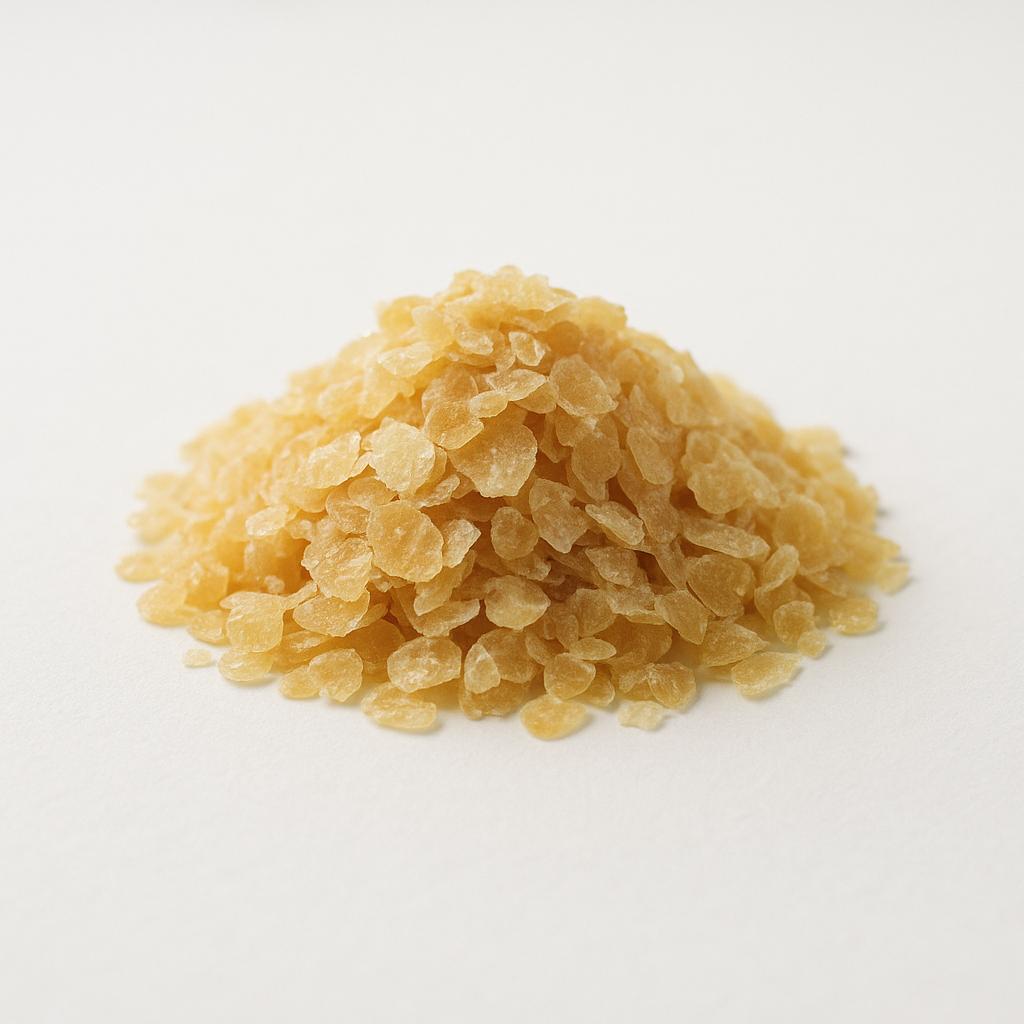
- Pale/whitened (decolorized) shellac supplied as flakes or powder
- Film-forming resin used to create a glossy protective coating
Compositional Metrics
- Conformity to recognized food additive specifications (identity/purity) is typically required
- Impurity controls commonly focus on insoluble matter, ash/wax-related parameters, and heavy metal limits
- Process-chemical controls may include residual bleaching agents and residual solvents depending on manufacturing route
Grades
- Food-grade bleached shellac per buyer specification aligned to recognized additive monographs
Packaging
- Moisture-protective packaging with inner liners (e.g., lined bags/drums) to prevent humidity pickup and blocking
Supply Chain
Value Chain
- Lac cultivation on host trees → sticklac harvest → seedlac processing → shellac refining → bleaching/decolorization → filtration/drying → flake/powder finishing → packaging → domestic distribution/export
Temperature
- Store dry and away from heat to reduce softening, blocking, and quality drift during storage and transit
Shelf Life
- Shelf life is generally storage-stable when kept dry; humidity and heat exposure are key degradation risks
Freight IntensityLow
Transport ModeSea
Risks
Regulatory Compliance HighMarket access can be blocked if bleached shellac does not meet destination-market food additive authorization and recognized identity/purity specifications, or if batch documentation does not match labels and contracts.Confirm additive legal status and spec basis (e.g., Codex GSFA/JECFA or destination positive list) before shipment; issue a batch CoA aligned to the agreed monograph and run a document concordance check (name/spec, lot, origin, net weight).
Food Safety MediumRefining/bleaching routes may introduce quality and contaminant risks (e.g., residual solvents/processing chemicals or heavy metal nonconformance) that can trigger customer rejection or border action.Qualify processors with validated refining/bleaching controls, routine impurity testing, and defined acceptance criteria; maintain change-control for process chemistry and suppliers.
Supply MediumUpstream lac output can be volatile due to agricultural and ecological factors affecting host trees and lac insect productivity, creating supply and price instability for shellac derivatives.Diversify sourcing across multiple lac-growing states and processors; use forward contracts and safety stock for critical coating programs.
Labor And Social MediumUpstream tiers may involve informal labor and vulnerable communities, elevating reputational and compliance risk if child labor or exploitative practices occur in collection or early processing stages.Implement upstream due diligence (supplier code, audits where feasible, grievance channels) and prioritize processors with documented responsible sourcing programs.
Logistics LowWhile freight intensity is generally low, port congestion, container availability, and customs/document delays can disrupt delivery schedules for time-bound manufacturing programs.Use buffer lead times, pre-book capacity for peak seasons, and ensure complete pre-alert documentation for importers.
Sustainability
- Forest- and agroforestry-linked lac cultivation creates sensitivity to host-tree health, land stewardship, and biodiversity impacts
- Bleaching/refining can involve solvents and chemical inputs, raising wastewater and worker exposure management expectations
Labor & Social
- Supply chains can involve informal rural labor in lac cultivation/collection, creating elevated due-diligence needs for child labor and fair work conditions in upstream tiers
- Livelihood dependence of tribal and rural communities can increase sensitivity to price shocks and procurement practices
Standards
- HACCP
- ISO 22000
- FSSC 22000
- GMP
FAQ
Why is India an important country for bleached shellac supply?India is a globally significant origin for lac-based products, with shellac supply linked to lac cultivation and processing in multiple Indian states. ICAR’s natural resins and gums institute provides sector references on lac production and associated value chains.
What are the most common documents buyers request for bleached shellac shipments from India?Buyers commonly request a batch Certificate of Analysis, an SDS/MSDS, and origin documentation (often a Certificate of Origin). This aligns with the record’s emphasis that market access is documentation- and specification-driven for food additive ingredients.
What is the main compliance risk for exporting bleached shellac as a food additive ingredient?The main risk is failing destination-market authorization and identity/purity specifications for the additive, which can lead to shipment rejection. Codex GSFA and FAO/WHO JECFA are common international reference points used by regulators and buyers when defining additive status and specifications.
Sources
인도 대비 공급업체, 수출 및 가격 비교를 위한 표백 셸락의 다른 국가 마켓
인도와 연관된 국가들에서 표백 셸락 공급업체 커버리지, 무역 흐름, 가격 벤치마크를 비교해 보세요.


무료 진단
인도 표백 셸락, 사는 쪽이세요 파는 쪽이세요?
어느 쪽이든 몇 가지만 답해주시면 됩니다. 어디서 살 수 있는지, 누구에게 팔 수 있는지 정리해서 보내드릴게요.
'쿠키 허용'을 클릭하면 통계 및 개인 선호도 산출을 위한 쿠키 제공에 동의하게 됩니다.
개인정보 보호정책에서 쿠키에 대한 자세한 내용을 확인할 수 있습니다.