Upcoming Apple Harvest in US Faces Challenges: Wildfires, Labor Shortages, and Tariffs
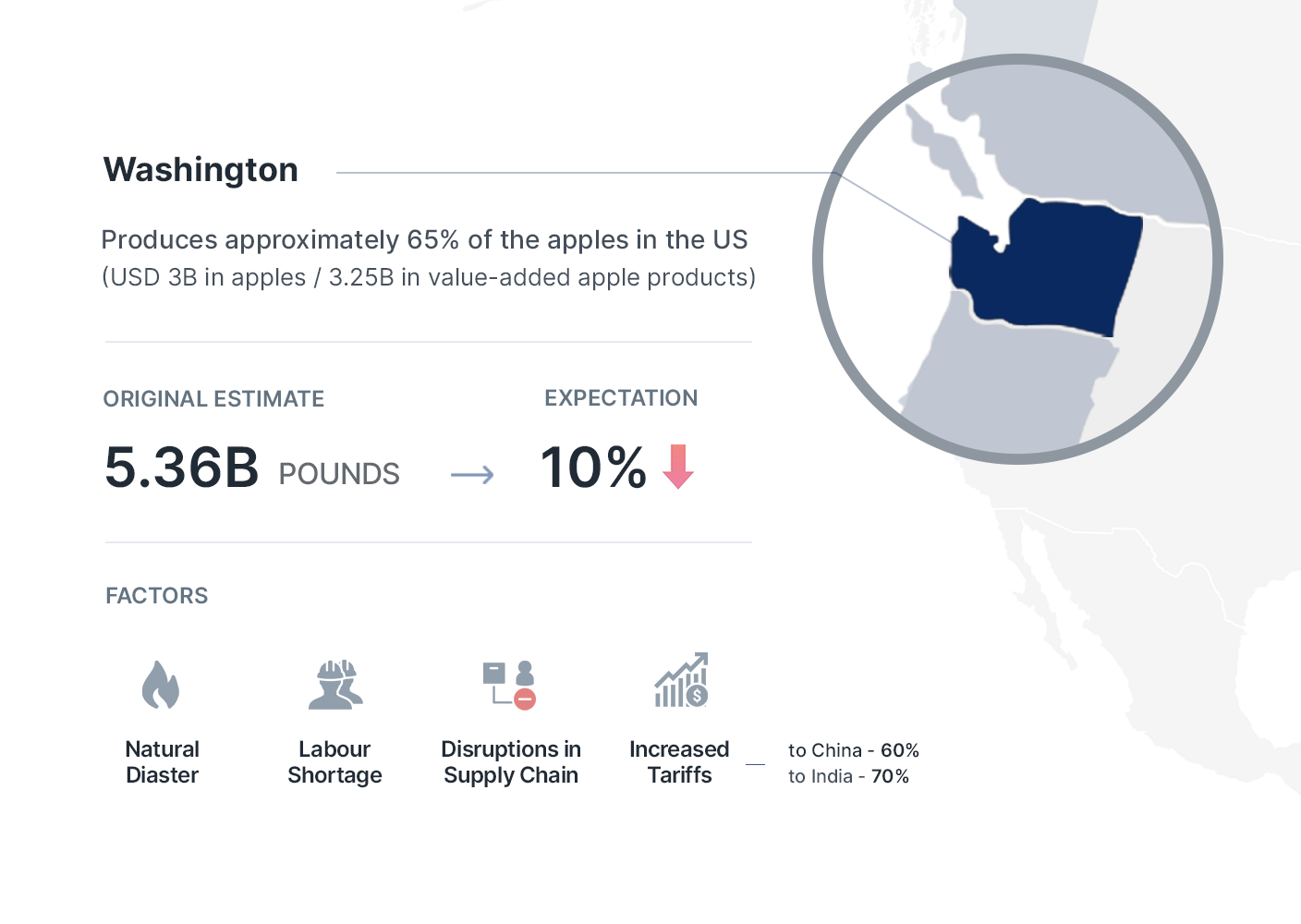
In light of recent wildfires that have rampaged the Pacific Northwest, the destruction has also affected one of the world’s greatest producing areas for apples-Washington State, which has also affected its neighbor, British Columbia. This came soon after apple crops in Washington were predicted to be similar to last year’s, an estimate of 133.9 million forty-pound boxes, but since the fire, production is expected to be down as much as 10%.
Fires Along with Strong Winds Disrupt Beginning of Harvest Season
The harvest season for apples in Washington state usually commences from August to early November, where the output contributes approximately 65% of the entire country’s apple harvest. As the fires, induced by lightning, have made their way through the state, it has scorched through orchards, destroyed warehouses holding apples, and prevented workers from working in the fields. Earlier in September, apples were also hit by severe windstorms, which blew the fruits from the trees and destroyed equipment.
In Okanagan, British Columbia, fires from the US have inadvertently affected apple crops, as the smoke from the fires prevented apple-pickers from working in the fields, creating some delays in harvests. The picked apples will develop a duller color as well due to the smoke with the lack of sunlight, but the taste is expected to remain the same. Although comparatively smaller than the US in terms of production/export volume, British Columbia produces 27% of Canada’s apple crop, with the Okanagan-Similkameen valleys taking up 98% of the BC harvest.
2020 a Difficult Year for Washington Apples
The season has not had a rosy outlook from the start, as China and India both slapped retaliatory tariffs on US exports. India remained the fifth-largest export destination for the US in 2019 when the base tariff was at 50%, but ever since the US pulled India from the Generalized System of Preferences (GSP), which allows partner countries to export certain goods to the US without duties, an additional 20% tariff was imposed (March 2019). China has reacted similarly to the US’s import bans on its goods, bumping up tariffs from 50 to 60% in 2019. Coupled with shortages in labor and logistical issues from the pandemic, 2020 has been a difficult year for US producers.
Sources
- The News&Observer. "High winds and wildfires reduce nation’s largest apple crop."
- Grow BC. "A Guide to BC’s Agriculture Resources."
- Info News.ca. "Labour shortage, smoke causing delay in Okanagan apple harvest."
- Tri-cities area journal of business. "A big bite: $3B apple industry is the MVP of Washington ag."


