
1. Weekly News
Brazil
Tomato Prices Surged in Brazil Due to Reduced Supply and Quality Issues
The prices of a 20-kilogram (kg) box of 3A salad tomatoes surged across Brazil's main wholesale markets in W52, driven by a notable reduction in supply. In São Paulo, the average price rose 48.8% week-on-week (WoW) to USD 10.40 per box, while Belo Horizonte saw an increase of 69.7% WoW to USD 11.54 per box. Prices in Rio de Janeiro climbed by 38.3% WoW to USD 9.75 per box, and Campinas recorded an average of USD 12.02 per box, up 29.7% WoW. The reduced supply was due to several factors, including milder temperatures in key producing regions, which slowed the ripening of tomatoes, the early conclusion of harvests in areas like Reserva, and crop eradication due to earlier low prices. Moreover, cool night weather in Venda Nova do Imigrante and Itapeva led to reduced harvest volumes, while rains caused blemishes in early-phase crops, further impacting quality. This convergence of climatic and structural challenges highlights producers' difficulties in maintaining consistent supply in Brazil's volatile tomato market.
Peru
Peru's Tomato Exports Increased by 8% YoY in Nov-24
Peru's tomato exports reached 976 metric tons (mt) in Nov-24, marking an 8% year-on-year (YoY) increase compared to the 907 mt exported in Nov-23. These exports were distributed across 12 countries, with Ecuador accounting for 44% of shipments and Brazil accounting for 30% as the primary destinations. This growth highlights Peru's expanding presence in regional tomato markets.
Ukraine
Ukrainian Greenhouse Tomato Prices Rose Before New Year’s Celebrations
In the lead-up to New Year’s celebrations, demand for Ukrainian greenhouse tomatoes surged, driving a significant price increase. Imported tomatoes from Türkiye predominantly supply the market. In W52, prices rose by an average of 20% WoW, ranging between USD 1.91 and 2.38/kg, depending on quality, batch size, and variety. The heightened demand exceeded available supply, as local processing plants halted sampling due to the season's end, and imports could not fully meet market needs. Greenhouse tomato prices are now 12% higher than during the same period last year, with robust demand likely to push prices even higher in the coming days.
2. Weekly Pricing
Weekly Tomato Pricing Important Exporters (USD/kg
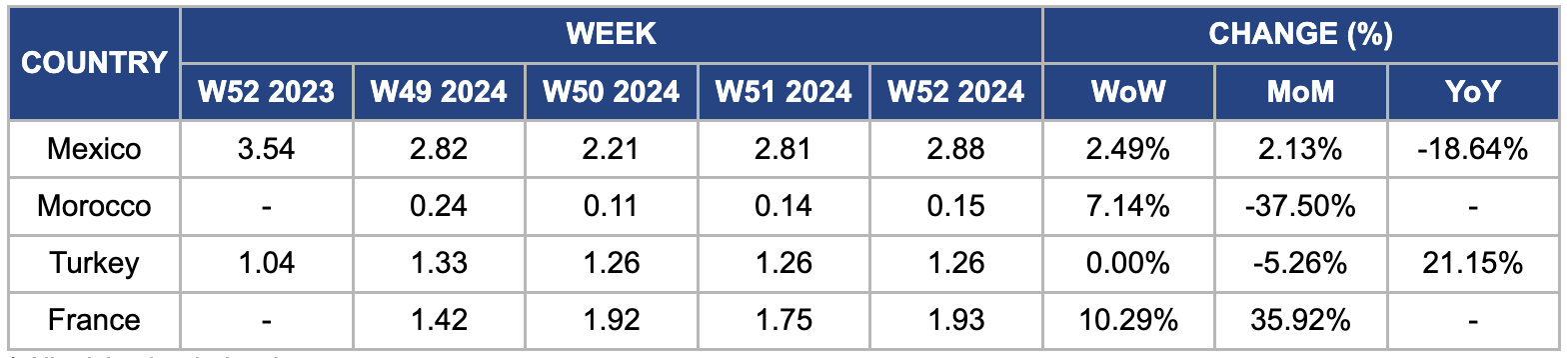
Yearly Change in Tomato Pricing Important Exporters (W52 2023 to W52 2024)

Mexico
In W52, Mexico's tomato prices rose significantly by 2.49% WoW and 2.13% month-on-month (MoM), reaching USD 2.49/kg. This price surge was due to reduced supply caused by cold weather conditions in key production areas like Sinaloa and Baja California. These cold spells in mid-December delayed harvests and reduced production volumes. The situation was aggravated further by strong export demand from the United States (US), where seasonal shortages increased dependence on Mexican tomatoes. The combination of weather disruptions and heightened export demand led to a substantial tightening of supply in Mexico's domestic market, pushing prices higher.
Morocco
In W52, Morocco's tomato prices increased 7.14% WoW to USD 0.15/kg from USD 0.14/kg in W51. This surge was primarily due to a significant reduction in supply caused by cold weather conditions in key production areas such as Souss-Massa and Agadir, where temperatures dropped below seasonal averages in mid-Dec-24. These colder temperatures disrupted tomato ripening and delayed harvesting schedules, creating supply shortages in local and export markets.
Strong export demand from European Union (EU) countries, particularly France and Spain, also aggravated the supply constraints. These countries rely on Moroccan tomato imports during winter to offset their seasonal production deficits. Rising transportation costs and logistical challenges due to holiday-season congestion further limited the efficient distribution of tomatoes, amplifying price pressures in the domestic market. Despite the weekly increase, prices declined by 37.50% MoM. This significant drop is due to the seasonal nature of tomato production in Morocco. As the peak harvest season concludes, supply levels typically decrease, leading to higher prices.
Türkiye
In W52, Türkiye's tomato prices remained steady WoW at USD 1.26/kg but showed a 5.26% MoM decline. The ongoing harvest in the Ahlat district is progressing, with local tomatoes steadily reaching the market. Fueled by the efforts of local producers, the increased supply contributed to the price drop. However, the surge in demand for domestically grown tomatoes has helped maintain market activity. Despite this, a YoY comparison reveals a significant 21.15% price increase from USD 1.04/kg in W52 2023. This sharp rise is due to higher operational costs, particularly for diesel and transportation, which have increased more than tomato prices. These escalating costs have placed financial pressure on producers, leading to protests in key agricultural regions.
France
In W52, France's tomato prices increased by 10.29% WoW and 35.93% YoY to USD 1.93/kg. This significant rise is primarily due to the French market's shortage of round tomatoes, attributed mainly to seasonal factors. Moreover, the French tomato season is at a turning point, with many producers nearing the end of their season. This transition has led to a reduction in supply, contributing to the price increase.
3. Actionable Recommendations
Address Seasonal Gaps and Foster Domestic Production for Year-Round Supply
France's tomato prices have surged due to a shortage of round tomatoes and seasonal supply gaps. France could address these issues by fostering year-round domestic production by adopting controlled-environment farming, such as greenhouse systems, which can maintain consistent supply outside the primary harvest season. Moreover, encouraging small- and medium-scale producers to diversify their crops to include different varieties of tomatoes could help smooth supply fluctuations. France should also consider improving its supply chain to manage seasonal peaks better and ensure that tomatoes are available at stable prices throughout the year. This would help prevent drastic price increases and enhance market predictability.
Support Producers Amid Rising Costs and Explore Export Market Expansion
Türkiye's tomato prices have been impacted by rising operational costs, especially for transportation and diesel, leading to financial pressure on producers. The country should provide targeted support to farmers facing increased costs, potentially through subsidies or low-interest loans to help offset higher fuel prices. Moreover, Türkiye should focus on expanding its export market beyond traditional partners and explore opportunities in new regions, including North Africa and the Middle East. By diversifying export destinations and improving marketing strategies, Türkiye can capitalize on the growing demand for tomatoes while easing domestic supply pressures. Investment in more sustainable agricultural practices, such as drip irrigation systems, could also help reduce costs and improve productivity.
Implement Better Weather Forecasting and Improve Transportation Infrastructure
Morocco's tomato market was impacted by cold weather, which delayed harvests, disrupted ripening, and logistical challenges during peak holiday periods. Morocco could enhance its weather forecasting systems and encourage producers to adopt more climate-smart agricultural practices. Improving transportation infrastructure, especially during the peak season, would help alleviate the pressure caused by congestion and rising logistical costs. By investing in better roads and storage facilities, Morocco can improve the efficiency of tomato distribution, ensuring that supply reaches both domestic and export markets promptly. Furthermore, extending the harvest season through greenhouses could mitigate the seasonal production drops and stabilize prices year-round.
Sources: Tridge, Agraria, AgroPortal.ua, Fresh Plaza, Horti Daily, Portal Do Agronegocio


