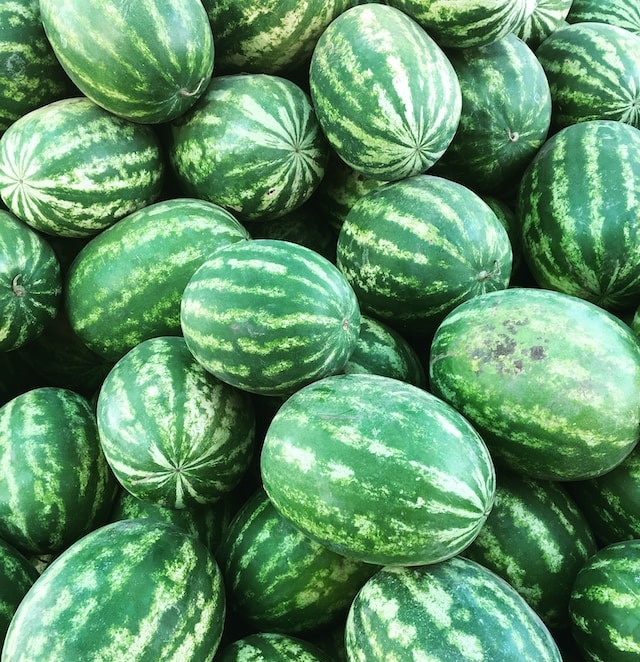
In W45 in the melon and watermelon landscape, Egypt doubled its melons export volumes to Saudi Arabia in the first eight months of 2023, including watermelons. The export volume is expected to keep rising until the end of 2023. Egypt exported 16.5 thousand tons of melons to Saudi Arabia from Jan-23 to Aug-23, a two and a half times increase over the previous five years. Watermelon shipments exceeded last year's total by 80%, and melon exports are currently 2.4 times higher. Egypt is one of the world's most important producers of melons, second only to Algeria and Morocco in Africa. Saudi Arabia offers opportunities for product placement in premium supermarkets and stores with less stringent quality requirements. In 2023, the country will likely set a new import record for both watermelons and melons.
Moreover, melons are primarily supplied by Jordan, Yemen, and Egypt, with other less significant exporting countries like Syria, Oman, and India also close to the Saudi market. Despite the distance, Saudi Arabia imports several hundred tons of melons from the United States (US). In the watermelon industry, Jordan has maintained its dominant position in exports to Saudi Arabia, but Egypt is rapidly regaining its market share. Regarding melons, Jordan continues to be a key player, supplying between 75% and 80% of Saudi Arabia's imports.
In Russia, Dagestan farmers successfully harvested over 224 thousand tons of melons in 2023, a 20% year-over-year (YoY) increase. The melon crop was removed from 7.5 thousand hectares (ha), with an average yield of 299 centners per ha. In 2022, 187 thousand tons of watermelons and melons were harvested in Dagestan.
Lastly, the French Label Rouge has certified a new melon variety, the yellow Charenta melon, as the second variety to be awarded. The French Ministry of Agriculture and Food Sovereignty and the French Ministry of Economy approved the certification. Vendée Qualité, a multi-sectoral organization, led the project to highlight sustainable cultivation methods. The sector currently consists of growers from the south of the Vendée, but will soon include growers from other regions.


