일본 표백 셸락 공급업체 및 가격 — 마켓 오버뷰 2026
HS 코드
130190
최종 업데이트
2026-08-23
서치 및 소싱 팀을 위한 핵심 요약
- 일본에 대한 샘플 수출 거래 3건이 요약되어 있습니다.
- 일본의 표백 셸락에 대해 수출 파트너 기업 4개와 수입 파트너 기업 3개가 매핑되어 있습니다.
- 수출 파트너 국가 5개와 수입 파트너 국가 5개가 랭킹되어 있습니다.
- 이 페이지 데이터셋의 최신 기준 연도는 2024입니다.
- 페이지 데이터 최종 업데이트일: 2026-08-23.
일본 내 표백 셸락 수출 공급업체 인텔리전스, 가격 추이 및 무역 흐름
일본의 표백 셸락에 대해 수출 파트너 기업 4개가 추적됩니다. Supply Chain Intelligence 회사 프로필 및 분석으로 수출업체 커버리지, 파트너 품질, 경로 우선순위를 검증하세요.
일본에서의 표백 셸락 수출 인텔리전스를 확인하세요. 샘플 공급업체 거래 3건, 월간 단가 범위, HS 코드 130190의 파트너 국가 무역 흐름 패턴을 포함합니다.
스캐터 포인트는 전체 거래 데이터셋의 100.0%에서 샘플링되었습니다.
표백 셸락의 일본 샘플 수출 공급업체 거래 기록
일본의 표백 셸락 샘플 거래 3건에는 수출 가격과 공급업체 거래 패턴 벤치마킹을 위한 날짜, 원산지, 파트너 국가 맥락이 포함됩니다.
일본의 표백 셸락 샘플 거래 단가(일자별): 2025-11-06: 22.72 USD / kg, 2025-10-15: 70.73 USD / kg, 2025-10-02: 43.08 USD / kg.
| 일자 | 신고 품목 | 단가 | 수출업체 | 수입업체 | |
|---|---|---|---|---|---|
| 2025-11-06 | WAX ******** * ***** ***** ** ****** * ** | 22.72 USD / kg | (일본) | (미국) | |
| 2025-10-15 | Pla**** ******* ******* ****** **** ** ********** ********** ******* *** ******* ********** *** ***** ************ | 70.73 USD / kg | (일본) | (베트남) | |
| 2025-10-02 | Pla**** ******* ******* ****** **** ** ***** *** **** ********* *** * ****** **** ** ********** ********** ******* *** ******* ********** **** ***** *** | 43.08 USD / kg | (일본) | (베트남) |
일본 내 상위 표백 셸락 수출 공급업체 및 기업
선도 수출업체 프로필을 검토하고 일본의 표백 셸락에 대해 추적되는 전체 수출 파트너 기업 4개와 비교하세요. Supply Chain Intelligence 회사 프로필 및 분석으로 소싱 및 수출 파트너를 더 빠르게 선별할 수 있습니다.
(일본)
최근 수출 거래: 2026-07-23
최근 수출 파트너 기업: 1
임직원 규모: 직원 101 - 500명
산업군: 식품 제조
밸류체인 역할: 유통 / 도매농업 / 생산 / 가공 / 포장식품 제조
(일본)
최근 수출 거래: 2026-07-23
임직원 규모: 직원 101 - 500명
산업군: 식품 제조
밸류체인 역할: 식품 제조
(일본)
최근 수출 거래: 2026-07-23
산업군: 브로커 및 무역 대행식품 제조식품 포장식품 도매
밸류체인 역할: 유통 / 도매무역
(일본)
최근 수출 거래: 2025-10-02
최근 수출 파트너 기업: 1
임직원 규모: 직원 1000명 초과
매출액: 매출 USD 500M - 1B
산업군: 식품 제조
밸류체인 역할: 유통 / 도매
일본 수출 파트너 커버리지
4개 기업
총 수출 파트너 기업 수는 일본의 표백 셸락 수출 네트워크 깊이를 보여주는 핵심 신호입니다.
수출업체와 수입업체는 공급망 인텔리전스 기업 프로필 및 분석을 열어 일본 내 표백 셸락 파트너 집중도, 공급 역량 시그널, 무역 관련성을 평가할 수 있습니다.
일본 내 표백 셸락의 연간 수출 금액, 물량 및 공급업체 시장 규모 (HS 코드 130190)
일본의 표백 셸락 수출 물량/금액 3년치를 분석해 공급 측 시장 성장, 계절성, 무역 변동성을 평가하세요.
| 연도 | 물량 | 금액 |
|---|---|---|
| 2024 | 18,725 | 583,274 USD |
| 2023 | 13,825 | 386,956 USD |
| 2022 | 9,846 | 340,400 USD |
일본에서 수출되는 표백 셸락의 주요 수출 대상 시장 (HS 코드 130190) 2024
2024년 기준, 일본발 표백 셸락 수출의 상위 목적지국 5개 전반에서 수출 물량과 금액을 비교하세요.
| 순위 | 국가 | 물량 | 금액 |
|---|---|---|---|
| 1 | 중국 | 10,106 | 243,706.81 USD |
| 2 | 미국 | 400 | 93,158.115 USD |
| 3 | 필리핀 | 3,825 | 86,756.427 USD |
| 4 | 대한민국 | 1,510 | 58,414.585 USD |
| 5 | 태국 | 872 | 35,860.028 USD |
소싱 진단
일본산 표백 셸락, 우리도 들여올 수 있을까요?
필요한 스펙과 물량만 알려주세요. 실제로 소싱이 되는지, 어떤 원산지와 공급사가 맞는지 무료로 짚어드려요.
일본의 표백 셸락 수입 바이어 인텔리전스 및 가격 시그널: 바이어, 수요, 거래 파트너
일본의 표백 셸락에 대해 수입 파트너 기업 3개가 추적됩니다. 수출업체와 수입업체는 Supply Chain Intelligence 회사 프로필 및 분석을 활용해 바이어 수요, 파트너 밀도, 다운스트림 채널을 분석할 수 있습니다.
스캐터 포인트는 전체 거래 데이터셋의 94.4%에서 샘플링되었습니다.
표백 셸락의 일본 샘플 수입 거래 및 가격 기록
일본의 표백 셸락 샘플 수입 거래 5건은 가격 수준과 수요 측 거래 패턴 벤치마킹을 위한 날짜, 원산지, 무역 국가 맥락을 제공합니다.
일본의 표백 셸락 샘플 수입 거래 단가(일자별): 2026-07-22: 16.18 USD / kg, 2026-07-22: 16.18 USD / kg, 2026-07-05: 18.04 USD / kg, 2026-05-19: 18.04 USD / kg, 2026-05-17: 16.18 USD / kg.
| 일자 | 신고 품목 | 단가 | 수출업체 | 수입업체 | 원산지 | |
|---|---|---|---|---|---|---|
| 2026-07-22 | SHE**** **** *** ** *** ******* ** *********** ***** ****** | 16.18 USD / kg | (-) | (-) | - | |
| 2026-07-22 | SHE**** **** *** ** *** ******* ** *********** ***** ****** | 16.18 USD / kg | (-) | (-) | - | |
| 2026-07-05 | SHE******** *** ** *** ******* ** *********** ***** ************** | 18.04 USD / kg | (-) | (-) | - | |
| 2026-05-19 | SHE******** *** ** *** ******* ** *********** ***** ************** | 18.04 USD / kg | (-) | (-) | - | |
| 2026-05-17 | SHE**** **** *** ** *** ******* ** *********** ***** ****** | 16.18 USD / kg | (-) | (-) | - |
일본 내 상위 표백 셸락 바이어, 수입업체 및 수요 파트너
선도 바이어 프로필을 검토하고 일본의 표백 셸락에 대해 추적되는 전체 수입 파트너 기업 3개와 비교하세요. 수출업체와 수입업체는 Supply Chain Intelligence 회사 프로필 및 분석으로 수요 측 파트너 적합도를 평가할 수 있습니다.
(일본)
최근 수입 거래: 2026-07-23
산업군: 식품 제조식품 포장기타
밸류체인 역할: 식품 제조기타
(일본)
최근 수입 거래: 2026-07-23
최근 수입 파트너 기업: 1
임직원 규모: 직원 101 - 500명
산업군: 식품 제조
밸류체인 역할: 유통 / 도매농업 / 생산 / 가공 / 포장식품 제조
(일본)
최근 수입 거래: 2025-10-06
최근 수입 파트너 기업: 1
임직원 규모: 직원 1000명 초과
매출액: 매출 USD 500M - 1B
산업군: 식품 제조
밸류체인 역할: 유통 / 도매
일본 수입 파트너 커버리지
3개 기업
수입 파트너 기업 수는 일본의 표백 셸락 수요 측 가시성을 보여줍니다.
공급망 인텔리전스 분석과 기업 프로필을 활용해 일본에서 활동 중인 표백 셸락 수입업체, 유통업체, 바이어 네트워크를 식별하세요.
일본 내 표백 셸락의 연간 수입 금액, 물량 및 수요 규모 (HS 코드 130190)
일본의 표백 셸락 수입 물량/금액 3년치를 추적해 수요 성장과 시장 모멘텀을 평가하세요.
| 연도 | 물량 | 금액 |
|---|---|---|
| 2024 | 485,656 | 4,719,815 USD |
| 2023 | 561,726 | 5,739,303 USD |
| 2022 | 474,151 | 4,598,605 USD |
일본에 표백 셸락를 공급하는 주요 원산지 공급국 (HS 코드 130190) 2024
2024년 기준, 일본로 표백 셸락를 공급하는 상위 원산 공급국 5개 전반의 수입 물량과 금액을 비교하세요.
| 순위 | 국가 | 물량 | 금액 |
|---|---|---|---|
| 1 | 인도 | 204,156 | 2,059,540.225 USD |
| 2 | 태국 | 125,025 | 1,296,292.435 USD |
| 3 | 이란 | 7,500 | 649,979.519 USD |
| 4 | 인도네시아 | 120,370 | 437,488.374 USD |
| 5 | 그리스 | 427 | 59,478.229 USD |
수출 진단
우리 표백 셸락, 이 일본 바이어들에게 팔 수 있을까요?
만드시는 제품만 알려주시면 됩니다. 지금 수출할 준비가 됐는지, 어느 시장이 맞는지 무료로 봐드려요.
가격 데이터
가려진 일본 표백 셸락 가격, 열어볼까요?
전체 가격 히스토리와 경쟁사 벤치마크를 열어드립니다. 어떤 숫자가 필요하신지만 말씀해 주시면 함께 살펴봐 드려요.
Classification
Product TypeIngredient
Product FormSolid refined resin (granules/flakes/powder)
Industry PositionFood additive ingredient (glazing/surface-finishing agent)
Market
Bleached shellac is an insect-derived polyester resin used primarily as a glazing/surface-finishing agent (INS 904). In Japan, shellac is permitted as an “existing food additive” of natural origin and is subject to Japan’s Specifications and Standards for Food Additives (JSFA). JSFA includes a monograph for shellac (including “White Shellac”), with purity specifications such as wax content, acid value, and limits for toxic elements. Commercial use in Japan is concentrated in niche applications like confectionery/chocolate and chewing gum glazing, as well as coatings for supplements/tablets, with imports subject to Food Sanitation Act import notification and quarantine-station checks. Since April 1, 2024, responsibilities for setting/evaluating food safety standards (including food additives) have been transferred to the Consumer Affairs Agency (CAA) from MHLW.
Market RoleImport-dependent food additive ingredient market with domestic distribution/formulation for glazing applications
Domestic RoleSpecialty glazing and coating agent used by food and supplement manufacturers; regulated under Japan’s positive-list food additive system
Specification
Physical Attributes
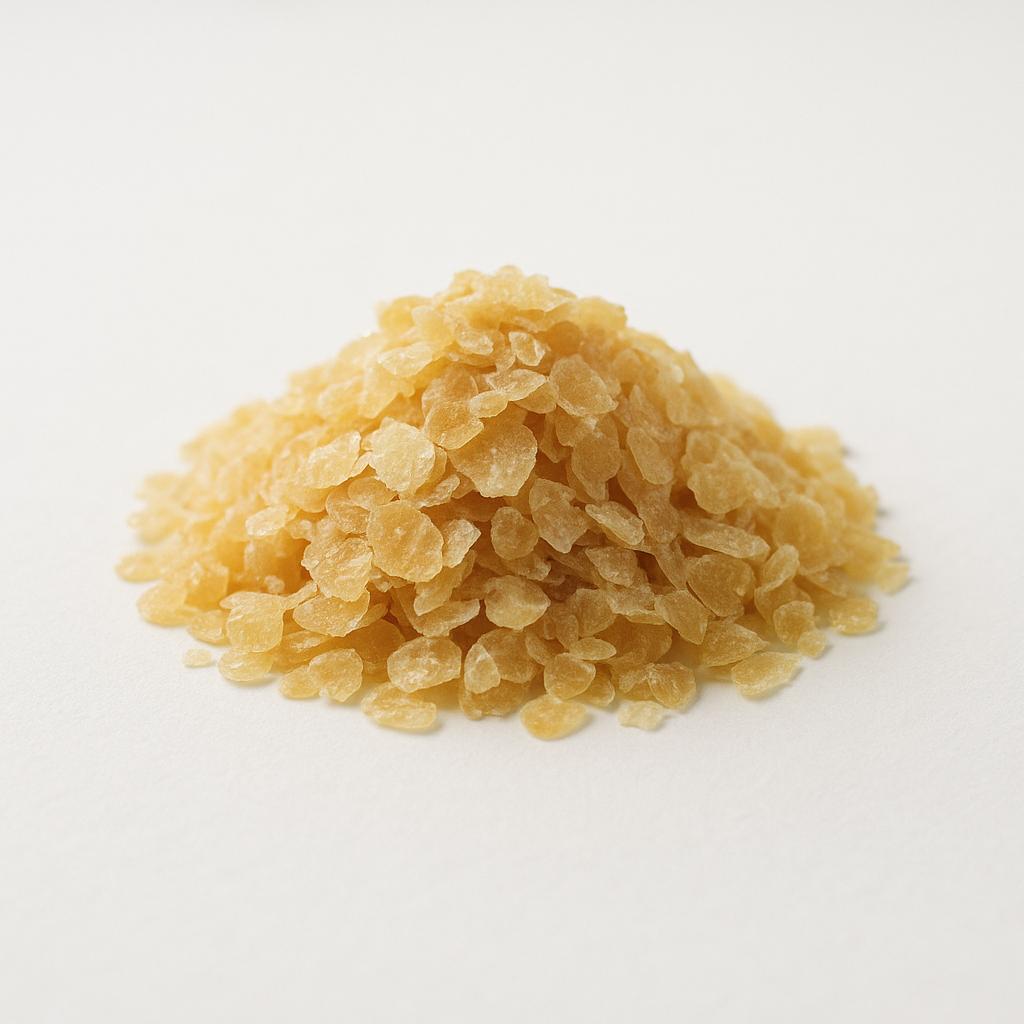
- JSFA “White Shellac” is described as white to light yellow granules or small granular flakes
- JECFA describes bleached shellac as an off-white to tan amorphous granular resin; wax-free bleached shellac as light yellow amorphous granular resin
- Solubility reference (JECFA): insoluble in water; freely (though very slowly) soluble in ethanol; slightly soluble in acetone and ether
Compositional Metrics
- Acid value: JSFA White Shellac 73–89; JSFA Purified Shellac 60–80; JECFA bleached shellac 60–89
- Wax limit: JSFA/JECFA wax-containing shellac not more than 5.5%; wax-free shellac not more than 0.2%
- Toxic elements: JSFA sets limits including lead (not more than 2 µg/g as Pb) and arsenic (not more than 1.5 µg/g as As); JECFA specifies lead not more than 2 mg/kg
Grades
- JSFA monograph for Shellac distinguishes “White Shellac” and “Purified Shellac”
- JSFA/JECFA recognize wax-containing vs. wax-free shellac, with different wax-content limits
- JECFA definition of bleached shellac includes alkaline dissolution and hypochlorite bleaching; wax-free grade includes a filtration step to remove wax
Supply Chain
Value Chain
- Import of refined shellac meeting JSFA specifications → domestic ingredient distribution and (where needed) dissolution/formulation for coating → application as external glaze/coating on confectionery/chewing gum/supplements → finished product distribution
Risks
Regulatory Compliance HighJapan’s food additive regime is positive-list based, and business imports of food additives require import notification and quarantine-station compliance checks; if shellac does not meet JSFA specifications or is treated as outside the permitted additive categories for the intended use, the shipment can be delayed or rejected.Confirm the additive’s permitted status (e.g., existing food additive listing) and intended-use fit; align product specs with the JSFA shellac monograph (including wax class) and submit complete, consistent import notification documentation; consult the responsible quarantine station before first import.
Food Safety MediumNon-compliance with toxic-element and purity specifications (e.g., lead/arsenic limits, wax content, rosin absence tests) can trigger nonconformance findings under official specifications for shellac.Require a lot-specific certificate of analysis demonstrating conformance to relevant JSFA/JECFA-style parameters (acid value, wax %, toxic elements, identity/purity tests) and ensure test methods are aligned with recognized compendial approaches.
Consumer Perception MediumShellac is insect-derived, which can create buyer pushback for products positioned as vegan/strict vegetarian or for channels with specific religious/dietary expectations, even when legally compliant.Pre-align claims and labeling strategy with customers; where needed, use third-party Halal/Kosher certifications accepted by the target channel and maintain clear origin statements in technical documentation.
Sustainability
- Animal-origin (insect-derived) natural resin sourcing: upstream provenance and responsible harvesting transparency
- Chemical processing stewardship for bleached grades (e.g., oxidizing bleach steps and downstream impurity control)
Labor & Social
- Supplier social compliance and worker safety due diligence in upstream lac harvesting and refining/bleaching operations (primarily outside Japan)
FAQ
Is shellac permitted for use as a food additive in Japan?Yes—shellac appears on Japan’s List of Existing Food Additives (natural-origin additives permitted under Japan’s food additive framework). Products still need to meet the applicable official specifications and standards, such as the JSFA shellac monograph, for distribution and use.
What is the key import compliance step to bring shellac in for business use in Japan?For business imports, importers must submit an import notification (“Notification Form for Importation of Foods, etc.”) under the Food Sanitation Act to the MHLW quarantine station, where the shipment undergoes document examination (and inspection when required) before a certificate of notification is issued.
Which specification checkpoints are commonly referenced for bleached shellac used as a glazing agent (INS 904)?Compendial references include identity/solubility characteristics and purity limits such as acid value ranges and maximum wax content (with tighter limits for wax-free grades), along with toxic-element limits (e.g., lead, and in JSFA also arsenic) and rosin-related purity checks.
Sources
일본 대비 공급업체, 수출 및 가격 비교를 위한 표백 셸락의 다른 국가 마켓
일본와 연관된 국가들에서 표백 셸락 공급업체 커버리지, 무역 흐름, 가격 벤치마크를 비교해 보세요.


무료 진단
일본 표백 셸락, 사는 쪽이세요 파는 쪽이세요?
어느 쪽이든 몇 가지만 답해주시면 됩니다. 어디서 살 수 있는지, 누구에게 팔 수 있는지 정리해서 보내드릴게요.
'쿠키 허용'을 클릭하면 통계 및 개인 선호도 산출을 위한 쿠키 제공에 동의하게 됩니다.
개인정보 보호정책에서 쿠키에 대한 자세한 내용을 확인할 수 있습니다.