PDF 파일 미리보기
The South Korean pecan market has experienced remarkable growth, reaching 1,310 metric tons (on a kernel basis) in 2023, double the volume imported just five years before. This rapid growth in pecan imports is credited to the United States (US)-Korea free trade agreement, which has been in effect since 2012 and led to the elimination of the 28% import tariff on pecans.
Despite this rapid expansion, pecans constituted only 2% of the country's tree nut imports in 2023, underscoring their status as a niche product. While projections indicate continued growth in pecan consumption, the pace is anticipated to slow as the market becomes more saturated.
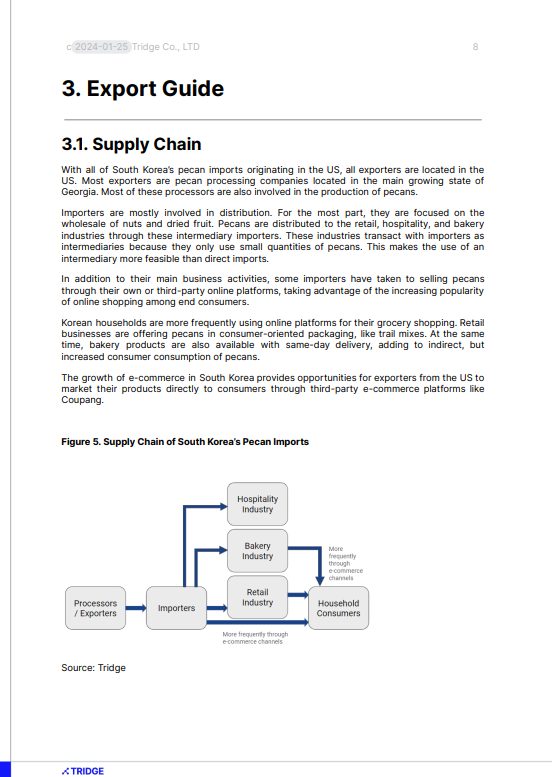
Key importers, acting as intermediaries, play a crucial role in distributing pecans to end-users, such as retailers, and the hospitality and bakery industries. Understanding the dynamics of the Korean business culture, adherence to regulatory requirements, and the evolving landscape of importers present both challenges and opportunities for exporters aiming to tap into this emerging market.
Despite this rapid expansion, pecans constituted only 2% of the country's tree nut imports in 2023, underscoring their status as a niche product. While projections indicate continued growth in pecan consumption, the pace is anticipated to slow as the market becomes more saturated.
Key importers, acting as intermediaries, play a crucial role in distributing pecans to end-users, such as retailers, and the hospitality and bakery industries. Understanding the dynamics of the Korean business culture, adherence to regulatory requirements, and the evolving landscape of importers present both challenges and opportunities for exporters aiming to tap into this emerging market.
목차
Key Takeaways
1. The Pecan Market in South Korea
1.1. The Pecan Market Landscape
2. Market Situation
2.1. Free Trade Agreements
2.2. Imports
3. Export Guide
3.1. Supply Chain
3.2. Export Requirements
3.3. Contacting Importers
3.4. Support for US Exporters
4. Competitive Landscape
4.1. Importer Landscape
4.2. Buyer Market Dynamic Change
4.3. Buyer Price Trends
4.4. Exporter Landscape
4.5. Supplier Market Dynamic Change
5. Tridge Solutions
5.1. Tridge Social Marketplace
관련 시장 데이터


관련 콘텐츠 더 보기
'쿠키 허용'을 클릭하면 통계 및 개인 선호도 산출을 위한 쿠키 제공에 동의하게 됩니다.
개인정보 보호정책에서 쿠키에 대한 자세한 내용을 확인할 수 있습니다.