Tomato Trade Dynamics in the European Union
In MY 2021, it is expected that overall fresh tomato production in the EU will decrease by 2% compared to 2020. The production volume would remain 5.2% below the average tomato production of the last five years. Spain, the largest fresh tomato producer in the EU is likely to witness a 10% fall in tomato production volume along with a 2% fall in production in France. Furthermore, it is expected that tomato exports will continue to follow a downward trend and fall by 21% in 2021 in comparison to the volumes recorded in 2020.
On the other hand, EU’s tomato imports are expected to increase by 7% over the previous year and are likely to be 18% more than the average of the last five years.In 2020, Germany (18%), the Netherlands (3.9%), Poland (3.13%), and France (2.85%) the largest tomato importers in the world. The EU imports tomatoes mainly from EU members, the Netherlands and Spain, and it also imports tomatoes in large volumes from Morocco and Turkey. In the last few years, the reliance on imports from Morocco and Turkey has increased due to falling tomato production in EU tomato-producing countries.
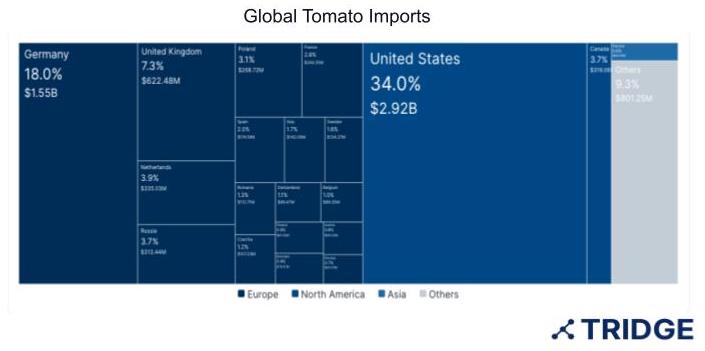
Source: Tridge.
Tomato imports from Morocco have grown from 341.08 tons in 2015 to 435.04 tons in 2020, translating into an average annual growth of 18%. Turkey, on the other hand, has witnessed an average annual growth of 49% in tomato exports to the EU compared to the same period last year as the volume grew from 40.5 tons in 2015 to 125.5 in 2020. In the last five years, Morocco increased its tomato sales in the European Union by 26.38%, while in that period those of Spain have fallen by -21.68%. EU imports tomatoes mainly during the first 6 months of the calendar year during which Moroccan tomato sales have increased by 15.8% in the last five years while the Turkish tomato sales have increased by 34.6%.
Morocco and Turkey are replacing the position of Spain in the European tomato market by increasing their share in the European tomato market. Turkey was initially supplying limited quantities of tomatoes to the EU but the pace has picked up in the last few years. One of the key driving forces is the significantly lower price of local tomatoes in Turkey’s domestic markets relative to the local prices of tomatoes in the Spanish market. The lower domestic prices translate into lower export prices and better opportunities for export in the global market. Spain is concerned about the growing imports of tomatoes from Morocco and Turkey to the EU. To avoid tough competition from the non-EU countries, Spain has adjusted its harvest period, before the harvest season in Morocco and Turkey kicks off.This has provided Spain a commercial window before tomatoes arrive from Morocco and Turkey in the region.
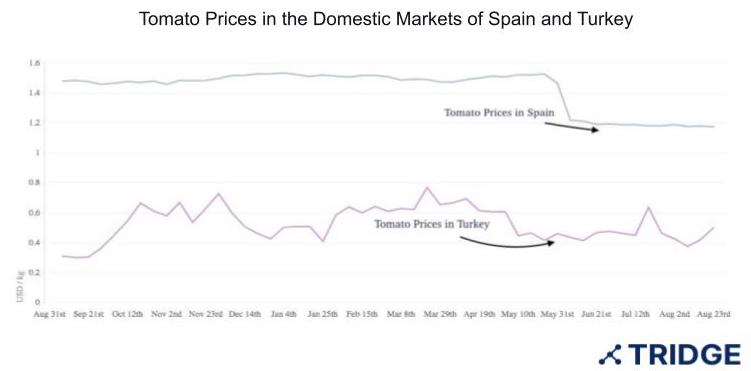
Source: Tridge.
Sources
- European Commision. “The tomato market in the EU:Vol. 3a: Trade for fresh products.”
- Fepex. “More imports, less production and exports in the EU fresh tomato sector.”
- Horto Info. “Spain and the Netherlands are losing the tomato market in the EU in favor of Morocco and Turkey.”
- Tridge. Price Charts.
- Tridge. Trade Data.