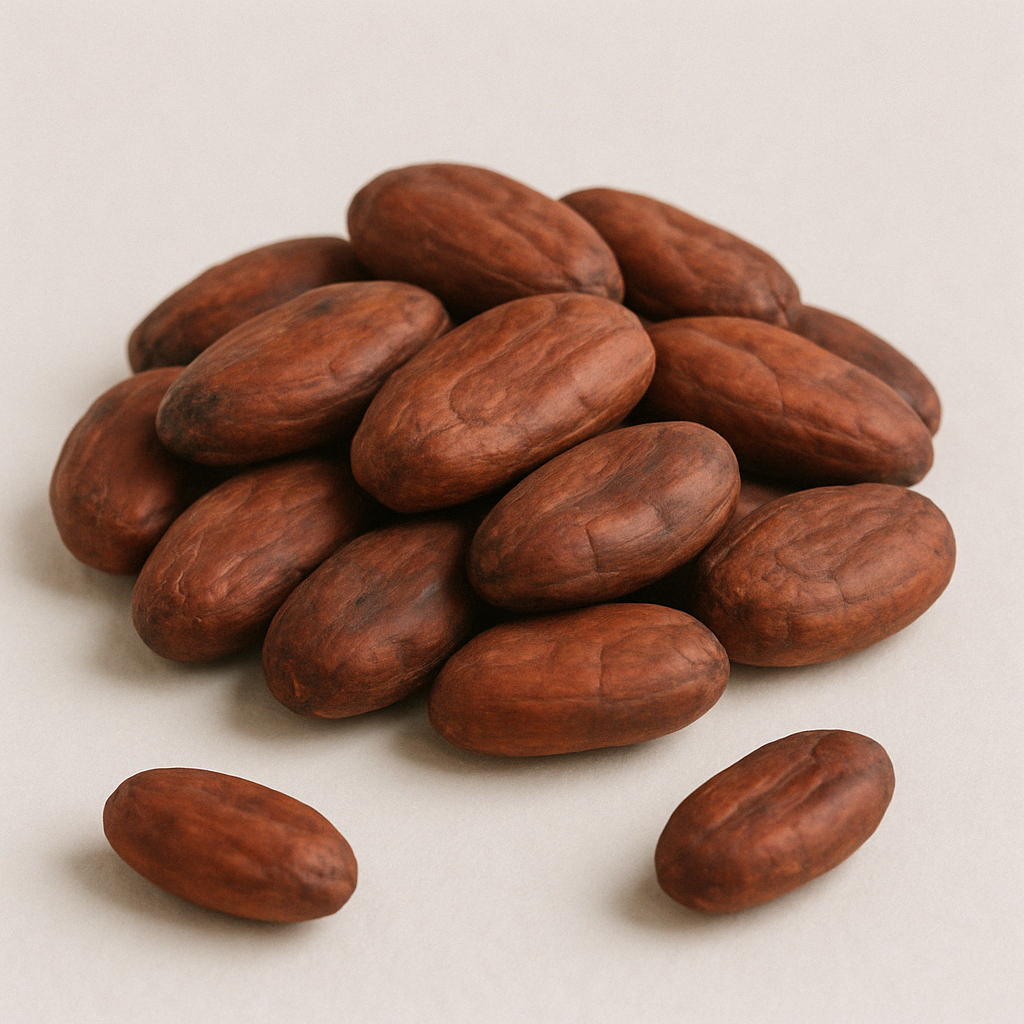
나이지리아산 코코아 콩
주요 판매자
/132x132/company-logo/3d/24/d8/3d24d80a73a27a9c779ba9e7819f43fa1bf15210/Tridge_Gacon_logo.png)


이 시장에 대하여
시장 정보
History
Cocoa was introduced to Nigeria in the late 19th century by missionaries, gaining commercial importance by the 1950s. The sector flourished until the oil boom of the 1970s diverted attention from agriculture. Since the 2000s, cocoa has experienced a revival, with increasing global demand and government-backed initiatives like the Cocoa Transformation Agenda. Recent years have seen renewed focus on sustainable farming, pest control, and improved quality to regain international competitiveness.
Production Region
Nigeria’s cocoa cultivation is concentrated in the tropical rainforest belt of the southwest:
- Ondo State: Nigeria’s largest cocoa-producing state.
- Cross River State: Key eastern production zone with rising output.
- Osun & Ekiti States: Traditional cocoa regions with historical prominence.
- Oyo, Ogun & Delta States: Moderate contributors.
- Edo State: Emerging production area with government support.
Growing Conditions
Nigeria’s climate is highly suitable for cocoa cultivation:
- Climate: Humid tropical with distinct wet and dry seasons.
- Temperature: Optimal range of 22–30°C.
- Rainfall: 1,200–2,000 mm annually.
- Soil: Deep, well-drained loamy soils with pH 5.5–6.5.
- Elevation: Typically 150–600 meters above sea level.
Harvesting Process
Cocoa harvesting in Nigeria involves:
- Manual Pod Harvesting: Using cutlasses or knives to avoid damaging trees.
- Pod Breaking: Beans extracted and pulp retained for fermentation.
- Fermentation: Typically 5–7 days in heaps covered with banana leaves or jute bags.
- Drying: Sun drying for 7–10 days on raised mats or drying platforms.
- Grading: Based on fermentation, bean count, moisture (max 7%), and defect levels.
Cultivation Method
Cocoa farming is dominated by smallholders using traditional methods:
- Agroforestry: Cocoa intercropped with plantains, kola, and fruit trees.
- Integrated Pest Management: Growing adoption due to black pod disease and mirid bugs.
- Rehabilitation Programs: State-led replanting and pruning schemes in Ondo and Osun.
- Youth & Women Training: Expansion of gender-inclusive farming programs.
- Certification: UTZ, Rainforest Alliance, and Organic schemes increasing in southwest Nigeria.
Supply Chain
Nigeria’s cocoa supply chain is informal but evolving:
- Smallholder Farmers: Over 90% of production; average farm size <3 hectares.
- Licensed Buying Agents (LBAs): Purchase cocoa beans directly from farmers.
- Middlemen & Exporters: Facilitate aggregation, quality checks, and shipping.
- Processors: Local firms like Stanmark Cocoa, FTN Cocoa, and Multi-Trex process beans into semi-finished products.
- Export Destinations: Netherlands, Germany, Belgium, Malaysia, and US.
Local Logistics
Transport and logistics include:
- Rural Collection: By road to local aggregation centers.
- Storage: Jute bags stored in ventilated warehouses.
- Ports: Lagos (Apapa), Calabar, and Port Harcourt are primary cocoa export ports.
- Infrastructure Bottlenecks: Poor rural roads and delayed port processing can affect bean quality and timeliness.
Regulations and Certifications
Nigerian cocoa exports are subject to:
- NEPC Oversight: Nigerian Export Promotion Council facilitates international trade.
- NAQS Phytosanitary Certification: Required for international shipment.
- SON (Standards Organisation of Nigeria): Mandates adherence to national cocoa standards.
- Traceability Programs: Increasing in certified value chains.
Quality Standards
Cocoa is graded on the following:
- Fermentation: Fully fermented beans (brown, not slaty) are preferred.
- Moisture: <7% for export.
- Bean Count: Ideal is 95–105 beans per 100g.
- Defects: Moldy, insect-damaged, or flat beans limited to <3%.
Trade Terms
Cocoa trade practices in Nigeria typically follow:
- MOQ: 12–25 MT (container-based).
- Incoterms: FOB Lagos or CIF major destinations.
- Payment Terms: Cash or LC, typically negotiated with exporters.
- Price Benchmarking: Based on ICE Futures US and London Cocoa Exchange.
Environmental and Social Impacts
Key sustainability challenges and initiatives include:
- Deforestation Risk: Encroachment into forest reserves remains a concern.
- Child Labor: Ongoing efforts with NGOs to reduce child involvement in cocoa fields.
- Women’s Involvement: Strengthening through training and microfinance.
- Climate Resilience: Promotion of drought-tolerant and disease-resistant varieties.
Uses
Nigerian cocoa beans are primarily exported, but also used locally for:
- Chocolate & Confectionery: Domestic use growing slowly.
- Cocoa Powder, Butter & Liquor: Produced locally for export and domestic manufacturing.
- Artisanal Chocolate: Niche producers emerging in Lagos and Abuja.
- Industrial Applications: For cosmetics and pharmaceutical cocoa butter.
Additional Information
Nigeria aims to increase its cocoa production to over 500,000 MT by 2027 by replacing aging trees, strengthening traceability, and improving farmer incomes. Investments in value addition and infrastructure will be critical to boosting global competitiveness and entering premium chocolate supply chains.
Harvesting seasonality
Varieties
Forastero
Dominates national production due to its robustness and high yield.
Trinitario
Found in select farms aiming at specialty markets.
Criollo
Very limited; grown experimentally or by artisanal producers.
나이지리아의 코코아 콩 생산량
생산량 개요
나이지리아 코코아 콩의 생산량 추세 차트
나이지리아 코코아 콩 수출
수출 개요
수출 동향
검증된 판매자
/132x132/company-logo/60/88/62/6088623592abc5606045bc378e07274ebd097cc3/file_0000000018487208b5af6e1334a28514.png)
/132x132/company-logo/4e/a9/60/4ea96007ca6f7542c7aa400c5679438917a4ceeb/logo.png)
/132x132/company-logo/30/a8/15/30a815dbca69cdcc0299c6ad2a615303d9a43f0b/Hamkulex_logo.jpg)

/132x132/company-logo/f4/75/ed/f475edd4ca730fc67838cd4f72aca88037357271/Otec_Logo_Main.png)
/132x132/company-logo/fe/f5/a4/fef5a42a021e14ba29d7803187b2b1f5bb041b32/FB_Agro.PNG)
/132x132/company-logo/36/f6/5a/36f65a03966315d4290939426ecd73e6908dd278/fitz_2.jpg)
/132x132/company-logo/a4/84/de/a484de9ddf22e72de38e08d95acca8cbeecf3123/AC4A986C-6028-401E-B08E-703B8E8F5D6D.png)


