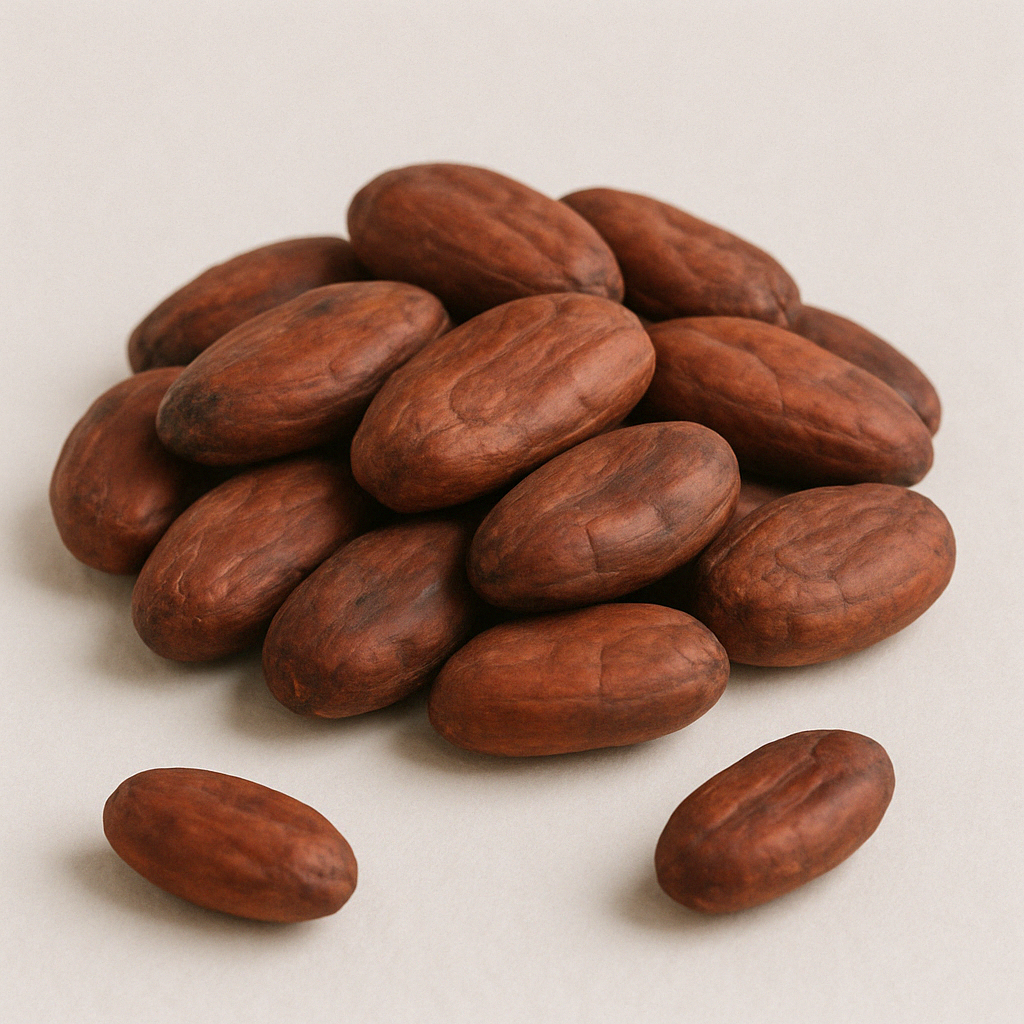
탄자니아산 코코아 콩
이 마켓의 첫 번째 우수 판매자가 되어보세요.
이 시장에 대하여
시장 정보
History
Cocoa was introduced to Tanzania during the colonial period, with German and later British administrators encouraging cultivation in the early 1900s. However, it remained relatively underdeveloped until recent decades. Renewed attention from NGOs, development agencies, and buyers has revived the sector since the 2000s, focusing on quality improvement and market access, particularly for smallholder farmers.
Production Region
Cocoa is mainly produced in the southern and eastern zones of Tanzania:
- Mbeya: Largest cocoa-producing region; high altitudes, fertile soils.
- Morogoro: Known for cooperative-driven quality beans.
- Ruvuma: Expanding production with good agronomic potential.
- Tanga & Lindi: Smaller but improving regions, often linked to donor projects.
Growing Conditions
Tanzania’s cocoa belt benefits from favorable agroecological conditions:
- Temperature: 20–30°C typical in cocoa-growing regions.
- Rainfall: 1,000–1,500 mm/year, with distinct wet/dry seasons.
- Soil: Deep, well-drained loamy or clay soils with pH 5.0–6.5.
- Altitude: 300–800 meters, with higher elevations aiding bean quality.
Harvesting Process
Smallholder farmers follow traditional but improving post-harvest methods:
- Manual Harvesting: Pods hand-cut using knives.
- Pod Breaking: Beans extracted manually, often in field groups.
- Fermentation: Wooden boxes or banana-leaf heaps; typically 5–7 days.
- Drying: Sun-dried on mats or drying tables for 5–10 days.
- Grading: Sorting based on size, moisture (max 7%), and fermentation quality.
Cultivation Method
Cocoa is almost exclusively grown by smallholders on <3 ha plots:
- Agroforestry: Cocoa intercropped with banana, avocado, or shade trees.
- Low Chemical Use: Many farmers follow organic practices, though few are certified.
- Training Programs: Supported by NGOs like TechnoServe and Helvetas.
- Cooperatives and Farmer Groups: Key to improving traceability and market access.
- Certification: Fairtrade and Rainforest Alliance programs gaining traction.
Supply Chain
Tanzania’s cocoa supply chain is informal but strengthening:
- Smallholder Farmers: Around 30,000 households.
- Village Collection Points: Managed by cooperatives or local traders.
- Processors & Exporters: Examples include Kokoa Kamili, TANCOBA, and private aggregators.
- Export Channels: Primarily via the port of Dar es Salaam, destined for Europe.
- Direct Trade: Increasing number of international buyers working directly with cooperatives for traceable, single-origin cocoa.
Local Logistics
Transport and infrastructure remain a challenge:
- Feeder Roads: Often unpaved and affected by rains.
- Regional Hubs: Mbeya and Morogoro serve as aggregation centers.
- Export Port: Dar es Salaam – the main cocoa export gateway.
- Storage: Centralized drying and warehousing in regional cooperatives or exporter hubs.
Regulations and Certifications
Export and quality control are managed by several national agencies:
- Tanzania Coffee and Cocoa Board (TCCB): Regulatory body for cocoa quality, licensing, and trade.
- Tanzania Bureau of Standards (TBS): Ensures moisture and phytosanitary compliance.
- Certifications: Rainforest Alliance, Fairtrade, and Organic (EU/USDA) available through NGOs and exporters.
Quality Standards
Tanzanian cocoa is sold as bulk and specialty, with standards based on:
- Fermentation: Well-fermented beans with 6–8% moisture preferred.
- Defect Levels: Limited mold/slaty beans accepted for premium buyers.
- Bean Count: Typically 95–110 beans/100g.
- Flavor Profile: Fruity, floral, sometimes winey – ideal for fine chocolate makers.
Trade Terms
Export practices are increasingly formalized:
- MOQ: 10–15 MT per container.
- Incoterms: FOB Dar es Salaam; CIF for EU/US common.
- Pricing: Linked to ICE cocoa futures, with premiums of USD 200–400/MT for fine-flavor or certified lots.
- Payment: Bank transfer, LC, or advance payment for small quantities via direct trade.
Environmental and Social Impacts
The cocoa sector contributes to sustainable development:
- Livelihoods: Cocoa supports income diversification for smallholder families.
- Deforestation Concerns: Agroforestry promoted to minimize forest encroachment.
- Women’s Participation: Women increasingly active in cooperatives and training.
- Youth Engagement: Programs encourage younger farmers to adopt cocoa.
- Climate Adaptation: Introduction of drought-resistant clones and shade trees.
Uses
Tanzanian cocoa is increasingly in demand across quality-conscious sectors:
- Craft Chocolate: Used by bean-to-bar makers in the US, EU, and Japan.
- Organic Cocoa Butter: For natural cosmetics.
- Specialty Nibs and Liquor: Small-volume, high-margin exports.
- Local Chocolate: Small domestic chocolate makers are emerging.
Additional Information
Tanzania is building a reputation for high-quality, traceable cocoa thanks to exporter–farmer partnerships like Kokoa Kamili, which has won international recognition. Donor-led projects aim to double production by 2030 through training, improved genetics, and better post-harvest infrastructure.
수확 시기
품종
Trinitario Dominant
Preferred by premium buyers for fine-flavor profiles.
Forastero
Higher-yielding, used for bulk and cocoa butter.
/132x132/company-logo/00/e1/99/00e199f105dbace2d7d067b5f4362429798d202c/matumika_cL.jpg)


