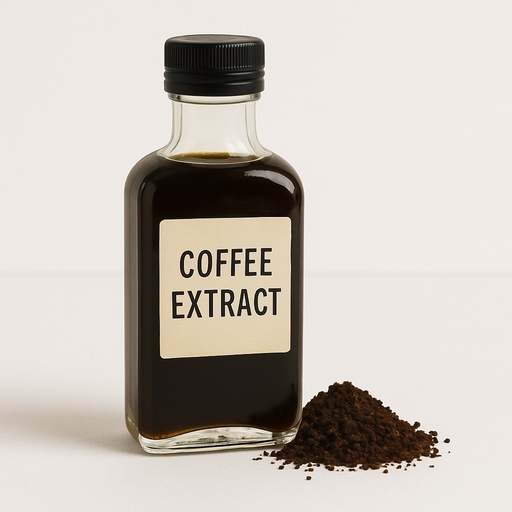
Coffee Extract Suppliers & Prices in Sweden — Market Overview 2026
Sub Product
Coffee Paste, Instant Coffee Extract, Liquid Coffee Extract
Raw Materials
Green Coffee Bean
HS Code
210111
Last Updated
2026-10-19
Key takeaways for search and sourcing teams
- 1 sampled export transactions for Sweden are summarized.
- 5 export partner countries and 5 import partner countries are ranked.
- Latest reference year in this page dataset is 2024.
- Page data last updated on 2026-10-19.
Coffee Extract Export Supplier & Manufacturer Intelligence, Price Trends, and Trade Flows in Sweden
1 export partner companies are tracked for Coffee Extract in Sweden. Use Supply Chain Intelligence company profiles and analytics to validate exporter coverage, partner quality, and route priorities.
Explore Coffee Extract export intelligence in Sweden, including 1 sampled supplier transactions, monthly unit-price ranges, and partner-country trade flow patterns for HS Code 210111.
Scatter points are sampled from 100.0% of the full transaction dataset. Each point is a real transaction — click one to see its details and ask AI Chat whether it was a fair deal.
Sample Export Supplier & Manufacturer Transaction Records for Coffee Extract in Sweden
1 sampled Coffee Extract transactions in Sweden include date, origin, and partner-country context to benchmark export prices and supplier trading patterns.
Coffee Extract sampled transaction unit prices by date in Sweden: 2026-02-11: 32.09 USD / kg.
| Date | Reported Product | Unit Price | Exporter | Importer | |
|---|---|---|---|---|---|
| 2026-02-11 | Unknown Product | 32.09 USD / kg | (Sweden) | (Chile) |
These 1 rows are a sample — open Coffee Extract transactions in Sweden on Tridge Eye
Each record shows the exporter, importer and unit price. Ask AI Chat whether the deal was fair, or turn the records into an AI Curation.
Sign up and verify your company — newly verified companies can try Tridge Eye Business free.
Top Coffee Extract Export Suppliers, Manufacturers, and Companies in Sweden
Review leading exporter profiles and benchmark them against 1 total export partner companies tracked for Coffee Extract in Sweden. Use Supply Chain Intelligence company profiles and analytics to shortlist sourcing and export partners faster.
(Sweden)
Latest Export Transaction: 2026-09-19
Industries: Food Wholesalers
Value Chain Roles: Distribution / Wholesale
See the full picture in Tridge Eye: full price and trade history · 725,009+ company profiles
Sweden Export Partner Coverage
1 companies
Total export partner company count is a core signal of Sweden export network depth for Coffee Extract.
Exporters and importers can open Supply Chain Intelligence company profiles and analytics to assess Coffee Extract partner concentration, capacity signals, and trade relevance in Sweden.
Annual Export Value, Volume, and Supplier Market Size for Coffee Extract in Sweden (HS Code 210111)
Analyze 3 years of Coffee Extract export volume and value in Sweden to evaluate supplier market growth, seasonality, and trade volatility.
| Year | Volume | Value |
|---|---|---|
| 2024 | 1,929,888 | 35,560,455 USD |
| 2023 | 1,417,834 | 25,579,629 USD |
| 2022 | 1,665,384 | 26,520,895 USD |
Top Destination Markets for Coffee Extract Exports from Sweden (HS Code 210111) in 2024
For 2024, compare export volume and value across the top 5 destination countries for Coffee Extract exports from Sweden.
| Rank | Country | Volume | Value |
|---|---|---|---|
| 1 | Norway | 888,010.271 | 16,167,946.75 USD |
| 2 | Denmark | 562,225.964 | 11,008,042.266 USD |
| 3 | Finland | 419,472.47 | 6,859,338.254 USD |
| 4 | Iceland | 40,005.136 | 1,113,493.913 USD |
| 5 | Belgium | 3,000 | 88,477.676 USD |
Tridge Ark · Sourcing Feasibility Check
Could you be importing Coffee Extract from Sweden yourself?
Just tell us your spec and the volume you need. We'll check whether it's actually sourceable, and which origins and suppliers fit.
Free feasibility check, no account required.
Coffee Extract Import Buyer Intelligence and Price Signals in Sweden: Buyers, Demand, and Trade Partners
Exporters and importers can use Supply Chain Intelligence company profiles and analytics to analyze Coffee Extract buyer demand, partner density, and downstream channels in Sweden.
Annual Import Value, Volume, and Demand Size for Coffee Extract in Sweden (HS Code 210111)
Track 3 years of Coffee Extract import volume and value in Sweden to assess demand growth and market momentum.
| Year | Volume | Value |
|---|---|---|
| 2024 | 5,122,910 | 86,974,691 USD |
| 2023 | 4,495,738 | 75,726,838 USD |
| 2022 | 4,907,898 | 75,941,358 USD |
Top Origin Supplier Countries Supplying Coffee Extract to Sweden (HS Code 210111) in 2024
For 2024, compare import volume and value across the top 5 origin supplier countries supplying Coffee Extract to Sweden.
| Rank | Country | Volume | Value |
|---|---|---|---|
| 1 | Switzerland | 1,138,000 | 22,464,434.508 USD |
| 2 | Czechia | 768,000 | 12,135,730.458 USD |
| 3 | Germany | 463,000 | 8,301,855.565 USD |
| 4 | Netherlands | 599,000 | 7,272,486.416 USD |
| 5 | Hungary | 462,000 | 7,150,888.755 USD |
Tridge Ark · Export Feasibility Check
Your Coffee Extract — could it sell to these buyers in Sweden?
Just tell us what you make. We'll see whether you're ready to export today and which markets suit your offer.
Free feasibility check, no account required.
Classification
Product TypeIngredient
Product FormExtract / Concentrate
Industry PositionFood Ingredient
Market
Coffee extract in Sweden is primarily an import-supplied ingredient market supporting a high-consumption coffee culture and downstream food and beverage manufacturing. Sweden’s role is shaped by EU single-market rules for food safety, labeling, and customs, with national oversight and guidance provided by Swedish authorities. A key near-term market-access consideration is the EU Deforestation Regulation (EUDR) for coffee and relevant derived products, with application dates that drive traceability and due-diligence expectations for operators placing products on the EU market. Demand is likely to remain structurally tied to household and foodservice coffee consumption, while procurement costs can be sensitive to global coffee price cycles and logistics costs.
Market RoleImport-dependent consumer and processing market
Domestic RoleDownstream market for coffee-derived ingredients used by industrial buyers; demand anchored by strong domestic coffee consumption culture.
Market GrowthNot Mentioned
Specification
Physical Attributes
- Typically supplied as liquid coffee extract/concentrate or as soluble coffee powder/granules for industrial formulation in Sweden.
Compositional Metrics
- Soluble solids / dry matter content (often expressed as °Brix for liquid concentrates) per buyer specification
- Caffeine content (declared/controlled per specification depending on end use)
- Moisture content (for powders) to support shelf stability
Grades
- Liquid coffee extract/concentrate (bulk)
- Spray-dried soluble coffee powder
- Freeze-dried soluble coffee granules
Packaging
- Food-grade drums or IBCs for liquid extract
- Multiwall bags with inner liners or cartons for soluble coffee powders/granules
Supply Chain
Value Chain
- Manufacture (extract/concentrate or soluble coffee) → export dispatch → EU customs import clearance → Swedish importer/warehouse → B2B distribution to industrial users → formulation/packaging into finished products
Temperature
- Follow supplier storage instructions; protect liquid concentrates from freezing during winter transport/warehousing conditions in Sweden where applicable.
Shelf Life
- Shelf life and quality retention depend on packaging barrier performance (moisture/oxygen control for soluble coffee powders) and closed, hygienic handling for liquid concentrates.
Freight IntensityMedium
Transport ModeMultimodal
Risks
Regulatory Compliance HighEU Deforestation Regulation (EUDR) obligations for coffee and relevant derived products can block or delay market access if required due diligence, traceability, and documentation are not in place by the applicable dates (large/medium operators: 30 December 2026; micro/small operators: 30 June 2027).Map the supply chain and product scope against Regulation (EU) 2023/1115; implement traceability and due-diligence workflows (including supplier documentation readiness) well ahead of the 30 December 2026 application date for large/medium operators.
Food Safety MediumNon-compliance with EU chemical-safety rules (e.g., contaminants limits) or insufficient evidence of mitigation controls for process contaminants relevant to coffee categories (e.g., acrylamide benchmark/mitigation expectations for instant/soluble coffee) can trigger enforcement actions, recalls, or buyer rejection in Sweden.Use a documented HACCP/food-safety plan, require COAs aligned to the product form and risk profile (including contaminants testing where relevant), and ensure supplier process controls align with EU requirements for the applicable coffee category.
Price Volatility MediumGlobal coffee price cycles and origin-side supply shocks can materially change landed costs for imported coffee extract in Sweden, affecting contract pricing, margins, and demand from industrial users.Use indexed pricing clauses, hedging where feasible, and multi-origin/multi-supplier sourcing strategies to reduce exposure to single-origin shocks.
Logistics MediumMultimodal logistics into Sweden can be disrupted by freight-rate volatility and seasonal handling risks; liquid concentrates may face added risk from cold-chain-adjacent constraints (e.g., freezing risk) during winter distribution.Prefer robust packaging and transport specifications, plan buffer lead-times, and implement winter handling SOPs for liquid concentrates (temperature protection and receiving checks).
Sustainability
- Deforestation- and forest-degradation risk screening in coffee supply chains (EU Deforestation Regulation due diligence and traceability readiness for coffee and relevant derived products).
- Climate-risk exposure at origin (yield shocks and quality variability) translating into import cost volatility for Swedish buyers.
Labor & Social
- Child labor and other labor-rights risks can exist in upstream coffee supply chains in some producing countries; Sweden-facing buyers may require supplier codes of conduct and audit evidence.
- Smallholder livelihood and living-income pressure at origin can raise reputational and continuity-of-supply risks for EU/Sweden buyers.
Standards
- FSSC 22000
- BRCGS Food Safety
- ISO 22000
FAQ
When do EU deforestation rules start affecting coffee and coffee-derived products placed on the Swedish market?Under the EU Deforestation Regulation (Regulation (EU) 2023/1115), the main obligations apply from 30 December 2026 for large and medium operators, and from 30 June 2027 for micro and small operators. Importers and brand owners selling coffee-derived products in Sweden should prepare traceability and due-diligence documentation ahead of these dates.
Do importers into Sweden need an EORI number to clear coffee extract through customs?If you are acting as the consignee, declarant, or representative in an import customs declaration from outside the EU, an EORI number is required for customs procedures in Sweden and the EU. Swedish Customs (Tullverket) provides guidance on when an EORI number is needed and how to apply.
Where can I check whether a coffee-extract shipment needs border control when importing into Sweden from outside the EU?The Swedish Food Agency (Livsmedelsverket) explains how to assess imports of food of non-animal origin, including checking for any import bans and whether border control applies. Their guidance notes that the vast majority of non-animal-origin products do not require border control, but you should verify your specific product.
What labeling rules apply if coffee extract is sold as a consumer product in Sweden?Consumer-packaged foods sold in Sweden must comply with EU food information and labeling requirements under Regulation (EU) No 1169/2011. This regulation sets general labeling principles and assigns responsibility for the accuracy of food information to the operator under whose name the food is marketed or, if not established in the EU, the EU importer.
Sources
Other Coffee Extract Country Markets for Supplier, Manufacturer, Export, and Price Comparison from Sweden
Compare Coffee Extract supplier coverage, trade flows, and price benchmarks across countries related to Sweden.


Tridge Ark · Export & Sourcing Feasibility Checks
Coffee Extract in Sweden — are you buying, or selling?
Either way it's a few questions. We'll come back with where you could buy it, or who you could sell it to.
Free feasibility check, no account required.
Related Coffee Extract Product Categories
Browse parent, sub, derived, and raw-material product market pages related to Coffee Extract.
Raw materials: Green Coffee Bean
By clicking “Accept Cookies,” I agree to provide cookies for statistical and personalized preference purposes. To learn more about our cookies, please read our Privacy Policy.