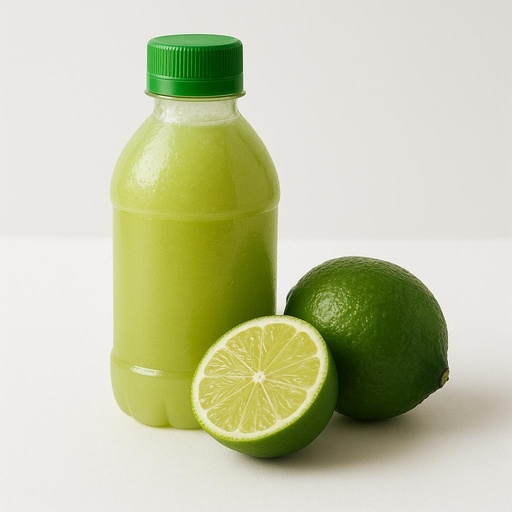
Lime Concentrate Prices & Trade in Canada — Market Overview 2026
Raw Materials
Fresh Lime
HS Code
200939
Last Updated
2026-10-29
Key takeaways for search and sourcing teams
- 5 export partner countries and 5 import partner countries are ranked.
- Latest reference year in this page dataset is 2024.
- Page data last updated on 2026-10-29.
Lime Concentrate Export Supplier & Manufacturer Intelligence, Price Trends, and Trade Flows in Canada
Use Supply Chain Intelligence company profiles and analytics to validate Lime Concentrate exporter coverage, partner quality, and route priorities in Canada.
Annual Export Value, Volume, and Supplier Market Size for Lime Concentrate in Canada (HS Code 200939)
Analyze 3 years of Lime Concentrate export volume and value in Canada to evaluate supplier market growth, seasonality, and trade volatility.
| Year | Volume | Value |
|---|---|---|
| 2024 | 667,905 | 497,321 USD |
| 2023 | 747,512 | 830,507 USD |
| 2022 | 590,593 | 690,865 USD |
Top Destination Markets for Lime Concentrate Exports from Canada (HS Code 200939) in 2024
For 2024, compare export volume and value across the top 5 destination countries for Lime Concentrate exports from Canada.
| Rank | Country | Volume | Value |
|---|---|---|---|
| 1 | United States | 607,310 | 412,427.038 USD |
| 2 | Netherlands | 29,392 | 41,253.585 USD |
| 3 | Saint Pierre and Miquelon | 18,390 | 26,729.279 USD |
| 4 | New Zealand | 11,280 | 14,820.795 USD |
| 5 | France | 993 | 1,380.207 USD |
Tridge Ark · Sourcing Feasibility Check
Could you be importing Lime Concentrate from Canada yourself?
Just tell us your spec and the volume you need. We'll check whether it's actually sourceable, and which origins and suppliers fit.
Free feasibility check, no account required.
Lime Concentrate Import Buyer Intelligence and Price Signals in Canada: Buyers, Demand, and Trade Partners
Exporters and importers can use Supply Chain Intelligence company profiles and analytics to analyze Lime Concentrate buyer demand, partner density, and downstream channels in Canada.
Annual Import Value, Volume, and Demand Size for Lime Concentrate in Canada (HS Code 200939)
Track 3 years of Lime Concentrate import volume and value in Canada to assess demand growth and market momentum.
| Year | Volume | Value |
|---|---|---|
| 2024 | 7,652,175 | 18,191,985 USD |
| 2023 | 5,359,991 | 17,475,188 USD |
| 2022 | 7,693,515 | 21,220,402 USD |
Top Origin Supplier Countries Supplying Lime Concentrate to Canada (HS Code 200939) in 2024
For 2024, compare import volume and value across the top 5 origin supplier countries supplying Lime Concentrate to Canada.
| Rank | Country | Volume | Value |
|---|---|---|---|
| 1 | United States | 3,669,075.614 | 8,691,597.449 USD |
| 2 | Argentina | 1,821,884.229 | 4,218,426.063 USD |
| 3 | Spain | 434,540 | 1,025,154.979 USD |
| 4 | Mexico | 491,463.536 | 1,022,708.58 USD |
| 5 | Brazil | 488,594.922 | 883,909.411 USD |
Tridge Ark · Export Feasibility Check
Your Lime Concentrate — could it sell to these buyers in Canada?
Just tell us what you make. We'll see whether you're ready to export today and which markets suit your offer.
Free feasibility check, no account required.
Classification
Product TypeIngredient
Product FormConcentrate
Industry PositionProcessed Fruit Ingredient
Market
In Canada, lime concentrate is primarily an import-supplied ingredient used by food and beverage manufacturers and foodservice for flavouring and formulation. Importers and downstream handlers are expected to comply with CFIA requirements under the Safe Food for Canadians Regulations (SFCR), including preventive controls and traceability documentation where applicable. The product typically enters as bulk concentrate (commonly frozen or aseptic) and is distributed through ingredient importers/distributors to industrial users. While tariff treatment depends on classification and origin, Canada’s Customs Tariff lists duty-free treatment for relevant citrus juice headings, making compliance and logistics the more material operational constraints than customs duty.
Market RoleNet importer (import-dependent processing and consumer market)
Domestic RoleIndustrial ingredient for domestic food and beverage manufacturing; limited domestic primary production of limes due to climate constraints
SeasonalityAvailability is typically year-round because concentrate can be stored (frozen or aseptic), though input fruit supply shocks in major producing countries can create price volatility.
Specification
Physical Attributes
- Color and aroma profile consistency (clarified vs. cloudy specifications)
- Turbidity/insoluble solids control (pulp content where specified)
Compositional Metrics
- Soluble solids (°Brix) as a core concentrate specification metric
- Acidity and pH (often expressed as titratable acidity) for flavour standardization
Grades
- Clarified vs. cloudy concentrate specifications
- Frozen vs. aseptic (ambient-stable) concentrate presentation
Packaging
- Aseptic bag-in-drum or bag-in-box for bulk industrial supply
- Frozen drums/pails for frozen concentrate programs
- Intermediate bulk containers (IBCs) for industrial users where applicable
Supply Chain
Value Chain
- Origin fruit processing (extraction/filtration/concentration) → bulk packing (aseptic or frozen) → international transport → Canadian importer under SFCR obligations → bulk storage/handling → distribution to manufacturers/foodservice or further processing
Temperature
- Frozen concentrate programs require continuous low-temperature control through transport and storage
- Aseptic concentrate is commonly handled as ambient-stable until opened, then managed under food-safety and quality controls
Shelf Life
- Shelf life depends strongly on packaging system (aseptic vs. frozen), storage conditions, and post-opening handling controls
Freight IntensityMedium
Transport ModeMultimodal
Risks
Regulatory Compliance HighNon-compliance with SFCR import requirements (licensing where required, preventive control plan obligations where applicable, and traceability documentation/label requirements) can result in shipment detention, enforcement action, or recall exposure, disrupting supply to Canadian industrial users.Verify SFCR licensing/PCP applicability for the specific product and activity, maintain supplier approval/COA workflows, and ensure traceability records (lot identifiers, supplier/customer links) are accessible in Canada and producible on demand.
Supply Concentration MediumLimes are grown in tropical climates and production is concentrated in major origin countries; weather shocks and disease pressures in those regions can tighten global lime availability and raise concentrate input costs for Canadian buyers.Diversify approved origins/suppliers, use forward contracts where feasible, and maintain alternative formulations or buffered inventory for high-usage SKUs.
Logistics MediumBulk concentrate programs are exposed to container availability and freight-rate volatility; frozen concentrate adds reefer-capacity and cold-chain integrity risk, which can cause delays or quality degradation if mishandled.Specify packaging and temperature regime in contracts (aseptic vs. frozen), qualify carriers/lanes, and implement receiving QC checks aligned to product specifications.
Labor And Human Rights MediumForced-labour compliance risk can arise anywhere in upstream agricultural and processing supply chains; Canada’s forced-labour import prohibition elevates the consequence of insufficient due diligence for importers and brand owners.Implement supplier labour due diligence and documentation aligned to forced-labour risk screening, and maintain evidence packages for high-risk geographies and subcontracted processing steps.
Sustainability
- Water stewardship risks associated with irrigated citrus production in origin countries supplying concentrate
- Pesticide residue and agrochemical stewardship scrutiny for citrus-derived ingredients
Labor & Social
- Canada prohibits the importation of goods produced wholly or in part by forced labour (Customs Tariff amendment in force since 2020), increasing the need for origin-country labour due diligence in supply chains.
- Supply chain transparency expectations increased with the Fighting Against Forced Labour and Child Labour in Supply Chains Act (in force since 2024) for in-scope entities.
FAQ
Do Canadian importers of lime concentrate need a preventive control plan (PCP) under SFCR?In many cases, importers are required to have preventive controls in place and may need a written PCP under the Safe Food for Canadians Regulations, depending on the food and activities involved. CFIA guidance for importers describes the PCP as the documented plan for how the importer ensures imported food is safe and meets Canadian requirements.
What traceability approach is expected in Canada for imported processed fruit products like lime concentrate?CFIA describes SFCR traceability as tracking food forward to the immediate customer and back to the immediate supplier (one step forward/one step back), aligned to Codex principles. Where applicable, businesses must keep traceability documents and be able to provide them to CFIA upon request within required timelines.
Are customs duties typically a major cost driver for lime concentrate imported into Canada?Canada’s Customs Tariff lists a duty rate of Free for relevant citrus juice headings (including HS 2009.31 and 2009.39 for juice of other single citrus fruits), subject to correct tariff classification. In practice, compliance and logistics often matter more than customs duty for delivered cost risk management.
Sources
Other Lime Concentrate Country Markets for Supplier, Manufacturer, Export, and Price Comparison from Canada
Compare Lime Concentrate supplier coverage, trade flows, and price benchmarks across countries related to Canada.


Tridge Ark · Export & Sourcing Feasibility Checks
Lime Concentrate in Canada — are you buying, or selling?
Either way it's a few questions. We'll come back with where you could buy it, or who you could sell it to.
Free feasibility check, no account required.
Related Lime Concentrate Product Categories
Browse parent, sub, derived, and raw-material product market pages related to Lime Concentrate.
Raw materials: Fresh Lime
By clicking “Accept Cookies,” I agree to provide cookies for statistical and personalized preference purposes. To learn more about our cookies, please read our Privacy Policy.