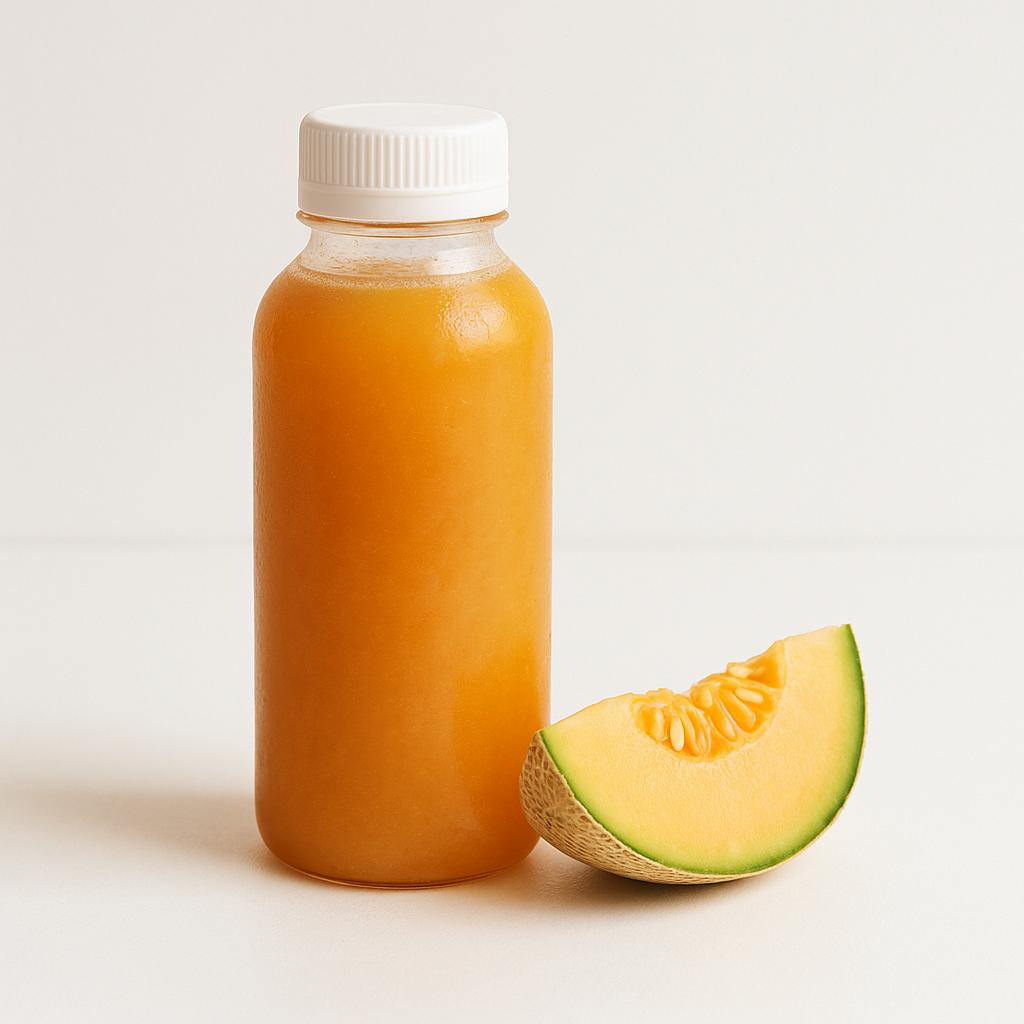
Melon Concentrate Suppliers & Prices in South Korea — Market Overview 2026
Raw Materials
Fresh Melon
HS Code
210690
Last Updated
2026-10-19
Key takeaways for search and sourcing teams
- 5 export partner countries and 5 import partner countries are ranked.
- Latest reference year in this page dataset is 2024.
- Page data last updated on 2026-10-19.
Melon Concentrate Export Supplier & Manufacturer Intelligence, Price Trends, and Trade Flows in South Korea
Use Supply Chain Intelligence company profiles and analytics to validate Melon Concentrate exporter coverage, partner quality, and route priorities in South Korea.
Annual Export Value, Volume, and Supplier Market Size for Melon Concentrate in South Korea (HS Code 210690)
Analyze 3 years of Melon Concentrate export volume and value in South Korea to evaluate supplier market growth, seasonality, and trade volatility.
| Year | Volume | Value |
|---|---|---|
| 2024 | 197,710,249 | 900,740,990 USD |
| 2023 | 193,928,795 | 847,282,196 USD |
| 2022 | 187,036,286 | 730,438,126 USD |
Top Destination Markets for Melon Concentrate Exports from South Korea (HS Code 210690) in 2024
For 2024, compare export volume and value across the top 5 destination countries for Melon Concentrate exports from South Korea.
| Rank | Country | Volume | Value |
|---|---|---|---|
| 1 | China | 9,329,622 | 214,401,327 USD |
| 2 | Japan | 84,458,430 | 110,969,128 USD |
| 3 | Vietnam | 11,858,201 | 103,277,510 USD |
| 4 | United States | 11,055,939.269 | 81,630,038 USD |
| 5 | Indonesia | 22,607,980 | 71,547,420 USD |
Tridge Ark · Sourcing Feasibility Check
Could you be importing Melon Concentrate from South Korea yourself?
Just tell us your spec and the volume you need. We'll check whether it's actually sourceable, and which origins and suppliers fit.
Free feasibility check, no account required.
Melon Concentrate Import Buyer Intelligence and Price Signals in South Korea: Buyers, Demand, and Trade Partners
5 import partner companies are tracked for Melon Concentrate in South Korea. Exporters and importers can use Supply Chain Intelligence company profiles and analytics to analyze buyer demand, partner density, and downstream channels.
Scatter points are sampled from 100.0% of the full transaction dataset. Each point is a real transaction — click one to see its details and ask AI Chat whether it was a fair deal.
Sample Import Transaction and Price Records for Melon Concentrate in South Korea
5 sampled Melon Concentrate import transactions in South Korea provide date, origin, and trade-country context to benchmark price levels and demand-side trading patterns.
Melon Concentrate sampled import transaction unit prices by date in South Korea: 2026-09-23: 3.97 USD / kg, 2026-09-21: 5.51 USD / kg, 2026-08-27: 32.80 USD / kg, 2026-08-10: 3.97 USD / kg, 2026-08-07: 5.81 USD / kg.
| Date | Reported Product | Unit Price | Exporter | Importer | Origin | |
|---|---|---|---|---|---|---|
| 2026-09-23 | [당류**** **** ************** ***** | 3.97 USD / kg | (-) | (-) | - | |
| 2026-09-21 | [과.***** ***************** *********** | 5.51 USD / kg | (-) | (-) | - | |
| 2026-08-27 | [향료* *** ****** ********* ****** ****** ** | 32.80 USD / kg | (-) | (-) | - | |
| 2026-08-10 | [당류**** **** ************** ***** | 3.97 USD / kg | (-) | (-) | - | |
| 2026-08-07 | [과.***** ***************** ********** ***** *********** **** | 5.81 USD / kg | (-) | (-) | - |
These 5 rows are a sample — open Melon Concentrate transactions in South Korea on Tridge Eye
Each record shows the exporter, importer and unit price. Ask AI Chat whether the deal was fair, or turn the records into an AI Curation.
Sign up and verify your company — newly verified companies get Tridge Eye Business free for the first month.
Top Melon Concentrate Buyers, Importers, and Demand Partners in South Korea
Review leading buyer profiles and compare them with 5 total import partner companies tracked for Melon Concentrate in South Korea. Exporters and importers can use Supply Chain Intelligence company profiles and analytics to evaluate demand-side partner fit.
(South Korea)
Latest Import Transaction: 2026-09-19
Industries: Others
Value Chain Roles: Others
(South Korea)
Latest Import Transaction: 2026-09-19
Employee Size: Over 1000 Employees
Sales Revenue: USD Over 1B
Industries: Food Manufacturing
Value Chain Roles: Food Manufacturing
(South Korea)
Latest Import Transaction: 2026-09-19
Industries: Food Manufacturing
Value Chain Roles: Distribution / Wholesale, Food Manufacturing, Trade
(South Korea)
Latest Import Transaction: 2026-09-19
Employee Size: 101 - 500 Employees
Sales Revenue: USD 10M - 50M
Industries: Food Manufacturing
Value Chain Roles: Food Manufacturing
(South Korea)
Latest Import Transaction: 2026-09-19
Employee Size: 101 - 500 Employees
Industries: Beverage Manufacturing, Food Manufacturing, Food Packaging
Value Chain Roles: Distribution / Wholesale, Food Manufacturing
See the full picture in Tridge Eye: full price and trade history · 725,009+ company profiles
South Korea Import Partner Coverage
5 companies
Import partner company count highlights demand-side visibility for Melon Concentrate in South Korea.
Use Supply Chain Intelligence analytics and company profiles to identify active Melon Concentrate importers, distributors, and buyer networks in South Korea.
Annual Import Value, Volume, and Demand Size for Melon Concentrate in South Korea (HS Code 210690)
Track 3 years of Melon Concentrate import volume and value in South Korea to assess demand growth and market momentum.
| Year | Volume | Value |
|---|---|---|
| 2024 | 131,912,739 | 2,069,463,917 USD |
| 2023 | 133,299,128 | 2,182,851,291 USD |
| 2022 | 137,879,850 | 2,275,861,336 USD |
Top Origin Supplier Countries Supplying Melon Concentrate to South Korea (HS Code 210690) in 2024
For 2024, compare import volume and value across the top 5 origin supplier countries supplying Melon Concentrate to South Korea.
| Rank | Country | Volume | Value |
|---|---|---|---|
| 1 | United States | 18,547,740 | 1,020,348,114 USD |
| 2 | Germany | 9,648,587 | 235,336,891 USD |
| 3 | China | 15,961,990 | 113,521,641 USD |
| 4 | New Zealand | 13,676,835 | 93,366,386 USD |
| 5 | Canada | 1,557,120.5 | 74,527,540 USD |
Tridge Ark · Export Feasibility Check
Your Melon Concentrate — could it sell to these buyers in South Korea?
Just tell us what you make. We'll see whether you're ready to export today and which markets suit your offer.
Free feasibility check, no account required.
Classification
Product TypeIngredient
Product FormConcentrate
Industry PositionProcessed Fruit Ingredient
Market
In South Korea, melon concentrate is primarily a B2B ingredient used in fruit/vegetable beverage formulations and related processed products rather than a mainstream consumer retail item. Imports are governed by the Ministry of Food and Drug Safety (MFDS) under the Special Act on Imported Food Safety Control, including mandatory registration of foreign food facilities before import declaration and the possibility of MFDS on-site inspection. Product acceptance is closely tied to MFDS Food Code specifications for fruit and vegetable beverage categories, including raw-material Brix benchmarks for melon extract and safety specifications (e.g., heavy metal and microbiological limits) applicable to the relevant beverage/juice categories. The market therefore functions mainly as an import-dependent processing market where compliance readiness and documentation quality are central to avoiding clearance disruption.
Market RoleImport-dependent ingredient and processing market (downstream beverage/food manufacturing)
Domestic RoleDownstream ingredient for fruit/vegetable beverage manufacturing and formulation
Market GrowthNot Mentioned
Specification
Compositional Metrics
- MFDS Food Code (Article 5) indicates the sugar content (Brix°) of 100% extract of melon used in beverages should be not less than 6°.
- MFDS Food Code (Article 5) for fruit and vegetable beverage categories lists safety specifications such as limits for lead and cadmium and microbiological criteria (e.g., total bacteria and coliform-related criteria depending on heat treatment status).
Supply Chain
Value Chain
- Overseas fruit processing/concentration → foreign facility registration to MFDS (prior to import declaration) → sea freight → Korean importer import declaration → border inspection (document review/field inspection/sampling as applicable) → delivery to beverage/food processors
Freight IntensityMedium
Transport ModeSea
Risks
Regulatory Compliance HighMFDS requires foreign food facility registration to be completed before import declaration, and the Special Act framework allows import disruption when registration obligations are not met; MFDS also states it may suspend imports when on-site inspection is refused/avoided or hazard concerns exist, creating a direct market-access failure risk for melon concentrate shipments tied to a non-compliant facility.Ensure the manufacturing/processing site is registered in MFDS (Imported Food Information Maru) before shipment planning; maintain registration validity/updates, and establish a rapid-response protocol to MFDS on-site inspection notices through the Korean importer.
Food Safety MediumMFDS Food Code specifications for fruit and vegetable beverage categories include compositional benchmarks (e.g., Brix for melon extract used in beverages) and safety specifications (e.g., heavy metals and microbiological criteria depending on product type/heat treatment); non-compliance can trigger intensified inspection, clearance delays, or rejection.Align the product specification and COA/testing plan to the MFDS Food Code requirements applicable to the intended category (e.g., concentrated fruit/vegetable juice vs. beverage use); perform pre-shipment verification and retain traceable batch test documentation.
Logistics MediumBulk import logistics (typically sea freight) and freight-rate volatility can materially change landed cost and disrupt production schedules for downstream Korean beverage processors, especially when shipments are delayed into planned manufacturing windows.Use buffer inventory planning and dual sourcing where feasible; lock freight capacity during peak seasons and align incoterms and lead times with downstream production schedules.
FAQ
Is MFDS registration of the foreign manufacturing facility required before importing melon concentrate into South Korea?Yes. MFDS states that registration of foreign food facilities is a mandatory requirement for exporting products to Korea and that the registration must be completed before import declaration, using the Imported Food Information Maru system.
What is a key compositional benchmark in MFDS standards relevant to melon-based juice inputs used in beverages?MFDS Food Code (Article 5) lists minimum sugar content (Brix°) benchmarks for 100% fruit/vegetable extracts used in beverages; for melon, the listed benchmark is not less than 6° Brix.
Can MFDS suspend imports if a foreign facility refuses an on-site inspection?Yes. MFDS describes that if the exporting-country government or a foreign food facility refuses, interrupts, or avoids an on-site inspection (including no response without lawful reasons), MFDS will suspend the importation of the food products of the foreign food facility concerned.
Sources
Other Melon Concentrate Country Markets for Supplier, Manufacturer, Export, and Price Comparison from South Korea
Compare Melon Concentrate supplier coverage, trade flows, and price benchmarks across countries related to South Korea.


Tridge Ark · Export & Sourcing Feasibility Checks
Melon Concentrate in South Korea — are you buying, or selling?
Either way it's a few questions. We'll come back with where you could buy it, or who you could sell it to.
Free feasibility check, no account required.
Related Melon Concentrate Product Categories
Browse parent, sub, derived, and raw-material product market pages related to Melon Concentrate.
Raw materials: Fresh Melon
By clicking “Accept Cookies,” I agree to provide cookies for statistical and personalized preference purposes. To learn more about our cookies, please read our Privacy Policy.