US Chicken Re-Enters Chinese Market after Five Years
While exports of US chicken to China and Hong Kong only take up approximately 2% of the total poultry export revenue, the chicken paw market is an extremely profitable sector. Chicken paws within China have a product value that ranges from USD 0.6 to 1 per pound, unmatched by any other markets, while it is valued at around USD 0.05 per pound in the US. Approximately 50 percent of the chicken products sold consist of wings and paws.
Trade Wars: How US Chicken Was Banned from China
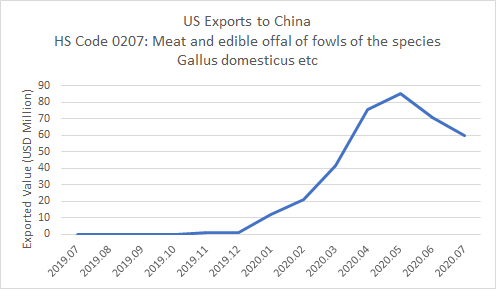
The Phase One deal finalized in January 2020 signified the elimination of the ban on importing US chicken since 2015. Lifted during the preliminary stages of the deal in November last year, the ban had been caused by an ongoing trade conflict between China and the US since 2010.
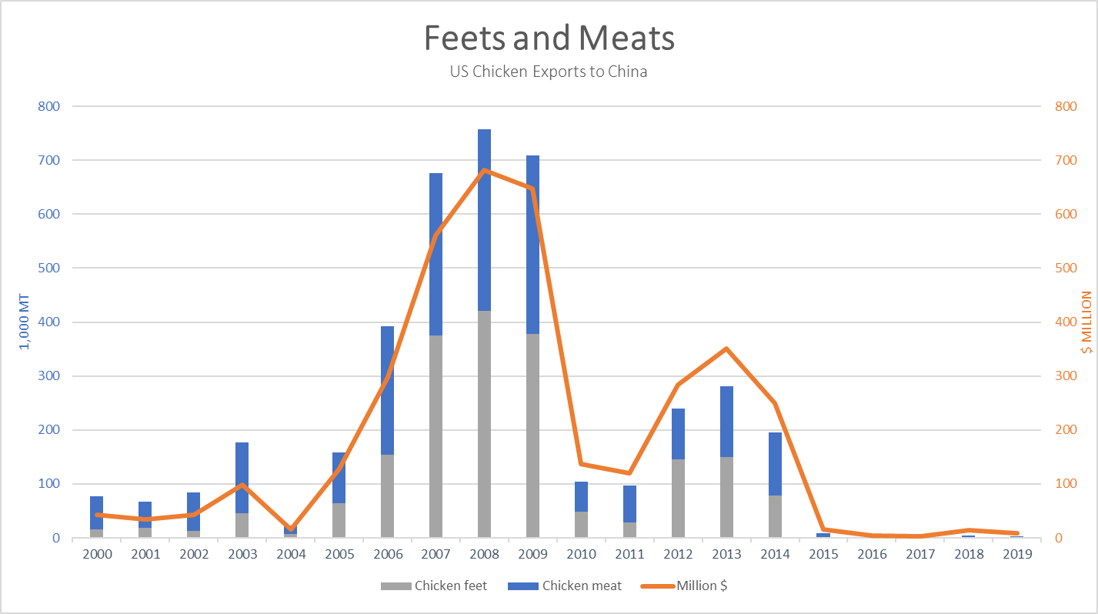
In 2008 prior to the clash, the US had exported over 420K tons of chicken paws to China that year alone. In 2009, however, the US International Trade Commission concluded that the sharp increase in tire imports to the US was adversely affecting US tire suppliers, which led the country to impose ad valorem (levying taxes or duties proportionate to the estimated value of a product) tariffs on Chinese tire imports since 2010.
Subsequently, China imposed anti-dumping duties of up to 105.4 percent on US broiler chicken imports. Exports of US chicken meats and paws declined noticeably as a result. While China lowered its duties to a maximum of 73.8 percent in 2014 and the US won its case against China in a WTO suit in 2018, by then the import ban had already been imposed from the avian influenza outbreak in the US.
Since the retaliatory tariffs were imposed in 2010, US chicken part exports to China decreased by approximately 90% (2011). The third-biggest US chicken producer Sanderson reported a US 50 million drop in gross profit from the regulations, including sales of the popularly consumed chicken wings and paws. In 2019, China is thought to have imported a mere 375K MT of all chicken products, which is considerably lower than the 400K tons of chicken paws imported before the regulations were put in place.
While some of the leftover chicken paws in the US were used as animal feed, a large portion of the excess products were simply left hanging. During this time, other chicken producers such as Brazil, Europe, and Middle Eastern countries stepped up to fill the gap while black markets were formed for US chicken paw imports to China. This involved US producers exporting the products to a third-party country and then relabeling and re-exporting them to China.
Source: USDA
Export Situation in 2020
Even with the Phase One deal in effect, additional import duties for the US plays a disadvantageous role despite the US’s cheaper and higher quality chicken, However, it is still estimated that US chicken paw exports to China could possibly reach a yearly value of nearly USD 1 billion.
In early 2020, US chicken exports to China suffered when China put a stop to chicken imports amid concerns of the spreading of the coronavirus. The situation was also fueled by decreased demand from the hospitality sector as suppliers scrambled to find alternative markets. With life in China mostly returning to its normal state and African Swine Fever having significantly lowered Chinese pork production this year, however, consumers are also expected to have increased interest in products of alternative protein sources like chicken.
Sources
- The New York Times. “Chewy Chicken Feet May Quash a Trade War.”
- The Washington Post. “US, China embroiled in trade spat over chicken feet.”
- Bloomberg. “US Chicken Feet Entering China May Presage New Trading Era.”
- Reuters. “United States wins WTO chicken ruling against China.”
- China Business Review. “ A Game of Chicken.”
- Bangkok Post. “The rise and fall of US chicken feet in China."