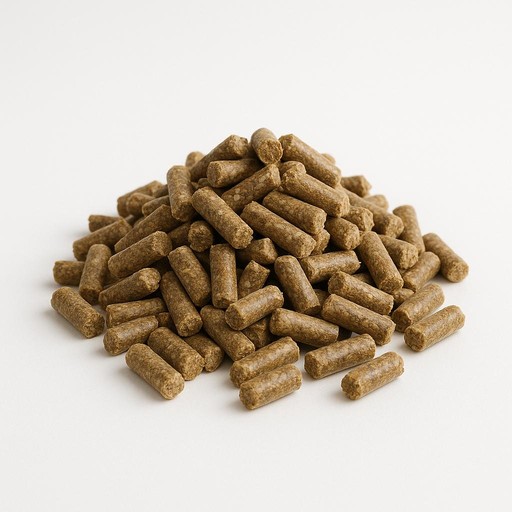
Cattle Feed Prices & Trade in Laos — Market Overview 2026
Sub Product
Beef Cow Feed, Calf Feed, Dairy Cow Feed
Last Updated
2026-10-19
Key takeaways for search and sourcing teams
- Page data last updated on 2026-10-19.
Tridge Ark · Sourcing Feasibility Check
Could you be importing Cattle Feed from Laos yourself?
Just tell us your spec and the volume you need. We'll check whether it's actually sourceable, and which origins and suppliers fit.
Free feasibility check, no account required.
Cattle Feed Import Buyer Intelligence and Price Signals in Laos: Buyers, Demand, and Trade Partners
Exporters and importers can use Supply Chain Intelligence company profiles and analytics to analyze Cattle Feed buyer demand, partner density, and downstream channels in Laos.
Scatter points are sampled from 14.9% of the full transaction dataset. Each point is a real transaction — click one to see its details and ask AI Chat whether it was a fair deal.
Sample Import Transaction and Price Records for Cattle Feed in Laos
5 sampled Cattle Feed import transactions in Laos provide date, origin, and trade-country context to benchmark price levels and demand-side trading patterns.
Cattle Feed sampled import transaction unit prices by date in Laos: 2026-08-20: 0.35 USD / kg, 2026-08-12: 0.35 USD / kg, 2026-08-08: 0.38 USD / kg, 2026-08-06: 0.38 USD / kg, 2026-01-21: 0.23 USD / kg.
| Date | Reported Product | Unit Price | Exporter | Importer | Origin | |
|---|---|---|---|---|---|---|
| 2026-08-20 | Flo** **** * **** **** ********* *** ********** ** ****** ********** ******* *** **** *** ***************************** ********** *** ***** ************ | 0.35 USD / kg | (-) | (-) | - | |
| 2026-08-12 | Flo** **** * ******** ********* *** ********** ** ****** ********** ******* *** **** *** ***************************** ********** *** ***** ************ | 0.35 USD / kg | (-) | (-) | - | |
| 2026-08-08 | Flo** **** * ******** ********* *** ********** ** ****** ********** ******* *** **** *** ***************************** ********** *** ***** ************ | 0.38 USD / kg | (-) | (-) | - | |
| 2026-08-06 | Flo** **** * ******** ********* *** ********** ** ****** ********** ******* *** **** *** ***************************** ********** *** ***** ************ | 0.38 USD / kg | (-) | (-) | - | |
| 2026-01-21 | Mix** **** ****** ******* ******** *** *** ********* *** ****** ***** ****** ***** *** ****** ** ******* *** ***** ************ | 0.23 USD / kg | (-) | (-) | - |
These 5 rows are a sample — open Cattle Feed transactions in Laos on Tridge Eye
Each record shows the exporter, importer and unit price. Ask AI Chat whether the deal was fair, or turn the records into an AI Curation.
Sign up and verify your company — newly verified companies get Tridge Eye Business free for the first month.
Tridge Ark · Export Feasibility Check
Your Cattle Feed — could it sell to these buyers in Laos?
Just tell us what you make. We'll see whether you're ready to export today and which markets suit your offer.
Free feasibility check, no account required.
Classification
Product TypeIndustrial Product
Product FormProcessed (compound feed / concentrate / premix)
Industry PositionAnimal Nutrition Input (Livestock Production Supply Chain)
Market
Cattle feeding in Lao PDR is largely forage-based in smallholder systems, with growing interest in more commercialized cattle fattening and breeding value chains that increase attention to reliable feed supply and quality. Animal feed is regulated under the Government’s Decree on Animal Feed (No. 02/GoL, dated 02 January 2020), which requires registration before producing or importing and sets import-permit and checkpoint-inspection requirements overseen by the Department of Livestock and Fisheries (DLF) under the Ministry of Agriculture and Forestry. Because Lao PDR is landlocked and cattle feed is freight-intensive, cross-border trucking costs and border formalities materially shape landed costs and availability. Recent private investment announcements in feed milling in Lao PDR signal an expanding domestic manufacturing base, though product lines (ruminant vs. monogastric feed) vary by operator. Feed-resource adequacy remains a constraint in some highland systems, making improved feeding practices and feed-resource assessments a policy and development focus.
Market RoleImport-dependent consumer market with emerging domestic feed manufacturing capacity; cattle feeding remains predominantly forage-based with increasing use of commercial supplements and concentrates
Domestic RoleKey production input supporting cattle fattening/breeding development and broader livestock productivity initiatives
Market GrowthMixed (medium-term outlook)
Specification
Physical Attributes
- Packaging and labeling must be consistent with registered product information under Lao PDR’s animal feed management rules.
Compositional Metrics
- Declared nutrient composition elements commonly referenced in import documentation include protein, fat, minerals/vitamins, moisture, and fiber (per DLF import requirements referenced in Lao technical regulation).
Packaging
- Safe container/packaging and labeling consistent with registration information are explicitly required for import and sale of animal feed under the Decree on Animal Feed.
Supply Chain
Value Chain
- Supplier/manufacturer documentation and product details prepared → DLF feed registration (as applicable) and import permit application → pre-import sampling/analysis requirements (where applied) → cross-border transport to permitted checkpoints → veterinary officer inspection/validation at checkpoints → customs clearance and inland distribution to dealers/farms
Shelf Life
- Import documentation requirements include manufacture and expiry information, implying the need for expiry-aligned inventory controls for feed and premixes.
Freight IntensityHigh
Transport ModeLand
Risks
Regulatory Compliance HighLao PDR requires animal feed products to be registered and importers to be permitted before importing for sale, with imports routed through permitted checkpoints and subject to veterinary inspection/validation; technical rules also reference a DLF import application form (R.004) and pre-import documentation and sampling/lab analysis expectations. Non-compliance or documentation/product mismatch can lead to delay, suspension/cancellation of registration, recall, or destruction of unsafe/unregistered feed under the Decree on Animal Feed.Complete DLF feed registration and importer permitting before contracting shipments; align label/recipe information to the registered dossier; obtain required quality certificates from origin authorities and, where applicable, submit samples to the national animal feed laboratory within required lead times; run a pre-shipment document check against DLF requirements and ensure entry via licensed checkpoints.
Logistics MediumAs a landlocked country with high transport costs, Lao PDR’s supply of freight-intensive bulk products like animal feed and feed ingredients is sensitive to trucking rates, fuel costs, and border processing disruptions, affecting landed costs and availability for cattle producers.Use multi-supplier routing via Thailand/Vietnam corridors where feasible; build buffer stocks for critical premixes/minerals; consider local milling/finishing options and local raw material inclusion where compliant with feed registration and quality rules.
Feed Safety MediumThe Decree on Animal Feed emphasizes management of feed quality, safety, and contaminants, and empowers the Ministry of Agriculture and Forestry to define permitted/non-permitted contaminant lists and levels; imports failing quality standards referenced in origin certificates or national technical requirements may be prohibited or subject to enforcement actions.Implement supplier QA with routine contaminant/mycotoxin screening (as relevant to ingredient mix), retain certificates of analysis and quality certificates, and maintain lot-level records aligned to the registered formulation and labeling.
Sustainability MediumResearch on northern Laos documents negative environmental outcomes associated with rapid hybrid maize expansion, including soil and forest degradation and deforestation pressures, which can create reputational, sourcing, and long-run productivity risks for downstream users relying on maize-linked feed supply chains.Adopt responsible sourcing practices for maize-linked inputs (e.g., land-use risk screening, supplier engagement on soil conservation and forest protection) and diversify ingredient baskets where nutritionally and economically feasible.
Sustainability
- Land-use change and soil/forest degradation risks linked to hybrid maize expansion in northern Laos, relevant to feed ingredient supply chains where maize is produced for livestock feeding markets
- Boom-bust commodity dynamics in maize production can create environmental and livelihood pressures that downstream buyers may treat as ESG and supply stability risks
Labor & Social
- Smallholder vulnerability to price volatility, debt, and unequal bargaining power in maize expansion/contract-farming networks in northern Laos, relevant where maize contributes to livestock feed value chains
FAQ
Do imported cattle feed products need to be registered before they can be sold in Lao PDR?Yes. The Decree on Animal Feed (No. 02/GoL, dated 02 January 2020) requires animal feed to be registered before it is produced, imported, exported, transited, or distributed for business purposes in Lao PDR, with registration tied to labeling and ingredient/recipe information managed by the livestock and fisheries authority.
Which authority is referenced for import permits and feed registration in Lao PDR?The Decree on Animal Feed assigns animal feed registration and import-related oversight to the livestock and fisheries authority under the Ministry of Agriculture and Forestry, commonly referenced as the Department of Livestock and Fisheries (DLF), including inspection/validation by veterinary officers at permitted border checkpoints.
What documents are commonly referenced for importing animal feed into Lao PDR?Lao technical regulation and the Decree on Animal Feed reference a DLF import application process (including Form R.004 in the technical regulation), importer permissions, a quality certificate from a competent authority in the country of origin/manufacture showing composition and manufacture/expiry details, and product labeling/recipe information consistent with the registered feed dossier.
Sources
Other Cattle Feed Country Markets for Supplier, Export, and Price Comparison from Laos
Compare Cattle Feed supplier coverage, trade flows, and price benchmarks across countries related to Laos.


Tridge Ark · Export & Sourcing Feasibility Checks
Cattle Feed in Laos — are you buying, or selling?
Either way it's a few questions. We'll come back with where you could buy it, or who you could sell it to.
Free feasibility check, no account required.
Related Cattle Feed Product Categories
Browse parent, sub, derived, and raw-material product market pages related to Cattle Feed.
By clicking “Accept Cookies,” I agree to provide cookies for statistical and personalized preference purposes. To learn more about our cookies, please read our Privacy Policy.