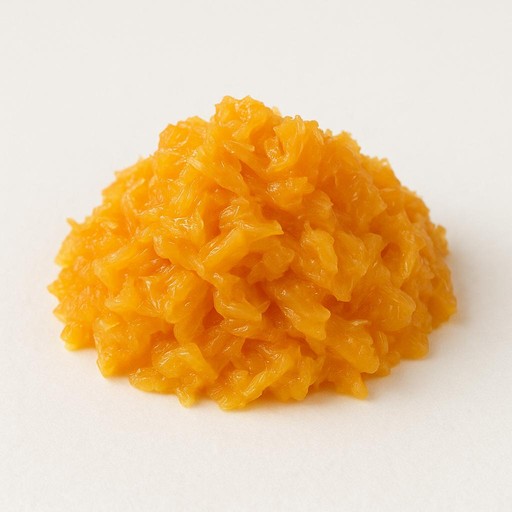
Orange Pulp Suppliers & Prices in Germany — Market Overview 2026
Sub Product
Orange Pulp Cell, Orange Pulp Segment
Derived Products
Orange Juice Beverage
Last Updated
2026-10-19
Key takeaways for search and sourcing teams
- 1 sampled export transactions for Germany are summarized.
- Page data last updated on 2026-10-19.
Orange Pulp Export Supplier Intelligence, Price Trends, and Trade Flows in Germany
3 export partner companies are tracked for Orange Pulp in Germany. Use Supply Chain Intelligence company profiles and analytics to validate exporter coverage, partner quality, and route priorities.
Explore Orange Pulp export intelligence in Germany, including 1 sampled supplier transactions, monthly unit-price ranges, and partner-country trade flow patterns for HS Code -.
Scatter points are sampled from 100.0% of the full transaction dataset. Each point is a real transaction — click one to see its details and ask AI Chat whether it was a fair deal.
Sample Export Supplier Transaction Records for Orange Pulp in Germany
1 sampled Orange Pulp transactions in Germany include date, origin, and partner-country context to benchmark export prices and supplier trading patterns.
Orange Pulp sampled transaction unit prices by date in Germany: 2025-10-30: 9.87 USD / kg.
| Date | Reported Product | Unit Price | Exporter | Importer | |
|---|---|---|---|---|---|
| 2025-10-30 | STC ** **** ** ******* ****** ***** ***** ***** **** ******* | 9.87 USD / kg | (Germany) | (Philippines) |
See These Germany Orange Pulp Shipments — and at What Price
Free account — open the full market in Tridge Eye
Sign up and verify your company — newly verified companies can try Tridge Eye Business free.
Top Orange Pulp Export Suppliers and Companies in Germany
Review leading exporter profiles and benchmark them against 3 total export partner companies tracked for Orange Pulp in Germany. Use Supply Chain Intelligence company profiles and analytics to shortlist sourcing and export partners faster.
(Germany)
Latest Export Transaction: 2026-09-19
Employee Size: Over 1000 Employees
Sales Revenue: USD Over 1B
Industries: Beverage Manufacturing, Food Manufacturing, Food Services And Drinking Places, Freight Forwarding And Intermodal, Online Retail And Fulfillment
Value Chain Roles: Distribution / Wholesale, Food Manufacturing, Logistics, Trade
(Germany)
Latest Export Transaction: 2026-09-19
Employee Size: 11 - 50 Employees
Industries: Food Wholesalers
Value Chain Roles: Distribution / Wholesale, Logistics, Trade
(Germany)
Latest Export Transaction: 2026-09-19
Employee Size: Over 1000 Employees
Sales Revenue: USD Over 1B
Industries: Beverage Manufacturing, Food Manufacturing, Food Wholesalers, Online Retail And Fulfillment
Value Chain Roles: Distribution / Wholesale, Food Manufacturing, Trade
See the full picture in Tridge Eye: full price and trade history · 725,009+ company profiles
Germany Export Partner Coverage
3 companies
Total export partner company count is a core signal of Germany export network depth for Orange Pulp.
Exporters and importers can open Supply Chain Intelligence company profiles and analytics to assess Orange Pulp partner concentration, capacity signals, and trade relevance in Germany.
Tridge Ark · Sourcing Feasibility Check
Could you be importing Orange Pulp from Germany yourself?
Just tell us your spec and the volume you need. We'll check whether it's actually sourceable, and which origins and suppliers fit.
Free feasibility check, no account required.
Tridge Ark · Export Feasibility Check
Your Orange Pulp — could it sell to these buyers in Germany?
Just tell us what you make. We'll see whether you're ready to export today and which markets suit your offer.
Free feasibility check, no account required.
Classification
Product TypeIngredient
Product FormProcessed (Aseptic or Frozen Pulp)
Industry PositionFood Manufacturing Ingredient
Market
Orange pulp in Germany is an import-dependent ingredient market because oranges are not produced commercially at scale in Germany’s climate, so supply is tied to global citrus processing origins. Demand is primarily downstream B2B (juice/nectar, soft drinks, dairy fruit preparations, bakery and dessert applications) rather than primary agriculture. Market access and quality expectations are shaped by EU-wide food law and controls, with common buyer specifications referencing Codex and EU industry guidance (e.g., AIJN) for orange-based products. The most material commercial uncertainties are EU border compliance (residues/contaminants/additives/traceability) and upstream supply volatility in major citrus belts affected by citrus greening (HLB) and weather.
Market RoleImport-dependent consumer and processing market (Net importer)
Domestic RoleIndustrial input for beverage and food manufacturing; minimal domestic primary production
Market GrowthNot Mentioned
SeasonalityYear-round availability is typical because product is supplied via imports and industrial storage (aseptic ambient or frozen cold-chain).
Specification
Primary VarietySweet orange (Citrus sinensis)
Secondary Variety
- Blood orange (Citrus sinensis)
Physical Attributes
- Defined pulp/cell profile (e.g., floating cells/coarse pulp as specified by buyer)
- Absence of peel/seed fragments beyond GMP tolerance
- Characteristic orange color and flavor; no off-odors
Compositional Metrics
- Identity/quality evaluation commonly uses analytical profiles (e.g., °Brix-related and acidity-related parameters) and authenticity checks in EU industry guidance for orange products
- Compliance with EU pesticide maximum residue limits (MRLs) for relevant raw materials and ingredients
- Compliance with EU maximum levels for certain contaminants, where applicable to the product category
Grades
- Buyer-specific industrial specifications (no single universal EU grade); contracts commonly define pulp content/particle profile, microbiological limits, and documentation pack
Packaging
- Aseptic bag-in-drum or bag-in-box for ambient distribution
- Frozen drums/blocks for frozen pulp routes
- Food-contact compliant packaging materials for EU placement on the market
Supply Chain
Value Chain
- Origin-country orange processing (extraction/pulping) → heat treatment (e.g., pasteurisation as applicable) → aseptic filling or freezing → sea freight to EU → German import customs filing (ATLAS) → ambient (aseptic) or cold storage (frozen) → delivery to industrial users
Temperature
- Aseptic pulp: typically handled as shelf-stable ambient cargo if integrity is maintained
- Frozen pulp: continuous frozen chain expected (commonly aligned to frozen-food practice, e.g., ≤ -18°C setpoints in logistics contracts)
Shelf Life
- Shelf life is highly sensitive to aseptic integrity (for ambient formats) and to cold-chain breaks and thaw/refreeze events (for frozen formats)
Freight IntensityHigh
Transport ModeSea
Risks
Regulatory Compliance HighEU border rejection or market withdrawal risk if orange pulp or downstream products fail EU requirements (e.g., pesticide residue exceedances, non-compliant contaminants levels, or unauthorised additive use/labeling). RASFF notifications and official controls can trigger shipment holds, intensified checks, and customer delisting.Use a pre-shipment compliance pack (COA + residue screening where relevant + additive/label review), confirm CN/TARIC classification and applicable measures, and maintain robust traceability and supplier approval aligned to EU official controls expectations.
Climate HighUpstream supply and price volatility risk from citrus greening (HLB) and adverse weather in major citrus belts feeding global orange processing, which can reduce fruit availability and increase input costs for pulp.Diversify origins/suppliers, contract with agreed quality equivalence, and maintain safety stocks sized to lead times for sea freight and potential crop-shock scenarios.
Labor And Human Rights MediumHuman-rights and reputational risk linked to documented forced-labor enforcement actions and allegations in parts of Brazil’s orange supply chain; German/EU due diligence frameworks increase scrutiny and potential remediation obligations for in-scope buyers.Run supplier mapping to farm/contractor level where feasible, screen against credible enforcement/public sources, require corrective action plans and independent audits, and document LkSG-aligned risk analysis and remediation steps.
Logistics MediumFreight rate and port disruption risk can materially affect landed cost and service levels because orange pulp is typically shipped in heavy bulk formats and often via sea freight; cold-chain failures (for frozen pulp) can create quality and claims exposure.Use forward freight planning and contingency routing, specify temperature/logging requirements for frozen cargo, and add clear acceptance criteria and claims protocols in contracts.
Sustainability
- Upstream climate and plant-disease exposure in major citrus belts can disrupt supply and increase embedded environmental impacts per delivered unit (yield shocks).
- Agrochemical use scrutiny (pesticide residues) and water stewardship expectations in citrus production areas supplying EU markets
- Packaging and cold-chain energy footprint considerations for frozen pulp routes
Labor & Social
- Documented cases and allegations of forced labor/conditions analogous to slavery in parts of Brazil’s orange supply chain have created ongoing human-rights due diligence expectations for downstream buyers.
- Germany’s Supply Chain Due Diligence Act (LkSG) increases compliance pressure for in-scope companies to identify and address human-rights risks in agricultural supply chains, including citrus-linked ingredients.
- Seasonal and migrant labor vulnerability is a recurrent risk pattern in agricultural harvesting contexts and should be addressed in supplier due diligence.
Standards
- IFS Food
- BRCGS Food Safety
- FSSC 22000
FAQ
What is the main deal-breaker compliance risk for importing orange pulp into Germany?The biggest blocker risk is EU non-compliance that leads to border rejection or withdrawal—especially pesticide residue exceedances, contaminant exceedances, or non-compliant additive use/labeling—because these can trigger official control actions and RASFF alerts.
Which system is used for import customs clearance in Germany for commercial shipments?Germany uses the ATLAS IT procedure for largely automated customs clearance and monitoring of cross-border goods traffic, so import declarations are typically handled electronically through ATLAS workflows.
What traceability level is expected for orange pulp in the EU market?EU General Food Law requires food businesses to be able to identify who they received the product from and who they supplied it to, supported by systems and procedures that can be shown to authorities on demand.
Sources


Tridge Ark · Export & Sourcing Feasibility Checks
Orange Pulp in Germany — are you buying, or selling?
Either way it's a few questions. We'll come back with where you could buy it, or who you could sell it to.
Free feasibility check, no account required.
Related Orange Pulp Product Categories
Browse parent, sub, derived, and raw-material product market pages related to Orange Pulp.
Sub products: Orange Pulp Cell, Orange Pulp Segment
Derived products: Orange Juice Beverage
By clicking “Accept Cookies,” I agree to provide cookies for statistical and personalized preference purposes. To learn more about our cookies, please read our Privacy Policy.