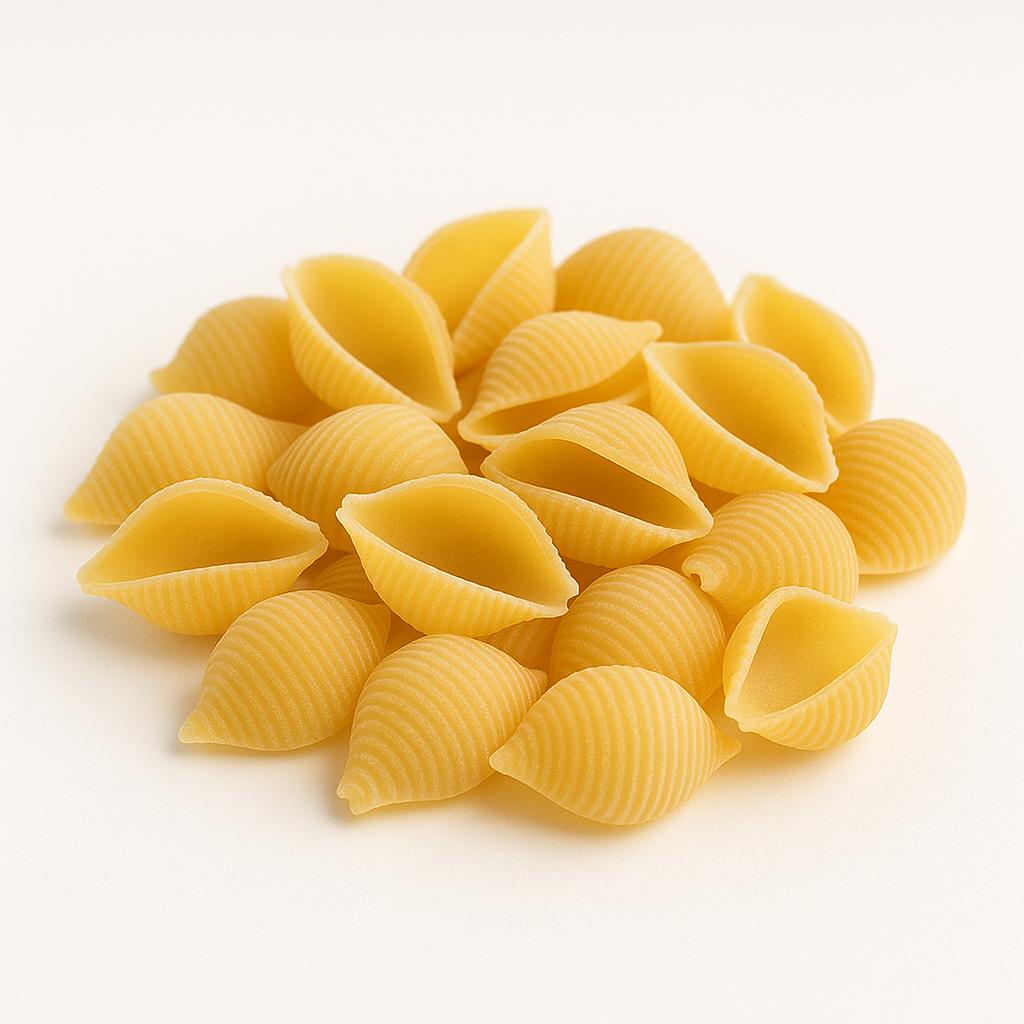
Shell-shaped Pasta Suppliers & Prices in Germany — Market Overview 2026
Parent Product
Short Pasta
Last Updated
2026-10-19
Key takeaways for search and sourcing teams
- 2 sampled export transactions for Germany are summarized.
- Page data last updated on 2026-10-19.
Shell-shaped Pasta Export Supplier Intelligence, Price Trends, and Trade Flows in Germany
2 export partner companies are tracked for Shell-shaped Pasta in Germany. Use Supply Chain Intelligence company profiles and analytics to validate exporter coverage, partner quality, and route priorities.
Explore Shell-shaped Pasta export intelligence in Germany, including 2 sampled supplier transactions, monthly unit-price ranges, and partner-country trade flow patterns for HS Code -.
Scatter points are sampled from 100.0% of the full transaction dataset. Each point is a real transaction — click one to see its details and ask AI Chat whether it was a fair deal.
Sample Export Supplier Transaction Records for Shell-shaped Pasta in Germany
2 sampled Shell-shaped Pasta transactions in Germany include date, origin, and partner-country context to benchmark export prices and supplier trading patterns.
Shell-shaped Pasta sampled transaction unit prices by date in Germany: 2025-12-22: 2.54 USD / kg, 2025-10-17: 3.70 USD / kg.
| Date | Reported Product | Unit Price | Exporter | Importer | |
|---|---|---|---|---|---|
| 2025-12-22 | EDE** ****** ******** ******** ***** | 2.54 USD / kg | (Germany) | (Kazakhstan) | |
| 2025-10-17 | EDE** ******** ******* ******** ************ ************ ****** ******* ******** ***** ********* ***** ***** | 3.70 USD / kg | (Germany) | (Kazakhstan) |
These 2 rows are a sample — open Shell-shaped Pasta transactions in Germany on Tridge Eye
Each record shows the exporter, importer and unit price. Ask AI Chat whether the deal was fair, or turn the records into an AI Curation.
Sign up and verify your company — newly verified companies get Tridge Eye Business free for the first month.
Top Shell-shaped Pasta Export Suppliers and Companies in Germany
Review leading exporter profiles and benchmark them against 2 total export partner companies tracked for Shell-shaped Pasta in Germany. Use Supply Chain Intelligence company profiles and analytics to shortlist sourcing and export partners faster.
(Germany)
Latest Export Transaction: 2026-09-19
Industries: Others
Value Chain Roles: Distribution / Wholesale
(Germany)
Latest Export Transaction: 2026-09-19
Industries: Food Wholesalers
Value Chain Roles: Distribution / Wholesale, Trade
See the full picture in Tridge Eye: full price and trade history · 725,009+ company profiles
Germany Export Partner Coverage
2 companies
Total export partner company count is a core signal of Germany export network depth for Shell-shaped Pasta.
Exporters and importers can open Supply Chain Intelligence company profiles and analytics to assess Shell-shaped Pasta partner concentration, capacity signals, and trade relevance in Germany.
Tridge Ark · Sourcing Feasibility Check
Could you be importing Shell-shaped Pasta from Germany yourself?
Just tell us your spec and the volume you need. We'll check whether it's actually sourceable, and which origins and suppliers fit.
Free feasibility check, no account required.
Tridge Ark · Export Feasibility Check
Your Shell-shaped Pasta — could it sell to these buyers in Germany?
Just tell us what you make. We'll see whether you're ready to export today and which markets suit your offer.
Free feasibility check, no account required.
Classification
Product TypeProcessed Food
Product FormDry (Shelf-stable)
Industry PositionPackaged Processed Food
Market
Shell-shaped pasta sold in Germany is a shelf-stable, packaged staple product supplied through both domestic manufacturing and intra-EU trade, alongside imports from outside the EU. Market access is primarily defined by EU food law on labeling (including allergen disclosure for cereals containing gluten), hygiene/HACCP-based controls, and limits for contaminants relevant to cereal-based foods. Germany’s modern retail and discounter channels drive high private-label penetration and strong buyer specifications, with premium differentiation via bronze-die, wholegrain, and gluten-free lines. Importers placing packaged pasta on the German market also face country-specific packaging compliance duties under the German Packaging Act (VerpackG) and the LUCID register framework.
Market RoleLarge domestic consumer market with significant domestic manufacturing and extensive intra‑EU sourcing
Domestic RoleStaple pantry carbohydrate used primarily in household retail consumption, with additional demand from foodservice and institutional catering.
Market GrowthNot Mentioned
SeasonalityYear-round availability; demand is not seasonally constrained because product is shelf-stable.
Specification
Primary VarietyConchiglie (shell-shaped pasta)
Secondary Variety
- Conchigliette (small shells)
- Conchiglioni (large shells)
Physical Attributes
- Shell geometry designed to hold sauces and small ingredients
- Smooth vs. ridged surface variants affecting sauce adhesion
- Uniform color and low breakage rates expected in retail packs
Compositional Metrics
- Moisture control to maintain shelf stability and texture
- Cooking performance metrics commonly monitored by buyers (e.g., firmness and cooking loss)
Packaging
- Moisture-barrier retail bags/boxes with German-language compliant labeling
- Bulk cases/packs for foodservice and wholesale channels
- Lot coding enabling batch-level traceability and recall execution
Supply Chain
Value Chain
- Durum wheat sourcing → milling to semolina → mixing/kneading → extrusion/forming (shell dies) → drying → cooling → packaging and coding → distribution to retail/foodservice
Temperature
- Ambient logistics; protect from heat spikes that can degrade packaging integrity and product quality
- Dry storage is critical to prevent moisture uptake and quality loss
Atmosphere Control
- Humidity control and intact moisture-barrier packaging reduce clumping and quality defects
- Pest management in storage and distribution is important for cereal-based dry goods
Shelf Life
- Shelf life is generally long for dry pasta when stored cool and dry; moisture ingress is a primary quality failure mode
Freight IntensityMedium
Transport ModeLand
Risks
Regulatory Compliance HighNon-compliant German/EU labeling (especially allergen disclosure for cereals containing gluten, ingredient list accuracy, and mandatory food information) can lead to product withdrawal/recall and, for non‑EU shipments, customs/market-entry delays until corrected.Run a pre-market label and artwork compliance review against Regulation (EU) 1169/2011 (German-language requirements, allergen emphasis, nutrition declaration), and maintain a controlled label-change process with versioned approvals.
Food Safety MediumCereal-based products can be affected by regulated contaminants (notably mycotoxins such as deoxynivalenol in cereal supply chains); exceedances can trigger border rejection, official control action, and RASFF notifications.Implement a risk-based raw material monitoring plan (supplier approval, COAs where appropriate, targeted lab testing for relevant contaminants) and keep documentation audit-ready for official controls.
Sustainability Compliance MediumIf the importer/brand owner is the first entity placing packaged pasta on the German market, failure to meet VerpackG obligations (e.g., LUCID registration and system participation where required) can result in enforcement action including sales bans and fines.Confirm VerpackG role allocation (manufacturer/first distributor/importer), complete LUCID registration where applicable, and ensure packaging system participation and reporting duties are operational before first sale.
Buyer Requirements MediumLarge German retailers and private-label programs may require GFSI-benchmarked audits (e.g., IFS Food or BRCGS) and robust traceability/food safety culture evidence; gaps can block supplier onboarding even if legal compliance is met.Align site systems to an accepted GFSI scheme (IFS Food and/or BRCGS as commercially relevant), maintain up-to-date audit reports and corrective-action closure evidence, and prepare a buyer-specific compliance dossier.
Logistics LowRoad freight and energy-cost volatility in Europe can compress margins for bulky, price-competitive pasta lines, especially private label and wholesale formats.Use indexed freight clauses for longer contracts, optimize pallet density/pack formats, and dual-source within the EU to reduce disruption exposure.
Sustainability
- Packaging compliance and extended producer responsibility expectations under Germany’s Packaging Act (VerpackG), including registration and system participation for first distributors/importers placing packaged goods on the German market
- Climate-related volatility in wheat/durum supply and pricing can affect cost structure and sourcing stability for pasta manufacturers and private-label programs
Labor & Social
- Supply-chain human-rights due diligence expectations for in-scope companies under Germany’s Supply Chain Due Diligence Act (LkSG), which can require upstream risk assessment, remediation processes, and reporting as part of buyer onboarding
Standards
- IFS Food
- BRCGS Global Standard Food Safety
FAQ
What are the key labeling obligations for packaged shell pasta sold in Germany?Germany applies EU-wide food labeling rules. Prepacked pasta must carry mandatory food information under Regulation (EU) 1169/2011, including an ingredient list with allergens clearly indicated (cereals containing gluten are typically relevant), and—where applicable—nutrition information. Labels must be suitable for the German market and aligned with buyer and enforcement expectations.
Do importers placing packaged pasta on the German market have packaging compliance duties?Yes. If a company is the first distributor placing packaged goods on the German market, Germany’s Packaging Act framework can require registration with the Central Agency Packaging Register (ZSVR) via LUCID and compliance with system participation and reporting obligations where applicable. Non-compliance can lead to enforcement measures, including potential sales bans.
Which food safety certifications are commonly requested by German retail buyers for pasta suppliers?Retail programs commonly reference GFSI-benchmarked food safety schemes. In Europe and Germany, IFS Food and BRCGS Global Standard Food Safety are frequently used in buyer qualification; the exact requirement depends on the retailer, channel, and whether the product is branded or private label.
How do traceability and recalls typically work for pasta in the EU/Germany context?EU General Food Law requires traceability at all stages of the food chain, so operators need systems to identify suppliers and customers for each lot. When a safety issue is identified, EU authorities use the Rapid Alert System for Food and Feed (RASFF) to share information quickly, which can accelerate withdrawals and recalls across member states.
Sources
Other Shell-shaped Pasta Country Markets for Supplier, Export, and Price Comparison from Germany
Compare Shell-shaped Pasta supplier coverage, trade flows, and price benchmarks across countries related to Germany.


Tridge Ark · Export & Sourcing Feasibility Checks
Shell-shaped Pasta in Germany — are you buying, or selling?
Either way it's a few questions. We'll come back with where you could buy it, or who you could sell it to.
Free feasibility check, no account required.
Related Shell-shaped Pasta Product Categories
Browse parent, sub, derived, and raw-material product market pages related to Shell-shaped Pasta.
Parent product: Short Pasta
By clicking “Accept Cookies,” I agree to provide cookies for statistical and personalized preference purposes. To learn more about our cookies, please read our Privacy Policy.