Shellac, bleached Suppliers & Prices in China — Market Overview 2026
HS Code
130190
Last Updated
2026-08-23
Key takeaways for search and sourcing teams
- 5 sampled export transactions for China are summarized.
- 1 export partner companies and 12 import partner companies are mapped for Shellac, bleached in China.
- Latest reference year in this page dataset is 2024.
- Page data last updated on 2026-08-23.
Shellac, bleached Export Supplier Intelligence, Price Trends, and Trade Flows in China
1 export partner companies are tracked for Shellac, bleached in China. Use Supply Chain Intelligence company profiles and analytics to validate exporter coverage, partner quality, and route priorities.
Explore Shellac, bleached export intelligence in China, including 5 sampled supplier transactions, monthly unit-price ranges, and partner-country trade flow patterns for HS Code 130190.
Scatter points are sampled from 56.5% of the full transaction dataset.
Sample Export Supplier Transaction Records for Shellac, bleached in China
5 sampled Shellac, bleached transactions in China include date, origin, and partner-country context to benchmark export prices and supplier trading patterns.
Shellac, bleached sampled transaction unit prices by date in China: 2026-02-22: 5.96 USD / kg, 2025-11-05: 9.49 USD / kg, 2025-10-14: 80.20 USD / kg, 2025-09-26: 3.00 USD / kg, 2025-09-19: 3.00 USD / kg.
| Date | Reported Product | Unit Price | Exporter | Importer | |
|---|---|---|---|---|---|
| 2026-02-22 | CAR** ** ****** ** * ************ ********* * *** ********* ********* ******** *********** ******* ******* ******** ******* ** ** ******* ** **** ************ * ***** ***** *** ************ ******* ****** | 5.96 USD / kg | (China) | (United States) | |
| 2025-11-05 | LOS ****** *** ****** **** ***** ****** ******** ************ * ************ **** ******** ********** ********** ****** ******* * ***** ***** * ********* ********** | 9.49 USD / kg | (China) | (Colombia) | |
| 2025-10-14 | LAS ***** ****** *** ****** **** ***** ****** ******** ************ * ************ **** ******** ********** ********* | 80.20 USD / kg | (China) | (Argentina) | |
| 2025-09-26 | Foo* ************** ********* ****** *** *** ****** ** **** ****** **** **** ***** ******* ** * ********** ******** **** * ******* ***** ** **** ************************* *************** **** | 3.00 USD / kg | (China) | (Vietnam) | |
| 2025-09-19 | Foo* ************** ********* ****** *** *** ****** ** **** ****** **** **** ***** ******* ** * ********** ******** **** * ******* ***** ** **** ************************* *************** **** | 3.00 USD / kg | (China) | (Vietnam) |
Top Shellac, bleached Export Suppliers and Companies in China
Review leading exporter profiles and benchmark them against 1 total export partner companies tracked for Shellac, bleached in China. Use Supply Chain Intelligence company profiles and analytics to shortlist sourcing and export partners faster.
(China)
Latest Export Transaction: 2026-07-23
Employee Size: 11 - 50 Employees
Industries: Crop ProductionFood ManufacturingFood Services And Drinking Places
Value Chain Roles: Distribution / WholesaleFarming / Production / Processing / PackingFood Manufacturing
China Export Partner Coverage
1 companies
Total export partner company count is a core signal of China export network depth for Shellac, bleached.
Exporters and importers can open Supply Chain Intelligence company profiles and analytics to assess Shellac, bleached partner concentration, capacity signals, and trade relevance in China.
Annual Export Value, Volume, and Supplier Market Size for Shellac, bleached in China (HS Code 130190)
Analyze 2 years of Shellac, bleached export volume and value in China to evaluate supplier market growth, seasonality, and trade volatility.
| Year | Volume | Value |
|---|---|---|
| 2023 | 743,215 | 7,954,115 USD |
| 2022 | 1,175,148 | 12,318,566 USD |
Sourcing diagnosis
Could you be importing Shellac, bleached from China yourself?
Just tell us your spec and the volume you need. We'll check whether it's actually sourceable, and which origins and suppliers fit — free.
Shellac, bleached Import Buyer Intelligence and Price Signals in China: Buyers, Demand, and Trade Partners
12 import partner companies are tracked for Shellac, bleached in China. Exporters and importers can use Supply Chain Intelligence company profiles and analytics to analyze buyer demand, partner density, and downstream channels.
Scatter points are sampled from 68.0% of the full transaction dataset.
Sample Import Transaction and Price Records for Shellac, bleached in China
5 sampled Shellac, bleached import transactions in China provide date, origin, and trade-country context to benchmark price levels and demand-side trading patterns.
Shellac, bleached sampled import transaction unit prices by date in China: 2026-01-15: 13.56 USD / kg, 2026-01-11: 25.08 USD / kg, 2026-01-03: 13.68 USD / kg, 2026-01-01: 11.59 USD / kg, 2026-01-01: 11.59 USD / kg.
| Date | Reported Product | Unit Price | Exporter | Importer | Origin | |
|---|---|---|---|---|---|---|
| 2026-01-15 | SEE**** ******* ***** *** *** *** *********** | 13.56 USD / kg | (-) | (-) | - | |
| 2026-01-11 | LAS ***** ****** *** ****** **** ***** ****** ******** ************ * ************ **** ******** ********** ********** ****** ******* * ***** ***** * ********* ********** | 25.08 USD / kg | (-) | (-) | - | |
| 2026-01-03 | SEE**** ** *** **** ******* ************** *** *** *********** ******* ** ***** ***** ******* ***** ****** ****** | 13.68 USD / kg | (-) | (-) | - | |
| 2026-01-01 | SEE**** *** ** *** ******* ** ***** ****** ***** ****** | 11.59 USD / kg | (-) | (-) | - | |
| 2026-01-01 | SEE**** *** ** *** ******* ** ***** ****** ***** ****** | 11.59 USD / kg | (-) | (-) | - |
Top Shellac, bleached Buyers, Importers, and Demand Partners in China
Review leading buyer profiles and compare them with 12 total import partner companies tracked for Shellac, bleached in China. Exporters and importers can use Supply Chain Intelligence company profiles and analytics to evaluate demand-side partner fit.
(China)
Latest Import Transaction: 2026-07-23
Industries: Beverage ManufacturingFood ManufacturingOthers
Value Chain Roles: Distribution / WholesaleFood Manufacturing
(China)
Latest Import Transaction: 2026-07-23
Employee Size: 51 - 100 Employees
Industries: Beverage ManufacturingFood ManufacturingFood PackagingOthers
Value Chain Roles: Food ManufacturingTrade
(China)
Latest Import Transaction: 2026-07-23
Industries: Others
Value Chain Roles: Trade
(China)
Latest Import Transaction: 2026-07-23
Industries: Others
Value Chain Roles: Trade
(China)
Latest Import Transaction: 2026-07-23
Employee Size: 1 - 10 Employees
Industries: Others
Value Chain Roles: Trade
(China)
Latest Import Transaction: 2026-07-23
Industries: Others
Value Chain Roles: Trade
China Import Partner Coverage
12 companies
Import partner company count highlights demand-side visibility for Shellac, bleached in China.
Use Supply Chain Intelligence analytics and company profiles to identify active Shellac, bleached importers, distributors, and buyer networks in China.
Annual Import Value, Volume, and Demand Size for Shellac, bleached in China (HS Code 130190)
Track 2 years of Shellac, bleached import volume and value in China to assess demand growth and market momentum.
| Year | Volume | Value |
|---|---|---|
| 2023 | 18,375,972 | 36,807,397 USD |
| 2022 | 20,414,046 | 42,737,194 USD |
Export diagnosis
Your Shellac, bleached — could it sell to these buyers in China?
Just tell us what you make. We'll see whether you're ready to export today and which markets suit your offer — free.
Price data
Want the hidden Shellac, bleached prices in China?
We'll open up the full price history and competitor benchmarks. Just tell us which numbers you need and we'll walk you through them.
Classification
Product TypeIngredient
Product FormBleached refined resin (food-additive grade)
Industry PositionFood Additive Ingredient (glazing/coating agent)
Market
Bleached shellac in China is positioned primarily as an imported food-additive ingredient used for surface glazing/coating applications in processed foods and for functional coatings in adjacent regulated uses such as pharmaceuticals. Market access depends on conformity with China’s food safety framework for food additives and importer documentation that supports identity, purity, and intended-use compliance. Demand is driven by industrial manufacturers that require consistent appearance and performance specifications, with procurement typically handled via ingredient traders and food-additive distributors. The most material commercial constraint is compliance risk (permitted uses, specification alignment, and import inspection outcomes) rather than agronomic seasonality.
Market RoleImport-dependent ingredient and domestic user/processing market
Domestic RoleIndustrial input for food manufacturing and related coating applications
Specification
Physical Attributes
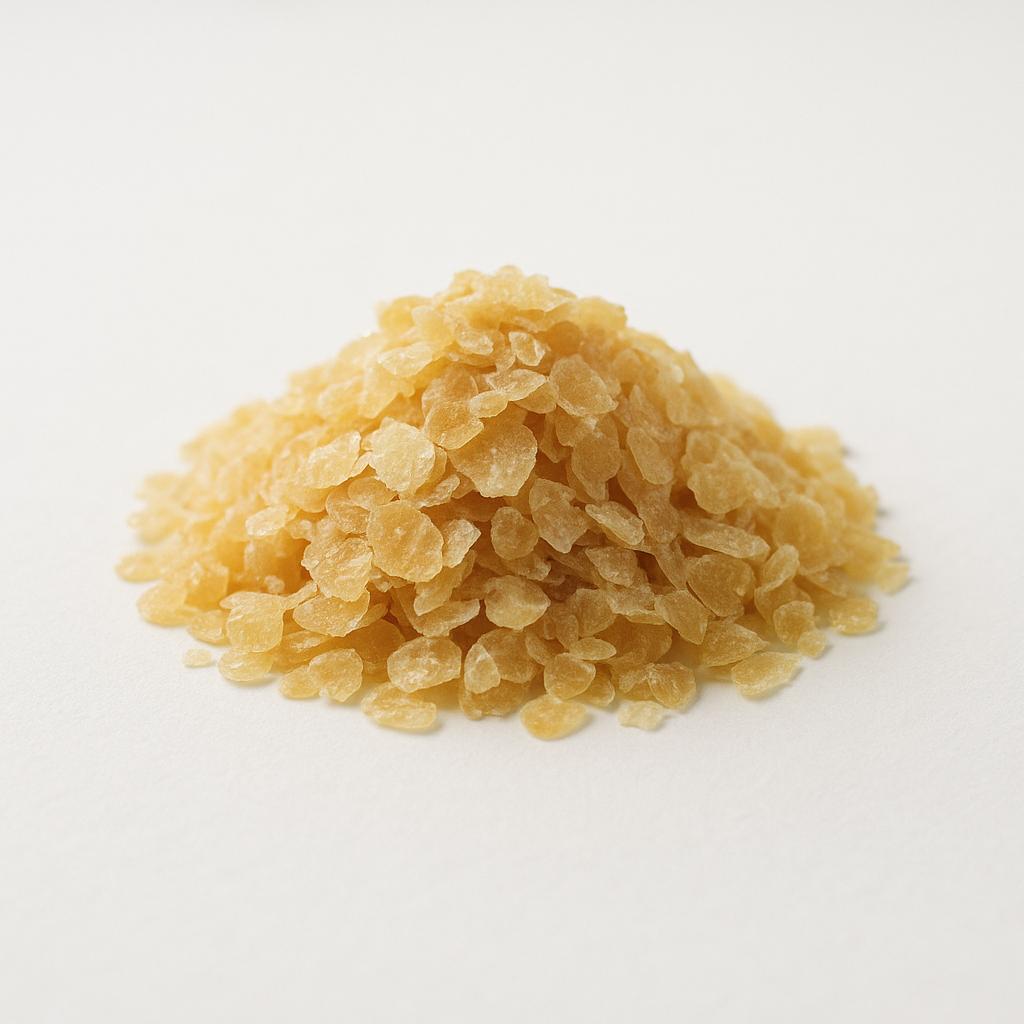
- Light-colored (bleached) refined resin, commonly traded in solid form (e.g., flakes) suitable for further dissolution/formulation
- Consistency of color/clarity is typically a key buyer acceptance parameter for glazing/coating applications
Compositional Metrics
- Identity and purity aligned to recognized food-additive specifications (e.g., monographs where applicable)
- Limits/controls relevant to processing and refining such as insoluble matter and residual processing chemicals/solvents (as applicable to supplier process)
- Parameters supporting functional performance (e.g., film-forming behavior) are typically managed via supplier specifications
Grades
- Food additive grade (glazing/coating use where permitted)
- Technical/pharmaceutical supply-chain grades (specification-dependent; verify intended-use alignment case-by-case)
Packaging
- Sealed moisture-protective packaging appropriate for resin stability during international transport and warehouse storage
- Packaging and labeling typically include batch identification to support importer traceability and inspection readiness
Supply Chain
Value Chain
- Overseas supplier refining/bleaching → export dispatch → ocean/air freight to China → customs declaration and potential sampling/testing → bonded/warehouse storage → distributor/formulator handling → delivery to industrial manufacturers
Temperature
- Store and transport in cool, dry conditions to avoid softening, sticking, or quality drift from heat exposure
Atmosphere Control
- Moisture control (sealed packs, humidity management) is typically more important than modified atmosphere for resin stability
Shelf Life
- Shelf life is primarily affected by storage conditions (heat/humidity) and packaging integrity; industrial buyers often rely on batch COA and retained-sample practices
Freight IntensityLow
Transport ModeSea
Risks
Regulatory Compliance HighNon-conformity with China’s food additive use rules or with importer-required identity/purity specifications can result in border delays, rejection, or downstream recall exposure, effectively blocking market access for the shipment.Confirm intended-use permissibility against applicable China food additive standards, align supplier specifications to recognized monographs where applicable, and provide a complete pre-shipment dossier (batch COA, specs, origin, traceability) matched to the importer’s checklist.
Food Safety MediumImpurity or residue issues related to refining/bleaching (e.g., off-spec residues or contaminants) can trigger non-compliance findings during importer QA or border sampling, creating disposal or re-export risk.Require batch testing to agreed impurity/residue parameters, audit upstream process controls, and use accredited labs where required by the importer or customer program.
Documentation Gap MediumInconsistent product naming (shellac vs. lac resin derivatives), incomplete COA/spec sheets, or mismatched shipment documents can increase inspection probability and clearance time at entry.Standardize product identity statements across contracts, labels, COA, and shipping documents; run a pre-alert document reconciliation process before vessel/flight departure.
Logistics MediumWhile freight cost is usually not the primary margin driver for compact ingredients, port congestion, inspection holds, or route disruptions can create lead-time shocks that interrupt manufacturer production plans.Hold safety stock at distributor warehouses, qualify at least one alternate supplier/origin route, and use forecast-based ordering with importer lead-time buffers.
Sustainability
- Upstream supply-chain due diligence on origin and processing practices (traceable sourcing and documented refining/bleaching controls)
- Chemical and waste management expectations around refining/bleaching steps (where conducted by upstream suppliers) relevant to buyer ESG screening
Labor & Social
- Importer and brand due diligence expectations for upstream labor practices in origin countries supplying shellac (collection/processing), especially where supply chains are multi-tier
- Product origin as insect-derived material can create market-access and customer-acceptance sensitivities for vegetarian/vegan claims in downstream products
Standards
- HACCP
- ISO 22000
- FSSC 22000
- GMP (food additive manufacturing)
FAQ
What is bleached shellac typically used for in China’s food supply chain?It is typically procured as an ingredient for industrial glazing/coating applications where permitted, supplied through food-additive importers and distributors to manufacturers that need consistent appearance and specification-controlled inputs.
What is the most common reason shipments face disruption when importing bleached shellac into China?The biggest disruption risk is regulatory and specification non-compliance (intended-use alignment and identity/purity documentation). If importer dossiers and batch COA/specifications do not support compliance, shipments can be delayed or rejected.
What documentation should exporters prepare to reduce clearance risk for China-bound shipments?Importers commonly rely on customs documentation (invoice, packing list, transport document) plus batch-level COA, a product specification sheet, and origin documentation where required. Preparing these in a consistent, reconciled set helps reduce inspection and delay risk.
Sources
Other Shellac, bleached Country Markets for Supplier, Export, and Price Comparison from China
Compare Shellac, bleached supplier coverage, trade flows, and price benchmarks across countries related to China.


Free diagnosis
Shellac, bleached in China — are you buying, or selling?
Either way it's a few questions. We'll come back with where you could buy it, or who you could sell it to.
By clicking “Accept Cookies,” I agree to provide cookies for statistical and personalized preference purposes. To learn more about our cookies, please read our Privacy Policy.