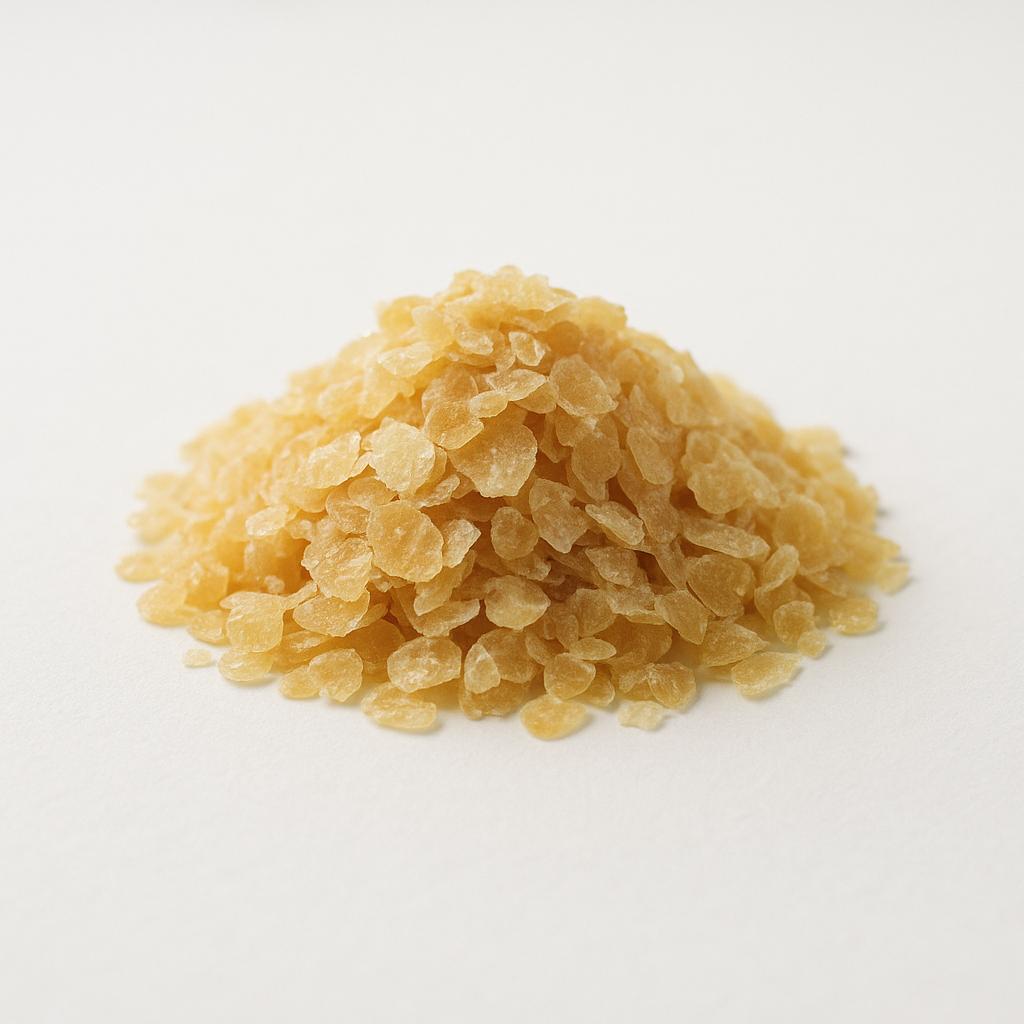
Shellac, bleached Suppliers, Trade & Prices — Market Overview 2026
HS Code
130190
Last Updated
2026-08-23
Key takeaways for search and sourcing teams
- Shellac, bleached market coverage spans 130 countries.
- 229 exporter companies and 227 importer companies are indexed in the global supply chain intelligence network for this product.
- 1,056 supplier-linked transactions are summarized across the top 20 countries.
- Latest reference year in this page dataset is 2026.
- Page data last updated on 2026-08-23.
Global Supplier Transactions, Export Activity, and Price Benchmarks for Shellac, bleached
Analyze 1,056 supplier-linked transactions across the top 20 countries, with monthly unit-price benchmarks to track export competitiveness and sourcing risk for Shellac, bleached.
Shellac, bleached Country YoY Change in Supplier Transactions and Export Momentum
Compare positive and negative YoY shifts in Shellac, bleached to identify accelerating supplier markets and weakening export corridors.
Top YoY shifts for Shellac, bleached: Argentina (+866.9%), United States (+404.3%), Mexico (-95.2%).
Shellac, bleached Country-Level Supplier Transaction and Unit Price Summary
As of 2025-09, benchmark Shellac, bleached country transaction counts with monthly unit price and volume to prioritize supplier and export markets.
In 2026-02, countries with visible Shellac, bleached transaction unit prices: Germany (18.39 USD / kg), India (15.44 USD / kg), Indonesia (8.38 USD / kg), China (5.96 USD / kg), United Arab Emirates (4.29 USD / kg).
| Country | YoY Change | Transaction Count | 2025-09 | 2025-10 | 2025-11 | 2025-12 | 2026-01 | 2026-02 | 2026-03 | 2026-04 | 2026-05 | 2026-06 | 2026-07 | 2026-08 |
|---|---|---|---|---|---|---|---|---|---|---|---|---|---|---|
| India | +4.8% | 912 | 16.61 USD / kg (525,662.994 kg) | 11.79 USD / kg (150,425.094 kg) | 13.57 USD / kg (272,544.827 kg) | 13.60 USD / kg (433,517.535 kg) | 12.54 USD / kg (689,207.292 kg) | 15.44 USD / kg (515,520.713 kg) | ||||||
| Indonesia | +6.5% | 24 | 8.24 USD / kg (49,712 kg) | - (-) | 7.17 USD / kg (53,260 kg) | 8.29 USD / kg (17,000 kg) | - (-) | 8.38 USD / kg (47,379 kg) | ||||||
| Thailand | +5.3% | 18 | 63.85 USD / kg (10 kg) | 6.00 USD / kg (16,200.001 kg) | 8.17 USD / kg (126,925.001 kg) | 12.02 USD / kg (45,520 kg) | 6.00 USD / kg (77,770.001 kg) | - (-) | ||||||
| United States | +404.3% | 9 | - (-) | 86.01 USD / kg (69.9 kg) | - (-) | 54.56 USD / kg (1,896 kg) | - (-) | - (-) | ||||||
| Germany | -24.1% | 20 | 24.24 USD / kg (43,141 kg) | 16.19 USD / kg (2,770 kg) | - (-) | 17.24 USD / kg (5,150 kg) | 23.69 USD / kg (3,000 kg) | 18.39 USD / kg (1,300 kg) | ||||||
| Netherlands | -52.9% | 3 | - (-) | - (-) | - (-) | 3.23 USD / kg (5.55 kg) | - (-) | - (-) | ||||||
| Brazil | -55.5% | 13 | - (-) | 7.64 USD / kg (11,895.01 kg) | - (-) | - (-) | 8.76 USD / kg (39.04 kg) | - (-) | ||||||
| Mexico | -95.2% | 2 | - (-) | - (-) | - (-) | - (-) | - (-) | - (-) | ||||||
| China | -31.0% | 20 | 2.85 USD / kg (48,700 kg) | - (-) | - (-) | - (-) | - (-) | 5.96 USD / kg (25,060 kg) | ||||||
| United Arab Emirates | - | 1 | - (-) | - (-) | - (-) | - (-) | - (-) | 4.29 USD / kg (24,600 kg) |
Shellac, bleached Global Supply Chain Coverage
456 companies
229 exporters and 227 importers are mapped for Shellac, bleached.
Exporters and importers can use Tridge Supply Chain Intelligence company profiles and analytics to identify counterparties for Shellac, bleached, benchmark reach, and prioritize outreach by market.
Shellac, bleached Export Supplier Intelligence, Trade Flows, and Price Signals
229 exporter companies are mapped in Tridge Supply Chain Intelligence for Shellac, bleached. Exporters and importers can use company profiles and analytics to evaluate supplier coverage, trading activity, and route opportunities.
Shellac, bleached Top Exporters and Supplier Profiles
Review leading exporter profiles while benchmarking against 229 total exporter companies in the Shellac, bleached supply chain intelligence network. Exporters and importers can unlock company profiles and analytics to qualify partners faster.
(India)
Latest Export Transaction: 2026-02-22
Recently Export Partner Companies: 1
Industries: Others
Value Chain Roles: Trade
(Germany)
Latest Export Transaction: 2026-07-23
Recently Export Partner Companies: 1
Industries: Food ManufacturingFood PackagingFood Services And Drinking Places
Value Chain Roles: Distribution / WholesaleFood ManufacturingRetail
(China)
Latest Export Transaction: 2025-10-21
Recently Export Partner Companies: 1
Industries: Others
Value Chain Roles: Trade
(India)
Latest Export Transaction: 2026-06-11
Recently Export Partner Companies: 5
Industries: Beverage ManufacturingFood ManufacturingFood PackagingFood Wholesalers
Value Chain Roles: Distribution / WholesaleFarming / Production / Processing / PackingFood ManufacturingTrade
(Switzerland)
Latest Export Transaction: 2025-11-13
Recently Export Partner Companies: 1
Employee Size: Over 1000 Employees
Sales Revenue: USD Over 1B
Industries: Food Manufacturing
Value Chain Roles: Food Manufacturing
(India)
Latest Export Transaction: 2026-07-23
Recently Export Partner Companies: 3
Employee Size: 11 - 50 Employees
Sales Revenue: USD 10M - 50M
Industries: Beverage ManufacturingCrop ProductionFood ManufacturingFood PackagingOthers
Value Chain Roles: Distribution / WholesaleFarming / Production / Processing / PackingFood Manufacturing
Shellac, bleached Global Exporter Coverage
229 companies
Exporter company count is a key signal for Shellac, bleached supply depth and sourcing optionality.
Use Supply Chain Intelligence analytics to narrow Shellac, bleached opportunities by country, product, and value-chain role, then open company profiles to validate fit.
Top Exporting Countries for Shellac, bleached (HS Code 130190) in 2024
For Shellac, bleached in 2024, compare export volume and value across the top 10 supplier countries to map core supply structure.
| Rank | Country | Volume | Value |
|---|---|---|---|
| 1 | India | 8,922,372.286 kg | 80,172,949.798 USD |
| 2 | Thailand | 8,513,966.647 kg | 35,983,182.84 USD |
| 3 | Brazil | 31,678,376 kg | 33,136,690 USD |
| 4 | Greece | 279,701 kg | 20,426,805.268 USD |
| 5 | Germany | 801,186.182 kg | 15,494,163.717 USD |
| 6 | Belgium | 59,789.937 kg | 12,094,166.382 USD |
| 7 | United States | 1,822,174 kg | 11,590,137 USD |
| 8 | Myanmar [Burma] | 3,859,426 kg | 7,279,982.397 USD |
| 9 | El Salvador | 105,923.82 kg | 4,606,928.42 USD |
| 10 | Uzbekistan | 211,058.291 kg | 4,428,289.99 USD |
Shellac, bleached Export Trade Flow and Partner Country Summary
Track Shellac, bleached exporter-to-importer flows by value, volume, and share to uncover high-potential export routes.
Sourcing diagnosis
Where should you be sourcing Shellac, bleached from?
Just tell us your spec and the volume you need. We'll check whether it's actually sourceable, and which origins and suppliers fit — free.
Shellac, bleached Import Buyer Intelligence, Demand Signals, and Price Benchmarks
227 importer companies are mapped for Shellac, bleached demand intelligence. Use Supply Chain Intelligence company profiles and analytics to prioritize buyers, distributors, and downstream demand partners by market.
Shellac, bleached Top Buyers, Importers, and Demand Partners
Review leading buyer profiles and compare them against 227 total importer companies tracked for Shellac, bleached. Exporters and importers can use Supply Chain Intelligence company profiles and analytics to evaluate buyer quality and demand concentration.
(India)
Latest Import Transaction: 2025-09-01
Recently Import Partner Companies: 1
Industries: Food ManufacturingFood PackagingOthers
Value Chain Roles: -
(Argentina)
Latest Import Transaction: 2025-10-28
Recently Import Partner Companies: 2
Industries: Food Wholesalers
Value Chain Roles: -
(France)
Latest Import Transaction: 2026-07-23
Employee Size: 51 - 100 Employees
Sales Revenue: USD 50M - 100M
Industries: Food ManufacturingFood Services And Drinking PlacesFood Wholesalers
Value Chain Roles: -
(Germany)
Latest Import Transaction: 2026-04-17
Recently Import Partner Companies: 1
Sales Revenue: USD 1M - 5M
Industries: Food ManufacturingFood PackagingFood Services And Drinking Places
Value Chain Roles: -
(Norway)
Latest Import Transaction: 2026-07-23
Recently Import Partner Companies: 1
Employee Size: 1 - 10 Employees
Industries: Online Retail And Fulfillment
Value Chain Roles: -
(United States)
Latest Import Transaction: 2026-07-23
Industries: Food ManufacturingFood PackagingOthers
Value Chain Roles: -
Global Importer Coverage
227 companies
Importer company count highlights the current depth of demand-side visibility for Shellac, bleached.
Use Supply Chain Intelligence analytics and company profiles to identify active Shellac, bleached buyers, compare partner density by country, and refine GTM priorities.
Top Import Demand Countries for Shellac, bleached (HS Code 130190) in 2024
For Shellac, bleached in 2024, compare import volume and value across the top 10 demand countries to identify priority markets.
| Rank | Country | Volume | Value |
|---|---|---|---|
| 1 | India | 36,029,221.723 kg | 196,643,565.728 USD |
| 2 | United States | 4,269,392 kg | 40,834,646 USD |
| 3 | Portugal | 29,660,518.937 kg | 33,503,738.493 USD |
| 4 | Germany | 1,854,890.759 kg | 22,649,410.764 USD |
| 5 | Spain | 3,949,288.835 kg | 13,961,804.671 USD |
| 6 | Switzerland | 84,170.914 kg | 11,654,227.723 USD |
| 7 | Netherlands | 2,568,809 kg | 9,300,031.553 USD |
| 8 | United Kingdom | 557,545 kg | 8,682,559.301 USD |
| 9 | Canada | 527,783.072 kg | 6,474,816.267 USD |
| 10 | Brazil | 3,114,956.695 kg | 5,271,978 USD |
Shellac, bleached Import Trade Flow and Origin Country Summary
Analyze Shellac, bleached origin-to-destination trade flows by value, volume, and share to monitor demand-side sourcing channels.
Export diagnosis
Your Shellac, bleached — which buyers could it sell to?
Just tell us what you make. We'll see whether you're ready to export today and which markets suit your offer — free.
Global Wholesale Supplier Price Trends by Country for Shellac, bleached
Shellac, bleached Monthly Wholesale Supplier Price Summary by Country
Monthly Shellac, bleached wholesale unit-price benchmarks by country for export and sourcing decisions.
In 2026-02, countries with visible Shellac, bleached wholesale unit prices: Egypt (5.10 USD / kg).
| Country | 2025-09 | 2025-10 | 2025-11 | 2025-12 | 2026-01 | 2026-02 | 2026-03 | 2026-04 | 2026-05 | 2026-06 | 2026-07 | 2026-08 |
|---|---|---|---|---|---|---|---|---|---|---|---|---|
| Egypt | 4.98 USD / kg | 4.99 USD / kg | 5.05 USD / kg | 5.05 USD / kg | 5.09 USD / kg | 5.10 USD / kg |
Shellac, bleached Wholesale Price Competitiveness by Major Exporting Countries
Compare Shellac, bleached wholesale price ranges and YoY changes across the top 1 exporting countries to benchmark supplier price competitiveness.
| Rank | Country | Average | Lower | Upper | YoY |
|---|---|---|---|---|---|
| 1 | Egypt | 4.90 USD / kg | 4.23 USD / kg | 5.27 USD / kg | +10.7% |
Latest Shellac, bleached Wholesale Export Price Updates
Use the latest 1 Shellac, bleached wholesale updates to validate current export price points and origin-level supplier changes.
| Date | Entry Name | Unit Price (USD) | |
|---|---|---|---|
| 2026-05-01 | قشر ********** ******* **** ******** * | 4.53 USD / kg |
Price data
Want the hidden Shellac, bleached prices?
We'll open up the full price history and competitor benchmarks. Just tell us which numbers you need and we'll walk you through them.
Classification
Product TypeIngredient
Product FormRefined resin (bleached, granular/flakes)
Industry PositionFood Additive (Glazing Agent)
Market
Bleached shellac (INS 904; EU E904) is a specialty, insect-derived resin traded globally as a glazing/coating agent for selected food categories and supplement-like formats. Supply is closely tied to lac cultivation and downstream refining/bleaching capacity, with India a long-standing leader in production and export and Thailand also hosting industrial producers. Global trade is shaped by buyer adherence to Codex/JECFA specifications and by jurisdiction-specific additive permissions and specifications (notably the EU’s detailed E904 requirements). Regulatory and quality-compliance expectations (e.g., impurities and toxic elements, wax content and adulteration checks) are central determinants of market access and buyer qualification.
Major Producing Countries
Major Exporting Countries
Major Importing Countries
- United StatesListed by India’s SHEFEXIL as an export destination for Indian lac/lac-based products.
- GermanyListed by India’s SHEFEXIL as an export destination for Indian lac/lac-based products.
- IndonesiaListed by India’s SHEFEXIL as an export destination for Indian lac/lac-based products.
Specification
Major VarietiesBleached shellac, Wax-free bleached shellac
Physical Attributes
- Bleached shellac: off-white to tan, amorphous granular resin
- Wax-free bleached shellac: light yellow, amorphous, granular resin
Compositional Metrics
- Solubility: insoluble in water; freely (though very slowly) soluble in ethanol; slightly soluble in acetone and ether
- Acid value: between 60 and 89 (JECFA specification test parameter)
- Loss on drying: not more than 6% (JECFA specification)
- Wax: wax-free bleached shellac not more than 0.2% (JECFA specification; aligned with EU specification updates)
- Lead: not more than 2 mg/kg (JECFA specification)
Grades
- JECFA specification for Shellac, bleached (INS 904)
- EU food additive specification for E 904 Shellac under Regulation (EU) No 231/2012 (as amended)
ProcessingFunctional uses: coating agent, glazing agent, surface-finishing agentRosin adulteration is explicitly tested for in the JECFA specification (authenticity/quality control focus)
Supply Chain
Value Chain
- Lac cultivation/harvest (raw lac) -> primary cleaning/processing -> dissolution in aqueous sodium carbonate -> bleaching (sodium hypochlorite) -> precipitation (dilute sulfuric acid) -> drying -> (optional) wax removal by filtration -> granulation/flaking -> export distribution to food/coating users
Demand Drivers
- Codex-recognized glazing agent applications at GMP levels in categories such as surface-treated produce, confectionery/chocolate products, ready-to-eat savouries, and food supplements
- Use as a protective/glazing coating in specialized tablet/coated-tablet food formats in the EU (foods for special medical purposes)
Risks
Regulatory Compliance HighBleached shellac’s market access is tightly linked to additive specifications and evolving regulatory scrutiny around production method distinctions and impurity/toxic element controls. In the EU, shellac (E 904) specifications and authorized uses are actively maintained and were amended in 2026, reflecting ongoing compliance attention that can trigger reformulation, re-qualification, or shipment holds if specifications/testing expectations change.Contract to an explicit specification set (e.g., JECFA and the destination-market legal specs), implement routine COA-based compliance testing (wax, metals, identity/adulteration screens), and maintain change-control on bleaching/decolouring process routes.
Quality Adulteration MediumShellac is vulnerable to quality variability and intentional adulteration risk in trade; JECFA includes an explicit rosin test and multiple purity limits, signaling the need for authenticity controls. Buyers relying on glazing performance and compliance parameters can face rejects if identity/purity deviates.Use approved suppliers with validated JECFA/EU-aligned methods, require batch COAs, and perform periodic third-party verification including rosin/adulterant screening.
Supply Concentration MediumCommercial production and processing capacity is regionally concentrated (notably India and Thailand), and the upstream biological production system depends on lac insect cultivation and host plant availability. Climate anomalies, pest/disease pressure on host plants, or disruptions in regional processing capacity can tighten availability and raise lead times for qualified food-grade material.Maintain multi-origin qualification where feasible, qualify more than one processor/refiner, and carry safety stock for critical glazing applications.
Sustainability
- Chemical bleaching inputs and wastewater management considerations (e.g., sodium hypochlorite use and acid precipitation in bleached shellac production)
- Supply dependence on insect cultivation systems and host-plant availability (biological production system sensitivity)
Labor & Social
- Market-access and consumer-acceptance sensitivity due to insect-derived origin (labeling/claims alignment for vegetarian/vegan positioning)
FAQ
What is bleached shellac used for in foods?Bleached shellac (INS 904; EU E904) is used primarily as a glazing/coating agent applied to the outside of certain foods. Codex GSFA provisions list uses at GMP levels across categories such as surface-treated produce and confectionery, and EU rules also authorize shellac as a glazing agent for specific tablet/coated-tablet food formats for special medical purposes.
How is bleached shellac produced (in general terms)?FAO/JECFA specifications describe bleached shellac as being made by dissolving lac in aqueous sodium carbonate, bleaching with sodium hypochlorite, precipitating with a dilute sulfuric acid solution, and drying. Wax-free bleached shellac involves an additional step where wax is removed by filtration.
What key specification checks are commonly referenced for bleached shellac in trade?FAO/JECFA specifications include defined identity and purity parameters such as solubility behavior, acid value range, loss on drying limits, wax limits (including a tight limit for wax-free bleached shellac), and a lead maximum level, along with an explicit test intended to detect rosin adulteration.
Shellac, bleached Country Coverage for Suppliers, Export Flows, and Prices
Explore country-level Shellac, bleached market pages for supplier coverage, trade flows, and price benchmarks.


All country market pages: Bangladesh, Sri Lanka, Russia, Indonesia, Iraq, Portugal, Chile, Greece, Argentina, Uzbekistan, United Arab Emirates, Saudi Arabia, Myanmar [Burma], Kenya, Philippines, Vietnam, Spain, Singapore, Switzerland, Japan, El Salvador, Netherlands, Nicaragua, Australia, Canada, Poland, Belgium, Guatemala, South Africa, South Korea, Madagascar, Ethiopia, Malaysia, Pakistan, Slovenia, Ukraine, Bolivia, Tanzania, Burkina Faso, Ecuador, Hong Kong, Morocco, Uganda, Uruguay, Dominican Republic, Honduras, Bulgaria, Laos, Austria, Colombia, Jordan, Venezuela, Kazakhstan, New Zealand, Panama, Armenia, Azerbaijan, Bosnia and Herzegovina, Bahrain, Burundi, Benin, Bermuda, Brunei, Botswana, Belize, Democratic Republic of the Congo, Ivory Coast, Costa Rica, Cuba, Cyprus, Denmark, Estonia, Finland, Fiji, Gabon, Gambia, Croatia, Hungary, Ireland, Iran, Iceland, Jamaica, Kyrgyzstan, Cambodia, Liberia, Lesotho, Lithuania, Luxembourg, Latvia, Moldova, Montenegro, Macedonia, Macao, Malta, Mauritius, Maldives, Malawi, Mexico, Mozambique, Namibia, Niger, Nigeria, Norway, Nepal, Peru, Paraguay, Qatar, Romania, Serbia, Sweden, Slovakia, Senegal, Swaziland, Togo, Tunisia, Taiwan, Zambia, Zimbabwe
Free diagnosis
Shellac, bleached — are you buying, or selling?
Either way it's a few questions. We'll come back with where you could buy it, or who you could sell it to.
By clicking “Accept Cookies,” I agree to provide cookies for statistical and personalized preference purposes. To learn more about our cookies, please read our Privacy Policy.