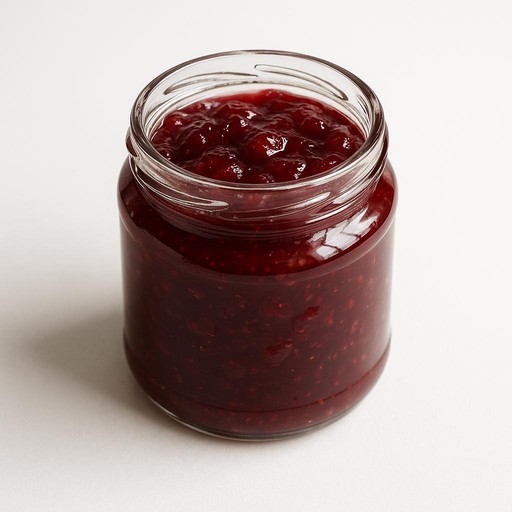
Cherry Jam Suppliers & Prices in Brazil — Market Overview 2026
Raw Materials
Fresh Cherry, Pectins, White Sugar
HS Code
200799
Last Updated
2026-10-29
Key takeaways for search and sourcing teams
- 5 sampled export transactions for Brazil are summarized.
- 5 export partner countries and 5 import partner countries are ranked.
- Latest reference year in this page dataset is 2024.
- Page data last updated on 2026-10-29.
Cherry Jam Export Supplier & Manufacturer Intelligence, Price Trends, and Trade Flows in Brazil
2 export partner companies are tracked for Cherry Jam in Brazil. Use Supply Chain Intelligence company profiles and analytics to validate exporter coverage, partner quality, and route priorities.
Explore Cherry Jam export intelligence in Brazil, including 5 sampled supplier transactions, monthly unit-price ranges, and partner-country trade flow patterns for HS Code 200799.
Scatter points are sampled from 100.0% of the full transaction dataset. Each point is a real transaction — click one to see its details and ask AI Chat whether it was a fair deal.
Sample Export Supplier & Manufacturer Transaction Records for Cherry Jam in Brazil
5 sampled Cherry Jam transactions in Brazil include date, origin, and partner-country context to benchmark export prices and supplier trading patterns.
Cherry Jam sampled transaction unit prices by date in Brazil: 2026-08-03: 4.04 USD / kg, 2026-07-27: 7.19 USD / kg, 2026-07-03: 4.16 USD / kg, 2026-07-03: 4.16 USD / kg, 2026-05-14: 7.31 USD / kg.
| Date | Reported Product | Unit Price | Exporter | Importer | |
|---|---|---|---|---|---|
| 2026-08-03 | REL**** ** ******* ********* ******** | 4.04 USD / kg | (Brazil) | (Bolivia) | |
| 2026-07-27 | CER**** ********** * *********** ** **** ***** ******* *** ******* * ****** * **** *********** * *** | 7.19 USD / kg | (Brazil) | (Uruguay) | |
| 2026-07-03 | 380***** * ******* ** ******* ********* ******** | 4.16 USD / kg | (Brazil) | (Bolivia) | |
| 2026-07-03 | 380***** * ******* ** ******* ********* ******** | 4.16 USD / kg | (Brazil) | (Bolivia) | |
| 2026-05-14 | CER**** ********** * *********** ** **** ***** ******* *** ******* * ****** * **** *********** * *** | 7.31 USD / kg | (Brazil) | (Uruguay) |
See These Brazil Cherry Jam Shipments — and at What Price
Free account — open the full market in Tridge Eye
Sign up and verify your company — newly verified companies can try Tridge Eye Business free.
Top Cherry Jam Export Suppliers, Manufacturers, and Companies in Brazil
Review leading exporter profiles and benchmark them against 2 total export partner companies tracked for Cherry Jam in Brazil. Use Supply Chain Intelligence company profiles and analytics to shortlist sourcing and export partners faster.
(Brazil)
Latest Export Transaction: 2026-09-29
Industries: Others
Value Chain Roles: Trade
(Brazil)
Latest Export Transaction: 2026-09-29
Employee Size: 11 - 50 Employees
Sales Revenue: USD 1M - 5M
Industries: Beverage Manufacturing, Food Manufacturing, Food Packaging
Value Chain Roles: Distribution / Wholesale, Trade
See the full picture in Tridge Eye: full price and trade history · 725,009+ company profiles
Brazil Export Partner Coverage
2 companies
Total export partner company count is a core signal of Brazil export network depth for Cherry Jam.
Exporters and importers can open Supply Chain Intelligence company profiles and analytics to assess Cherry Jam partner concentration, capacity signals, and trade relevance in Brazil.
Annual Export Value, Volume, and Supplier Market Size for Cherry Jam in Brazil (HS Code 200799)
Analyze 3 years of Cherry Jam export volume and value in Brazil to evaluate supplier market growth, seasonality, and trade volatility.
| Year | Volume | Value |
|---|---|---|
| 2024 | 10,143,323 | 14,576,034 USD |
| 2023 | 11,565,740 | 16,480,528 USD |
| 2022 | 13,736,825 | 16,081,783 USD |
Top Destination Markets for Cherry Jam Exports from Brazil (HS Code 200799) in 2024
For 2024, compare export volume and value across the top 5 destination countries for Cherry Jam exports from Brazil.
| Rank | Country | Volume | Value |
|---|---|---|---|
| 1 | United States | 6,641,358 | 9,051,756 USD |
| 2 | Angola | 591,672 | 855,347 USD |
| 3 | Portugal | 404,132.655 | 846,036 USD |
| 4 | Uruguay | 336,338 | 439,099 USD |
| 5 | Paraguay | 206,367 | 408,102 USD |
Tridge Ark · Sourcing Feasibility Check
Could you be importing Cherry Jam from Brazil yourself?
Just tell us your spec and the volume you need. We'll check whether it's actually sourceable, and which origins and suppliers fit.
Free feasibility check, no account required.
Cherry Jam Import Buyer Intelligence and Price Signals in Brazil: Buyers, Demand, and Trade Partners
Exporters and importers can use Supply Chain Intelligence company profiles and analytics to analyze Cherry Jam buyer demand, partner density, and downstream channels in Brazil.
Annual Import Value, Volume, and Demand Size for Cherry Jam in Brazil (HS Code 200799)
Track 3 years of Cherry Jam import volume and value in Brazil to assess demand growth and market momentum.
| Year | Volume | Value |
|---|---|---|
| 2024 | 8,567,681 | 22,868,574 USD |
| 2023 | 6,545,148 | 20,651,778 USD |
| 2022 | 4,738,459 | 13,072,986 USD |
Top Origin Supplier Countries Supplying Cherry Jam to Brazil (HS Code 200799) in 2024
For 2024, compare import volume and value across the top 5 origin supplier countries supplying Cherry Jam to Brazil.
| Rank | Country | Volume | Value |
|---|---|---|---|
| 1 | Argentina | 4,400,624 | 8,993,938 USD |
| 2 | France | 733,750 | 4,227,399 USD |
| 3 | Turkiye | 1,180,500 | 2,639,056 USD |
| 4 | Italy | 466,166 | 1,978,281 USD |
| 5 | Spain | 787,913 | 1,790,178 USD |
Tridge Ark · Export Feasibility Check
Your Cherry Jam — could it sell to these buyers in Brazil?
Just tell us what you make. We'll see whether you're ready to export today and which markets suit your offer.
Free feasibility check, no account required.
Classification
Product TypeProcessed Food
Product FormShelf-stable (jarred preserve)
Industry PositionValue-added processed fruit product
Market
Cherry jam in Brazil is a niche fruit-preserve segment typically positioned as a premium flavor within the broader "geleias" category. Because Brazil is not a major producer of temperate cherries, cherry jam supply is commonly supported by imported finished goods and/or imported cherry ingredients used by domestic processors. Market access for imports is shaped by ANVISA food rules (labeling and additive compliance) alongside customs processes via SISCOMEX/Receita Federal, with the possibility of documentary and physical inspection at entry. Glass-jar packaging makes the product relatively freight- and breakage-sensitive, increasing the importance of palletization, container protection, and distributor handling discipline.
Market RoleImport-dependent consumer market with domestic processing and packing
Domestic RoleRetail and foodservice preserve product; cherry positioned as a premium/niche flavor versus more common local fruit jams
Market GrowthNot Mentioned
SeasonalityYear-round retail availability; any seasonality in cherry inputs is largely smoothed by processed, shelf-stable production and inventory.
Specification
Physical Attributes
- Uniform gel set and spreadability
- Deep red color and flavor consistency across batches
- Low incidence of seeds/pits and foreign matter
- Jar integrity (no chips/cracks) and vacuum seal confirmation
Compositional Metrics
- Soluble solids (°Brix) as a finished-product consistency indicator
- pH/acidity for flavor balance and preservation performance
- Declared fruit content where used as a quality differentiator
- Additive presence and limits (e.g., preservatives) aligned to applicable rules
Packaging
- Glass jars with twist-off lids (retail)
- Bulk plastic tubs/pails for foodservice and bakery use (where marketed)
Supply Chain
Value Chain
- Importer/distributor model: overseas manufacturer → ocean freight → Brazilian port → customs + ANVISA controls → distributor warehousing → modern retail/foodservice
- Domestic processing model: ingredients (fruit inputs + sugar + pectin) → cooking/concentration → hot-fill into jars → packing → distributor/retail
Temperature
- Ambient distribution; protect from excessive heat to preserve color/flavor stability and package integrity
- After opening, consumer storage typically requires refrigeration per label instructions
Shelf Life
- Unopened product is typically shelf-stable; shelf life depends on formulation and validation by the manufacturer
- Seal failure or jar damage is a key shelf-life and safety risk driver in distribution
Freight IntensityHigh
Transport ModeSea
Risks
Regulatory Compliance HighPortuguese labeling non-compliance and/or use of additives not aligned with applicable Brazilian requirements can trigger ANVISA-related holds, relabeling demands, delays, or refusal at entry, disrupting supply and increasing demurrage and rework costs.Run a pre-shipment label and formulation compliance review with the Brazilian importer and align documentation (spec sheet, ingredient list, lot coding, date marking) before booking freight.
Logistics MediumGlass-jar breakage and pallet instability during ocean and domestic trucking distribution can cause product loss, contamination risk, and claims, especially under rushed handling and weak secondary packaging.Use robust secondary cartons, corner protection, stretch-wrapping standards, and drop/tilt-tested pallet patterns; define claims and inspection SOPs with the distributor.
Tax And FX MediumBrazil’s currency volatility and complex tax/fee environment can quickly change landed-cost economics for premium imported preserves, affecting sell-through and buyer reorders.Scenario-test landed cost with the importer (duty + taxes + inland freight) and consider local packing/processing options or adjusted pack sizes to protect price points.
Labor And Social MediumIf the formulation uses Brazil-sourced sugar or other local agricultural inputs, supplier labor non-compliance (including exposure to forced-labor indicators) can create reputational and retailer delisting risk even when the final product is compliant at the border.Apply supplier due diligence for sugar and other key inputs (audit programs and screening against official enforcement lists) and document corrective-action pathways.
Sustainability
- Packaging sustainability: glass weight and breakage drives waste and transport emissions; recycling and secondary packaging choices are increasingly scrutinized by retailers
- Upstream agricultural sourcing diligence for key inputs (notably sugar) where land-use and social compliance risks can be relevant in Brazil
Labor & Social
- Upstream sugarcane supply in Brazil has documented labor-risk exposure (including cases of "trabalho análogo à escravidão" in some supply chains); buyer due diligence often includes supplier screening and audits
- Importer/distributor compliance culture and documentation discipline can materially affect ethical and legal risk in market entry
Standards
- HACCP
- ISO 22000
- FSSC 22000
- BRCGS Food Safety
- IFS Food
FAQ
What is the most common reason cherry jam shipments get delayed at the Brazilian border?Documentation and labeling mismatches are a common cause of delay, especially when the Portuguese label details (product identity, ingredient list, lot/date marking, importer information) do not align with the shipment paperwork or the product specification expected under ANVISA controls.
Which sales channels are most relevant for cherry jam in Brazil?Cherry jam is typically sold through supermarkets/hypermarkets and premium/specialty retailers, with additional volume through e-commerce; foodservice channels such as cafes and bakeries also buy jam for toppings and fillings.
Why is logistics considered a key risk for cherry jam into Brazil?Cherry jam is commonly shipped in glass jars, which makes it heavy and prone to breakage if pallets are poorly protected; for imports, exposure to ocean freight volatility and domestic trucking handling also raises cost and damage risk.
Other Cherry Jam Country Markets for Supplier, Manufacturer, Export, and Price Comparison from Brazil
Compare Cherry Jam supplier coverage, trade flows, and price benchmarks across countries related to Brazil.


Tridge Ark · Export & Sourcing Feasibility Checks
Cherry Jam in Brazil — are you buying, or selling?
Either way it's a few questions. We'll come back with where you could buy it, or who you could sell it to.
Free feasibility check, no account required.
Related Cherry Jam Product Categories
Browse parent, sub, derived, and raw-material product market pages related to Cherry Jam.
By clicking “Accept Cookies,” I agree to provide cookies for statistical and personalized preference purposes. To learn more about our cookies, please read our Privacy Policy.