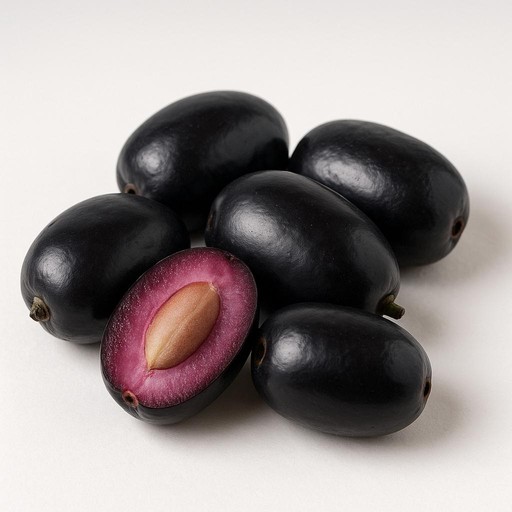
Fresh Java Plum Suppliers, Trade & Prices — Market Overview 2026
Derived Products
Java Plum Juice, Java Plum Juice Concentrate, Dried Java Plum
HS Code
081090
Last Updated
2026-09-13
Key takeaways for search and sourcing teams
- Fresh Java Plum market coverage spans 134 countries.
- 232 exporter companies and 265 importer companies are indexed in the global supply chain intelligence network for this product.
- 255 supplier-linked transactions are summarized across the top 3 countries.
- Latest reference year in this page dataset is 2026.
- Page data last updated on 2026-09-13.
Global Supplier Transactions, Export Activity, and Price Benchmarks for Fresh Java Plum
Analyze 255 supplier-linked transactions across the top 3 countries, with monthly unit-price benchmarks to track export competitiveness and sourcing risk for Fresh Java Plum.
Fresh Java Plum Country YoY Change in Supplier Transactions and Export Momentum
Compare positive and negative YoY shifts in Fresh Java Plum to identify accelerating supplier markets and weakening export corridors.
Top YoY shifts for Fresh Java Plum: India (-16.9%).
Fresh Java Plum Country-Level Supplier Transaction and Unit Price Summary
As of 2025-10, benchmark Fresh Java Plum country transaction counts with monthly unit price and volume to prioritize supplier and export markets.
In 2026-03, countries with visible Fresh Java Plum transaction unit prices: India (1.89 USD / kg).
| Country | YoY Change | Transaction Count | 2025-10 | 2025-11 | 2025-12 | 2026-01 | 2026-02 | 2026-03 | 2026-04 | 2026-05 | 2026-06 | 2026-07 | 2026-08 | 2026-09 |
|---|---|---|---|---|---|---|---|---|---|---|---|---|---|---|
| India | -16.9% | 249 | 2.73 USD / kg (669.6 kg) | 1.53 USD / kg (263.2 kg) | 2.30 USD / kg (6,844.2 kg) | 2.08 USD / kg (3,040 kg) | 2.21 USD / kg (3,899.4 kg) | 1.89 USD / kg (5,384.4 kg) | ||||||
| China | - | 5 | 0.81 USD / kg (60 kg) | - (-) | 0.82 USD / kg (34.5 kg) | 0.83 USD / kg (24 kg) | 0.83 USD / kg (27 kg) | - (-) | ||||||
| Vietnam | - | 1 | - (-) | - (-) | - (-) | 0.65 USD / kg (27,000 kg) | - (-) | - (-) |
Fresh Java Plum Global Supply Chain Coverage
497 companies
232 exporters and 265 importers are mapped for Fresh Java Plum.
Exporters and importers can use Tridge Supply Chain Intelligence company profiles and analytics to identify counterparties for Fresh Java Plum, benchmark reach, and prioritize outreach by market.
Fresh Java Plum Export Supplier Intelligence, Trade Flows, and Price Signals
232 exporter companies are mapped in Tridge Supply Chain Intelligence for Fresh Java Plum. Exporters and importers can use company profiles and analytics to evaluate supplier coverage, trading activity, and route opportunities.
Fresh Java Plum Top Exporters and Supplier Profiles
Review leading exporter profiles while benchmarking against 232 total exporter companies in the Fresh Java Plum supply chain intelligence network. Exporters and importers can unlock company profiles and analytics to qualify partners faster.
(Thailand)
Latest Export Transaction: 2026-08-13
Recently Export Partner Companies: 1
Industries: Beverage ManufacturingFood ManufacturingFood PackagingFood Services And Drinking PlacesOthers
Value Chain Roles: Distribution / WholesaleFarming / Production / Processing / PackingTrade
Exporting Countries: India
Supplying Products: Asparagus, Fresh Mangosteen, Fresh Pomelo Fruit +5
(Thailand)
Latest Export Transaction: 2026-08-13
Recently Export Partner Companies: 1
Industries: Crop Production
Value Chain Roles: Trade
Exporting Countries: India
Supplying Products: Asparagus, Fresh Kaffir Lime Leaf, Fresh Longan +5
(India)
Latest Export Transaction: 2026-07-15
Recently Export Partner Companies: 8
Employee Size: Over 1000 Employees
Sales Revenue: USD 50M - 100M
Industries: Food ManufacturingFood PackagingFood Services And Drinking Places
Value Chain Roles: Distribution / WholesaleFood ManufacturingRetailTrade
Exporting Countries: Denmark, Qatar, New Zealand, Australia, United Arab Emirates, Germany, United Kingdom, Netherlands, Canada, United States
Supplying Products: Naan, Flatbread, Frozen Potato Cake +5
(Uzbekistan)
Latest Export Transaction: 2026-08-13
Recently Export Partner Companies: 1
Industries: Crop ProductionFood ManufacturingFood Services And Drinking PlacesOthers
Value Chain Roles: Distribution / WholesaleFarming / Production / Processing / PackingFood ManufacturingOthers
Exporting Countries: Russia
Supplying Products: Fresh Grape, Fresh Apricot, Fresh Nectarine +5
(India)
Latest Export Transaction: 2026-06-25
Recently Export Partner Companies: 3
Industries: Beverage ManufacturingFood ManufacturingFood Packaging
Value Chain Roles: Distribution / WholesaleFood Manufacturing
Exporting Countries: United Kingdom, Spain, Canada, United States, Australia
Supplying Products: Fudge, Wheat Flour, Fresh Carrot +5
(Pakistan)
Latest Export Transaction: 2026-08-13
Recently Export Partner Companies: 3
Employee Size: 11 - 50 Employees
Sales Revenue: USD 1M - 5M
Industries: Crop ProductionFood Manufacturing
Value Chain Roles: Farming / Production / Processing / PackingFood Manufacturing
Exporting Countries: Denmark, Germany, Oman, United Arab Emirates, Italy, United Kingdom
Supplying Products: Fresh Mango, Fresh Bottle Gourd, Fresh Carrot +5
Fresh Java Plum Global Exporter Coverage
232 companies
Exporter company count is a key signal for Fresh Java Plum supply depth and sourcing optionality.
Use Supply Chain Intelligence analytics to narrow Fresh Java Plum opportunities by country, product, and value-chain role, then open company profiles to validate fit.
Top Exporting Countries for Fresh Java Plum (HS Code 081090) in 2024
For Fresh Java Plum in 2024, compare export volume and value across the top 10 supplier countries to map core supply structure.
| Rank | Country | Volume | Value |
|---|---|---|---|
| 1 | Thailand | 604,140,914.867 kg | 667,535,022.8 USD |
| 2 | Netherlands | 86,055,213 kg | 362,574,826.936 USD |
| 3 | Ecuador | 61,720,919.93 kg | 216,580,889.485 USD |
| 4 | Egypt | 53,026,019.978 kg | 171,520,196.44 USD |
| 5 | Turkiye | 150,795,266 kg | 164,219,723 USD |
| 6 | Spain | 54,078,945.92 kg | 117,239,427.117 USD |
| 7 | India | 89,657,134.77 kg | 93,079,030.168 USD |
| 8 | United States | 26,218,700 kg | 73,697,590 USD |
| 9 | Mexico | 60,190,671 kg | 60,906,272 USD |
| 10 | Belgium | 25,436,920 kg | 38,269,686.645 USD |
Fresh Java Plum Export Trade Flow and Partner Country Summary
Track Fresh Java Plum exporter-to-importer flows by value, volume, and share to uncover high-potential export routes.
Sourcing diagnosis
Where should you be sourcing Fresh Java Plum from?
Just tell us your spec and the volume you need. We'll check whether it's actually sourceable, and which origins and suppliers fit.
Free diagnosis, no account required.
Fresh Java Plum Import Buyer Intelligence, Demand Signals, and Price Benchmarks
265 importer companies are mapped for Fresh Java Plum demand intelligence. Use Supply Chain Intelligence company profiles and analytics to prioritize buyers, distributors, and downstream demand partners by market.
Fresh Java Plum Top Buyers, Importers, and Demand Partners
Review leading buyer profiles and compare them against 265 total importer companies tracked for Fresh Java Plum. Exporters and importers can use Supply Chain Intelligence company profiles and analytics to evaluate buyer quality and demand concentration.
(India)
Latest Import Transaction: 2026-08-13
Recently Import Partner Companies: 1
Industries: Others
Value Chain Roles: -
(Russia)
Latest Import Transaction: 2026-08-13
Recently Import Partner Companies: 1
Industries: Food ManufacturingFood Wholesalers
Value Chain Roles: Macedonia, Serbia, Azerbaijan, Turkiye, Uzbekistan
(India)
Latest Import Transaction: 2026-08-13
Recently Import Partner Companies: 1
Industries: Food WholesalersOnline Retail And FulfillmentOthers
Value Chain Roles: -
(India)
Latest Import Transaction: 2026-08-13
Recently Import Partner Companies: 1
Industries: Others
Value Chain Roles: -
(Canada)
Latest Import Transaction: 2026-08-13
Recently Import Partner Companies: 1
Industries: Food ManufacturingFood Services And Drinking PlacesFood WholesalersOthers
Value Chain Roles: -
(India)
Latest Import Transaction: 2026-08-13
Recently Import Partner Companies: 1
Employee Size: 11 - 50 Employees
Sales Revenue: USD 1M - 5M
Industries: Beverage ManufacturingCrop ProductionFood Manufacturing
Value Chain Roles: -
Global Importer Coverage
265 companies
Importer company count highlights the current depth of demand-side visibility for Fresh Java Plum.
Use Supply Chain Intelligence analytics and company profiles to identify active Fresh Java Plum buyers, compare partner density by country, and refine GTM priorities.
Top Import Demand Countries for Fresh Java Plum (HS Code 081090) in 2024
For Fresh Java Plum in 2024, compare import volume and value across the top 10 demand countries to identify priority markets.
| Rank | Country | Volume | Value |
|---|---|---|---|
| 1 | United States | 275,685,098 kg | 376,237,668 USD |
| 2 | Netherlands | 75,190,595 kg | 240,077,237.738 USD |
| 3 | Germany | 61,116,273.234 kg | 198,676,075.823 USD |
| 4 | Hong Kong | 90,763,189 kg | 122,042,304.438 USD |
| 5 | Canada | 35,401,134 kg | 109,880,127.07 USD |
| 6 | United Kingdom | 33,476,515 kg | 101,205,241.941 USD |
| 7 | India | 57,062,057 kg | 63,134,063.618 USD |
| 8 | Italy | 26,342,419 kg | 56,992,234.402 USD |
| 9 | Thailand | 35,483,477 kg | 49,000,972.15 USD |
| 10 | Belgium | 16,031,660.74 kg | 38,912,802.142 USD |
Fresh Java Plum Import Trade Flow and Origin Country Summary
Analyze Fresh Java Plum origin-to-destination trade flows by value, volume, and share to monitor demand-side sourcing channels.
Export diagnosis
Your Fresh Java Plum — which buyers could it sell to?
Just tell us what you make. We'll see whether you're ready to export today and which markets suit your offer.
Free diagnosis, no account required.
Global Wholesale Supplier Price Trends by Country for Fresh Java Plum
Fresh Java Plum Monthly Wholesale Supplier Price Summary by Country
Monthly Fresh Java Plum wholesale unit-price benchmarks by country for export and sourcing decisions.
In 2026-03, countries with visible Fresh Java Plum wholesale unit prices: India (0.97 USD / kg).
| Country | 2025-10 | 2025-11 | 2025-12 | 2026-01 | 2026-02 | 2026-03 | 2026-04 | 2026-05 | 2026-06 | 2026-07 | 2026-08 | 2026-09 |
|---|---|---|---|---|---|---|---|---|---|---|---|---|
| India | 0.99 USD / kg | 0.90 USD / kg | - | 0.96 USD / kg | 0.50 USD / kg | 0.97 USD / kg | ||||||
| Pakistan | - | - | - | - | - | - | ||||||
| Bangladesh | - | - | - | - | - | - |
Fresh Java Plum Wholesale Price Competitiveness by Major Exporting Countries
Compare Fresh Java Plum wholesale price ranges and YoY changes across the top 3 exporting countries to benchmark supplier price competitiveness.
| Rank | Country | Average | Lower | Upper | YoY |
|---|---|---|---|---|---|
| 1 | India | 0.43 USD / kg | 0.00 USD / kg | 2.27 USD / kg | -61.8% |
| 2 | Pakistan | 0.97 USD / kg | 0.52 USD / kg | 1.35 USD / kg | +30.2% |
| 3 | Bangladesh | 1.29 USD / kg | 1.25 USD / kg | 1.33 USD / kg | +22.1% |
Latest Fresh Java Plum Wholesale Export Price Updates
Use the latest 5 Fresh Java Plum wholesale updates to validate current export price points and origin-level supplier changes.
| Date | Entry Name | Unit Price (USD) | |
|---|---|---|---|
| 2026-08-01 | Jam********* ************ ***** * * ************ ****** ****** ***** ************** *********** | 0.42 USD / kg | |
| 2026-08-01 | Jam********* ************ ***** * * ************ ***** **** ************* ******* ** ************** *********** | 1.52 USD / kg | |
| 2026-08-01 | Jam********* ************ ***** * * ************ ***** **** ****************** ******* ** ************** *********** | 1.62 USD / kg | |
| 2026-08-01 | Jam********* ************ ***** * * ************ ***** **** ****************** ******* ** ************** *********** | 0.89 USD / kg | |
| 2026-08-01 | Jam** * ****** ********** | 63.76 USD / kg |
Price data
Which Fresh Java Plum prices do you need?
We'll open up the full price history and competitor benchmarks. Just tell us which numbers you need and we'll walk you through them.
Classification
Product TypeRaw Material
Product FormFresh
Industry PositionPrimary Agricultural Product
Raw Material
Commodity GroupTropical fruit
Scientific NameSyzygium cumini (L.) Skeels
PerishabilityHigh
Growing Conditions
- Tropical to subtropical climates; grows primarily in wet tropical biomes within its native range.
- Often associated with monsoon-influenced seasonality in parts of Asia.
- Cultivated and naturalized broadly across the tropics and subtropics outside its native range.
Main VarietiesRa (larger-fruited market type), Kaatha (smaller, more acidic market type)
Consumption Forms
- Fresh fruit (local seasonal markets)
- Juice/syrup-based beverages
- Jams/jellies and other processed products (including wine in some contexts)
Grading Factors
- Maturity/color (pink/crimson to dark purple/black at commercial maturity depending on local preference)
- Berry size uniformity within pack
- Absence of skin breaks, bruising, decay, and excessive shrivel
Market
Fresh Java plum (jamun/jambolan; Syzygium cumini) is a seasonal tropical fruit primarily produced and consumed within its native range across tropical and subtropical Asia, with limited long-distance fresh trade due to extreme perishability. Supply is typically short and seasonal (often concentrated around monsoon-season harvest windows in parts of Asia), which reinforces local-market pricing and rapid sell-through dynamics. Where it does move beyond local markets, the product is highly dependent on rapid handling and continuous cold-chain and may shift into processed uses (juice, jams, wine) to reduce losses. The tree is widely introduced outside its native range, and in some destinations it is treated as invasive, which can affect planting, movement of propagative material, and commercialization pathways.
Market GrowthNot Mentioned
Major Producing Countries
- IndiaWithin native range; widely cultivated and marketed locally/regionally as jamun/Java plum.
- IndonesiaWithin native range (including Java); cultivated and consumed locally.
- BangladeshWithin native range; local seasonal fruit supply.
- PakistanWithin native range; local seasonal fruit supply.
- Sri LankaWithin native range; local seasonal fruit supply.
Supply Calendar
- South Asia (notably India):Jun, JulHarvest in parts of Asia is commonly reported around the monsoon season and may last roughly 30–40 days depending on locality.
Specification
Major VarietiesRa (larger-fruited market type), Kaatha (smaller, more acidic market type)
Physical Attributes
- Small, typically single-seeded berries; color transitions from green to pink/crimson and then to dark purple/black at maturity.
- Sweet–sour and astringent flavor profile; strongly pigmented skin/juice can stain.
Compositional Metrics
- High anthocyanin/polyphenol pigmentation is a defining characteristic linked to the fruit’s deep purple coloration.
Packaging
- Because of high perishability, packaging that limits moisture loss and mechanical damage is critical for marketability.
- Modified-atmosphere packaging using polypropylene film (including macro-perforated formats) has been studied to extend storage life under refrigeration.
ProcessingFrequently diverted to processing (e.g., juice, jam/jellies, wine) to manage short fresh shelf life and seasonal gluts.
Supply Chain
Value Chain
- Harvest (hand-pick) -> rapid sorting/handling to limit bruising -> quick movement to market or immediate chilling -> local wholesale/retail distribution
- For extended storage: pre-cooling/refrigeration -> modified-atmosphere packaging -> distribution under cold chain
Demand Drivers
- Strong seasonal and cultural consumption in South Asia and parts of Southeast Asia.
- Value-added processing demand (juice/jams/wine) used to reduce losses from short fresh shelf life.
Temperature
- Refrigerated storage around 5°C has been used in published postharvest studies to extend storage duration when paired with appropriate packaging.
Atmosphere Control
- Modified-atmosphere packaging (including macro-perforated film treatments) has been investigated as a practical method to retain quality during refrigerated storage.
Shelf Life
- Very short ambient shelf life is commonly reported (about 1–2 days under normal conditions).
- Refrigerated modified-atmosphere packaging trials have reported storage up to about 23 days at 5°C under specific packaging configurations.
Risks
Shelf Life Limitation HighFresh Java plum is extremely perishable, with a commonly cited ambient shelf life of about 1–2 days; this sharply constrains long-distance fresh trade, increases shrink risk, and can force rapid discounting or diversion to processing during seasonal peaks.Prioritize fast harvest-to-market logistics, continuous cold chain, and (where feasible) refrigerated modified-atmosphere packaging; build processing outlets (juice/jam/wine) to absorb peak-season volumes.
Phytosanitary Compliance MediumAs a tropical fresh fruit, shipments can face stringent phytosanitary and quarantine requirements in importing markets, especially where tephritid fruit flies are regulated quarantine pests for many fruit hosts.Align orchard/collection practices and export protocols with importing-country phytosanitary programs; use approved inspection/treatment pathways and strong traceability.
Food Safety MediumFresh-fruit supply chains are sensitive to microbial contamination risks from water, soil amendments, and poor handling; short shelf life can amplify the impact of temperature abuse and poor hygiene in distribution.Implement Codex-aligned hygienic practices (water quality control, worker hygiene, sanitation, and traceability) and maintain cold-chain discipline.
Regulatory Compliance MediumIn some introduced regions, Syzygium cumini is considered invasive; this can create restrictions or reputational risk around planting, distribution of propagative material, and commercialization projects.Check destination and subnational invasive-species guidance before investment; avoid introducing planting material to sensitive ecosystems and follow local risk-screening protocols.
Sustainability
- High food-loss risk due to extreme perishability and short, concentrated seasonal supply windows.
- Invasive-species and biodiversity concerns where the tree is introduced and escapes cultivation (potential restrictions on planting and movement).
FAQ
Why is fresh Java plum not widely traded over long distances?Fresh Java plum is extremely perishable, with a commonly cited ambient shelf life of about 1–2 days, which makes long transit times and retail distribution risky without a strong cold chain. Postharvest studies show storage can be extended under refrigeration with modified-atmosphere packaging, but this adds handling complexity and cost.
Where is Java plum (Syzygium cumini) native, and where has it been introduced?Kew’s Plants of the World Online lists the native range as tropical and subtropical Asia to northern Queensland (Australia) and documents many introduced locations across the tropics and subtropics (including Florida and parts of Africa and the Americas). This wide introduced range is relevant because some places treat it as invasive.
When is the main harvest window for Java plum in parts of Asia?Published reviews commonly describe harvest in Asia as starting around the monsoon season (often June to July) and lasting roughly 30–40 days, though timing varies by locality and climate.
Sources
Fresh Java Plum Country Coverage for Suppliers, Export Flows, and Prices
Explore country-level Fresh Java Plum market pages for supplier coverage, trade flows, and price benchmarks.


All country market pages: Bangladesh, Canada, Hong Kong, Nigeria, South Africa, Germany, Philippines, Brazil, Kenya, Italy, Uganda, France, Turkiye, Tanzania, Moldova, Saudi Arabia, United Arab Emirates, Peru, Ecuador, Egypt, Singapore, Colombia, Ireland, Mexico, Azerbaijan, Nepal, Belgium, Greece, Cambodia, Austria, Switzerland, Israel, South Korea, Laos, Portugal, Uzbekistan, Guatemala, Kuwait, Oman, Tunisia, Sri Lanka, Poland, Australia, Ukraine, Sweden, Czechia, Morocco, Honduras, Norway, Hungary, Brunei, Bulgaria, Japan, Jordan, Romania, Denmark, Dominican Republic, Qatar, Andorra, Madagascar, Maldives, Bahrain, Slovakia, Kazakhstan, New Zealand, Lithuania, Albania, Armenia, Bosnia and Herzegovina, Barbados, Burkina Faso, Burundi, Benin, Bermuda, Bolivia, Bahamas, Botswana, Democratic Republic of the Congo, Ivory Coast, Costa Rica, Cuba, Cyprus, Estonia, Ethiopia, Finland, Fiji, Gabon, Gambia, Croatia, Iran, Iceland, Jamaica, Kyrgyzstan, Lebanon, Liberia, Lesotho, Luxembourg, Latvia, Montenegro, Macedonia, Myanmar [Burma], Mongolia, Macao, Malta, Mauritius, Malawi, Mozambique, Namibia, Niger, Nicaragua, Panama, Paraguay, Serbia, Slovenia, Senegal, El Salvador, Swaziland, Togo, Uruguay, Saint Vincent and the Grenadines, Zambia, Zimbabwe
Export & sourcing diagnosis
Fresh Java Plum — are you buying, or selling?
Either way it's a few questions. We'll come back with where you could buy it, or who you could sell it to.
Free diagnosis, no account required.
Related Fresh Java Plum Product Categories
Browse parent, sub, derived, and raw-material product market pages related to Fresh Java Plum.
By clicking “Accept Cookies,” I agree to provide cookies for statistical and personalized preference purposes. To learn more about our cookies, please read our Privacy Policy.