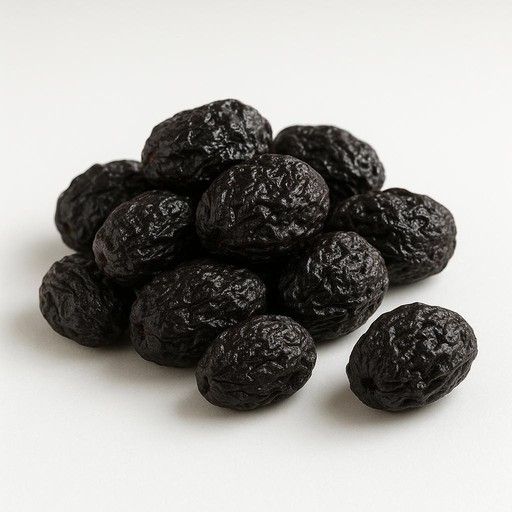
Dried Java Plum Suppliers, Trade & Prices — Market Overview 2026
Raw Materials
Fresh Java Plum
Last Updated
2026-09-13
Key takeaways for search and sourcing teams
- Dried Java Plum market coverage spans 27 countries.
- 240 exporter companies and 217 importer companies are indexed in the global supply chain intelligence network for this product.
- 162 supplier-linked transactions are summarized across the top 5 countries.
- Page data last updated on 2026-09-13.
Global Supplier Transactions, Export Activity, and Price Benchmarks for Dried Java Plum
Analyze 162 supplier-linked transactions across the top 5 countries, with monthly unit-price benchmarks to track export competitiveness and sourcing risk for Dried Java Plum.
Dried Java Plum Country YoY Change in Supplier Transactions and Export Momentum
Compare positive and negative YoY shifts in Dried Java Plum to identify accelerating supplier markets and weakening export corridors.
Top YoY shifts for Dried Java Plum: Uzbekistan (-44.7%), China (-40.2%), India (-4.2%).
Dried Java Plum Country-Level Supplier Transaction and Unit Price Summary
As of 2025-10, benchmark Dried Java Plum country transaction counts with monthly unit price and volume to prioritize supplier and export markets.
In 2026-03, countries with visible Dried Java Plum transaction unit prices: India (2.40 USD / kg).
| Country | YoY Change | Transaction Count | 2025-10 | 2025-11 | 2025-12 | 2026-01 | 2026-02 | 2026-03 | 2026-04 | 2026-05 | 2026-06 | 2026-07 | 2026-08 | 2026-09 |
|---|---|---|---|---|---|---|---|---|---|---|---|---|---|---|
| India | -4.2% | 153 | 2.31 USD / kg (29,928 kg) | 1.84 USD / kg (7,480.24 kg) | 1.07 USD / kg (100,373.5 kg) | 1.28 USD / kg (7,730 kg) | 1.68 USD / kg (28,118.8 kg) | 2.40 USD / kg (1,937.6 kg) | ||||||
| Pakistan | - | 2 | - (-) | - (-) | 1.20 USD / kg (2,000 kg) | - (-) | 1.20 USD / kg (2,000 kg) | - (-) | ||||||
| Uzbekistan | -44.7% | 5 | 0.42 USD / kg (396 kg) | 0.42 USD / kg (6,850 kg) | 0.42 USD / kg (1,250 kg) | - (-) | - (-) | - (-) | ||||||
| China | -40.2% | 1 | - (-) | - (-) | 0.42 USD / kg (5,600 kg) | - (-) | - (-) | - (-) | ||||||
| Tajikistan | - | 1 | - (-) | 0.34 USD / kg (129 kg) | - (-) | - (-) | - (-) | - (-) |
Dried Java Plum Global Supply Chain Coverage
457 companies
240 exporters and 217 importers are mapped for Dried Java Plum.
Exporters and importers can use Tridge Supply Chain Intelligence company profiles and analytics to identify counterparties for Dried Java Plum, benchmark reach, and prioritize outreach by market.
Dried Java Plum Export Supplier Intelligence, Trade Flows, and Price Signals
240 exporter companies are mapped in Tridge Supply Chain Intelligence for Dried Java Plum. Exporters and importers can use company profiles and analytics to evaluate supplier coverage, trading activity, and route opportunities.
Dried Java Plum Top Exporters and Supplier Profiles
Review leading exporter profiles while benchmarking against 240 total exporter companies in the Dried Java Plum supply chain intelligence network. Exporters and importers can unlock company profiles and analytics to qualify partners faster.
(India)
Latest Export Transaction: 2026-08-13
Recently Export Partner Companies: 1
Employee Size: Over 1000 Employees
Sales Revenue: USD Over 1B
Industries: Beverage ManufacturingCrop ProductionFood ManufacturingFood PackagingFood Services And Drinking Places
Value Chain Roles: Distribution / WholesaleFarming / Production / Processing / PackingFood ManufacturingRetailTrade
Exporting Countries: Poland, Algeria, Italy, Malaysia, Russia, Mexico, South Korea, Vietnam, China, Taiwan
Supplying Products: Sesame Seed, Dried Mung Bean, Sorghum Grain +5
(India)
Latest Export Transaction: 2026-04-20
Recently Export Partner Companies: 1
Employee Size: 101 - 500 Employees
Sales Revenue: USD 10M - 50M
Industries: Beverage ManufacturingFood ManufacturingFood PackagingFood WholesalersOthers
Value Chain Roles: Distribution / WholesaleFarming / Production / Processing / PackingFood ManufacturingTrade
Exporting Countries: Thailand, Singapore, Israel, Turkiye, Jordan, Lebanon, Iran, Egypt, United Arab Emirates, Iraq
Supplying Products: Sesame Seed, Cumin Seed, Fresh Turmeric +5
(Hong Kong)
Latest Export Transaction: 2026-08-13
Recently Export Partner Companies: 1
Industries: Others
Value Chain Roles: Trade
Exporting Countries: United States
Supplying Products: Dried Java Plum, Flavored Roasted Corn Snacks, Corn Crackers +5
(India)
Latest Export Transaction: 2026-08-13
Recently Export Partner Companies: 1
Industries: Crop ProductionFood Manufacturing
Value Chain Roles: Farming / Production / Processing / PackingFood ManufacturingTrade
Exporting Countries: Croatia, Colombia, United States, South Africa, Thailand, Jordan, Indonesia, Turkiye, Russia, China
Supplying Products: Chia Seed, Dried Moringa Leaf, Cassia Tea +5
(India)
Latest Export Transaction: 2026-07-31
Recently Export Partner Companies: 2
Industries: Crop ProductionFood Manufacturing
Value Chain Roles: Farming / Production / Processing / PackingFood Manufacturing
Exporting Countries: France, Italy, Israel, Australia, Germany
Supplying Products: Dried Java Plum, Dried Licorice Root, Moringa Seed +5
(Afghanistan)
Latest Export Transaction: 2026-08-13
Recently Export Partner Companies: 1
Employee Size: 11 - 50 Employees
Industries: Brokers And Trade AgenciesCrop ProductionFood Manufacturing
Value Chain Roles: Farming / Production / Processing / PackingTrade
Exporting Countries: Pakistan
Supplying Products: Raisins, Cumin Seed, Dried Apricots +5
Dried Java Plum Global Exporter Coverage
240 companies
Exporter company count is a key signal for Dried Java Plum supply depth and sourcing optionality.
Use Supply Chain Intelligence analytics to narrow Dried Java Plum opportunities by country, product, and value-chain role, then open company profiles to validate fit.
Sourcing diagnosis
Where should you be sourcing Dried Java Plum from?
Just tell us your spec and the volume you need. We'll check whether it's actually sourceable, and which origins and suppliers fit.
Free diagnosis, no account required.
Dried Java Plum Import Buyer Intelligence, Demand Signals, and Price Benchmarks
217 importer companies are mapped for Dried Java Plum demand intelligence. Use Supply Chain Intelligence company profiles and analytics to prioritize buyers, distributors, and downstream demand partners by market.
Dried Java Plum Top Buyers, Importers, and Demand Partners
Review leading buyer profiles and compare them against 217 total importer companies tracked for Dried Java Plum. Exporters and importers can use Supply Chain Intelligence company profiles and analytics to evaluate buyer quality and demand concentration.
(United States)
Latest Import Transaction: 2026-08-13
Recently Import Partner Companies: 1
Employee Size: 101 - 500 Employees
Industries: Others
Value Chain Roles: -
(Ukraine)
Latest Import Transaction: 2026-08-13
Recently Import Partner Companies: 1
Industries: Brokers And Trade AgenciesCrop ProductionFood Manufacturing
Value Chain Roles: -
(Argentina)
Latest Import Transaction: 2026-08-13
Recently Import Partner Companies: 1
Industries: Others
Value Chain Roles: -
(Bangladesh)
Latest Import Transaction: 2026-08-13
Recently Import Partner Companies: 1
Industries: Food ManufacturingFood PackagingFood Services And Drinking PlacesGrocery Stores
Value Chain Roles: -
(Philippines)
Latest Import Transaction: 2026-08-13
Recently Import Partner Companies: 1
Employee Size: 11 - 50 Employees
Sales Revenue: USD 5M - 10M
Industries: Food ManufacturingFood Services And Drinking PlacesFood Wholesalers
Value Chain Roles: -
(Pakistan)
Latest Import Transaction: 2026-08-13
Recently Import Partner Companies: 1
Employee Size: 11 - 50 Employees
Sales Revenue: USD 1M - 5M
Industries: Beverage ManufacturingBrokers And Trade AgenciesCrop ProductionFood ManufacturingFood Packaging
Value Chain Roles: Saudi Arabia, Kazakhstan, Afghanistan
Global Importer Coverage
217 companies
Importer company count highlights the current depth of demand-side visibility for Dried Java Plum.
Use Supply Chain Intelligence analytics and company profiles to identify active Dried Java Plum buyers, compare partner density by country, and refine GTM priorities.
Export diagnosis
Your Dried Java Plum — which buyers could it sell to?
Just tell us what you make. We'll see whether you're ready to export today and which markets suit your offer.
Free diagnosis, no account required.
Price data
Which Dried Java Plum prices do you need?
We'll open up the full price history and competitor benchmarks. Just tell us which numbers you need and we'll walk you through them.
Classification
Product TypeProcessed Food
Product FormDried
Industry PositionProcessed Fruit Product
Market
Dried java plum (also marketed as jamun) is a niche dried-fruit product derived from Syzygium cumini and typically traded through specialty, ethnic, and functional-food channels rather than as a globally standardized dried fruit commodity. Supply is closely linked to seasonal fresh-fruit availability in tropical and subtropical growing regions, but the dried form is marketed year-round due to shelf stability. International trade can be difficult to isolate in public trade statistics because product descriptions may be reported under broad “other dried fruit” groupings or, for powders, under ingredient/botanical headings depending on processing and declared use. Buyer focus in cross-border trade tends to concentrate on moisture control, foreign-matter management, and contaminant testing because these are the main determinants of safety and shelf life for dried fruit products.
Specification
Physical Attributes
- Dark purple to black coloration in the dried product, reflecting the naturally pigmented fruit skin and pulp
- Commonly marketed as whole dried fruit, sliced pieces, or milled powder depending on end use
Compositional Metrics
- Moisture content and water activity are primary stability specifications for dried fruit products
- Contaminant screening commonly emphasized in buyer specs for dried fruit supply chains (e.g., mycotoxins, heavy metals, pesticide residues), depending on destination-market requirements
Packaging
- Moisture-barrier packaging (e.g., laminated/foil pouches or lined cartons) to limit humidity uptake during storage and transport
- Food-grade bulk packs for ingredient users (with inner liners) and smaller consumer packs for retail/e-commerce
ProcessingLow-moisture product; quality and safety are highly sensitive to rehydration from humid storage conditionsPowdered forms require tighter foreign-matter control and sieving/metal detection due to higher downstream application sensitivity
Supply Chain
Value Chain
- Fresh fruit procurement -> washing/sorting -> pitting and slicing (where applicable) -> dehydration -> cooling/equilibration -> grading/foreign matter control -> metal detection -> packaging -> ambient distribution
Demand Drivers
- Specialty and ethnic food demand for jamun/java plum products
- Functional-food and supplement-adjacent use in powder format as an ingredient in mixes, beverages, and nutraceutical-style products (subject to local regulatory positioning)
Temperature
- Typically shipped and stored ambient; quality depends more on low humidity and moisture-barrier packaging than on refrigeration
Shelf Life
- Shelf life is primarily limited by moisture uptake and resulting mold risk, plus oxidative quality loss where packaging is not adequately protective
Risks
Food Safety and Contaminants HighThe most material disruption risk in dried java plum trade is food-safety non-compliance driven by inadequate drying and moisture control (mold growth), plus contaminant findings (e.g., mycotoxins, pesticide residues, heavy metals) that can trigger border rejections, recalls, or import alerts in destination markets.Use HACCP-based controls with validated drying parameters, set moisture/water-activity specifications, require batch testing aligned to destination regulations (contaminants/mycotoxins/residues), and verify foreign-matter controls (sieving and metal detection) before export.
Quality Variability MediumDried java plum quality can vary significantly across suppliers (piece size, dryness, cleanliness, sensory profile), creating buyer risk for inconsistent performance in retail packs or ingredient applications.Define product-form-specific specs (whole vs. slices vs. powder), standardize grading and defect tolerances, and implement pre-shipment inspection and retention samples.
Regulatory Classification MediumDepending on whether the product is imported as a dried fruit, powder, or marketed for functional/health uses, regulatory treatment and labeling expectations can differ by jurisdiction, raising the risk of delays or non-compliance.Align product description, intended use, and labeling with importer counsel; confirm tariff classification and claims compliance prior to shipment.
Food Fraud MediumPowdered formats are more exposed to substitution or dilution risks (economically motivated adulteration), which can lead to authenticity disputes and regulatory actions.Apply supplier qualification, incoming identity testing (fit-for-purpose methods), and chain-of-custody documentation for high-risk powder SKUs.
Sustainability
- Energy use and emissions associated with dehydration (hot-air drying or other mechanical drying) relative to fresh-fruit distribution
- Packaging waste considerations for moisture-barrier materials used to protect dried fruit quality in humid climates
Labor & Social
- Traceability and compliance risk where drying and packing are conducted by fragmented, small-scale processors with variable documentation and worker protections
FAQ
What is dried java plum (jamun) made from?It is produced by drying the fruit of Syzygium cumini (commonly sold as jamun/java plum), and is typically sold as whole dried fruit, sliced pieces, or as a milled powder depending on the intended use.
What is the biggest trade risk for dried java plum in global supply chains?Food-safety non-compliance is the main risk, especially where drying and moisture control are insufficient, because it increases mold risk and can lead to contaminant findings (such as mycotoxins or residues) that trigger border rejections or recalls.
How should dried java plum be stored to protect quality?It is generally stored and shipped at ambient temperature, but it must be kept dry in sealed, moisture-barrier packaging because humidity-driven moisture uptake is a key driver of quality loss and mold risk.
Sources
Dried Java Plum Country Coverage for Suppliers, Export Flows, and Prices
Explore country-level Dried Java Plum market pages for supplier coverage, trade flows, and price benchmarks.

China

Hong Kong

India

Philippines

United Kingdom

Uzbekistan

United States

Australia

Ukraine

Canada

South Africa

Bangladesh
All country market pages: New Zealand, Pakistan, Sri Lanka, United Arab Emirates, Qatar, Singapore, Nepal, Netherlands, Bahrain, Germany, Iran, Kuwait, Kazakhstan, Saudi Arabia, Tajikistan
Export & sourcing diagnosis
Dried Java Plum — are you buying, or selling?
Either way it's a few questions. We'll come back with where you could buy it, or who you could sell it to.
Free diagnosis, no account required.
Related Dried Java Plum Product Categories
Browse parent, sub, derived, and raw-material product market pages related to Dried Java Plum.
Raw materials: Fresh Java Plum
By clicking “Accept Cookies,” I agree to provide cookies for statistical and personalized preference purposes. To learn more about our cookies, please read our Privacy Policy.