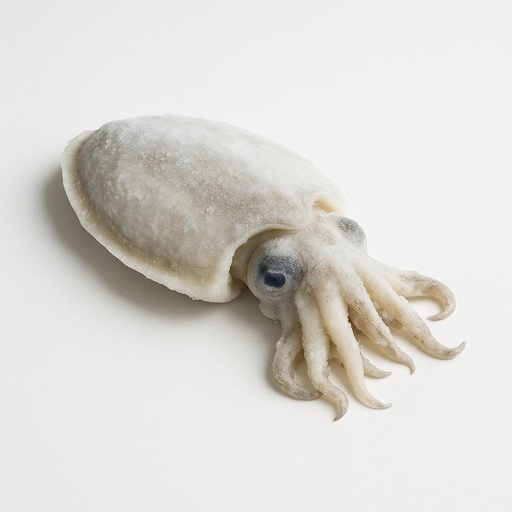
Frozen Cuttlefish Suppliers & Prices in Chile — Market Overview 2026
Raw Materials
Fresh Cuttlefish
Last Updated
2026-10-19
Key takeaways for search and sourcing teams
- 5 sampled export transactions for Chile are summarized.
- 1 export partner companies and 26 import partner companies are mapped for Frozen Cuttlefish in Chile.
- Page data last updated on 2026-10-19.
Frozen Cuttlefish Export Supplier Intelligence, Price Trends, and Trade Flows in Chile
1 export partner companies are tracked for Frozen Cuttlefish in Chile. Use Supply Chain Intelligence company profiles and analytics to validate exporter coverage, partner quality, and route priorities.
Explore Frozen Cuttlefish export intelligence in Chile, including 5 sampled supplier transactions, monthly unit-price ranges, and partner-country trade flow patterns for HS Code -.
Scatter points are sampled from 12.0% of the full transaction dataset. Each point is a real transaction — click one to see its details and ask AI Chat whether it was a fair deal.
Sample Export Supplier Transaction Records for Frozen Cuttlefish in Chile
5 sampled Frozen Cuttlefish transactions in Chile include date, origin, and partner-country context to benchmark export prices and supplier trading patterns.
Frozen Cuttlefish sampled transaction unit prices by date in Chile: 2026-08-26: 2.01 USD / kg, 2026-08-21: 2.02 USD / kg, 2026-08-11: 1.63 USD / kg, 2026-08-04: 1.58 USD / kg, 2026-08-03: 1.80 USD / kg.
| Date | Reported Product | Unit Price | Exporter | Importer | |
|---|---|---|---|---|---|
| 2026-08-26 | FIL*** ** ***** ********* | 2.01 USD / kg | (Chile) | (Taiwan) | |
| 2026-08-21 | TEN****** ** ********* ***** ************* ************* *********** ************** ** ****** | 2.02 USD / kg | (Chile) | (Spain) | |
| 2026-08-11 | FIL*** ** ****** ****** ********* ********** ****** | 1.63 USD / kg | (Chile) | (Vietnam) | |
| 2026-08-04 | FIL*** ** ***** ***** ********* | 1.58 USD / kg | (Chile) | (China) | |
| 2026-08-03 | FIL*** ** ***** ***** ********* | 1.80 USD / kg | (Chile) | (Vietnam) |
These 5 rows are a sample — open Frozen Cuttlefish transactions in Chile on Tridge Eye
Each record shows the exporter, importer and unit price. Ask AI Chat whether the deal was fair, or turn the records into an AI Curation.
Sign up and verify your company — newly verified companies get Tridge Eye Business free for the first month.
Top Frozen Cuttlefish Export Suppliers and Companies in Chile
Review leading exporter profiles and benchmark them against 1 total export partner companies tracked for Frozen Cuttlefish in Chile. Use Supply Chain Intelligence company profiles and analytics to shortlist sourcing and export partners faster.
(Chile)
Latest Export Transaction: 2026-09-19
Employee Size: 51 - 100 Employees
Sales Revenue: USD 10M - 50M
Industries: Others
Value Chain Roles: Trade
See the full picture in Tridge Eye: full price and trade history · 725,009+ company profiles
Chile Export Partner Coverage
1 companies
Total export partner company count is a core signal of Chile export network depth for Frozen Cuttlefish.
Exporters and importers can open Supply Chain Intelligence company profiles and analytics to assess Frozen Cuttlefish partner concentration, capacity signals, and trade relevance in Chile.
Tridge Ark · Sourcing Feasibility Check
Could you be importing Frozen Cuttlefish from Chile yourself?
Just tell us your spec and the volume you need. We'll check whether it's actually sourceable, and which origins and suppliers fit.
Free feasibility check, no account required.
Frozen Cuttlefish Import Buyer Intelligence and Price Signals in Chile: Buyers, Demand, and Trade Partners
26 import partner companies are tracked for Frozen Cuttlefish in Chile. Exporters and importers can use Supply Chain Intelligence company profiles and analytics to analyze buyer demand, partner density, and downstream channels.
Scatter points are sampled from 100.0% of the full transaction dataset. Each point is a real transaction — click one to see its details and ask AI Chat whether it was a fair deal.
Sample Import Transaction and Price Records for Frozen Cuttlefish in Chile
5 sampled Frozen Cuttlefish import transactions in Chile provide date, origin, and trade-country context to benchmark price levels and demand-side trading patterns.
Frozen Cuttlefish sampled import transaction unit prices by date in Chile: 2026-07-30: 3.40 USD / kg, 2026-07-27: 3.40 USD / kg, 2026-07-27: 3.40 USD / kg, 2026-05-28: 2.40 USD / kg, 2025-12-29: 3.65 USD / kg.
| Date | Reported Product | Unit Price | Exporter | Importer | Origin | |
|---|---|---|---|---|---|---|
| 2026-07-30 | JIB*** ******** * ********* ********* * ***** ********** | 3.40 USD / kg | (-) | (-) | - | |
| 2026-07-27 | JIB*** ******** * ********* ********* * ***** ********** | 3.40 USD / kg | (-) | (-) | - | |
| 2026-07-27 | JIB*** ******** * ********* ********* * ***** ********** | 3.40 USD / kg | (-) | (-) | - | |
| 2026-05-28 | JIB*** ******** * ********* ********* * ***** ********** | 2.40 USD / kg | (-) | (-) | - | |
| 2025-12-29 | JIB*** ******** * ********* ********* * ***** ********** | 3.65 USD / kg | (-) | (-) | - |
These 5 rows are a sample — open Frozen Cuttlefish transactions in Chile on Tridge Eye
Each record shows the exporter, importer and unit price. Ask AI Chat whether the deal was fair, or turn the records into an AI Curation.
Sign up and verify your company — newly verified companies get Tridge Eye Business free for the first month.
Top Frozen Cuttlefish Buyers, Importers, and Demand Partners in Chile
Review leading buyer profiles and compare them with 26 total import partner companies tracked for Frozen Cuttlefish in Chile. Exporters and importers can use Supply Chain Intelligence company profiles and analytics to evaluate demand-side partner fit.
(Chile)
Latest Import Transaction: 2026-09-19
Industries: Fishing Aquaculture, Food Manufacturing
Value Chain Roles: Farming / Production / Processing / Packing, Food Manufacturing
(Chile)
Latest Import Transaction: 2026-09-19
Employee Size: 1 - 10 Employees
Industries: Brokers And Trade Agencies, Fishing Aquaculture, Food Manufacturing
Value Chain Roles: Distribution / Wholesale, Trade
(Chile)
Latest Import Transaction: 2026-09-19
Employee Size: Over 1000 Employees
Industries: Fishing Aquaculture, Food Manufacturing, Food Packaging, Food Services And Drinking Places
Value Chain Roles: Distribution / Wholesale, Farming / Production / Processing / Packing, Food Manufacturing, Trade
(Chile)
Latest Import Transaction: 2026-09-19
Industries: Food Wholesalers
Value Chain Roles: Trade
(Chile)
Latest Import Transaction: 2026-09-19
Employee Size: 11 - 50 Employees
Industries: Others
Value Chain Roles: Logistics
(Chile)
Latest Import Transaction: 2026-09-19
Employee Size: Over 1000 Employees
Industries: Fishing Aquaculture, Food Manufacturing
Value Chain Roles: Distribution / Wholesale, Farming / Production / Processing / Packing
See the full picture in Tridge Eye: full price and trade history · 725,009+ company profiles
Chile Import Partner Coverage
26 companies
Import partner company count highlights demand-side visibility for Frozen Cuttlefish in Chile.
Use Supply Chain Intelligence analytics and company profiles to identify active Frozen Cuttlefish importers, distributors, and buyer networks in Chile.
Tridge Ark · Export Feasibility Check
Your Frozen Cuttlefish — could it sell to these buyers in Chile?
Just tell us what you make. We'll see whether you're ready to export today and which markets suit your offer.
Free feasibility check, no account required.
Classification
Product TypeRaw Material
Product FormFrozen
Industry PositionPrimary Fishery Product
Raw Material
Market
Frozen cuttlefish-type products exported from Chile are commonly associated in local trade with "jibia", a regulated cephalopod resource managed by the Chilean fisheries authority. Export market access is strongly shaped by official sanitary export certification and, for some destinations, legal-catch documentation workflows. The relevant fishery is described by Chile’s authority as year-round (Jan–Dec), with management measures including quota and gear/access controls. The most acute trade-disruption risk is documentation non-compliance (e.g., EU IUU catch-certificate/CATCH requirements), which can delay or block entry even when product quality is acceptable.
Market RoleProducer and exporter (wild-capture) of frozen cephalopod products, supported by official export certification systems
SeasonalityYear-round extraction/landings are described for the relevant Chilean cephalopod resource, so frozen supply is generally available throughout the year subject to quota/management controls.
Specification
Primary VarietyJibia / jumbo squid (Dosidicus gigas) (note: confirm buyer-required market name vs. scientific name for labeling and documents)
Physical Attributes
- Frozen cephalopod products are traded in multiple cut forms (e.g., whole/cleaned portions); buyer specs typically focus on cut type, cleanliness/defect tolerance, and frozen condition rather than cultivar-style varieties.
Supply Chain
Value Chain
- Wild capture/landing → processing & freezing establishment → official inspection/certification → cold storage → reefer export shipment
Temperature
- Continuous frozen cold-chain management is critical for long-haul exports; documentation and inspection may be linked to certified handling and establishment controls.
Freight IntensityMedium
Transport ModeSea
Risks
Regulatory Compliance HighEU/UK market access can be blocked or delayed by missing/incorrect IUU catch-certificate documentation and electronic workflow requirements (EU CATCH compulsory for imports from 10 January 2026), even when the product meets quality expectations.Run a pre-shipment document audit for each destination (sanitary certificate format + catch documentation where applicable); ensure catch certificates are properly validated and aligned with EU TRACES NT/CATCH requirements and SERNAPESCA legal-catch certifications when used.
Documentation Gap MediumSpecies/market-name ambiguity (e.g., "jibia" referenced by Chile’s authority as Dosidicus gigas/jumbo squid while some buyers may expect "cuttlefish" labeling) can trigger labeling, customs, or buyer-spec disputes and may cause holds or rework.Standardize product descriptions around scientific name + buyer-accepted market name; align commercial invoice, packing list, sanitary certificate, and any catch documentation to the same species and product form.
Sustainability MediumThe authority lists management measures for the relevant fishery (including an annual catch quota and restricted access/gear controls); non-compliance or quota tightening can reduce supply availability and increase enforcement exposure for exporters.Source only from compliant vessels/landings with verifiable legal origin; maintain traceability from landing to lot; monitor SUBPESCA/SERNAPESCA updates affecting quotas and access.
Logistics MediumLong-haul reefer shipping from Chile exposes exporters to container availability constraints, equipment failures, and ocean-freight volatility, which can affect delivery reliability and margins for frozen product programs.Contract reefer capacity early during peak seasons; use temperature-monitoring and contingency routing; build buffer time into contracts for destination border/control point scheduling.
Sustainability
- Fisheries management constraints (restricted access, gear controls, and quota) can cap exportable supply and create compliance exposure if sourcing is not controlled.
- Stock-status considerations: the authority describes the relevant fishery as in a state of full exploitation (plena explotación), implying heightened scrutiny of management compliance.
FAQ
Which official certificates are commonly needed to export frozen cuttlefish-type (cephalopod) products from Chile?Shipments typically require an official sanitary export certificate issued by SERNAPESCA using the destination’s required template. Some destination markets also require legal-catch documentation (SERNAPESCA lists legal-catch certificates for markets including the EU and Japan).
What is the most common documentation pitfall for EU-bound consignments of Chilean frozen cephalopods?Incorrect or incomplete IUU catch-certificate documentation can block or delay entry. The European Commission states that the electronic CATCH system becomes compulsory for EU imports as of 10 January 2026, so exporters should ensure their catch documentation and workflows are compliant.
Is supply from the Chilean "jibia" resource seasonal?SUBPESCA lists the extraction period for "jibia" as covering all months (January through December), indicating year-round fishing activity. Availability can still vary due to quota, access controls, and operational conditions.
Sources
Other Frozen Cuttlefish Country Markets for Supplier, Export, and Price Comparison from Chile
Compare Frozen Cuttlefish supplier coverage, trade flows, and price benchmarks across countries related to Chile.


Tridge Ark · Export & Sourcing Feasibility Checks
Frozen Cuttlefish in Chile — are you buying, or selling?
Either way it's a few questions. We'll come back with where you could buy it, or who you could sell it to.
Free feasibility check, no account required.
Related Frozen Cuttlefish Product Categories
Browse parent, sub, derived, and raw-material product market pages related to Frozen Cuttlefish.
Raw materials: Fresh Cuttlefish
By clicking “Accept Cookies,” I agree to provide cookies for statistical and personalized preference purposes. To learn more about our cookies, please read our Privacy Policy.