Shellac, bleached Suppliers & Prices in Argentina — Market Overview 2026
HS Code
130190
Last Updated
2026-08-23
Key takeaways for search and sourcing teams
- 2 sampled export transactions for Argentina are summarized.
- 26 export partner companies and 5 import partner companies are mapped for Shellac, bleached in Argentina.
- 2 export partner countries and 5 import partner countries are ranked.
- Latest reference year in this page dataset is 2024.
- Page data last updated on 2026-08-23.
Shellac, bleached Export Supplier Intelligence, Price Trends, and Trade Flows in Argentina
26 export partner companies are tracked for Shellac, bleached in Argentina. Use Supply Chain Intelligence company profiles and analytics to validate exporter coverage, partner quality, and route priorities.
Explore Shellac, bleached export intelligence in Argentina, including 2 sampled supplier transactions, monthly unit-price ranges, and partner-country trade flow patterns for HS Code 130190.
Scatter points are sampled from 100.0% of the full transaction dataset.
Sample Export Supplier Transaction Records for Shellac, bleached in Argentina
2 sampled Shellac, bleached transactions in Argentina include date, origin, and partner-country context to benchmark export prices and supplier trading patterns.
Shellac, bleached sampled transaction unit prices by date in Argentina: 2026-01-11: 25.08 USD / kg, 2026-01-11: 25.08 USD / kg.
| Date | Reported Product | Unit Price | Exporter | Importer | |
|---|---|---|---|---|---|
| 2026-01-11 | LAS ***** ****** *** ****** **** ***** ****** ******** ************ * ************ **** ******** ********** ********** ****** ******* * ***** ***** * ********* ********** | 25.08 USD / kg | (Argentina) | (China) | |
| 2026-01-11 | LAS ***** ****** *** ****** **** ***** ****** ******** ************ * ************ **** ******** ********** ********** ****** ******* * ***** ***** * ********* ********** | 25.08 USD / kg | (Argentina) | (China) |
Top Shellac, bleached Export Suppliers and Companies in Argentina
Review leading exporter profiles and benchmark them against 26 total export partner companies tracked for Shellac, bleached in Argentina. Use Supply Chain Intelligence company profiles and analytics to shortlist sourcing and export partners faster.
(Argentina)
Latest Export Transaction: 2026-07-23
Industries: Others
Value Chain Roles: Trade
(Argentina)
Latest Export Transaction: 2026-07-23
Industries: Brokers And Trade AgenciesFood WholesalersOthers
Value Chain Roles: Distribution / WholesaleOthersTrade
(Argentina)
Latest Export Transaction: 2026-07-23
Industries: Food ManufacturingFood Services And Drinking PlacesOthers
Value Chain Roles: Distribution / WholesaleFood ManufacturingOthers
(Argentina)
Latest Export Transaction: 2026-07-23
Industries: Others
Value Chain Roles: Trade
(Argentina)
Latest Export Transaction: 2026-07-23
Industries: Others
Value Chain Roles: Trade
(Argentina)
Latest Export Transaction: 2026-07-23
Industries: Others
Value Chain Roles: Trade
Argentina Export Partner Coverage
26 companies
Total export partner company count is a core signal of Argentina export network depth for Shellac, bleached.
Exporters and importers can open Supply Chain Intelligence company profiles and analytics to assess Shellac, bleached partner concentration, capacity signals, and trade relevance in Argentina.
Annual Export Value, Volume, and Supplier Market Size for Shellac, bleached in Argentina (HS Code 130190)
Analyze 1 years of Shellac, bleached export volume and value in Argentina to evaluate supplier market growth, seasonality, and trade volatility.
| Year | Volume | Value |
|---|---|---|
| 2024 | 2,169,592 | 1,058,089 USD |
Top Destination Markets for Shellac, bleached Exports from Argentina (HS Code 130190) in 2024
For 2024, compare export volume and value across the top 2 destination countries for Shellac, bleached exports from Argentina.
| Rank | Country | Volume | Value |
|---|---|---|---|
| 1 | Brazil | 1,657,300 | 799,811.78 USD |
| 2 | Portugal | 512,292 | 258,276.86 USD |
Sourcing diagnosis
Could you be importing Shellac, bleached from Argentina yourself?
Just tell us your spec and the volume you need. We'll check whether it's actually sourceable, and which origins and suppliers fit — free.
Shellac, bleached Import Buyer Intelligence and Price Signals in Argentina: Buyers, Demand, and Trade Partners
5 import partner companies are tracked for Shellac, bleached in Argentina. Exporters and importers can use Supply Chain Intelligence company profiles and analytics to analyze buyer demand, partner density, and downstream channels.
Scatter points are sampled from 78.6% of the full transaction dataset.
Sample Import Transaction and Price Records for Shellac, bleached in Argentina
5 sampled Shellac, bleached import transactions in Argentina provide date, origin, and trade-country context to benchmark price levels and demand-side trading patterns.
Shellac, bleached sampled import transaction unit prices by date in Argentina: 2026-06-26: 83.77 USD / kg, 2026-05-21: 12.00 USD / kg, 2026-04-20: 17.00 USD / kg, 2026-03-13: 15.80 USD / kg, 2026-02-25: 18.39 USD / kg.
| Date | Reported Product | Unit Price | Exporter | Importer | Origin | |
|---|---|---|---|---|---|---|
| 2026-06-26 | LOS *** ******* *********** * ************ ********** | 83.77 USD / kg | (-) | (-) | - | |
| 2026-05-21 | LOS *** ******* *********** * ************ ********** | 12.00 USD / kg | (-) | (-) | - | |
| 2026-04-20 | LOS *** ******* *********** * ************ ********** | 17.00 USD / kg | (-) | (-) | - | |
| 2026-03-13 | LOS *** ******* *********** * ************ ********** | 15.80 USD / kg | (-) | (-) | - | |
| 2026-02-25 | LOS *** ******* *********** * ************ ********** | 18.39 USD / kg | (-) | (-) | - |
Top Shellac, bleached Buyers, Importers, and Demand Partners in Argentina
Review leading buyer profiles and compare them with 5 total import partner companies tracked for Shellac, bleached in Argentina. Exporters and importers can use Supply Chain Intelligence company profiles and analytics to evaluate demand-side partner fit.
(Argentina)
Latest Import Transaction: 2026-07-23
Employee Size: 51 - 100 Employees
Industries: Others
Value Chain Roles: Farming / Production / Processing / PackingTrade
(Argentina)
Latest Import Transaction: 2026-07-23
Industries: Others
Value Chain Roles: Trade
(Argentina)
Latest Import Transaction: 2026-07-23
Industries: Others
Value Chain Roles: Trade
(Argentina)
Latest Import Transaction: 2026-07-23
Employee Size: Over 1000 Employees
Industries: Freight Forwarding And IntermodalOnline Retail And Fulfillment
Value Chain Roles: LogisticsTrade
(Argentina)
Latest Import Transaction: 2026-07-23
Industries: Food ManufacturingOthers
Value Chain Roles: Food ManufacturingOthers
Argentina Import Partner Coverage
5 companies
Import partner company count highlights demand-side visibility for Shellac, bleached in Argentina.
Use Supply Chain Intelligence analytics and company profiles to identify active Shellac, bleached importers, distributors, and buyer networks in Argentina.
Annual Import Value, Volume, and Demand Size for Shellac, bleached in Argentina (HS Code 130190)
Track 1 years of Shellac, bleached import volume and value in Argentina to assess demand growth and market momentum.
| Year | Volume | Value |
|---|---|---|
| 2024 | 84,748 | 1,388,966 USD |
Top Origin Supplier Countries Supplying Shellac, bleached to Argentina (HS Code 130190) in 2024
For 2024, compare import volume and value across the top 5 origin supplier countries supplying Shellac, bleached to Argentina.
| Rank | Country | Volume | Value |
|---|---|---|---|
| 1 | Somalia | 52,000 | 816,982.35 USD |
| 2 | Germany | 10,002.5 | 165,101.66 USD |
| 3 | India | 11,500 | 83,615.49 USD |
| 4 | Spain | 3,070 | 82,591.92 USD |
| 5 | United States | 1,423 | 75,510.77 USD |
Export diagnosis
Your Shellac, bleached — could it sell to these buyers in Argentina?
Just tell us what you make. We'll see whether you're ready to export today and which markets suit your offer — free.
Price data
Want the hidden Shellac, bleached prices in Argentina?
We'll open up the full price history and competitor benchmarks. Just tell us which numbers you need and we'll walk you through them.
Classification
Product TypeIngredient
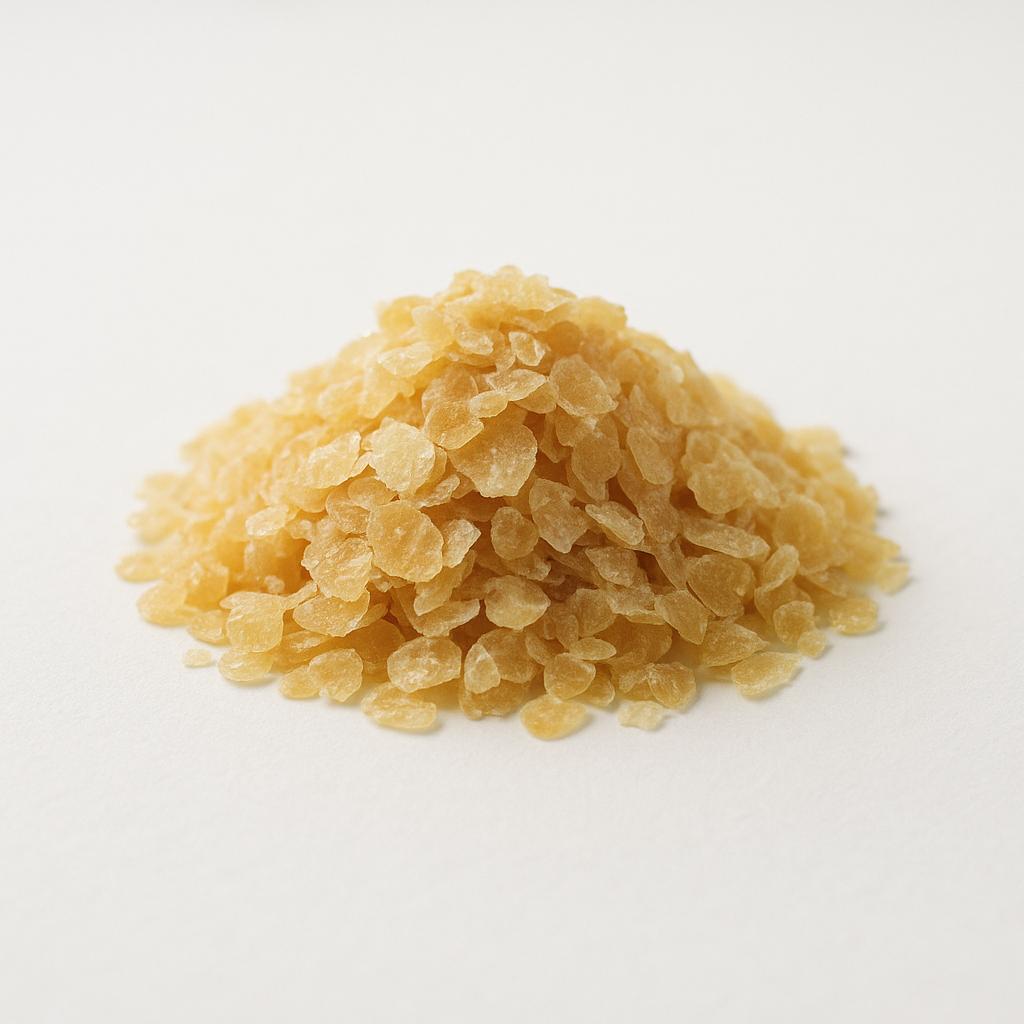
Product FormRefined (bleached shellac resin; granular/flakes)
Industry PositionFood Additive (Glazing/Coating Agent)
Market
In Argentina, bleached shellac is explicitly specified in the Código Alimentario Argentino (CAA) as “Goma laca (INS 904)”, including defined purity criteria for bleached and wax-free bleached forms. The country is an import-dependent market for this additive, as shellac is a lac-insect resin typically sourced from overseas supply chains rather than produced domestically. Market access and buyer acceptance hinge on meeting the CAA specifications (e.g., wax and lead limits) and providing batch documentation aligned to referenced JECFA methods. For imports regulated under ANMAT/INAL food trade procedures updated under Decree 35/2025 (announced January 30, 2025), administrative routing and documentation readiness can be as critical as the product’s technical conformity.
Market RoleNet importer (import-dependent ingredient market)
Domestic RoleIndustrial input for food and supplement/pharmaceutical coating applications where glazing agents are used
Specification
Physical Attributes
- Granular amorphous resin; bleached shellac described as whitish
- Wax-free bleached shellac described as light yellow
- Insoluble in water; soluble (slowly) in alcohol; partially soluble in acetone and ether
Compositional Metrics
- Acid value: 60–89 (CAA specification for Goma laca INS 904)
- Loss on drying: ≤ 6.0% (40°C, 4h, over silica gel, 15h) (CAA specification)
- Wax content: ≤ 5.5% for bleached shellac; ≤ 0.2% for wax-free bleached shellac (CAA specification)
- Lead: ≤ 2 mg/kg (CAA specification)
- Rosin (colophony): absence (CAA specification)
Supply Chain
Value Chain
- Origin refining/bleaching → export shipment → Argentina customs/import clearance → importer warehouse → distribution to industrial users (food/supplement/pharma) → in-plant application as glazing/coating ingredient
Temperature
- Ambient shipment and storage is typical; protect from heat to avoid softening/agglomeration risk in resin products
Shelf Life
- Quality is sensitive to moisture uptake and contamination; batch integrity and sealed packaging support shelf stability for industrial use
Freight IntensityLow
Transport ModeSea
Risks
Regulatory Compliance HighNon-conformity to Argentina’s CAA specification for Goma laca (INS 904) or misalignment with ANMAT/INAL import procedures under Decree 35/2025 can trigger border holds, refusal, or post-market enforcement, effectively blocking supply to industrial users.Pre-validate that the product grade matches the CAA INS 904 specification (including wax class), obtain a batch COA explicitly mapping to CAA parameters, and align the importer’s INAL pathway (TAD/required registrations) before shipment.
Food Safety MediumHeavy-metal non-compliance (notably lead) is a key failure mode for shellac lots; Argentina’s CAA specification sets an explicit lead maximum, and any exceedance can create rejection/recall risk.Require COA with lead results per lot, confirm laboratory method suitability, and implement incoming QC verification for high-risk origins or new suppliers.
Documentation Gap MediumIncomplete or inconsistent technical documentation (identity, wax status, COA parameters, or mismatched product description vs. invoice) can delay customs and sanitary processing and interrupt production schedules for industrial users.Use a pre-shipment document checklist and a single controlled product description aligned across PO, invoice, packing list, and COA.
Supply Concentration MediumArgentina’s dependence on imported shellac exposes buyers to upstream supply shocks (origin-country production variability, export disruptions, or supplier concentration), which can cause sudden availability and price swings for specialty grades.Dual-source qualified suppliers, maintain safety stock for critical coating applications, and pre-approve functional equivalents where feasible.
Sustainability
- Upstream supply-chain sustainability and traceability risk (shellac is insect-derived resin; buyers may request origin transparency and responsible processing controls).
- Chemical management expectations for bleaching/refining residues and impurity controls (managed via specification and COA conformity).
Labor & Social
- Insect-derived origin can create reputational/consumer-policy risk if not transparently managed in downstream labeling/claims (e.g., vegan/vegetarian suitability assertions).
- Supplier social-compliance assurance is typically managed through importer qualification and third-party audits when required by multinational or retailer programs.
Standards
- FSSC 22000 / ISO 22000
- HACCP
- GMP
- Supplier COA aligned to CAA (INS 904) and JECFA specifications
FAQ
Is bleached shellac explicitly recognized in Argentina’s food additive standards, and what key purity limits apply?Yes. Argentina’s Código Alimentario Argentino lists Goma laca (INS 904) and describes bleached shellac and wax-free bleached shellac, including limits such as wax content (≤5.5% for bleached; ≤0.2% for wax-free), lead (≤2 mg/kg), loss on drying (≤6.0%), and requiring absence of rosin (colophony).
What tariff classification is typically used in MERCOSUR for gum lac/shellac imports into Argentina?A commonly referenced MERCOSUR classification is NCM 1301.90.10 (“Goma laca”). Importers should still confirm the exact classification for the specific product presentation with their customs broker.
What is the main official channel referenced for Argentina’s updated food import procedures under Decree 35/2025?ANMAT indicates that the updated procedures managed through INAL include using the TAD platform for import-related steps such as the ‘Aviso de Importación’ pathway where applicable under the Decree 35/2025 framework.
Sources
Other Shellac, bleached Country Markets for Supplier, Export, and Price Comparison from Argentina
Compare Shellac, bleached supplier coverage, trade flows, and price benchmarks across countries related to Argentina.


Free diagnosis
Shellac, bleached in Argentina — are you buying, or selling?
Either way it's a few questions. We'll come back with where you could buy it, or who you could sell it to.
By clicking “Accept Cookies,” I agree to provide cookies for statistical and personalized preference purposes. To learn more about our cookies, please read our Privacy Policy.