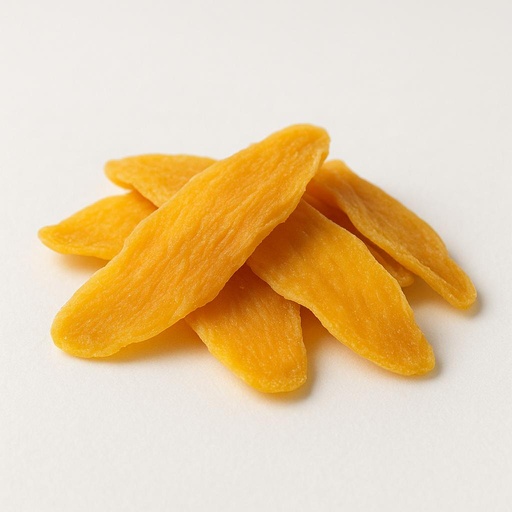
Soft Dried Mango Suppliers & Prices in India — Market Overview 2026
Parent Product
Dried Mango
HS Code
200899
Last Updated
2026-10-29
Key takeaways for search and sourcing teams
- 5 export partner countries and 5 import partner countries are ranked.
- Latest reference year in this page dataset is 2024.
- Page data last updated on 2026-10-29.
Soft Dried Mango Export Supplier & Manufacturer Intelligence, Price Trends, and Trade Flows in India
Use Supply Chain Intelligence company profiles and analytics to validate Soft Dried Mango exporter coverage, partner quality, and route priorities in India.
Annual Export Value, Volume, and Supplier Market Size for Soft Dried Mango in India (HS Code 200899)
Analyze 3 years of Soft Dried Mango export volume and value in India to evaluate supplier market growth, seasonality, and trade volatility.
| Year | Volume | Value |
|---|---|---|
| 2024 | 172,005,080 | 178,773,251 USD |
| 2023 | 92,906,825 | 106,190,698 USD |
| 2022 | 34,059,832 | 44,745,650 USD |
Top Destination Markets for Soft Dried Mango Exports from India (HS Code 200899) in 2024
For 2024, compare export volume and value across the top 5 destination countries for Soft Dried Mango exports from India.
| Rank | Country | Volume | Value |
|---|---|---|---|
| 1 | Netherlands | 35,367,639 | 36,510,145.105 USD |
| 2 | Saudi Arabia | 28,538,417 | 27,260,350.703 USD |
| 3 | United States | 10,445,472 | 12,818,989.7 USD |
| 4 | Kuwait | 9,953,636 | 9,755,929.753 USD |
| 5 | United Arab Emirates | 9,755,439 | 9,254,252.947 USD |
Tridge Ark · Sourcing Feasibility Check
Could you be importing Soft Dried Mango from India yourself?
Just tell us your spec and the volume you need. We'll check whether it's actually sourceable, and which origins and suppliers fit.
Free feasibility check, no account required.
Soft Dried Mango Import Buyer Intelligence and Price Signals in India: Buyers, Demand, and Trade Partners
56 import partner companies are tracked for Soft Dried Mango in India. Exporters and importers can use Supply Chain Intelligence company profiles and analytics to analyze buyer demand, partner density, and downstream channels.
Scatter points are sampled from 100.0% of the full transaction dataset. Each point is a real transaction — click one to see its details and ask AI Chat whether it was a fair deal.
Sample Import Transaction and Price Records for Soft Dried Mango in India
5 sampled Soft Dried Mango import transactions in India provide date, origin, and trade-country context to benchmark price levels and demand-side trading patterns.
Soft Dried Mango sampled import transaction unit prices by date in India: 2026-07-27: 7.59 USD / kg, 2026-07-22: 7.70 USD / kg, 2026-05-08: 7.70 USD / kg, 2026-05-02: 7.59 USD / kg, 2026-03-08: 7.62 USD / kg.
| Date | Reported Product | Unit Price | Exporter | Importer | Origin | |
|---|---|---|---|---|---|---|
| 2026-07-27 | 080***** **** ***** ***** ***** ******** **** ***** ***** ***** | 7.59 USD / kg | (-) | (-) | - | |
| 2026-07-22 | 200***** **** ***** ***** ***** ***** ******** **** ***** ***** ***** ***** | 7.70 USD / kg | (-) | (-) | - | |
| 2026-05-08 | 200***** **** ***** ***** ***** ***** ******** **** ***** ***** ***** ***** | 7.70 USD / kg | (-) | (-) | - | |
| 2026-05-02 | 080***** **** ***** ***** ***** ******** **** ***** ***** ***** | 7.59 USD / kg | (-) | (-) | - | |
| 2026-03-08 | 080***** **** ***** ***** ***** ** ** * * ***** ********** **** ***** ***** ***** ** ** * * ***** | 7.62 USD / kg | (-) | (-) | - |
See These India Soft Dried Mango Shipments — and at What Price
Free account — open the full market in Tridge Eye
Sign up and verify your company — newly verified companies can try Tridge Eye Business free.
Top Soft Dried Mango Buyers, Importers, and Demand Partners in India
Review leading buyer profiles and compare them with 56 total import partner companies tracked for Soft Dried Mango in India. Exporters and importers can use Supply Chain Intelligence company profiles and analytics to evaluate demand-side partner fit.
(India)
Latest Import Transaction: 2026-09-29
Industries: Beverage Manufacturing, Food Manufacturing, Food Services And Drinking Places
Value Chain Roles: Distribution / Wholesale, Food Manufacturing, Retail
(India)
Latest Import Transaction: 2026-09-29
Industries: Beverage Manufacturing, Food Manufacturing, Others
Value Chain Roles: Food Manufacturing, Trade
(India)
Latest Import Transaction: 2026-09-29
Industries: Beverage Manufacturing, Food Manufacturing, Others
Value Chain Roles: Distribution / Wholesale, Food Manufacturing, Trade
(India)
Latest Import Transaction: 2026-09-29
Industries: Food Manufacturing, Food Wholesalers
Value Chain Roles: Distribution / Wholesale, Food Manufacturing
(India)
Latest Import Transaction: 2026-09-29
Industries: Food Manufacturing
Value Chain Roles: Food Manufacturing
(India)
Latest Import Transaction: 2026-09-29
Industries: Brokers And Trade Agencies, Crop Production, Food Manufacturing, Food Packaging
Value Chain Roles: Farming / Production / Processing / Packing, Trade
See the full picture in Tridge Eye: full price and trade history · 725,009+ company profiles
India Import Partner Coverage
56 companies
Import partner company count highlights demand-side visibility for Soft Dried Mango in India.
Use Supply Chain Intelligence analytics and company profiles to identify active Soft Dried Mango importers, distributors, and buyer networks in India.
Annual Import Value, Volume, and Demand Size for Soft Dried Mango in India (HS Code 200899)
Track 3 years of Soft Dried Mango import volume and value in India to assess demand growth and market momentum.
| Year | Volume | Value |
|---|---|---|
| 2024 | 3,361,800 | 9,294,995 USD |
| 2023 | 2,926,009 | 6,948,857 USD |
| 2022 | 4,245,158 | 9,764,352 USD |
Top Origin Supplier Countries Supplying Soft Dried Mango to India (HS Code 200899) in 2024
For 2024, compare import volume and value across the top 5 origin supplier countries supplying Soft Dried Mango to India.
| Rank | Country | Volume | Value |
|---|---|---|---|
| 1 | United States | 341,191 | 3,436,140.308 USD |
| 2 | Philippines | 1,113,060 | 1,231,483.083 USD |
| 3 | United Arab Emirates | 50,727 | 1,000,527.415 USD |
| 4 | China | 635,119 | 971,664.556 USD |
| 5 | Thailand | 450,251 | 684,054.802 USD |
Tridge Ark · Export Feasibility Check
Your Soft Dried Mango — could it sell to these buyers in India?
Just tell us what you make. We'll see whether you're ready to export today and which markets suit your offer.
Free feasibility check, no account required.
Classification
Product TypeProcessed Food
Product FormSoft-dried (semi-dried) fruit snack
Industry PositionValue-Added Processed Fruit Product
Market
Soft-dried mango in India is produced from the country’s large seasonal mango supply base and is sold both as a domestic packaged snack and as an export-oriented dehydrated fruit product. Mango sourcing is concentrated in major producing states identified by India’s National Horticulture Board, while processing volumes typically intensify during the main mango harvest window highlighted in APEDA crop-calendar materials. Market access and labeling compliance are shaped by FSSAI’s food additive and labeling frameworks for pre-packaged foods. For exporters, DGFT’s Importer-Exporter Code (IEC) and APEDA membership (RCMC) requirements can be gating steps for commercialization and shipment execution.
Market RoleProducer with domestic consumption market and export-oriented processing segment
Domestic RolePackaged dried-fruit snack and food-ingredient product supplied to retail and food manufacturing users
SeasonalityRaw mango procurement for soft-dried processing is strongly seasonal; APEDA crop-calendar materials highlight peak mango harvesting months for India broadly spanning roughly April–September, with regional variation. Finished soft-dried product availability can be year-round via inventory, but processing throughput and raw-mango pricing typically tighten outside peak harvest.
Specification
Secondary Variety
- Alphonso
- Kesar
- Dasheri
- Langra
- Banganapalli
- Totapuri
Physical Attributes
- Uniform slice thickness and controlled chewiness (soft texture rather than brittle dryness)
- Bright yellow-orange color retention with minimal browning
- Low foreign matter tolerance (stones, peel fragments, stem pieces)
- Low stickiness to support retail handling and bulk packing efficiency
Compositional Metrics
- Moisture and water-activity control is central to a ‘soft-dried’ texture while managing mold risk
- If sulfites are used for anti-browning/preservation, total sulfite levels must remain within applicable limits and be correctly declared where required
Packaging
- Moisture/oxygen barrier pouches (often resealable) for domestic retail
- Bulk foodservice/ingredient packs (lined cartons or high-barrier bags) for export programs
- Lot/batch coding to support recalls and buyer audits under FSSAI labeling expectations and importer requirements
Supply Chain
Value Chain
- Mango procurement in producing states → reception & sorting → washing/sanitizing → peeling & slicing → anti-browning pretreatment (where used) → controlled dehydration to soft-dried endpoint → conditioning/equalization → metal detection/foreign matter control → packaging → domestic distribution or export dispatch
Temperature
- Ambient distribution is typical; quality risk is driven more by humidity/temperature excursions than by cold-chain breaks
- Storage and transit should prioritize cool, dry conditions to limit moisture pickup and texture deterioration
Atmosphere Control
- Oxygen management (high-barrier packs, optional nitrogen flushing/oxygen scavengers) can be used to slow oxidation and color change, especially for premium export packs
Shelf Life
- Shelf-life is primarily limited by moisture ingress (stickiness, clumping, mold risk) and oxidation-driven color/flavor drift
- Container dwell time and monsoon-season humidity elevate packaging integrity and desiccant/liner importance
Freight IntensityMedium
Transport ModeSea
Risks
Food Safety HighNon-compliance with additive/allergen expectations (especially sulfites used for anti-browning/preservation) can trigger border rejection, recall exposure, or buyer delisting. Codex GSFA provisions list a maximum level for the sulfites group in dried fruit (food category 04.1.2.2) of 1,000 mg/kg, and destination markets may apply equal or stricter requirements plus mandatory sulfite allergen declaration thresholds.Use validated sulfite dosing (or sulfite-free processing where targeted), test finished lots with an accredited lab, and ensure ingredients/allergen statements match the COA and the importing-country labeling rules.
Regulatory Compliance MediumExporter eligibility and shipment execution can be blocked by documentation gaps (e.g., missing/invalid IEC or missing APEDA RCMC where applicable) and by label non-conformance under FSSAI (for domestic sale) or destination-market label rules (for export packs).Maintain an IEC/RCMC compliance checklist, keep label artwork controlled under document management, and run pre-shipment label and document reconciliation against invoice/packing list/COA.
Tariff Classification MediumSoft-dried mango classification can be disputed when the product is more than simply ‘dried’ (e.g., sugar-infused or otherwise prepared), leading to tariff misapplication, delays, or penalties in destination customs.Lock a written HS classification rationale with a broker (ingredients/process-based), align commercial description to the actual recipe/process, and keep formulation/process evidence ready for customs queries.
Climate MediumSeasonal and weather-driven volatility in India’s mango harvest can tighten raw material supply and raise input prices during peak processing windows, affecting export program continuity and contracted pricing.Diversify sourcing across multiple producing states, contract early for peak-season volumes, and design production planning around APEDA/NHB harvest seasonality references.
Sustainability
- Water and input stewardship at orchard level in major mango belts (risk translates into residue compliance and supply continuity for processors)
- Energy use and emissions footprint from dehydration operations (electricity/thermal drying) for export buyers with ESG screening
- Single-use flexible packaging waste from retail snack formats; increasing buyer interest in recyclable/mono-material packaging
Labor & Social
- Seasonal labor reliance in fruit handling, peeling/slicing, and packing operations; heightened need for wage/hour compliance and safe working conditions during peak processing months
- Buyer code-of-conduct expectations (including prevention of child labor and forced labor risks) may require documented due diligence across orchards, labor contractors, and processing units
Standards
- BRCGS Global Standard Food Safety
- ISO 22000 (food safety management systems)
- HACCP-based Food Safety Management System (FSMS)
FAQ
What are the key India-side prerequisites to export soft-dried mango?At minimum, an exporter generally needs a DGFT Importer-Exporter Code (IEC). For APEDA scheduled products, exporters may also need an APEDA Registration-cum-Membership Certificate (RCMC) obtained through DGFT’s portal workflow. Shipments are typically executed through customs electronic filing (e.g., Shipping Bill via ICEGATE), alongside standard commercial documents (invoice/packing list).
Why are sulfites a high-risk compliance point for dried/soft-dried mango exports?Sulfites (such as sulfur dioxide and metabisulfites) are widely used in dried fruit to control browning, but they are tightly regulated and can be treated as allergens in many markets. Codex GSFA provisions list a maximum level for sulfites in dried fruit, and destination countries or buyers may apply equal or stricter limits and require clear sulfite declarations on labels. Non-compliance can lead to detention or rejection.
Which Indian rules shape retail labeling for soft-dried mango sold domestically?India’s pre-packaged food labeling requirements are set out under the Food Safety and Standards (Labelling and Display) Regulations, 2020 (FSSAI compendium versions incorporate amendments for reference). These rules drive mandatory declarations (including ‘best before’ and ingredient declarations) and prohibit misleading presentation.
How does mango harvest seasonality affect soft-dried mango production planning in India?APEDA crop-calendar materials and NHB horticulture references indicate that mango harvesting in India is concentrated in the main seasonal window (broadly April–September, with regional variation). Soft-dried mango processing and procurement typically ramp during this period, while year-round sales depend more on inventory management and humidity-protective storage.
Sources
Other Soft Dried Mango Country Markets for Supplier, Manufacturer, Export, and Price Comparison from India
Compare Soft Dried Mango supplier coverage, trade flows, and price benchmarks across countries related to India.


Tridge Ark · Export & Sourcing Feasibility Checks
Soft Dried Mango in India — are you buying, or selling?
Either way it's a few questions. We'll come back with where you could buy it, or who you could sell it to.
Free feasibility check, no account required.
Related Soft Dried Mango Product Categories
Browse parent, sub, derived, and raw-material product market pages related to Soft Dried Mango.
Parent product: Dried Mango
By clicking “Accept Cookies,” I agree to provide cookies for statistical and personalized preference purposes. To learn more about our cookies, please read our Privacy Policy.