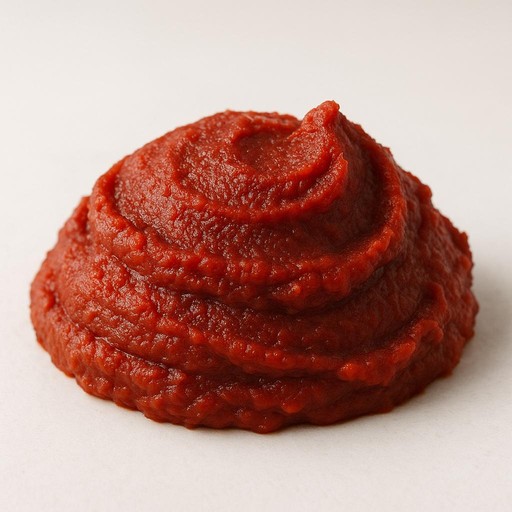
Tomato Paste Prices & Trade in Latvia — Market Overview 2026
Derived Products
Cocktail Sauce, Chili Beans, BBQ sauce, Demi Glace Sauce, +13
Raw Materials
Fresh Tomato, Salt
HS Code
200290
Last Updated
2026-10-19
Key takeaways for search and sourcing teams
- 5 export partner countries and 5 import partner countries are ranked.
- Latest reference year in this page dataset is 2024.
- Page data last updated on 2026-10-19.
Tomato Paste Export Supplier & Manufacturer Intelligence, Price Trends, and Trade Flows in Latvia
Use Supply Chain Intelligence company profiles and analytics to validate Tomato Paste exporter coverage, partner quality, and route priorities in Latvia.
Annual Export Value, Volume, and Supplier Market Size for Tomato Paste in Latvia (HS Code 200290)
Analyze 3 years of Tomato Paste export volume and value in Latvia to evaluate supplier market growth, seasonality, and trade volatility.
| Year | Volume | Value |
|---|---|---|
| 2024 | 264,427 | 663,146 USD |
| 2023 | 1,033,185 | 2,246,234 USD |
| 2022 | 1,176,042 | 2,239,255 USD |
Top Destination Markets for Tomato Paste Exports from Latvia (HS Code 200290) in 2024
For 2024, compare export volume and value across the top 5 destination countries for Tomato Paste exports from Latvia.
| Rank | Country | Volume | Value |
|---|---|---|---|
| 1 | Estonia | 137,490 | 230,652.029 USD |
| 2 | Lithuania | 68,440 | 149,864.234 USD |
| 3 | Poland | 23,676 | 134,587.516 USD |
| 4 | Ukraine | 22,600 | 123,232.263 USD |
| 5 | Russia | 3,707 | 8,341.906 USD |
Tridge Ark · Sourcing Feasibility Check
Could you be importing Tomato Paste from Latvia yourself?
Just tell us your spec and the volume you need. We'll check whether it's actually sourceable, and which origins and suppliers fit.
Free feasibility check, no account required.
Tomato Paste Import Buyer Intelligence and Price Signals in Latvia: Buyers, Demand, and Trade Partners
Exporters and importers can use Supply Chain Intelligence company profiles and analytics to analyze Tomato Paste buyer demand, partner density, and downstream channels in Latvia.
Annual Import Value, Volume, and Demand Size for Tomato Paste in Latvia (HS Code 200290)
Track 3 years of Tomato Paste import volume and value in Latvia to assess demand growth and market momentum.
| Year | Volume | Value |
|---|---|---|
| 2024 | 4,737,979 | 7,431,799 USD |
| 2023 | 5,056,853 | 8,816,759 USD |
| 2022 | 5,519,062 | 6,888,270 USD |
Top Origin Supplier Countries Supplying Tomato Paste to Latvia (HS Code 200290) in 2024
For 2024, compare import volume and value across the top 5 origin supplier countries supplying Tomato Paste to Latvia.
| Rank | Country | Volume | Value |
|---|---|---|---|
| 1 | China | 2,322,485.686 | 3,389,200.568 USD |
| 2 | Spain | 596,544 | 1,193,650.254 USD |
| 3 | Lithuania | 405,861 | 673,591.337 USD |
| 4 | Hungary | 390,803 | 475,989.796 USD |
| 5 | Germany | 223,044 | 338,367.285 USD |
Tridge Ark · Export Feasibility Check
Your Tomato Paste — could it sell to these buyers in Latvia?
Just tell us what you make. We'll see whether you're ready to export today and which markets suit your offer.
Free feasibility check, no account required.
Classification
Product TypeProcessed Food
Product FormShelf-stable paste (canned or aseptic)
Industry PositionProcessed Agricultural Product
Market
Tomato paste in Latvia is primarily an import-dependent, shelf-stable processed-vegetable staple used in home cooking and foodservice. Supply is largely sourced via EU single-market trade and, for third-country origins, enters under EU official controls with Latvia’s competent authorities applying routine import oversight for non-animal-origin foods. Compliance with EU food labelling, additive, and contaminant rules is a central market-access requirement, with non-compliance potentially triggering border actions or market withdrawals via EU alert mechanisms. Ethical sourcing scrutiny can be relevant where supply chains include higher-risk regions linked to forced-labour allegations in the global tomato sector.
Market RoleImport-dependent consumer market (EU single market)
Domestic RoleHousehold and foodservice cooking ingredient (base for sauces, soups, stews)
Market GrowthNot Mentioned
SeasonalityYear-round availability driven by shelf-stable inventories and continuous import supply.
Specification
Physical Attributes
- Uniform red color and clean flavor (no scorched notes)
- Smooth consistency appropriate for declared concentrate grade
- Absence of visible mold, foreign matter, and packaging defects (swollen or leaking cans)
Compositional Metrics
- Soluble solids / concentration (commonly expressed as °Brix or concentrate grade)
- pH / acidity and salt level (when salt is added)
- Net weight and drained/solids declaration consistent with label
Grades
- Single, double, or higher concentrate grades (commercial specifications vary by buyer)
- Organic vs conventional (where certified and labelled)
Packaging
- Retail cans and jars
- Foodservice cans
- Industrial aseptic bags-in-boxes or drums for downstream users
Supply Chain
Value Chain
- Processor/packer (origin country) → packaged tomato paste (cans or aseptic) → EU logistics (road/sea/rail) → (for third-country consignments) Latvia Border Control Post official controls → customs release for free circulation → importer/warehouse → retail and foodservice distribution
Temperature
- Generally transported and stored ambient as a shelf-stable product; protect from extreme heat and freezing to avoid quality degradation and packaging integrity issues.
Shelf Life
- Shelf-life and durability depend on packaging format (canned vs aseptic) and declared best-before date; verify buyer specification and label compliance for Latvia/EU sale.
Freight IntensityMedium
Transport ModeMultimodal
Risks
Food Safety HighNon-compliance with EU food safety requirements (e.g., contaminant limits or other safety non-conformities) can lead to border actions, market withdrawals, and rapid EU-wide alerts via RASFF, disrupting access to the Latvian market.Use accredited lab testing aligned to EU requirements, maintain full lot documentation, and run label/formulation verification before shipment; monitor RASFF trends relevant to tomato products.
Labor And Human Rights MediumTomato products linked to higher-risk regions associated with forced-labour allegations (notably Xinjiang in China) can trigger heightened buyer scrutiny; EU rules prohibiting products made with forced labour create additional enforcement and reputational risk over time.Implement origin mapping to farm/region where feasible, require supplier attestations and third-party audits where appropriate, and apply enhanced due diligence for China-origin inputs and complex repack/re-export chains.
Regulatory Compliance MediumDocumentation or procedural gaps for third-country consignments (e.g., missing or incorrect TRACES NT prior notification/CHED where required, or incomplete importer registration/records) can cause delays and storage costs at Border Control Posts.Confirm Latvia PVD requirements for the specific consignment and origin, complete TRACES NT submissions in advance, and align customs and official-control documentation checklists with the importer/broker.
Logistics MediumFreight-rate volatility and multimodal routing disruptions can increase landed cost and create availability gaps, particularly for long-distance, third-country origins shipped in containers.Diversify sourcing between intra-EU and third-country origins, lock freight contracts where possible, and hold safety stock for retail/private-label programs.
Climate MediumExtreme heat and drought in major processing-tomato regions can reduce raw tomato availability and raise concentrate prices, impacting procurement stability for Latvia importers.Use multi-origin sourcing and monitor seasonal outlooks and processor procurement signals in key origin regions.
Sustainability
- Water stress and drought risk in major processing-tomato producing regions affecting supply reliability and cost
- Packaging footprint (metal cans and multilayer aseptic materials) and recycling compliance expectations in EU retail
Labor & Social
- Forced-labour due diligence risk in parts of global tomato supply chains (notably Xinjiang-linked allegations), potentially leading to buyer exclusion or enhanced verification requirements for certain origins
Standards
- IFS Food
- BRCGS Food Safety
- ISO 22000
FAQ
What is the most common reason a tomato paste shipment could be blocked or withdrawn in Latvia?The biggest blocker is EU food-safety non-compliance (for example, exceeding permitted contaminant limits or other safety issues). In the EU, authorities can act quickly through official controls and the Rapid Alert System for Food and Feed (RASFF), which can result in recalls or market withdrawals.
Do importers need to do anything special when bringing tomato paste into Latvia from outside the EU?Yes. For third-country consignments, Latvia’s Food and Veterinary Service (PVD) applies routine import controls for food of non-animal origin, and importers may need to submit prior notification in TRACES NT using the Common Health Entry Document (CHED) where required. Customs formalities for release into free circulation also need to be completed before distribution.
Why do some buyers ask about forced-labour risk for tomato products?There have been documented forced-labour risk concerns tied to parts of the global tomato supply chain, including Xinjiang-linked tomato products referenced by U.S. CBP enforcement actions. In the EU, rules prohibiting products made with forced labour increase the need for buyers to perform due diligence on origin and supply-chain transparency.
Sources
Other Tomato Paste Country Markets for Supplier, Manufacturer, Export, and Price Comparison from Latvia
Compare Tomato Paste supplier coverage, trade flows, and price benchmarks across countries related to Latvia.


Tridge Ark · Export & Sourcing Feasibility Checks
Tomato Paste in Latvia — are you buying, or selling?
Either way it's a few questions. We'll come back with where you could buy it, or who you could sell it to.
Free feasibility check, no account required.
Related Tomato Paste Product Categories
Browse parent, sub, derived, and raw-material product market pages related to Tomato Paste.
Raw materials: Fresh Tomato, Salt
By clicking “Accept Cookies,” I agree to provide cookies for statistical and personalized preference purposes. To learn more about our cookies, please read our Privacy Policy.