Ascorbic Acid Suppliers & Prices in Singapore — Market Overview 2026
Parent Product
Vitamin C
Derived Products
Blackcurrant Drink, Plum Juice Drink, Long Life Fruit Juice Drink, Orange Fruit Cups, +3
Last Updated
2026-09-17
Key takeaways for search and sourcing teams
- 5 sampled export transactions for Singapore are summarized.
- 8 export partner companies and 38 import partner companies are mapped for Ascorbic Acid in Singapore.
- Page data last updated on 2026-09-17.
Ascorbic Acid Export Supplier Intelligence, Price Trends, and Trade Flows in Singapore
8 export partner companies are tracked for Ascorbic Acid in Singapore. Use Supply Chain Intelligence company profiles and analytics to validate exporter coverage, partner quality, and route priorities.
Explore Ascorbic Acid export intelligence in Singapore, including 5 sampled supplier transactions, monthly unit-price ranges, and partner-country trade flow patterns for HS Code -.
Scatter points are sampled from 64.9% of the full transaction dataset.
Sample Export Supplier Transaction Records for Ascorbic Acid in Singapore
5 sampled Ascorbic Acid transactions in Singapore include date, origin, and partner-country context to benchmark export prices and supplier trading patterns.
Ascorbic Acid sampled transaction unit prices by date in Singapore: 2026-04-16: 4.86 USD / kg, 2026-02-09: 22.93 USD / kg, 2026-01-22: 16.15 USD / kg, 2026-01-01: 4.86 USD / kg, 2025-12-30: 22.76 USD / kg.
| Date | Reported Product | Unit Price | Exporter | Importer | |
|---|---|---|---|---|---|
| 2026-04-16 | MIC***** * ******* ********* ******** ***************** **************** **** ****************** *** ************** *** | 4.86 USD / kg | (Singapore) | (India) | |
| 2026-02-09 | ASC***** **** ******** *** ***** | 22.93 USD / kg | (Singapore) | (Philippines) | |
| 2026-01-22 | ASC***** **** | 16.15 USD / kg | (Singapore) | (Bangladesh) | |
| 2026-01-01 | MIC***** * ******* ********* ******** ***************** **************** **** ****************** *** ************** *** | 4.86 USD / kg | (Singapore) | (India) | |
| 2025-12-30 | EQU*** ******* * ** ****** ******** ****** ******* * ** ****** ******** ****** ***** **** ***** * **** ****** ** * | 22.76 USD / kg | (Singapore) | (United States) |
Top Ascorbic Acid Export Suppliers and Companies in Singapore
Review leading exporter profiles and benchmark them against 8 total export partner companies tracked for Ascorbic Acid in Singapore. Use Supply Chain Intelligence company profiles and analytics to shortlist sourcing and export partners faster.
(Singapore)
Latest Export Transaction: 2026-08-17
Employee Size: 11 - 50 Employees
Industries: Others
Value Chain Roles: Trade
(Singapore)
Latest Export Transaction: 2026-08-17
Employee Size: 501 - 1000 Employees
Sales Revenue: USD 10M - 50M
Industries: Food ManufacturingFood WholesalersGrocery StoresOthers
Value Chain Roles: Distribution / WholesaleFood ManufacturingRetail
(Singapore)
Latest Export Transaction: 2026-08-17
Employee Size: 11 - 50 Employees
Sales Revenue: USD 1M - 5M
Industries: Others
Value Chain Roles: Logistics
(Singapore)
Latest Export Transaction: 2026-08-17
Employee Size: 101 - 500 Employees
Industries: Others
Value Chain Roles: Trade
(Singapore)
Latest Export Transaction: 2026-08-17
Recently Export Partner Companies: 1
Employee Size: 101 - 500 Employees
Industries: Others
Value Chain Roles: Logistics
(Singapore)
Latest Export Transaction: 2026-08-17
Industries: Beverage ManufacturingFood ManufacturingOthers
Value Chain Roles: Food ManufacturingOthersTrade
Singapore Export Partner Coverage
8 companies
Total export partner company count is a core signal of Singapore export network depth for Ascorbic Acid.
Exporters and importers can open Supply Chain Intelligence company profiles and analytics to assess Ascorbic Acid partner concentration, capacity signals, and trade relevance in Singapore.
Sourcing diagnosis
Could you be importing Ascorbic Acid from Singapore yourself?
Just tell us your spec and the volume you need. We'll check whether it's actually sourceable, and which origins and suppliers fit.
Free diagnosis, no account required.
Ascorbic Acid Import Buyer Intelligence and Price Signals in Singapore: Buyers, Demand, and Trade Partners
38 import partner companies are tracked for Ascorbic Acid in Singapore. Exporters and importers can use Supply Chain Intelligence company profiles and analytics to analyze buyer demand, partner density, and downstream channels.
Scatter points are sampled from 100.0% of the full transaction dataset.
Sample Import Transaction and Price Records for Ascorbic Acid in Singapore
5 sampled Ascorbic Acid import transactions in Singapore provide date, origin, and trade-country context to benchmark price levels and demand-side trading patterns.
Ascorbic Acid sampled import transaction unit prices by date in Singapore: 2025-12-22: 88.18 USD / kg, 2025-12-15: 91.62 USD / kg, 2025-10-08: 5.09 USD / kg, 2025-10-08: 5.09 USD / kg, 2025-09-18: 5.09 USD / kg.
| Date | Reported Product | Unit Price | Exporter | Importer | Origin | |
|---|---|---|---|---|---|---|
| 2025-12-22 | AD * **** ******** **** | 88.18 USD / kg | (-) | (-) | - | |
| 2025-12-15 | PAR* ** ** ****** ******** **** *** | 91.62 USD / kg | (-) | (-) | - | |
| 2025-10-08 | PAR* ** * ******* ******** **** *** | 5.09 USD / kg | (-) | (-) | - | |
| 2025-10-08 | PAR* ** * ******* ******** **** *** | 5.09 USD / kg | (-) | (-) | - | |
| 2025-09-18 | PAR* ** * ****** ******** **** *** | 5.09 USD / kg | (-) | (-) | - |
Top Ascorbic Acid Buyers, Importers, and Demand Partners in Singapore
Review leading buyer profiles and compare them with 38 total import partner companies tracked for Ascorbic Acid in Singapore. Exporters and importers can use Supply Chain Intelligence company profiles and analytics to evaluate demand-side partner fit.
(Singapore)
Latest Import Transaction: 2026-08-17
Recently Import Partner Companies: 1
Employee Size: Over 1000 Employees
Sales Revenue: USD Over 1B
Industries: Food ManufacturingOthers
Value Chain Roles: Distribution / WholesaleFood Manufacturing
(Singapore)
Latest Import Transaction: 2026-08-17
Employee Size: Over 1000 Employees
Sales Revenue: USD Over 1B
Industries: Beverage ManufacturingFood ManufacturingOthers
Value Chain Roles: Distribution / WholesaleFood ManufacturingTrade
(Singapore)
Latest Import Transaction: 2026-08-17
Employee Size: 11 - 50 Employees
Industries: Beverage ManufacturingFood ManufacturingFood Packaging
Value Chain Roles: Food ManufacturingTrade
(Singapore)
Latest Import Transaction: 2026-08-17
Employee Size: 11 - 50 Employees
Industries: Beverage ManufacturingFood ManufacturingFood PackagingFood Services And Drinking Places
Value Chain Roles: Distribution / WholesaleFood ManufacturingTrade
(Singapore)
Latest Import Transaction: 2026-08-17
Employee Size: Over 1000 Employees
Industries: Animal ProductionFood ManufacturingOthers
Value Chain Roles: Distribution / WholesaleFarming / Production / Processing / PackingFood ManufacturingTrade
(Singapore)
Latest Import Transaction: 2026-08-17
Employee Size: 11 - 50 Employees
Industries: Food ManufacturingOnline Retail And FulfillmentOthers
Value Chain Roles: Food ManufacturingRetailTrade
Singapore Import Partner Coverage
38 companies
Import partner company count highlights demand-side visibility for Ascorbic Acid in Singapore.
Use Supply Chain Intelligence analytics and company profiles to identify active Ascorbic Acid importers, distributors, and buyer networks in Singapore.
Export diagnosis
Your Ascorbic Acid — could it sell to these buyers in Singapore?
Just tell us what you make. We'll see whether you're ready to export today and which markets suit your offer.
Free diagnosis, no account required.
Price data
Which Ascorbic Acid prices in Singapore do you need?
We'll open up the full price history and competitor benchmarks. Just tell us which numbers you need and we'll walk you through them.
Classification
Product TypeIngredient
Product FormPowder
Industry PositionNutraceutical and Food Ingredient
Market
In Singapore, ascorbic acid (vitamin C) is primarily an imported ingredient used in health supplements and, separately, as an antioxidant ingredient in certain food applications. Demand is shaped by B2C supplement retail and e-commerce channels as well as B2B purchasing by brand owners and contract manufacturers operating in Singapore. Compliance expectations are driven by Health Sciences Authority (HSA) guidance for health supplements and by Singapore Food Agency (SFA) requirements for food-use applications. With no meaningful domestic production, supply continuity and pricing are exposed to upstream global vitamin C manufacturing concentration and disruption risk.
Market RoleImport-dependent consumer and formulation hub
Domestic RoleImported ascorbic acid is used for supplement formulation/packing and for food manufacturing applications where vitamin C functions as an ingredient/antioxidant, with local activity concentrated in distribution, blending, and finished-product manufacturing rather than upstream synthesis.
Market GrowthNot Mentioned
SeasonalityYear-round availability is determined by import schedules and inventory management rather than agricultural seasonality.
Specification
Primary VarietyL-ascorbic acid
Physical Attributes
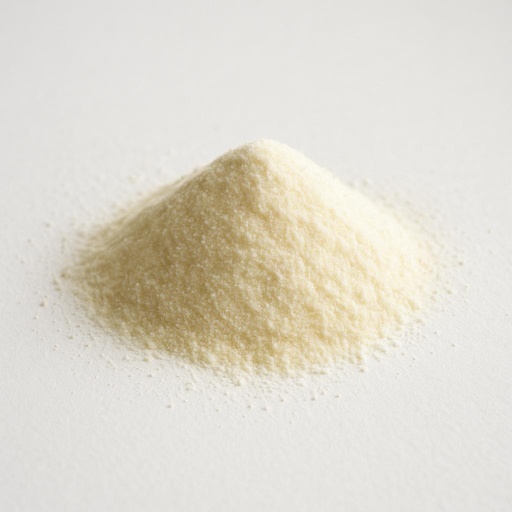
- White to slightly yellow crystalline powder
- Moisture sensitive; quality can degrade with humidity exposure
- Oxidation sensitive; protection from heat/light/air supports potency retention
Compositional Metrics
- Assay/potency (content) per agreed specification
- Moisture / loss on drying
- Impurities profile and related substances
- Heavy metals / elemental impurities (application-dependent)
- Microbiological limits where intended for food/supplement use
- Particle size / bulk density (processability for blending/tableting)
Grades
- Food-ingredient grade (aligned to applicable food standards for antioxidant/ingredient use)
- Pharmaceutical/pharmacopeial grade (when specified for certain supplement or pharma-adjacent applications)
Packaging
- Sealed moisture-barrier inner liner within drum/bag packaging to limit humidity and oxidation exposure
- Clear lot identification for batch traceability (lot number, manufacturing date, retest/expiry where applicable)
Supply Chain
Value Chain
- Overseas manufacturer → international freight → Singapore port/airport → importer/distributor warehouse → (optional) blending/repacking → contract manufacturer/brand owner → retail/e-commerce distribution
Temperature
- Typically handled as an ambient-stable ingredient but should be kept cool and dry; avoid heat and humidity exposure during storage and handling.
Atmosphere Control
- Keep containers tightly sealed; minimize exposure to air/oxygen and light to reduce oxidation-related quality loss.
Shelf Life
- Shelf-life is strongly dependent on packaging integrity and storage humidity; buyers often manage via retesting and potency checks against specification.
Freight IntensityLow
Transport ModeSea
Risks
Supply Concentration HighSingapore is import-dependent for ascorbic acid, and global vitamin C supply is exposed to upstream manufacturing concentration risk; plant shutdowns, export policy shifts, or logistics disruptions can rapidly tighten availability and raise landed costs, potentially disrupting supplement manufacturing programs.Pre-qualify multiple origins/suppliers, maintain safety stock for critical SKUs, and require early notification clauses for supply interruptions and specification changes.
Regulatory Compliance HighHealth supplement products containing vitamin C can face enforcement risk if labeling/claims are not aligned with HSA expectations (e.g., inappropriate therapeutic claims), causing delisting, recalls, or reputational harm.Run label and claims review against HSA guidance prior to launch; keep documented substantiation and a controlled change process for artwork and online listings.
Food Safety MediumPotency drift or contamination (including impurities not aligned with the agreed specification) can lead to batch rejection, rework, or product withdrawal for supplement and food applications.Apply inbound testing plans (identity/assay and targeted impurity checks), require lot-specific CoA, and audit suppliers’ change-control and quality systems.
Logistics MediumHumidity exposure during international transit or local warehousing can degrade quality for ascorbic acid powder, risking out-of-spec potency and shortened shelf performance.Specify moisture-barrier packaging, use desiccant/liners where appropriate, and enforce sealed-container SOPs with humidity-controlled storage for opened lots.
Sustainability
- Upstream manufacturing environmental compliance (effluent treatment and emissions controls) can be a supplier qualification theme for imported vitamin C ingredients.
- Packaging waste and drum/liner disposal considerations for bulk chemical ingredients in warehousing and manufacturing operations.
Labor & Social
- Worker safety and labor compliance at upstream chemical/fermentation manufacturing sites (outside Singapore) may be scrutinized during supplier approval for Singapore-based brands and contract manufacturers.
Standards
- Dietary supplement / food ingredient GMP expectations (buyer-driven)
- ISO 22000 / FSSC 22000 or equivalent food-safety management system evidence (buyer-driven)
- ISO 9001 quality management system evidence (buyer-driven)
FAQ
Which Singapore authorities are most relevant for vitamin C (ascorbic acid) used in supplements versus food?For health supplements, the Health Sciences Authority (HSA) is the key regulator for product safety and labeling/claims expectations. For food-use applications (where vitamin C may be used as an ingredient/antioxidant), the Singapore Food Agency (SFA) is the key authority for food regulatory requirements.
What documents do Singapore buyers commonly expect for imported ascorbic acid ingredient lots?Singapore importers and manufacturers commonly expect a lot-specific Certificate of Analysis (CoA), the agreed product specification, and a Safety Data Sheet (SDS), alongside standard shipping and customs documents such as invoice, packing list, and bill of lading/air waybill. A certificate of origin may be requested when needed for trade preference or customer requirements.
When is halal status relevant for vitamin C products sold in Singapore?Halal requirements are typically channel- and customer-driven: if a finished supplement is marketed as halal-certified, the full formulation and supply chain (including excipients and processing aids) must meet the halal certification body’s requirements. In Singapore, halal certification is commonly associated with MUIS-recognized processes.
Sources
Other Ascorbic Acid Country Markets for Supplier, Export, and Price Comparison from Singapore
Compare Ascorbic Acid supplier coverage, trade flows, and price benchmarks across countries related to Singapore.


Export & sourcing diagnosis
Ascorbic Acid in Singapore — are you buying, or selling?
Either way it's a few questions. We'll come back with where you could buy it, or who you could sell it to.
Free diagnosis, no account required.
Related Ascorbic Acid Product Categories
Browse parent, sub, derived, and raw-material product market pages related to Ascorbic Acid.
Parent product: Vitamin C
By clicking “Accept Cookies,” I agree to provide cookies for statistical and personalized preference purposes. To learn more about our cookies, please read our Privacy Policy.