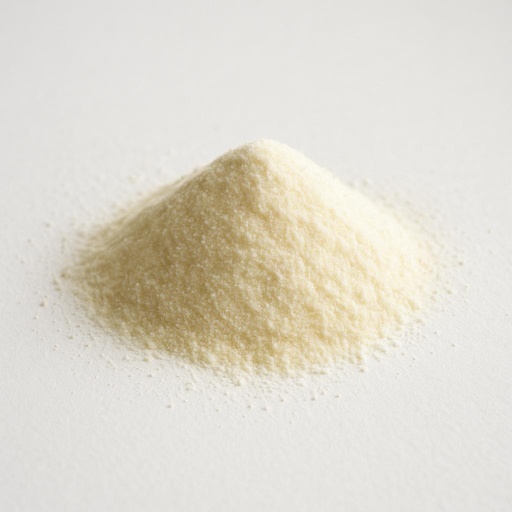
Ascorbic Acid Suppliers & Prices in Canada — Market Overview 2026
Parent Product
Vitamin C
Derived Products
Blackcurrant Drink, Plum Juice Drink, Long Life Fruit Juice Drink, Orange Fruit Cups, +3
Last Updated
2026-09-17
Key takeaways for search and sourcing teams
- 5 sampled export transactions for Canada are summarized.
- Page data last updated on 2026-09-17.
Ascorbic Acid Export Supplier Intelligence, Price Trends, and Trade Flows in Canada
26 export partner companies are tracked for Ascorbic Acid in Canada. Use Supply Chain Intelligence company profiles and analytics to validate exporter coverage, partner quality, and route priorities.
Explore Ascorbic Acid export intelligence in Canada, including 5 sampled supplier transactions, monthly unit-price ranges, and partner-country trade flow patterns for HS Code -.
Scatter points are sampled from 91.2% of the full transaction dataset.
Sample Export Supplier Transaction Records for Ascorbic Acid in Canada
5 sampled Ascorbic Acid transactions in Canada include date, origin, and partner-country context to benchmark export prices and supplier trading patterns.
Ascorbic Acid sampled transaction unit prices by date in Canada: 2026-09-11: 12.81 USD / kg, 2026-09-11: 12.81 USD / kg, 2026-08-27: 12.81 USD / kg, 2026-08-27: 12.81 USD / kg, 2026-07-31: 12.81 USD / kg.
| Date | Reported Product | Unit Price | Exporter | Importer | |
|---|---|---|---|---|---|
| 2026-09-11 | [비타* ** **** *************** * ****** | 12.81 USD / kg | (Canada) | (South Korea) | |
| 2026-09-11 | [비타* ** **** *************** * ****** | 12.81 USD / kg | (Canada) | (South Korea) | |
| 2026-08-27 | [비타* ** **** *************** * ****** | 12.81 USD / kg | (Canada) | (South Korea) | |
| 2026-08-27 | [비타* ** **** *************** * ****** | 12.81 USD / kg | (Canada) | (South Korea) | |
| 2026-07-31 | [비타* ** **** *************** * ****** | 12.81 USD / kg | (Canada) | (South Korea) |
Top Ascorbic Acid Export Suppliers and Companies in Canada
Review leading exporter profiles and benchmark them against 26 total export partner companies tracked for Ascorbic Acid in Canada. Use Supply Chain Intelligence company profiles and analytics to shortlist sourcing and export partners faster.
(Canada)
Latest Export Transaction: 2026-08-17
Employee Size: Over 1000 Employees
Industries: Beverage ManufacturingFood ManufacturingOthers
Value Chain Roles: Food ManufacturingOthers
(Canada)
Latest Export Transaction: 2026-08-17
Industries: Others
Value Chain Roles: Food Manufacturing
(Canada)
Latest Export Transaction: 2026-08-17
Industries: Animal ProductionFood ManufacturingOthers
Value Chain Roles: Distribution / WholesaleFood ManufacturingTrade
(Canada)
Latest Export Transaction: 2026-08-17
Employee Size: 1 - 10 Employees
Sales Revenue: USD 1M - 5M
Industries: Food Wholesalers
Value Chain Roles: Distribution / Wholesale
(Canada)
Latest Export Transaction: 2026-08-17
Employee Size: Over 1000 Employees
Industries: Others
Value Chain Roles: Distribution / Wholesale
(Canada)
Latest Export Transaction: 2026-08-17
Employee Size: 51 - 100 Employees
Sales Revenue: USD 10M - 50M
Industries: Food Manufacturing
Value Chain Roles: Food Manufacturing
Canada Export Partner Coverage
26 companies
Total export partner company count is a core signal of Canada export network depth for Ascorbic Acid.
Exporters and importers can open Supply Chain Intelligence company profiles and analytics to assess Ascorbic Acid partner concentration, capacity signals, and trade relevance in Canada.
Sourcing diagnosis
Could you be importing Ascorbic Acid from Canada yourself?
Just tell us your spec and the volume you need. We'll check whether it's actually sourceable, and which origins and suppliers fit.
Free diagnosis, no account required.
Export diagnosis
Your Ascorbic Acid — could it sell to these buyers in Canada?
Just tell us what you make. We'll see whether you're ready to export today and which markets suit your offer.
Free diagnosis, no account required.
Price data
Which Ascorbic Acid prices in Canada do you need?
We'll open up the full price history and competitor benchmarks. Just tell us which numbers you need and we'll walk you through them.
Classification
Product TypeIngredient
Product FormPowder
Industry PositionNutraceutical and Food Ingredient
Market
Ascorbic acid (vitamin C) in Canada is primarily a downstream consumer and manufacturing-input market, supplying dietary supplements (natural health products) and food uses such as antioxidant/fortification applications. Market access and commercialization depend heavily on Health Canada’s regulatory frameworks for natural health products and for food additive permissions/conditions of use in foods. Canada’s supply is import-reliant for bulk ingredient sourcing, with domestic activity concentrated on importing, repackaging/blending, and finished-product manufacturing. Compliance expectations commonly center on licensing (where applicable), labeling, and batch-level quality documentation (e.g., supplier specifications and certificates of analysis).
Market RoleNet importer and domestic consumer/manufacturing market
Domestic RoleWidely used vitamin C input for natural health products and for food manufacturing applications (e.g., antioxidant/fortification), plus finished retail supplement products
Market GrowthNot Mentioned
Specification
Physical Attributes
- Typically traded into Canada as L-ascorbic acid (vitamin C) in dry crystalline powder form for use as an ingredient in natural health products and in food manufacturing.
Compositional Metrics
- Canadian buyers commonly require a Certificate of Analysis aligned to the intended end-use (e.g., supplement/NHP quality requirements or food-grade specifications), covering identity and purity/impurity controls; exact limits are buyer- and application-specific.
Grades
- Food-grade and/or pharmacopeial grade (where specified by the buyer/end-use) are commonly used commercial descriptors in Canadian procurement.
Packaging
- Moisture- and oxygen-protective packaging is commonly used for bulk ingredient distribution to Canadian manufacturers (exact pack format varies by supplier and buyer specification).
Supply Chain
Value Chain
- Overseas bulk ingredient production → international freight → Canadian importer/warehouse → (optional) repack/blending → Canadian food or natural health product manufacturing → retail distribution
Temperature
- Handled as a dry ingredient; protection from humidity and excessive heat during storage/warehousing supports quality retention for Canadian manufacturing supply.
Atmosphere Control
- Oxygen exposure management (sealed packaging; controlled storage) is commonly emphasized for quality retention in Canadian warehousing and manufacturing workflows.
Shelf Life
- Shelf-life is strongly influenced by moisture/oxygen exposure and packaging integrity; Canadian buyers commonly manage shelf-life via supplier CoA/specs and inventory controls.
Risks
Regulatory Compliance HighNon-compliance with Canada’s Health Canada frameworks for natural health products (e.g., required product licensing for finished supplements and applicable site-licensing obligations for regulated activities) can block legal sale and trigger detention, enforcement action, or recall exposure.Determine upfront whether the product is imported as a bulk ingredient for manufacturing or as a finished natural health product; align licensing, labeling, and documentation to Health Canada requirements before shipment and commercialization.
Quality MediumVitamin C ingredient quality failures (e.g., identity/purity issues or contamination relative to buyer specification) can lead to downstream batch rejection or recalls in Canada’s supplement/food channels.Use approved suppliers, require lot-specific CoA against the buyer specification, and implement incoming testing and traceability controls appropriate to the end-use.
Supply Chain MediumCanada is import-reliant for bulk ascorbic acid supply; upstream supply concentration and international logistics disruption can create availability and lead-time shocks for Canadian manufacturers.Dual-source qualified suppliers, hold safety stock for critical SKUs, and pre-book freight/lead times for high-season retail promotion windows.
FAQ
Can vitamin C supplements be sold in Canada without Health Canada licensing?Finished vitamin C supplement products marketed as natural health products generally require Health Canada product licensing (e.g., an NPN) under the Natural Health Products Regulations framework. You can verify licensing status using Health Canada’s Licensed Natural Health Products Database (LNHPD).
Which Canadian authorities are most relevant for ascorbic acid used in supplements versus foods?Health Canada is central for natural health products (supplements) and for the food additive permission framework for food uses. The Canadian Food Inspection Agency (CFIA) provides food labeling guidance and conducts related compliance activities, while import clearance is handled through the Canada Border Services Agency (CBSA).
Where should importers verify customs classification and tariff treatment for ascorbic acid into Canada?Importers should confirm the tariff classification and applicable tariff treatment in the CBSA Customs Tariff, including any preferential treatment that may apply based on origin under Canada’s trade agreements.
Sources
Other Ascorbic Acid Country Markets for Supplier, Export, and Price Comparison from Canada
Compare Ascorbic Acid supplier coverage, trade flows, and price benchmarks across countries related to Canada.


Export & sourcing diagnosis
Ascorbic Acid in Canada — are you buying, or selling?
Either way it's a few questions. We'll come back with where you could buy it, or who you could sell it to.
Free diagnosis, no account required.
Related Ascorbic Acid Product Categories
Browse parent, sub, derived, and raw-material product market pages related to Ascorbic Acid.
Parent product: Vitamin C
By clicking “Accept Cookies,” I agree to provide cookies for statistical and personalized preference purposes. To learn more about our cookies, please read our Privacy Policy.