Ascorbic Acid Suppliers, Trade & Prices — Market Overview 2026
Parent Product
Vitamin C
Derived Products
Blackcurrant Drink, Plum Juice Drink, Long Life Fruit Juice Drink, Orange Fruit Cups, +3
Last Updated
2026-09-17
Key takeaways for search and sourcing teams
- Ascorbic Acid market coverage spans 71 countries.
- 1,947 exporter companies and 2,771 importer companies are indexed in the global supply chain intelligence network for this product.
- 2,672 supplier-linked transactions are summarized across the top 20 countries.
- Page data last updated on 2026-09-17.
Global Supplier Transactions, Export Activity, and Price Benchmarks for Ascorbic Acid
Analyze 2,672 supplier-linked transactions across the top 20 countries, with monthly unit-price benchmarks to track export competitiveness and sourcing risk for Ascorbic Acid.
Ascorbic Acid Country YoY Change in Supplier Transactions and Export Momentum
Compare positive and negative YoY shifts in Ascorbic Acid to identify accelerating supplier markets and weakening export corridors.
Top YoY shifts for Ascorbic Acid: Hong Kong (+270.1%), India (+209.5%), Japan (+174.7%).
Ascorbic Acid Country-Level Supplier Transaction and Unit Price Summary
As of 2025-10, benchmark Ascorbic Acid country transaction counts with monthly unit price and volume to prioritize supplier and export markets.
In 2026-03, countries with visible Ascorbic Acid transaction unit prices: United States (44.38 USD / kg), India (29.33 USD / kg), Switzerland (21.50 USD / kg), Netherlands (20.50 USD / kg), Canada (12.84 USD / kg), 1 more countries.
| Country | YoY Change | Transaction Count | 2025-10 | 2025-11 | 2025-12 | 2026-01 | 2026-02 | 2026-03 | 2026-04 | 2026-05 | 2026-06 | 2026-07 | 2026-08 | 2026-09 |
|---|---|---|---|---|---|---|---|---|---|---|---|---|---|---|
| China | -19.7% | 965 | 3.87 USD / kg (2,159,492.015 kg) | 4.04 USD / kg (1,852,192.71 kg) | 3.82 USD / kg (1,754,477.56 kg) | 3.66 USD / kg (1,233,748.14 kg) | 4.17 USD / kg (1,837,375 kg) | 2.29 USD / kg (390,000 kg) | ||||||
| Netherlands | -4.4% | 311 | 19.65 USD / kg (84,450 kg) | 19.39 USD / kg (54,220 kg) | 18.53 USD / kg (259,917.95 kg) | 18.12 USD / kg (307,060 kg) | 21.50 USD / kg (65,420 kg) | 20.50 USD / kg (61,875 kg) | ||||||
| Canada | +7.2% | 42 | 35.10 USD / kg (40,163.11 kg) | 16.96 USD / kg (28,723 kg) | 16.12 USD / kg (14,666 kg) | 12.84 USD / kg (16,569 kg) | 12.84 USD / kg (16,569 kg) | 12.84 USD / kg (28,692 kg) | ||||||
| Spain | -77.3% | 11 | 6.53 USD / kg (8,000 kg) | - (-) | - (-) | 57.04 USD / kg (12,000.75 kg) | 21.40 USD / kg (2,828 kg) | - (-) | ||||||
| United States | +71.3% | 449 | 24.22 USD / kg (73,485.1 kg) | 20.51 USD / kg (153,601.568 kg) | 19.79 USD / kg (144,110.104 kg) | 35.05 USD / kg (86,941.927 kg) | 17.77 USD / kg (185,199.03 kg) | 44.38 USD / kg (48,867.42 kg) | ||||||
| India | +209.5% | 93 | 34.09 USD / kg (22,234.05 kg) | 35.29 USD / kg (984.23 kg) | 29.52 USD / kg (10,888.02 kg) | 20.34 USD / kg (704.68 kg) | 29.67 USD / kg (1,502.3 kg) | 29.33 USD / kg (3,200 kg) | ||||||
| United Kingdom | +14.6% | 66 | 14.79 USD / kg (43,933.7 kg) | 22.14 USD / kg (149.18 kg) | 11.88 USD / kg (34,506 kg) | 32.35 USD / kg (2,500 kg) | 18.75 USD / kg (1,450 kg) | - (-) | ||||||
| Germany | -8.0% | 51 | 73.02 USD / kg (6,067.92 kg) | 13.57 USD / kg (31,516.4 kg) | 19.33 USD / kg (6,989.368 kg) | 55.51 USD / kg (321.41 kg) | 35.18 USD / kg (2 kg) | - (-) | ||||||
| Singapore | +0.9% | 34 | 15.19 USD / kg (3,232.56 kg) | 18.50 USD / kg (3,050 kg) | 19.33 USD / kg (49,229.16 kg) | 16.15 USD / kg (10,100 kg) | 22.93 USD / kg (21.53 kg) | - (-) | ||||||
| Switzerland | +50.1% | 56 | 27.50 USD / kg (1,134.446 kg) | 88.72 USD / kg (501.61 kg) | 15.75 USD / kg (99,185.14 kg) | 21.50 USD / kg (500 kg) | - (-) | 21.50 USD / kg (5,000 kg) |
Ascorbic Acid Global Supply Chain Coverage
4,718 companies
1,947 exporters and 2,771 importers are mapped for Ascorbic Acid.
Exporters and importers can use Tridge Supply Chain Intelligence company profiles and analytics to identify counterparties for Ascorbic Acid, benchmark reach, and prioritize outreach by market.
Ascorbic Acid Export Supplier Intelligence, Trade Flows, and Price Signals
1,947 exporter companies are mapped in Tridge Supply Chain Intelligence for Ascorbic Acid. Exporters and importers can use company profiles and analytics to evaluate supplier coverage, trading activity, and route opportunities.
Ascorbic Acid Verified Export Suppliers and Premium Partners
2 premium Ascorbic Acid suppliers include country, industry, and contactability signals to prioritize credible export partners faster.
SM Empreendimentos Farmacêuticos Ltda.
Brazil
Others
Paradise Ingredients, S.A.
Costa Rica
Beverage ManufacturingCrop ProductionFood Manufacturing
Become a Premium Supplier to join the Tridge Supply Chain Network and advance your marketing and export channel strategy.
Ascorbic Acid Top Exporters and Supplier Profiles
Review leading exporter profiles while benchmarking against 1,947 total exporter companies in the Ascorbic Acid supply chain intelligence network. Exporters and importers can unlock company profiles and analytics to qualify partners faster.
(China)
Latest Export Transaction: 2026-08-17
Recently Export Partner Companies: 1
Employee Size: Over 1000 Employees
Sales Revenue: USD Over 1B
Industries: Others
Value Chain Roles: Trade
Exporting Countries: Turkiye, Peru, Kazakhstan, Mexico, India
Supplying Products: Vitamin Raw Material, Ammonium salts of phosphatidic acid, Dextrose +5
(China)
Latest Export Transaction: 2026-07-08
Recently Export Partner Companies: 1
Industries: Food ManufacturingFood PackagingOthers
Value Chain Roles: Food Manufacturing
Exporting Countries: Denmark, Russia, United States, India
Supplying Products: Vitamin Raw Material, Vitamin A Supplement, Vitamin E Supplement +5
(China)
Latest Export Transaction: 2026-09-09
Recently Export Partner Companies: 20
Employee Size: Over 1000 Employees
Sales Revenue: USD Over 1B
Industries: Food ManufacturingOthers
Value Chain Roles: Others
Exporting Countries: Turkiye, Ecuador, Colombia, Russia, United States, Philippines, Pakistan, Indonesia, South Korea, India
Supplying Products: Vitamin Raw Material, Sodium erythorbate, Xanthan Gum +5
(China)
Latest Export Transaction: 2026-01-25
Recently Export Partner Companies: 9
Industries: Food Manufacturing
Value Chain Roles: Distribution / WholesaleTrade
Exporting Countries: Philippines, Turkiye, Mexico, Vietnam, Indonesia, Russia, Pakistan, United States, Bangladesh, India
Supplying Products: Vitamin Raw Material, Dextrose, Acesulfame potassium +5
(China)
Latest Export Transaction: 2026-09-02
Recently Export Partner Companies: 14
Employee Size: Over 1000 Employees
Industries: Beverage ManufacturingFood Manufacturing
Value Chain Roles: Food ManufacturingTrade
Exporting Countries: Brazil, Bangladesh, Mexico, Philippines, Turkiye, Russia, United States, Pakistan, South Korea, India
Supplying Products: Vitamin Raw Material, Sodium Benzoate, Sodium erythorbate +5
(China)
Latest Export Transaction: 2026-08-17
Recently Export Partner Companies: 1
Industries: Food ManufacturingFood PackagingOthers
Value Chain Roles: Food Manufacturing
Exporting Countries: India
Supplying Products: Vitamin Raw Material, Single Vitamin Material, Vitamin C +1
Ascorbic Acid Global Exporter Coverage
1,947 companies
Exporter company count is a key signal for Ascorbic Acid supply depth and sourcing optionality.
Use Supply Chain Intelligence analytics to narrow Ascorbic Acid opportunities by country, product, and value-chain role, then open company profiles to validate fit.
Sourcing diagnosis
Where should you be sourcing Ascorbic Acid from?
Just tell us your spec and the volume you need. We'll check whether it's actually sourceable, and which origins and suppliers fit.
Free diagnosis, no account required.
Ascorbic Acid Import Buyer Intelligence, Demand Signals, and Price Benchmarks
2,771 importer companies are mapped for Ascorbic Acid demand intelligence. Use Supply Chain Intelligence company profiles and analytics to prioritize buyers, distributors, and downstream demand partners by market.
Ascorbic Acid Top Buyers, Importers, and Demand Partners
Review leading buyer profiles and compare them against 2,771 total importer companies tracked for Ascorbic Acid. Exporters and importers can use Supply Chain Intelligence company profiles and analytics to evaluate buyer quality and demand concentration.
(India)
Latest Import Transaction: 2026-08-17
Recently Import Partner Companies: 1
Employee Size: 101 - 500 Employees
Sales Revenue: USD 10M - 50M
Industries: Food ManufacturingFood PackagingOthers
Value Chain Roles: -
(South Korea)
Latest Import Transaction: 2026-09-15
Recently Import Partner Companies: 5
Employee Size: 101 - 500 Employees
Industries: Food Manufacturing
Value Chain Roles: Kazakhstan
(India)
Latest Import Transaction: 2026-08-17
Recently Import Partner Companies: 1
Employee Size: 11 - 50 Employees
Industries: Others
Value Chain Roles: -
(India)
Latest Import Transaction: 2026-08-17
Recently Import Partner Companies: 1
Sales Revenue: USD 10M - 50M
Industries: Beverage ManufacturingFood ManufacturingFood PackagingFood Services And Drinking PlacesFood Wholesalers
Value Chain Roles: Malaysia, Yemen, Bhutan, Nepal, Nigeria, United Arab Emirates, Uganda, Sri Lanka
(India)
Latest Import Transaction: 2026-08-17
Recently Import Partner Companies: 1
Employee Size: 101 - 500 Employees
Sales Revenue: USD 10M - 50M
Industries: Food ManufacturingFood PackagingOthers
Value Chain Roles: -
(India)
Latest Import Transaction: 2026-08-17
Recently Import Partner Companies: 1
Industries: Others
Value Chain Roles: -
Global Importer Coverage
2,771 companies
Importer company count highlights the current depth of demand-side visibility for Ascorbic Acid.
Use Supply Chain Intelligence analytics and company profiles to identify active Ascorbic Acid buyers, compare partner density by country, and refine GTM priorities.
Export diagnosis
Your Ascorbic Acid — which buyers could it sell to?
Just tell us what you make. We'll see whether you're ready to export today and which markets suit your offer.
Free diagnosis, no account required.
Price data
Which Ascorbic Acid prices do you need?
We'll open up the full price history and competitor benchmarks. Just tell us which numbers you need and we'll walk you through them.
Classification
Product TypeIngredient
Product FormPowder (Crystalline)
Industry PositionFood and Nutraceutical Ingredient
Market
Ascorbic acid (vitamin C; commonly traded under HS 293627 for “vitamin C and its derivatives, unmixed”) is a globally traded industrial ingredient used heavily in dietary supplements, food fortification, and as an antioxidant food additive (INS 300). UN Comtrade data accessed via the World Bank’s WITS platform shows trade flows with a strong exporter concentration led by China, while major import demand is anchored by the United States and large Asian and European markets (e.g., Republic of Korea, Japan, Germany, the Netherlands). The market is driven more by industrial capacity, regulatory specifications (food-additive vs. pharmaceutical), and logistics than by agricultural seasonality. Because supply is concentrated and quality expectations are specification-driven, buyers typically prioritize supplier qualification, impurity control, and trade-policy exposure management.
Market GrowthNot Mentioned
Major Producing Countries
- ChinaIndustrial production and export availability are strongly associated with Chinese manufacturing capacity; UN Comtrade (via WITS, HS 293627) shows China as the leading exporter.
Major Exporting Countries
- ChinaLargest reported exporter in UN Comtrade (via WITS) for HS 293627 (Vitamin C and its derivatives, unmixed).
- NetherlandsMajor global export hub/re-exporter linked to EU distribution and logistics.
- GermanyLarge reported exporter; includes distribution and intra-European trade flows.
- United StatesReported exporter in UN Comtrade (via WITS); includes redistribution and specialized supply.
- JapanReported exporter; often associated with high-spec/regulated end uses.
Major Importing Countries
- United StatesOne of the largest import markets in UN Comtrade (via WITS) for HS 293627.
- South KoreaMajor importing market in UN Comtrade (via WITS) for HS 293627.
- JapanMajor importing market in UN Comtrade (via WITS) for HS 293627.
- GermanyLarge importing market and intra-EU distribution center for industrial ingredients.
- NetherlandsLarge importing market; re-export and distribution gateway role in Europe.
- FranceSignificant importer in UN Comtrade (via WITS) for HS 293627.
Specification
Major VarietiesL-ascorbic acid (vitamin C)
Physical Attributes
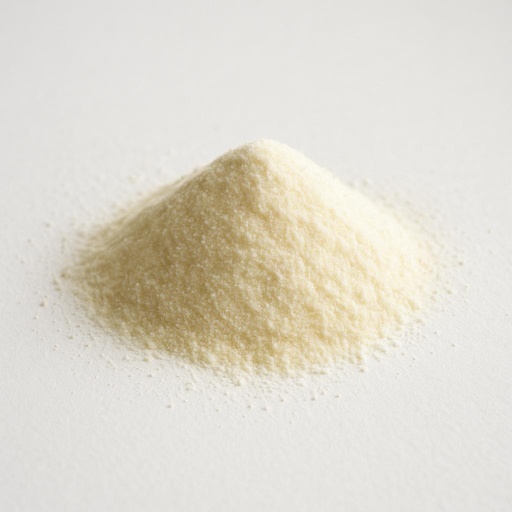
- White to slightly yellow, odourless crystalline powder (food-additive specification reference).
- Readily oxidizes in aqueous solution; protection from air and light is relevant for liquid formulations.
Compositional Metrics
- CAS No. 50-81-7; INS 300 (food additive identification in JECFA).
- Assay commonly specified at not less than 99% on the dried basis in FAO/JECFA food additive specifications.
Grades
- Food additive grade aligned to FAO/WHO JECFA specifications (used as antioxidant; INS 300).
- Pharmaceutical grade aligned to pharmacopeial requirements (e.g., USP/EP) for regulated medicinal/supplement applications.
Packaging
- Moisture-barrier packaging (e.g., lined drums or lined bags) to protect from humidity and oxidation during international transport.
- Lot/traceability labeling aligned to GMP/food safety system expectations for supplement and food manufacturing customers.
ProcessingUsed as an antioxidant/reducing agent in foods and beverages; also used for vitamin C fortification in supplements and fortified foods.Sensitive to oxidation in solution; handling practices often minimize oxygen/light exposure in liquid premixes.
Supply Chain
Value Chain
- Starch/sugar feedstock (glucose/dextrose) sourcing → fermentation-based intermediate production → chemical conversion → crystallization and drying → quality testing (assay/impurities) → packaging → international distributors/agents → supplement, food, and pharmaceutical manufacturers
Demand Drivers
- Dietary supplement manufacturing demand for vitamin C (tablets, capsules, powders, premixes).
- Food and beverage fortification programs (added vitamin C) and functional beverage formulations.
- Use as an antioxidant food additive (INS 300) to limit oxidation and quality deterioration in certain processed foods.
- Pharmaceutical and regulated-market demand where pharmacopeial-grade material is required.
Temperature
- Dry material handling emphasizes cool, dry storage and protection from light/moisture to preserve potency and prevent degradation.
Risks
Supply Concentration HighGlobal export availability is highly concentrated, with UN Comtrade data (via WITS, HS 293627) showing China as the leading exporter. Concentration increases exposure to single-origin disruptions (plant shutdowns, energy constraints, logistics bottlenecks, or regulatory actions), which can rapidly tighten supply for supplement and food manufacturers.Qualify multiple suppliers (including alternative trade hubs), maintain safety stocks for critical SKUs, and use specification-based dual-sourcing (food-grade vs. pharmacopeial-grade) where feasible.
Quality And Compliance MediumEnd uses span food additive and pharmaceutical/supplement applications, so buyers may require tight control of assay, impurities, and contaminants. Non-conformance can trigger rejected lots, recalls, or border holds in regulated markets.Specify the applicable standard (e.g., JECFA food-additive specs vs. pharmacopeial grade), require COAs aligned to that standard, and implement incoming testing for critical impurities.
Trade Policy MediumGiven concentrated sourcing and high cross-border movement, changes in tariffs, customs enforcement, sanctions, or documentation requirements can materially affect landed cost and lead times for HS 293627 shipments.Monitor tariff/classification and trade-policy changes for key supplying routes, and keep flexible incoterms/logistics options (multiple ports and forwarders).
Input Cost Volatility MediumProduction economics are sensitive to feedstock (glucose/starch derivatives) and energy/utility costs; shocks can pass through into spot pricing and availability for downstream supplement premixes and finished products.Use indexed or staggered procurement, diversify contract durations, and align forecast/booking cycles with supplier production planning.
Sustainability
- Industrial effluent and wastewater management considerations in fermentation/chemical conversion pathways for vitamin C.
- Energy use and associated emissions intensity in large-scale chemical/bioprocess manufacturing and drying operations.
- Upstream agricultural feedstock sustainability (glucose/starch inputs) as an indirect footprint driver.
Labor & Social
- Worker health and safety risks in chemical and fermentation manufacturing (process safety, chemical handling).
- Supplier labor and EHS auditing expectations in regulated supplement and food supply chains (GMP-aligned oversight).
FAQ
Which countries are the main exporters of ascorbic acid in global trade?UN Comtrade data accessed via the World Bank’s WITS platform for HS 293627 reports China as the leading exporter, with the Netherlands and Germany also appearing as major exporting hubs alongside the United States and Japan.
What are the main uses of ascorbic acid in global supplement and food supply chains?Ascorbic acid is widely used as vitamin C in dietary supplements and fortification, and it is also used as a food additive (INS 300) with an antioxidant function, as reflected in FAO/WHO JECFA evaluations and specifications.
What specifications do buyers commonly reference when purchasing ascorbic acid internationally?Food-industry transactions often reference FAO/WHO JECFA food additive specifications (INS 300), while pharmaceutical and some supplement applications may require pharmacopeial-grade material; typical buyer specifications focus on assay and impurity/contaminant limits consistent with the referenced standard.
Sources
Ascorbic Acid Country Coverage for Suppliers, Export Flows, and Prices
Explore country-level Ascorbic Acid market pages for supplier coverage, trade flows, and price benchmarks.

United Arab Emirates

Argentina

Austria

Australia

Bangladesh

Belgium

Bulgaria

Bahrain

Bolivia

Brazil

Bhutan

Canada
All country market pages: Switzerland, Chile, China, Colombia, Costa Rica, Germany, Ecuador, Egypt, Spain, France, United Kingdom, Ghana, Guatemala, Hong Kong, Honduras, Hungary, India, Italy, Jordan, Japan, Cambodia, South Korea, Kazakhstan, Laos, Lebanon, Sri Lanka, Lesotho, Lithuania, Luxembourg, Malawi, Mexico, Malaysia, Mozambique, Nicaragua, Netherlands, Norway, Nepal, New Zealand, Panama, Peru, Philippines, Pakistan, Poland, Paraguay, Russia, Saudi Arabia, Singapore, Slovenia, El Salvador, Thailand, Tajikistan, Turkiye, Ukraine, Uganda, United States, Uruguay, Uzbekistan, Vietnam, South Africa
Export & sourcing diagnosis
Ascorbic Acid — are you buying, or selling?
Either way it's a few questions. We'll come back with where you could buy it, or who you could sell it to.
Free diagnosis, no account required.
Related Ascorbic Acid Product Categories
Browse parent, sub, derived, and raw-material product market pages related to Ascorbic Acid.
Parent product: Vitamin C
By clicking “Accept Cookies,” I agree to provide cookies for statistical and personalized preference purposes. To learn more about our cookies, please read our Privacy Policy.