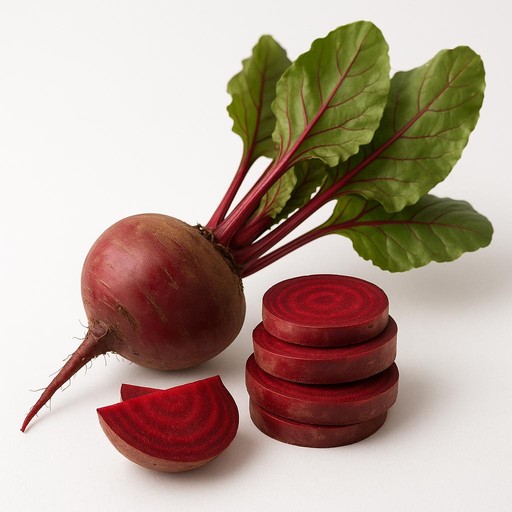
Fresh Beetroot Suppliers, Trade & Prices — Market Overview 2026
Derived Products
Beet Juice, Pickled Beetroot, Beet Powder
HS Code
070690
Last Updated
2026-10-19
Key takeaways for search and sourcing teams
- Fresh Beetroot market coverage spans 139 countries.
- 1,958 exporter companies and 1,950 importer companies are indexed in the global supply chain intelligence network for this product.
- 7,185 supplier-linked transactions are summarized across the top 20 countries.
- Wholesale sample entries: 5; farmgate sample entries: 3.
- Latest reference year in this page dataset is 2026.
- Page data last updated on 2026-10-19.
Global Supplier Transactions, Export Activity, and Price Benchmarks for Fresh Beetroot
Analyze 7,185 supplier-linked transactions across the top 20 countries, with monthly unit-price benchmarks to track export competitiveness and sourcing risk for Fresh Beetroot.
Fresh Beetroot Country YoY Change in Supplier Transactions and Export Momentum
Compare positive and negative YoY shifts in Fresh Beetroot to identify accelerating supplier markets and weakening export corridors.
Top YoY shifts for Fresh Beetroot: Turkiye (+935.3%), Lesotho (+51.8%), United States (+48.6%).
Fresh Beetroot Country-Level Supplier Transaction and Unit Price Summary
As of 2025-11, benchmark Fresh Beetroot country transaction counts with monthly unit price and volume to prioritize supplier and export markets.
In 2026-04, countries with visible Fresh Beetroot transaction unit prices: China (38.50 USD / kg), Turkiye (5.68 USD / kg), Mexico (0.60 USD / kg), India (0.33 USD / kg).
| Country | YoY Change | Transaction Count | 2025-11 | 2025-12 | 2026-01 | 2026-02 | 2026-03 | 2026-04 | 2026-05 | 2026-06 | 2026-07 | 2026-08 | 2026-09 | 2026-10 |
|---|---|---|---|---|---|---|---|---|---|---|---|---|---|---|
| United Kingdom | +37.8% | 3 | - (-) | - (-) | - (-) | - (-) | - (-) | - (-) | ||||||
| Turkiye | +935.3% | 13 | 1.57 USD / kg (71,480 kg) | - (-) | 1.51 USD / kg (1,250.4 kg) | 0.77 USD / kg (44,180 kg) | 3.92 USD / kg (-) | 5.68 USD / kg (6,450.4 kg) | ||||||
| India | -7.0% | 3,250 | 0.38 USD / kg (357,933.353 kg) | 0.52 USD / kg (125,359.8 kg) | 0.50 USD / kg (116,589.606 kg) | 0.40 USD / kg (217,744.791 kg) | 0.39 USD / kg (219,362.791 kg) | 0.33 USD / kg (473,944.05 kg) | ||||||
| South Africa | -21.2% | 2,253 | 0.34 USD / kg (63,045.56 kg) | 0.47 USD / kg (129,141.47 kg) | 0.52 USD / kg (41,382.81 kg) | 0.62 USD / kg (42,029.15 kg) | - (-) | - (-) | ||||||
| China | -17.4% | 88 | 0.20 USD / kg (96,450 kg) | 0.27 USD / kg (157,400 kg) | - (-) | - (-) | - (-) | 38.50 USD / kg (200 kg) | ||||||
| Kazakhstan | +0.3% | 19 | - (-) | - (-) | - (-) | - (-) | - (-) | - (-) | ||||||
| Mexico | +8.4% | 758 | 0.46 USD / kg (673,164.04 kg) | 0.47 USD / kg (854,845.528 kg) | 0.64 USD / kg (194,138.689 kg) | 0.71 USD / kg (164,299.059 kg) | 0.51 USD / kg (325,900.357 kg) | 0.60 USD / kg (368,175.57 kg) | ||||||
| Uzbekistan | -35.6% | 227 | 0.26 USD / kg (160,518 kg) | 0.25 USD / kg (90,921 kg) | 0.25 USD / kg (95,478 kg) | 0.25 USD / kg (98,381 kg) | - (-) | - (-) | ||||||
| Spain | -31.6% | 47 | 1.27 USD / kg (195,560 kg) | 1.25 USD / kg (352,180 kg) | - (-) | - (-) | - (-) | - (-) | ||||||
| Netherlands | -6.8% | 17 | 12.09 USD / kg (3 kg) | 12.22 USD / kg (10.2 kg) | - (-) | 4.49 USD / kg (5.45 kg) | - (-) | - (-) |
Fresh Beetroot Global Supply Chain Coverage
3,908 companies
1,958 exporters and 1,950 importers are mapped for Fresh Beetroot.
Exporters and importers can use Tridge Supply Chain Intelligence company profiles and analytics to identify counterparties for Fresh Beetroot, benchmark reach, and prioritize outreach by market.
Fresh Beetroot Export Supplier Intelligence, Trade Flows, and Price Signals
1,958 exporter companies are mapped in Tridge Supply Chain Intelligence for Fresh Beetroot. Exporters and importers can use company profiles and analytics to evaluate supplier coverage, trading activity, and route opportunities.
Fresh Beetroot Verified Export Suppliers and Premium Partners
8 premium Fresh Beetroot suppliers include country, industry, and contactability signals to prioritize credible export partners faster.

Maahir Foods
India
Food Manufacturing

Shri Gwal Exim Pvt. Ltd.
India
Contact
Food Manufacturing, Food Packaging, Food Services And Drinking Places
JR Spices & Seeds
India
Food Manufacturing
Yash Traders
India
Food Wholesalers, Brokers And Trade Agencies, Land Transport
Maeil Foods Co., Ltd.
South Korea
Food Manufacturing, Others
Savaliya Agri Commodity Export Pvt. Ltd.
India
Crop Production, Food Manufacturing, Brokers And Trade Agencies
Subtropico Market Agents
South Africa
Contact
Crop Production, Food Manufacturing, Food Packaging, Food Services And Drinking Places, Brokers And Trade Agencies, Food Wholesalers
Great Farmer
Vietnam
Crop Production, Food Wholesalers, Food Packaging
Become a Premium Supplier to join the Tridge Supply Chain Network and advance your marketing and export channel strategy.
Fresh Beetroot Top Exporters and Supplier Profiles
Review leading exporter profiles while benchmarking against 1,958 total exporter companies in the Fresh Beetroot supply chain intelligence network. Exporters and importers can unlock company profiles and analytics to qualify partners faster.
(United States)
Latest Export Transaction: 2026-09-19
Recently Export Partner Companies: 1
Employee Size: 11 - 50 Employees
Sales Revenue: USD 5M - 10M
Industries: Crop Production
Value Chain Roles: Farming / Production / Processing / Packing, Trade
Exporting Countries: Philippines, Kenya, Russia, Pakistan, Mexico, Costa Rica, India
Supplying Products: Ryegrass Seed, Fresh Beetroot, Fresh Cauliflower +5
(United States)
Latest Export Transaction: 2026-09-19
Recently Export Partner Companies: 1
Employee Size: 101 - 500 Employees
Industries: Crop Production, Food Manufacturing, Others
Value Chain Roles: Distribution / Wholesale, Farming / Production / Processing / Packing, Food Manufacturing, Others
Exporting Countries: Bolivia, Colombia, Peru, Ecuador, Mexico, India
Supplying Products: Fresh Beetroot, Watermelon Seeds, Squash Seed +5
(New Zealand)
Latest Export Transaction: 2026-09-19
Recently Export Partner Companies: 2
Sales Revenue: USD 10M - 50M
Industries: Crop Production, Food Manufacturing
Value Chain Roles: Farming / Production / Processing / Packing, Food Manufacturing, Trade
Exporting Countries: Sri Lanka, India
Supplying Products: Grass Pea Seed, Fresh Beetroot, Dried Peas +5
(United States)
Latest Export Transaction: 2026-09-19
Recently Export Partner Companies: 1
Employee Size: 101 - 500 Employees
Sales Revenue: USD 10M - 50M
Industries: Crop Production, Food Packaging
Value Chain Roles: Distribution / Wholesale, Farming / Production / Processing / Packing
Exporting Countries: India
Supplying Products: Fresh Beetroot
(Chile)
Latest Export Transaction: 2026-09-19
Recently Export Partner Companies: 10
Employee Size: Over 1000 Employees
Sales Revenue: USD 500M - 1B
Industries: Animal Production, Beverage Manufacturing, Crop Production, Food Manufacturing, Food Packaging, Others
Value Chain Roles: Distribution / Wholesale, Farming / Production / Processing / Packing, Food Manufacturing, Retail, Trade
Exporting Countries: Colombia, South Africa, United States, Peru, Uruguay, Ecuador, Japan, Argentina, Australia, Brazil
Supplying Products: Fresh Red Beet, Fresh Beetroot, Dried Red Beet +5
(France)
Latest Export Transaction: 2026-09-19
Recently Export Partner Companies: 2
Employee Size: Over 1000 Employees
Industries: Beverage Manufacturing, Food Manufacturing, Others
Value Chain Roles: Distribution / Wholesale, Food Manufacturing, Trade
Exporting Countries: Mexico, Kazakhstan, Kyrgyzstan, Indonesia, Turkiye, Ukraine, Pakistan, Bolivia, Russia, India
Supplying Products: Fresh Beetroot, Pomegranate Extract, Honey +5
See the full picture in Tridge Eye: full price and trade history · 725,009+ company profiles
Fresh Beetroot Global Exporter Coverage
1,958 companies
Exporter company count is a key signal for Fresh Beetroot supply depth and sourcing optionality.
Use Supply Chain Intelligence analytics to narrow Fresh Beetroot opportunities by country, product, and value-chain role, then open company profiles to validate fit.
Top Exporting Countries for Fresh Beetroot (HS Code 070690) in 2024
For Fresh Beetroot in 2024, compare export volume and value across the top 10 supplier countries to map core supply structure.
| Rank | Country | Volume | Value |
|---|---|---|---|
| 1 | Netherlands | 190,199,200 kg | 170,153,611.316 USD |
| 2 | Italy | 77,851,352 kg | 106,200,495.935 USD |
| 3 | Mexico | 71,756,253 kg | 36,228,232 USD |
| 4 | United States | 24,483,006 kg | 29,934,115 USD |
| 5 | Spain | 32,011,541.26 kg | 29,409,296.137 USD |
| 6 | Poland | 37,908,031 kg | 28,700,576 USD |
| 7 | Canada | 22,897,937 kg | 25,324,060.5 USD |
| 8 | Hungary | 14,909,452 kg | 23,693,283 USD |
| 9 | Uzbekistan | 61,938,889.202 kg | 18,163,259.93 USD |
| 10 | Germany | 14,915,507 kg | 17,288,740.779 USD |
Fresh Beetroot Export Trade Flow and Partner Country Summary
Track Fresh Beetroot exporter-to-importer flows by value, volume, and share to uncover high-potential export routes.
Tridge Ark · Sourcing Feasibility Check
Where should you be sourcing Fresh Beetroot from?
Just tell us your spec and the volume you need. We'll check whether it's actually sourceable, and which origins and suppliers fit.
Free feasibility check, no account required.
Fresh Beetroot Import Buyer Intelligence, Demand Signals, and Price Benchmarks
1,950 importer companies are mapped for Fresh Beetroot demand intelligence. Use Supply Chain Intelligence company profiles and analytics to prioritize buyers, distributors, and downstream demand partners by market.
Fresh Beetroot Top Buyers, Importers, and Demand Partners
Review leading buyer profiles and compare them against 1,950 total importer companies tracked for Fresh Beetroot. Exporters and importers can use Supply Chain Intelligence company profiles and analytics to evaluate buyer quality and demand concentration.
(India)
Latest Import Transaction: 2026-09-19
Recently Import Partner Companies: 2
Employee Size: 101 - 500 Employees
Sales Revenue: USD 10M - 50M
Industries: Crop Production, Food Manufacturing, Food Packaging
Value Chain Roles: Cameroon, Sri Lanka, South Africa, Togo, Vietnam, Senegal, Burkina Faso, Japan, Nepal, Bangladesh
(India)
Latest Import Transaction: 2026-09-19
Recently Import Partner Companies: 2
Employee Size: 11 - 50 Employees
Sales Revenue: USD 10M - 50M
Industries: Crop Production, Food Manufacturing
Value Chain Roles: Canada, Zimbabwe, Nepal, Thailand, Saudi Arabia, Jordan
(India)
Latest Import Transaction: 2026-09-19
Recently Import Partner Companies: 1
Industries: Others
Value Chain Roles: Sri Lanka, Chile
(India)
Latest Import Transaction: 2026-09-19
Recently Import Partner Companies: 1
Employee Size: Over 1000 Employees
Sales Revenue: USD Over 1B
Industries: Crop Production, Food Manufacturing
Value Chain Roles: Turkiye, Ivory Coast, Colombia, Tanzania, Ghana, Ukraine, Philippines, Ecuador, Bangladesh, United States
(India)
Latest Import Transaction: 2026-09-19
Recently Import Partner Companies: 1
Industries: Crop Production, Food Manufacturing, Food Packaging, Others
Value Chain Roles: Italy, Germany, Bangladesh, Poland, China, Sri Lanka, Thailand
(India)
Latest Import Transaction: 2026-09-19
Recently Import Partner Companies: 4
Industries: Crop Production
Value Chain Roles: New Zealand, Philippines, Sri Lanka, Thailand, Egypt, India, Bangladesh, Switzerland, Malaysia, United Arab Emirates
See the full picture in Tridge Eye: full price and trade history · 725,009+ company profiles
Global Importer Coverage
1,950 companies
Importer company count highlights the current depth of demand-side visibility for Fresh Beetroot.
Use Supply Chain Intelligence analytics and company profiles to identify active Fresh Beetroot buyers, compare partner density by country, and refine GTM priorities.
Top Import Demand Countries for Fresh Beetroot (HS Code 070690) in 2024
For Fresh Beetroot in 2024, compare import volume and value across the top 10 demand countries to identify priority markets.
| Rank | Country | Volume | Value |
|---|---|---|---|
| 1 | United States | 73,880,889 kg | 77,332,662 USD |
| 2 | South Korea | 51,342,178.27 kg | 57,025,738 USD |
| 3 | Germany | 44,560,725.339 kg | 40,486,131.545 USD |
| 4 | Poland | 31,135,696.553 kg | 36,846,192 USD |
| 5 | United Kingdom | 26,929,099 kg | 34,481,459.886 USD |
| 6 | Canada | 29,035,262.741 kg | 34,005,817.584 USD |
| 7 | Japan | 45,130,543 kg | 32,240,259.178 USD |
| 8 | Netherlands | 26,080,693 kg | 27,187,134.98 USD |
| 9 | Romania | 25,866,462.479 kg | 23,750,317.73 USD |
| 10 | Slovakia | 25,512,041 kg | 22,260,971.622 USD |
Fresh Beetroot Import Trade Flow and Origin Country Summary
Analyze Fresh Beetroot origin-to-destination trade flows by value, volume, and share to monitor demand-side sourcing channels.
Tridge Ark · Export Feasibility Check
Your Fresh Beetroot — which buyers could it sell to?
Just tell us what you make. We'll see whether you're ready to export today and which markets suit your offer.
Free feasibility check, no account required.
Global Wholesale Supplier Price Trends by Country for Fresh Beetroot
Fresh Beetroot Monthly Wholesale Supplier Price Summary by Country
Monthly Fresh Beetroot wholesale unit-price benchmarks by country for export and sourcing decisions.
In 2026-04, countries with visible Fresh Beetroot wholesale unit prices: United States (2.65 USD / kg), France (2.00 USD / kg), Turkiye (0.65 USD / kg), Poland (0.36 USD / kg).
| Country | 2025-11 | 2025-12 | 2026-01 | 2026-02 | 2026-03 | 2026-04 | 2026-05 | 2026-06 | 2026-07 | 2026-08 | 2026-09 | 2026-10 |
|---|---|---|---|---|---|---|---|---|---|---|---|---|
| Russia | 0.30 USD / kg | 0.30 USD / kg | - | - | - | - | ||||||
| France | 1.96 USD / kg | 1.75 USD / kg | 1.88 USD / kg | 1.90 USD / kg | 1.70 USD / kg | 2.00 USD / kg | ||||||
| United States | 2.44 USD / kg | 2.60 USD / kg | 2.51 USD / kg | 2.59 USD / kg | 2.66 USD / kg | 2.65 USD / kg | ||||||
| Turkiye | 0.46 USD / kg | 0.41 USD / kg | 0.69 USD / kg | 0.75 USD / kg | 0.61 USD / kg | 0.65 USD / kg | ||||||
| Poland | 0.35 USD / kg | 0.34 USD / kg | 0.32 USD / kg | 0.36 USD / kg | 0.35 USD / kg | 0.36 USD / kg |
Fresh Beetroot Wholesale Price Competitiveness by Major Exporting Countries
Compare Fresh Beetroot wholesale price ranges and YoY changes across the top 5 exporting countries to benchmark supplier price competitiveness.
| Rank | Country | Average | Lower | Upper | YoY |
|---|---|---|---|---|---|
| 1 | Russia | 0.30 USD / kg | 0.21 USD / kg | 0.36 USD / kg | -12.5% |
| 2 | France | 1.75 USD / kg | 1.29 USD / kg | 2.77 USD / kg | -12.9% |
| 3 | United States | 2.53 USD / kg | 1.59 USD / kg | 3.57 USD / kg | +3.0% |
| 4 | Turkiye | 0.61 USD / kg | 0.41 USD / kg | 0.84 USD / kg | +35.3% |
| 5 | Poland | 0.33 USD / kg | 0.21 USD / kg | 0.60 USD / kg | -10.0% |
Latest Fresh Beetroot Wholesale Export Price Updates
Use the latest 5 Fresh Beetroot wholesale updates to validate current export price points and origin-level supplier changes.
| Date | Entry Name | Unit Price (USD) | |
|---|---|---|---|
| 2026-10-01 | BIE**** * ******** ******* ******** ** ****** ******** **** * * ******** **** * ******* *** | 1.40 USD / kg | |
| 2026-10-01 | Bur*** * ******* ****************** | 0.29 USD / kg | |
| 2026-10-01 | Bee************** ***** * * ************ ***** **** ******** ******* ******** ******* * | 0.47 USD / kg | |
| 2026-10-01 | Bee************** ***** * * ************ ***** **** ************** ******* * | 0.57 USD / kg | |
| 2026-10-01 | Bee************** ***** * * ************ ********* ********* **** | 0.19 USD / kg |
Global Farmgate Supplier Price Trends by Country for Fresh Beetroot
Fresh Beetroot Monthly Farmgate Supplier Price Summary by Country
Monthly Fresh Beetroot farmgate unit-price benchmarks by country to monitor supplier-side cost movement.
In 2026-04, countries with visible Fresh Beetroot farmgate unit prices: Thailand (1.87 USD / kg).
| Country | 2025-11 | 2025-12 | 2026-01 | 2026-02 | 2026-03 | 2026-04 | 2026-05 | 2026-06 | 2026-07 | 2026-08 | 2026-09 | 2026-10 |
|---|---|---|---|---|---|---|---|---|---|---|---|---|
| Thailand | 1.54 USD / kg | 2.23 USD / kg | 2.23 USD / kg | 1.96 USD / kg | 1.86 USD / kg | 1.87 USD / kg |
Fresh Beetroot Farmgate Cost Trends by Major Exporting Supplier Countries
Compare Fresh Beetroot farmgate price levels and YoY changes across the top 1 exporting countries to understand origin-side supplier cost structure.
| Rank | Country | Average | Lower | Upper | YoY |
|---|---|---|---|---|---|
| 1 | Thailand | 1.89 USD / kg | 1.52 USD / kg | 2.25 USD / kg | +14.9% |
Latest Fresh Beetroot Farmgate Export Cost Updates
Review the latest 3 Fresh Beetroot farmgate updates to monitor origin-side export cost and supplier pricing shifts.
| Date | Entry Name | Unit Price (USD) | |
|---|---|---|---|
| 2026-04-01 | Fre** ******** ****** ********* * *** * | 1.86 USD / kg | |
| 2025-09-01 | Fre** ******** ******** * *** ** ******** ****** | 0.68 USD / kg | |
| 2024-11-01 | Fre** ******** ****** ********** * ***** * | 13.17 USD / kg |
Classification
Product TypeRaw Material
Product FormFresh
Industry PositionPrimary Agricultural Product
Raw Material
Commodity GroupRoot and tubercle vegetables (fresh vegetable; edible root)
Scientific NameBeta vulgaris L. (beetroot / table beet; Conditiva/Crassa group usage varies by classification source)
PerishabilityLow to Medium (storage crop; long storability under cold, high-humidity conditions)
Growing Conditions
- Cool-season crop; grown widely in temperate climates and in cooler seasons or higher elevations in warmer regions
- Typically produced in open-field systems; crop development and quality are sensitive to heat and water stress, and to foliar disease pressure such as Cercospora in some regions
Main VarietiesRound beetroot types, Cylindrical beetroot types, Hybrid beetroot types (including Cercospora-tolerant hybrids), Yellow/golden beetroot types, Striped beetroot types
Consumption Forms
- Fresh cooked (boiled/roasted) and salads
- Pickled/canned/sliced processing
- Juice and other processed uses where red pigments (betalains) are valued
Grading Factors
- Soundness (free from rot/deterioration)
- Cleanliness (washed/unwashed expectations)
- Freedom from pests and pest damage
- Firmness and freshness appearance
- Shape and skin color uniformity (Class I vs. Class II expectations)
- Skin defects/cracks and bruising (extent and whether removable by peeling)
- Forking/secondary root growth and hollowness/woodiness
Planting to HarvestCommonly ~55–90 days to harvest for beetroot roots (varies by type and target size; round types often earlier than cylindrical types).
Market
Fresh beetroot (table beet; Beta vulgaris) is a globally produced root vegetable that is traded internationally as fresh whole roots, commonly shipped “topped” (greens removed) for longer storage and logistics resilience. In trade statistics it is frequently captured under HS heading 0706 and, more specifically, HS 070690 (a basket that includes salad beetroot alongside other similar edible roots), which means product-level beetroot-only trade visibility can be limited. Recent UN Comtrade-derived trade views (via WITS) indicate major exporting roles for countries such as the Netherlands, China, Italy, Mexico and the United States, with major importing roles including Germany, the United States, the Republic of Korea and France (HS 070690 context). Market dynamics are strongly influenced by postharvest handling quality (moisture loss, shrink and storage rots) and by commercial grading/classing and labeling practices used in international marketing of root and tubercle vegetables.
Market GrowthNot Mentioned
Major Exporting Countries
- NetherlandsLeading exporter in UN Comtrade-derived WITS views for HS 070690 (which includes salad beetroot among similar edible roots); also functions as a European distribution hub.
- ChinaMajor exporter in UN Comtrade-derived WITS views for HS 070690 (basket category including salad beetroot).
- ItalyMajor exporter in UN Comtrade-derived WITS views for HS 070690 (basket category including salad beetroot).
- MexicoSignificant exporter in UN Comtrade-derived WITS views for HS 070690 (basket category including salad beetroot).
- United StatesExporter presence in UN Comtrade-derived WITS views for HS 070690 (basket category including salad beetroot).
- SpainExporter presence shown in recent UN Comtrade-derived WITS views for HS 070690 (basket category including salad beetroot).
Major Importing Countries
- GermanyTop importer in UN Comtrade-derived WITS views for HS 070690 in 2023 (basket category including salad beetroot).
- United StatesTop importer in UN Comtrade-derived WITS views for HS 070690 in 2023 (basket category including salad beetroot).
- South KoreaTop importer in UN Comtrade-derived WITS views for HS 070690 in 2023 (basket category including salad beetroot).
- FranceTop importer in UN Comtrade-derived WITS views for HS 070690 in 2023 (basket category including salad beetroot).
- PolandTop importer in UN Comtrade-derived WITS views for HS 070690 in 2023 (basket category including salad beetroot).
- CanadaTop importer in UN Comtrade-derived WITS views for HS 070690 in 2023 (basket category including salad beetroot).
Supply Calendar
- Temperate Northern Hemisphere (indicative; storage extends marketing window):Aug, Sep, Oct, NovIndicative main harvest window for many temperate production systems; long cold storage at ~0°C and high relative humidity can extend availability for several months beyond harvest.
Specification
Major VarietiesRound red beet types (e.g., Detroit-type), Cylindrical beet types for slicing/processing (e.g., Cylindra/Formanova), Hybrid processing and fresh-market types (e.g., Red Ace F1), Yellow/golden beet types, Striped (Chioggia-type) beet types
Physical Attributes
- Sold as topped roots (greens removed) for longer storage life, or as bunched beets with tops for short shelf life
- Key buyer-facing quality traits include firmness, freedom from decay, absence of serious bruising, and limited skin defects/cracks
- Shape uniformity is a commercial attribute (round vs. cylindrical types), especially for slicing and processing efficiency
Compositional Metrics
- Natural red pigments (betalains, including betanin) are a defining compositional attribute of red beetroot and can matter for color retention in downstream processing uses
Grades
- UNECE Standard FFV-59 (Root and tubercle vegetables) minimum requirements plus Class I and Class II quality classes are commonly referenced for commercial quality control of beetroot in international marketing
Packaging
- Packed to protect from dehydration and mechanical damage; common commercial presentations include bulk cartons/crates or consumer packs
- Packaging and labeling may specify the produce name (e.g., “Beetroot”), origin country, and commercial class, consistent with UNECE FFV-59 marking provisions
Supply Chain
Value Chain
- Harvest (often field lifting) -> topping (greens removed) and sorting -> washing (market-dependent) -> grading by quality class -> packing -> rapid cooling / cold storage -> refrigerated distribution -> retail/foodservice
Demand Drivers
- Stable retail demand for versatile, storable root vegetables in temperate-market diets
- Processing demand for sliced/canned/pickled beets and for beet-derived natural colorants supports specific cultivar choices and quality requirements
Temperature
- Cold storage around 0°C (32°F) with high relative humidity is recommended for extended storage; low humidity leads to shriveling and weight loss
- Greens are typically removed for storage shipments; topped beets can keep for several months under optimal cold, humid conditions
Atmosphere Control
- Controlled/modified atmosphere storage is not universally required; if used, mismanagement of O2/CO2 can increase decay or quality disorders, so benefits are context-specific and often limited
Shelf Life
- Topped beets are commonly cited as storable for ~4–6 months under optimal cold, high-humidity conditions; shorter life for bunched beets with tops
- Primary shelf-life failure modes are dehydration (shrink), sprouting, and microbial spoilage during extended storage
Risks
Postharvest Quality HighFresh beetroot trade value is highly exposed to moisture loss (shrink/shriveling) and storage/transit decay during multi-week to multi-month cold storage programs; failures in temperature and relative humidity control can rapidly downgrade lots and disrupt supply commitments.Maintain cold-chain near 0°C with high relative humidity; remove greens for long storage, minimize wounding/bruising, and sort out damaged roots before storage and export packing.
Plant Health MediumFungal and bacterial rots (and field diseases such as Cercospora leaf spot) can reduce marketable yield and increase storage losses, creating quality variability across origins and seasons.Use disease-tolerant cultivars where appropriate, apply field disease management, and tighten packhouse culls for mechanically injured or symptomatic roots to reduce storage decay pressure.
Regulatory Compliance MediumShipments marketed under international quality standards can face rejection if they fail minimum requirements (soundness, cleanliness, freedom from pests/defects) or do not meet declared class (Class I vs. Class II) and marking rules used in cross-border trade of root and tubercle vegetables.Align grading and inspection protocols with UNECE FFV-59 class criteria and marking requirements; document lot-level quality checks before export.
Trade Data Visibility LowBeetroot trade is often reported under HS 070690 together with other similar edible roots, which can obscure beetroot-specific trade signals and complicate market monitoring and competitor benchmarking.When sizing opportunities, triangulate HS 070690 with destination-specific tariff-line splits and company shipment data to isolate beetroot where possible.
FAQ
Which HS code is commonly used to track fresh beetroot in international trade data?Fresh beetroot is commonly tracked under HS heading 0706, and often within HS 070690, which covers salad beetroot along with other similar edible roots (fresh or chilled). Because HS 070690 is a basket category, it may include products beyond beetroot.
What storage conditions matter most for maintaining fresh beetroot quality in global logistics?Cold temperature and high humidity are the critical levers. Guidance for storage crops commonly recommends around 0°C (32°F) and high relative humidity (often ~95% or higher) with greens removed, because low humidity leads to shriveling and weight loss and longer storage increases decay risk.
How is beetroot commonly graded for commercial quality in international marketing?Beetroot is included within UNECE’s Root and tubercle vegetables standard (FFV-59), which sets minimum requirements and uses quality classes (Class I and Class II) that allow specified defect tolerances while requiring produce to be sound, clean, firm, and free from serious defects and decay.
Sources
Fresh Beetroot Country Coverage for Suppliers, Export Flows, and Prices
Explore country-level Fresh Beetroot market pages for supplier coverage, trade flows, and price benchmarks.


All country market pages: Netherlands, Ukraine, Vietnam, Belgium, China, Japan, India, Singapore, Spain, Guatemala, Iran, Italy, Czechia, Macedonia, Malaysia, Chile, Saudi Arabia, Austria, Oman, Morocco, Denmark, Somalia, Hungary, Brazil, Israel, Djibouti, Argentina, Colombia, Slovakia, Romania, Peru, Portugal, Thailand, Australia, United Arab Emirates, Senegal, Azerbaijan, Puerto Rico, South Africa, Ethiopia, Ireland, Sweden, Ecuador, Lithuania, Uruguay, Croatia, Latvia, Serbia, Kazakhstan, Panama, Norway, Switzerland, Myanmar [Burma], Pakistan, Kuwait, Costa Rica, Slovenia, Lesotho, Estonia, Albania, Armenia, Bosnia and Herzegovina, Barbados, Bangladesh, Burkina Faso, Bulgaria, Bahrain, Benin, Bermuda, Brunei, Bolivia, Bahamas, Bhutan, Botswana, Belize, Democratic Republic of the Congo, Ivory Coast, Cuba, Cyprus, Dominican Republic, Finland, Fiji, Gabon, Ghana, Gambia, Guinea, Greece, Guyana, Hong Kong, Honduras, Indonesia, Iceland, Jamaica, Jordan, Kenya, Kyrgyzstan, Cambodia, Laos, Sri Lanka, Liberia, Luxembourg, Moldova, Montenegro, Madagascar, Mongolia, Macao, Malta, Mauritius, Maldives, Malawi, Mozambique, Namibia, Niger, Nigeria, Nicaragua, Nepal, New Zealand, Paraguay, Qatar, El Salvador, Swaziland, Togo, Tanzania, Uganda, Saint Vincent and the Grenadines, Zambia, Zimbabwe
Tridge Ark · Export & Sourcing Feasibility Checks
Fresh Beetroot — are you buying, or selling?
Either way it's a few questions. We'll come back with where you could buy it, or who you could sell it to.
Free feasibility check, no account required.
Related Fresh Beetroot Product Categories
Browse parent, sub, derived, and raw-material product market pages related to Fresh Beetroot.
By clicking “Accept Cookies,” I agree to provide cookies for statistical and personalized preference purposes. To learn more about our cookies, please read our Privacy Policy.