Pectins Suppliers & Prices in Ukraine — Market Overview 2026
Sub Product
Amidated Low Methoxyl Pectin, High Methoxyl Pectin, Liquid Pectin, Low Methoxyl Pectin, +3
Derived Products
Persimmon Jam, Pineapple Jam, Tangor Jam, Nectarine Jam, +18
HS Code
130220
Last Updated
2026-10-19
Key takeaways for search and sourcing teams
- 5 sampled export transactions for Ukraine are summarized.
- 147 export partner companies and 51 import partner companies are mapped for Pectins in Ukraine.
- 5 export partner countries and 5 import partner countries are ranked.
- Latest reference year in this page dataset is 2024.
- Page data last updated on 2026-10-19.
Pectins Export Supplier Intelligence, Price Trends, and Trade Flows in Ukraine
147 export partner companies are tracked for Pectins in Ukraine. Use Supply Chain Intelligence company profiles and analytics to validate exporter coverage, partner quality, and route priorities.
Explore Pectins export intelligence in Ukraine, including 5 sampled supplier transactions, monthly unit-price ranges, and partner-country trade flow patterns for HS Code 130220.
Scatter points are sampled from 100.0% of the full transaction dataset. Each point is a real transaction — click one to see its details and ask AI Chat whether it was a fair deal.
Sample Export Supplier Transaction Records for Pectins in Ukraine
5 sampled Pectins transactions in Ukraine include date, origin, and partner-country context to benchmark export prices and supplier trading patterns.
Pectins sampled transaction unit prices by date in Ukraine: 2025-12-21: 10.80 USD / kg, 2025-12-21: 11.67 USD / kg, 2025-12-01: 48.00 USD / kg, 2025-11-28: 53.88 USD / kg, 2025-11-27: 7.61 USD / kg.
| Date | Reported Product | Unit Price | Exporter | Importer | |
|---|---|---|---|---|---|
| 2025-12-21 | СОК* * ********* ********** *********** ********* ********* ********* * ******** ********* ** **** **** * ********* ********** *********** *********** *** ******************* ********** ********** *********************** | 10.80 USD / kg | (Ukraine) | (Latvia) | |
| 2025-12-21 | СОК* * ********* ********** *********** ********* ********* ********* * ******** ********* ** **** **** * ********* ********** *********** *********** *** ******************* ********** ********** *********************** | 11.67 USD / kg | (Ukraine) | (Lithuania) | |
| 2025-12-01 | СОК* * ********* ********** *********** ********* ********* ********* * ******** ********* ** **** **** * ********* ********** *********** *********** *** ******************* ********** ********** *********************** | 48.00 USD / kg | (Ukraine) | (Moldova) | |
| 2025-11-28 | СОК* * ********* ********** *********** ********* ********* ********* * ******** ********* ** **** **** * ********* ********** *********** *********** *** ******************* ********** ********** *********************** | 53.88 USD / kg | (Ukraine) | (Lithuania) | |
| 2025-11-27 | СОК* * ********* ********** *********** ********* ********* ********* * ******** ********* ** **** **** * ********* ********** *********** *********** *** ******************* ********** ********** *********************** | 7.61 USD / kg | (Ukraine) | (Latvia) |
These 5 rows are a sample — open Pectins transactions in Ukraine on Tridge Eye
Each record shows the exporter, importer and unit price. Ask AI Chat whether the deal was fair, or turn the records into an AI Curation.
Sign up and verify your company — newly verified companies can try Tridge Eye Business free.
Top Pectins Export Suppliers and Companies in Ukraine
Review leading exporter profiles and benchmark them against 147 total export partner companies tracked for Pectins in Ukraine. Use Supply Chain Intelligence company profiles and analytics to shortlist sourcing and export partners faster.
(Ukraine)
Latest Export Transaction: 2026-09-19
Employee Size: Over 1000 Employees
Sales Revenue: USD Over 1B
Industries: Food Manufacturing, Food Services And Drinking Places
Value Chain Roles: Distribution / Wholesale, Food Manufacturing, Retail, Trade
(Ukraine)
Latest Export Transaction: 2026-09-19
Employee Size: Over 1000 Employees
Sales Revenue: USD Over 1B
Industries: Beverage Manufacturing, Food Manufacturing
Value Chain Roles: Distribution / Wholesale, Food Manufacturing, Trade
(Ukraine)
Latest Export Transaction: 2026-09-19
Industries: Food Manufacturing, Others
Value Chain Roles: Food Manufacturing, Others
(Ukraine)
Latest Export Transaction: 2026-09-19
Industries: Food Manufacturing
Value Chain Roles: Food Manufacturing
(Ukraine)
Latest Export Transaction: 2026-09-19
Recently Export Partner Companies: 5
Employee Size: Over 1000 Employees
Sales Revenue: USD Over 1B
Industries: Food Manufacturing
Value Chain Roles: Food Manufacturing
(Ukraine)
Latest Export Transaction: 2026-09-19
Employee Size: Over 1000 Employees
Sales Revenue: USD 50M - 100M
Industries: Beverage Manufacturing, Food Manufacturing, Food Packaging, Others
Value Chain Roles: Distribution / Wholesale, Farming / Production / Processing / Packing, Food Manufacturing, Trade
See the full picture in Tridge Eye: full price and trade history · 725,009+ company profiles
Ukraine Export Partner Coverage
147 companies
Total export partner company count is a core signal of Ukraine export network depth for Pectins.
Exporters and importers can open Supply Chain Intelligence company profiles and analytics to assess Pectins partner concentration, capacity signals, and trade relevance in Ukraine.
Annual Export Value, Volume, and Supplier Market Size for Pectins in Ukraine (HS Code 130220)
Analyze 2 years of Pectins export volume and value in Ukraine to evaluate supplier market growth, seasonality, and trade volatility.
| Year | Volume | Value |
|---|---|---|
| 2024 | 215,161 | 1,178,303 USD |
| 2023 | 162,524 | 1,701,890 USD |
Top Destination Markets for Pectins Exports from Ukraine (HS Code 130220) in 2024
For 2024, compare export volume and value across the top 5 destination countries for Pectins exports from Ukraine.
| Rank | Country | Volume | Value |
|---|---|---|---|
| 1 | Poland | 105,613 | 554,343.06 USD |
| 2 | Germany | 60,060 | 193,840.44 USD |
| 3 | Algeria | 20,000 | 169,681.18 USD |
| 4 | Turkiye | 11,450 | 104,812.88 USD |
| 5 | Egypt | 10,000 | 83,750.09 USD |
Tridge Ark · Sourcing Feasibility Check
Could you be importing Pectins from Ukraine yourself?
Just tell us your spec and the volume you need. We'll check whether it's actually sourceable, and which origins and suppliers fit.
Free feasibility check, no account required.
Pectins Import Buyer Intelligence and Price Signals in Ukraine: Buyers, Demand, and Trade Partners
51 import partner companies are tracked for Pectins in Ukraine. Exporters and importers can use Supply Chain Intelligence company profiles and analytics to analyze buyer demand, partner density, and downstream channels.
Scatter points are sampled from 7.9% of the full transaction dataset. Each point is a real transaction — click one to see its details and ask AI Chat whether it was a fair deal.
Sample Import Transaction and Price Records for Pectins in Ukraine
5 sampled Pectins import transactions in Ukraine provide date, origin, and trade-country context to benchmark price levels and demand-side trading patterns.
Pectins sampled import transaction unit prices by date in Ukraine: 2025-12-26: 271.48 USD / kg, 2025-12-23: 41.31 USD / kg, 2025-12-10: 11.07 USD / kg, 2025-12-08: 14.96 USD / kg, 2025-12-04: 19.39 USD / kg.
| Date | Reported Product | Unit Price | Exporter | Importer | Origin | |
|---|---|---|---|---|---|---|
| 2025-12-26 | СОК* * ********* ********** *********** ********* ********* ********* * ******** ********* ** **** **** * ********* ********** *********** *********** *** ******************* ********** ********** *********************** | 271.48 USD / kg | (-) | (-) | - | |
| 2025-12-23 | СОК* * ********* ********** *********** ********* ********* ********* * ******** ********* ** **** **** * ********* ********** *********** *********** *** ******************* ********** ********** *********************** | 41.31 USD / kg | (-) | (-) | - | |
| 2025-12-10 | СУХ** ******** ********* * ******* | 11.07 USD / kg | (-) | (-) | - | |
| 2025-12-08 | СОК* * ********* ********** *********** ********* ********* ********* * ******** ********* ** **** **** * ********* ********** *********** *********** *** ******************* ********** ********** *********************** | 14.96 USD / kg | (-) | (-) | - | |
| 2025-12-04 | СУХ** ******** ********* * ******* | 19.39 USD / kg | (-) | (-) | - |
These 5 rows are a sample — open Pectins transactions in Ukraine on Tridge Eye
Each record shows the exporter, importer and unit price. Ask AI Chat whether the deal was fair, or turn the records into an AI Curation.
Sign up and verify your company — newly verified companies can try Tridge Eye Business free.
Top Pectins Buyers, Importers, and Demand Partners in Ukraine
Review leading buyer profiles and compare them with 51 total import partner companies tracked for Pectins in Ukraine. Exporters and importers can use Supply Chain Intelligence company profiles and analytics to evaluate demand-side partner fit.
(Ukraine)
Latest Import Transaction: 2026-09-19
Employee Size: 51 - 100 Employees
Industries: Food Manufacturing, Food Packaging, Others
Value Chain Roles: Distribution / Wholesale, Food Manufacturing
(Ukraine)
Latest Import Transaction: 2026-09-19
Employee Size: Over 1000 Employees
Industries: Beverage Manufacturing, Food Manufacturing, Food Packaging
Value Chain Roles: Distribution / Wholesale, Farming / Production / Processing / Packing, Food Manufacturing
(Ukraine)
Latest Import Transaction: 2026-09-19
Employee Size: 101 - 500 Employees
Industries: Food Manufacturing, Food Wholesalers
Value Chain Roles: Food Manufacturing, Trade
(Ukraine)
Latest Import Transaction: 2026-09-19
Recently Import Partner Companies: 3
Employee Size: Over 1000 Employees
Sales Revenue: USD Over 1B
Industries: Food Manufacturing
Value Chain Roles: Food Manufacturing
(Ukraine)
Latest Import Transaction: 2026-09-19
Industries: Crop Production, Food Manufacturing, Others
Value Chain Roles: Farming / Production / Processing / Packing, Food Manufacturing, Others
(Ukraine)
Latest Import Transaction: 2026-09-19
Employee Size: 51 - 100 Employees
Industries: Beverage Manufacturing, Food Manufacturing, Food Packaging
Value Chain Roles: Distribution / Wholesale, Food Manufacturing, Trade
See the full picture in Tridge Eye: full price and trade history · 725,009+ company profiles
Ukraine Import Partner Coverage
51 companies
Import partner company count highlights demand-side visibility for Pectins in Ukraine.
Use Supply Chain Intelligence analytics and company profiles to identify active Pectins importers, distributors, and buyer networks in Ukraine.
Annual Import Value, Volume, and Demand Size for Pectins in Ukraine (HS Code 130220)
Track 1 years of Pectins import volume and value in Ukraine to assess demand growth and market momentum.
| Year | Volume | Value |
|---|---|---|
| 2024 | 845,479 | 9,792,885 USD |
Top Origin Supplier Countries Supplying Pectins to Ukraine (HS Code 130220) in 2024
For 2024, compare import volume and value across the top 5 origin supplier countries supplying Pectins to Ukraine.
| Rank | Country | Volume | Value |
|---|---|---|---|
| 1 | France | 240,112 | 2,674,801.72 USD |
| 2 | China | 228,650 | 2,432,577.5 USD |
| 3 | Czechia | 157,133 | 1,910,408.18 USD |
| 4 | Germany | 75,878.8 | 1,147,453.31 USD |
| 5 | Spain | 48,950 | 554,642.62 USD |
Tridge Ark · Export Feasibility Check
Your Pectins — could it sell to these buyers in Ukraine?
Just tell us what you make. We'll see whether you're ready to export today and which markets suit your offer.
Free feasibility check, no account required.
Classification
Product TypeIngredient
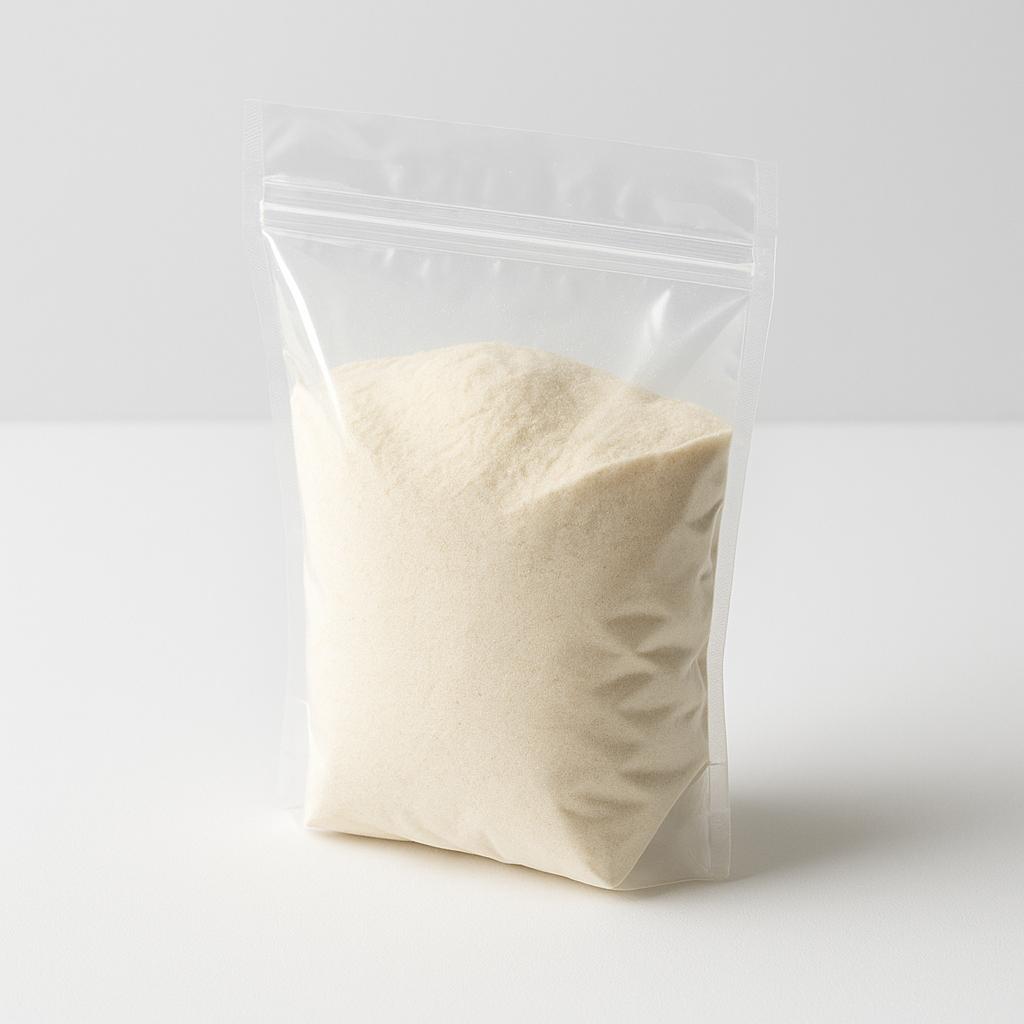
Product FormPowder
Industry PositionFood Additive / Functional Ingredient
Market
Pectin (INS 440 / E 440) in Ukraine is primarily a B2B functional ingredient used by food manufacturers as a gelling, thickening, and stabilizing agent. This record does not verify meaningful domestic pectin extraction capacity, so the market is treated as import-dependent. Demand is linked to domestic production of products such as fruit preparations/jams, confectionery, and dairy desserts where pectin functionality is relevant. The Russia–Ukraine war is a dominant constraint on logistics reliability, delivery lead times, and commercial risk management for inbound ingredient supply.
Market RoleImport-dependent ingredient market
Domestic RoleB2B formulation ingredient for Ukrainian food processing
Specification
Physical Attributes
- Free-flowing powder with controlled particle size (buyer specification).
- Moisture control is important to prevent caking and loss of functionality during storage and handling.
Compositional Metrics
- Degree of esterification / amidation (grade-defining parameter).
- Functional performance metrics (e.g., gel strength/setting behavior) specified by industrial buyers.
Grades
- High-methoxyl (HM) pectin
- Low-methoxyl (LM) pectin
- Amidated low-methoxyl (LMA) pectin
Packaging
- Industrial packaging such as multiwall paper bags with inner liner or fiber drums.
- Moisture-barrier packaging and resealability emphasized for shelf stability.
Supply Chain
Value Chain
- Global pectin producer → regional/EU distributor → Ukrainian importer/distributor → Ukrainian food manufacturers
Temperature
- Typically handled at ambient temperature; protect from excessive heat and humidity per supplier specification.
Shelf Life
- Hygroscopic material—moisture uptake can reduce flowability and functional performance; storage in sealed packaging and dry conditions is critical.
Freight IntensityLow
Transport ModeMultimodal
Risks
Geopolitical HighThe Russia–Ukraine war can severely disrupt Ukraine-bound ingredient trade through route instability, elevated insurance and security constraints, infrastructure impacts, and abrupt changes in lead times and delivery reliability.Use redundant suppliers and routes (including EU land corridors), negotiate flexible delivery windows, maintain safety stock in-country or in nearby EU warehousing, and align Incoterms/insurance responsibilities explicitly in contracts.
Logistics MediumBorder congestion and multimodal handoffs (road/rail/warehouse transfers) can cause delays and increased landed costs, raising the risk of production stoppages for manufacturers relying on just-in-time inputs.Pre-book transport capacity, verify importer customs readiness, and set reorder points based on worst-case lead time scenarios.
Regulatory Compliance MediumFood additive permissions and labeling expectations can be complex and product-category specific; documentation gaps (spec/CoA mismatch, insufficient labeling support) can create clearance delays or downstream audit non-conformities.Run a pre-shipment compliance checklist with the Ukrainian importer and end-user QA, including additive identity (INS/E-number), intended use, and document alignment.
Financial MediumCurrency and payment/settlement constraints related to wartime financial conditions can increase counterparty risk and complicate payment terms for imports.Use risk-managed payment structures (e.g., confirmed LC where appropriate) and conduct counterparty due diligence with conservative credit limits.
Sustainability
- Traceability of botanical source (e.g., citrus peel vs apple pomace) and by-product supply chain documentation for customer and auditor requirements.
Labor & Social
- Conflict-related worker safety and security risks in domestic logistics, warehousing, and distribution operations within Ukraine.
Standards
- FSSC 22000
- ISO 22000
- BRCGS (supplier/ingredient programs where applicable)
Sources
Other Pectins Country Markets for Supplier, Export, and Price Comparison from Ukraine
Compare Pectins supplier coverage, trade flows, and price benchmarks across countries related to Ukraine.


Tridge Ark · Export & Sourcing Feasibility Checks
Pectins in Ukraine — are you buying, or selling?
Either way it's a few questions. We'll come back with where you could buy it, or who you could sell it to.
Free feasibility check, no account required.
Related Pectins Product Categories
Browse parent, sub, derived, and raw-material product market pages related to Pectins.
Derived products: Persimmon Jam, Pineapple Jam, Tangor Jam, Nectarine Jam, Peach Jam, Pear Jam, Sour Cherry Jam, Sweet Granadilla Jam, Cranberry Jam, Rhubarb Jam, Star Gooseberry Jam, Tamarillo Jam, Cherry Jam, Pitanga Jam, Pili Fruit Jam, Rose Apple Jam, Cashew Apple Jam, Fruit Flavored Candies, Tangelo Jam, Sea Buckthorn Jam, Tomatillo Jam, Low-fat Fruit Yogurt
By clicking “Accept Cookies,” I agree to provide cookies for statistical and personalized preference purposes. To learn more about our cookies, please read our Privacy Policy.