W50 2024: Sunflower Oil Weekly Update
.jpg)
1. Weekly News
Global
FAO Reports Surge in Vegetable Oil Prices in November
The Food and Agriculture Organization of the United Nations (FAO) Vegetable Oil Price Index rose 7.5% month-on-month (MoM) to 164.1 points on Nov-24, its highest level since Jul-22. Higher global prices for palm, rapeseed, soybean, and sunflower oils drove the increase. Palm oil prices rose for the sixth month due to excessive rainfall causing lower-than-expected production in Southeast Asia. Soybean oil prices climbed on strong global import demand, while rapeseed and sunflower oil prices increased amid anticipated supply shortages.
India
India's Vegetable Oil Imports Surge in Nov-24 Amid Festival-Driven Demand
India's vegetable oil imports reached a four-month high of 1.63 million tons in Nov-24, driven by refiners restocking soybean and sunflower oils following robust festival-season demand. Soybean oil imports rose 19.3% year-on-year (YoY) to 407,648 tons, while sunflower oil imports surged 42.5% YoY to 340,660 tons. In contrast, palm oil imports declined slightly by 0.4% YoY to 841,993 tons, as its premium pricing over soybean and sunflower oils deterred purchases. Competitive soybean oil prices from Argentina spurred higher imports but pressured local soybean prices below the government's minimum support price. As refiners shift preferences, a significant drop in palm oil imports is expected in December.
Russia
Sunflower Oil Export Growth Driven by High Demand and Supply Challenges
Despite supply constraints, strong global demand for sunflower oil is driving increased production and exports from Russia. High import demand and limited availability of alternative vegetable oils, such as palm oil, have elevated sunflower oil's market position. Production has grown significantly YoY, with exports peaking in Nov-24. However, drought conditions have reduced sunflower yields by nearly one-third, particularly in key regions like the Southern, North Caucasian, and Central federal districts. Smaller seed sizes and lower harvest volumes have further tightened supplies. Expanding processing capacities and rising export tariffs are also influencing market dynamics. Expectations for a larger harvest in the next season indicate increased planting areas due to sunflower's high profitability.
Ukraine
USDA Raises Ukraine's 2024/25 Sunflower Production Forecast
The United States Department of Agriculture (USDA) increased its forecast for Ukraine's 2024/25 sunflower harvest to 12.9 million tons, with sunflower oil production estimated at 5.398 million tons, of which 5 million tons are expected to be exported. Sunflower meal output is projected at 5.183 million tons, with exports reaching 4.1 million tons. Globally, sunflower production is forecast at 50.512 million tons, sunflower oil at 19.957 million tons, and sunflower meal at 21 million tons, showing slight increases from the previous month.
2. Weekly Pricing
Weekly Sunflower Oil Pricing Top Producers (USD/kg)
_22.03.32.png)
Yearly Change in Sunflower Oil Pricing Top Producers (W50 2023 to W50 2024)
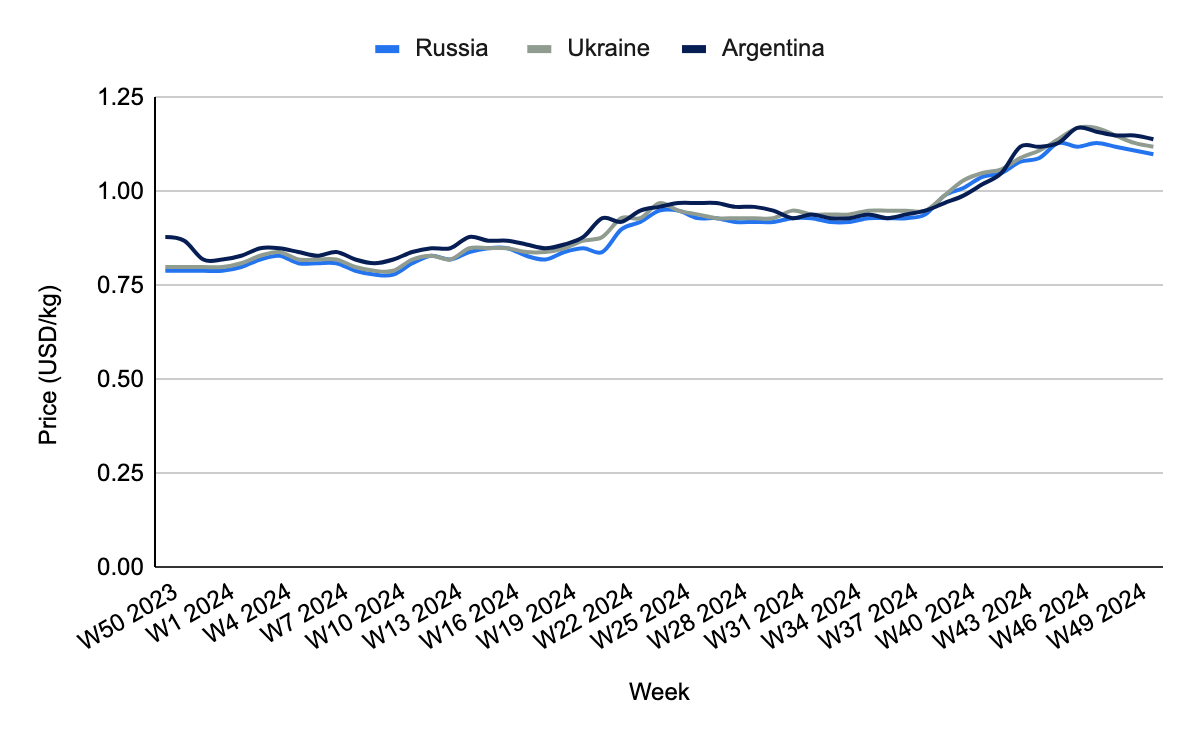
* Blank spaces on the graph signify data unavailability stemming from factors like missing data, supply unavailability, or seasonality
Russia
Sunflower oil prices in Russia remained relatively stable in W50 at USD 1.10 per kilogram (kg), showing a slight week-on-week (WoW) decline of 0.90% and a modest MoM drop of 2.65%, reflecting minor market adjustments. Despite these slight declines, prices have risen significantly by 39.24% YoY, primarily due to strong global demand and limited availability of alternative vegetable oils like palm oil. The sharp YoY increase is further supported by a peak in exports during Nov-24, even as drought conditions reduced sunflower yields by nearly one-third in key production regions such as the Southern, North Caucasian, and Central federal districts. Smaller seed sizes and lower harvest volumes have tightened supply while rising export tariffs and expanded processing capacities have influenced pricing. Sunflower's profitability is expected to drive increased planting in the upcoming season, contributing to future supply growth.
Ukraine
Sunflower oil prices in Ukraine showed a slight WoW decline of 0.88% in W50, reaching USD 1.12/kg, while MoM prices fell by 4.27%, reflecting improved supply conditions. The recent price drops are linked to Ukraine's higher production forecasts for the 2024/25 season, with sunflower oil output estimated at 5.398 million tons and exports projected at 5 million tons. Despite these declines, prices remain elevated by 40% YoY, driven by earlier supply constraints caused by droughts in the Black Sea region, reduced yields in Ukraine and Russia, and strong global demand in previous months. With Ukraine's production steadily increasing, sunflower oil prices will continue decreasing in the coming months, provided demand remains stable.
Argentina
Sunflower oil prices in Argentina decreased slightly in W50, falling by 0.87% WoW to USD 1.14/kg, with a MoM decline of 1.72%. These moderate drops reflect improved global sunflower oil supply, as leading producers like Russia and Ukraine have increased production levels. However, YoY prices remain elevated by 29.55%, driven by prior global supply constraints, particularly in the Black Sea region, and sustained strong global demand for sunflower oil.
3. Actionable Recommendations
Expand Processing and Export Opportunities
Argentina's sunflower oil exporters should capitalize on stable production levels to expand exports to high-demand regions like the European Union (EU) and Africa, where rising olive oil prices have boosted demand for alternatives. Investments in processing capacity to produce refined, organic, or non-GMO oils can tap into premium markets such as Germany and the United Kingdom (UK), where demand for sustainable and health-focused products is rising. Partnering with regional distributors or supermarket chains, such as Carrefour in the EU or Shoprite in Africa, and leveraging proximity to Brazil's growing food processing industry can further enhance export opportunities, enabling Argentina to strengthen its market presence amid global supply constraints.
Support Domestic Sunflower Cultivation
Countries with favorable climates, like India and Turkey, should prioritize investments to bolster domestic sunflower seed production, reducing reliance on volatile imports and strengthening local supply chains. India, for instance, can enhance cultivation in states like Karnataka and Maharashtra by providing subsidies to farmers, promoting drought-resistant varieties, and improving access to irrigation and quality seeds. Similarly, Turkey can expand sunflower farming in regions like Thrace, leveraging government-backed incentives and technical training programs for farmers to increase yields. Both countries can benefit from investments in advanced processing infrastructure to produce refined oils, which would meet domestic demand and create export opportunities. Research collaborations with agricultural institutes to develop high-yield and climate-resilient seeds and public-private partnerships to establish processing hubs can ensure long-term resilience against global supply fluctuations and foster economic growth in rural communities.
Sources: Tridge, Agro Portal BG, Agro Portal UA, Agro Vesti, Noticias Agricolas, Rural Voice


