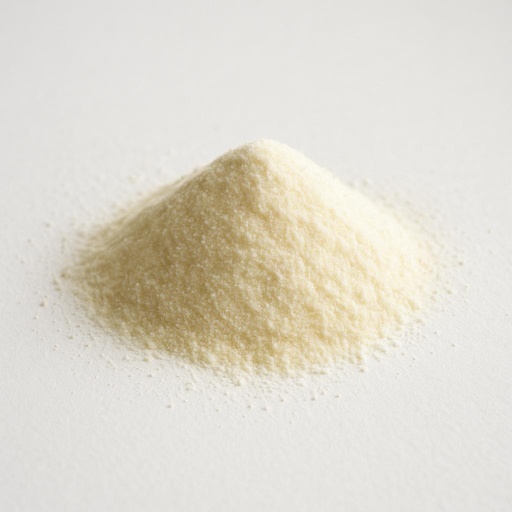
Ascorbic Acid Suppliers & Prices in Malaysia — Market Overview 2026
Parent Product
Vitamin C
Derived Products
Blackcurrant Drink, Plum Juice Drink, Long Life Fruit Juice Drink, Orange Fruit Cups, +3
Last Updated
2026-09-17
Key takeaways for search and sourcing teams
- 4 sampled export transactions for Malaysia are summarized.
- 2 export partner companies and 10 import partner companies are mapped for Ascorbic Acid in Malaysia.
- Page data last updated on 2026-09-17.
Ascorbic Acid Export Supplier Intelligence, Price Trends, and Trade Flows in Malaysia
2 export partner companies are tracked for Ascorbic Acid in Malaysia. Use Supply Chain Intelligence company profiles and analytics to validate exporter coverage, partner quality, and route priorities.
Explore Ascorbic Acid export intelligence in Malaysia, including 4 sampled supplier transactions, monthly unit-price ranges, and partner-country trade flow patterns for HS Code -.
Scatter points are sampled from 100.0% of the full transaction dataset.
Sample Export Supplier Transaction Records for Ascorbic Acid in Malaysia
4 sampled Ascorbic Acid transactions in Malaysia include date, origin, and partner-country context to benchmark export prices and supplier trading patterns.
Ascorbic Acid sampled transaction unit prices by date in Malaysia: 2026-05-28: 2.50 USD / kg, 2026-01-07: 2.27 USD / kg, 2026-01-07: 3.23 USD / kg, 2025-12-11: 5.25 USD / kg.
| Date | Reported Product | Unit Price | Exporter | Importer | |
|---|---|---|---|---|---|
| 2026-05-28 | [비타*** ************** **** | 2.50 USD / kg | (Malaysia) | (South Korea) | |
| 2026-01-07 | [비타*** ************** **** | 2.27 USD / kg | (Malaysia) | (South Korea) | |
| 2026-01-07 | [혼합*** **** ************** **** *** *********** | 3.23 USD / kg | (Malaysia) | (South Korea) | |
| 2025-12-11 | VIT**** * ********* ***** | 5.25 USD / kg | (Malaysia) | (Sri Lanka) |
Top Ascorbic Acid Export Suppliers and Companies in Malaysia
Review leading exporter profiles and benchmark them against 2 total export partner companies tracked for Ascorbic Acid in Malaysia. Use Supply Chain Intelligence company profiles and analytics to shortlist sourcing and export partners faster.
(Malaysia)
Latest Export Transaction: 2026-08-17
Employee Size: 501 - 1000 Employees
Industries: Beverage ManufacturingFood ManufacturingFood PackagingOthers
Value Chain Roles: Distribution / WholesaleFarming / Production / Processing / PackingFood Manufacturing
(Malaysia)
Latest Export Transaction: 2026-08-17
Industries: Others
Value Chain Roles: Distribution / Wholesale
Malaysia Export Partner Coverage
2 companies
Total export partner company count is a core signal of Malaysia export network depth for Ascorbic Acid.
Exporters and importers can open Supply Chain Intelligence company profiles and analytics to assess Ascorbic Acid partner concentration, capacity signals, and trade relevance in Malaysia.
Sourcing diagnosis
Could you be importing Ascorbic Acid from Malaysia yourself?
Just tell us your spec and the volume you need. We'll check whether it's actually sourceable, and which origins and suppliers fit.
Free diagnosis, no account required.
Ascorbic Acid Import Buyer Intelligence and Price Signals in Malaysia: Buyers, Demand, and Trade Partners
10 import partner companies are tracked for Ascorbic Acid in Malaysia. Exporters and importers can use Supply Chain Intelligence company profiles and analytics to analyze buyer demand, partner density, and downstream channels.
Scatter points are sampled from 100.0% of the full transaction dataset.
Sample Import Transaction and Price Records for Ascorbic Acid in Malaysia
1 sampled Ascorbic Acid import transactions in Malaysia provide date, origin, and trade-country context to benchmark price levels and demand-side trading patterns.
Ascorbic Acid sampled import transaction unit prices by date in Malaysia: 2025-09-15: 7.70 USD / kg.
| Date | Reported Product | Unit Price | Exporter | Importer | Origin | |
|---|---|---|---|---|---|---|
| 2025-09-15 | ASC***** **** | 7.70 USD / kg | (-) | (-) | - |
Top Ascorbic Acid Buyers, Importers, and Demand Partners in Malaysia
Review leading buyer profiles and compare them with 10 total import partner companies tracked for Ascorbic Acid in Malaysia. Exporters and importers can use Supply Chain Intelligence company profiles and analytics to evaluate demand-side partner fit.
(Malaysia)
Latest Import Transaction: 2026-08-17
Industries: Beverage ManufacturingFood ManufacturingFood Packaging
Value Chain Roles: Distribution / WholesaleFood Manufacturing
(Malaysia)
Latest Import Transaction: 2026-08-17
Industries: Others
Value Chain Roles: Trade
(Malaysia)
Latest Import Transaction: 2026-08-17
Employee Size: Over 1000 Employees
Sales Revenue: USD Over 1B
Industries: Beverage ManufacturingFood Manufacturing
Value Chain Roles: Distribution / WholesaleFood Manufacturing
(Malaysia)
Latest Import Transaction: 2026-08-17
Employee Size: 51 - 100 Employees
Industries: Animal ProductionCrop ProductionFood Manufacturing
Value Chain Roles: Farming / Production / Processing / PackingFood ManufacturingTrade
(Malaysia)
Latest Import Transaction: 2026-08-17
Employee Size: 101 - 500 Employees
Industries: Others
Value Chain Roles: Distribution / Wholesale
(Malaysia)
Latest Import Transaction: 2026-08-17
Employee Size: Over 1000 Employees
Sales Revenue: USD Over 1B
Industries: Beverage ManufacturingFood Manufacturing
Value Chain Roles: Distribution / WholesaleFood Manufacturing
Malaysia Import Partner Coverage
10 companies
Import partner company count highlights demand-side visibility for Ascorbic Acid in Malaysia.
Use Supply Chain Intelligence analytics and company profiles to identify active Ascorbic Acid importers, distributors, and buyer networks in Malaysia.
Export diagnosis
Your Ascorbic Acid — could it sell to these buyers in Malaysia?
Just tell us what you make. We'll see whether you're ready to export today and which markets suit your offer.
Free diagnosis, no account required.
Price data
Which Ascorbic Acid prices in Malaysia do you need?
We'll open up the full price history and competitor benchmarks. Just tell us which numbers you need and we'll walk you through them.
Classification
Product TypeIngredient
Product FormPowder (bulk, unmixed chemical)
Industry PositionNutraceutical and food ingredient (vitamin/antioxidant input for downstream manufacturing)
Market
Ascorbic acid (vitamin C; HS 2936.27 when imported as an unmixed chemical) is used in Malaysia mainly as an input for downstream manufacturing and as an active ingredient in health supplement dosage forms. Health supplements in Malaysia are regulated under the National Pharmaceutical Regulatory Agency (NPRA) framework, with specific registration guidance for health supplement products. For food uses, Malaysia’s food safety control framework is anchored in the Food Act 1983 and subsidiary regulations, including the Food Regulations 1985, which cover standards and labelling requirements and food additive controls. The market is therefore shaped more by regulatory classification (food ingredient vs. health supplement product) and documentation compliance than by domestic primary production.
Market RoleImport-dependent downstream formulation and consumer market (supplements and food manufacturing uses)
Domestic RoleDownstream user market for vitamin C in supplement manufacturing and as a food ingredient/additive
Specification
Primary VarietyL-ascorbic acid (vitamin C; INS 300 / E300 for food additive context)
Secondary Variety
- Sodium ascorbate
- Calcium ascorbate
- Ascorbyl palmitate
Physical Attributes
- White to slightly yellow crystalline powder; hygroscopicity and exposure to heat/light/oxygen can accelerate degradation and potency loss
Compositional Metrics
- Assay/potency (e.g., pharmacopeial or food-chemical specification depending on intended use)
- Impurity profile and residual solvents (specification-dependent) documented in Certificate of Analysis
Grades
- Food ingredient/additive grade aligned to applicable food standards and labeling rules
- Pharmaceutical/health supplement dossier grade aligned to NPRA registration dossier expectations for active ingredients in health supplements
Supply Chain
Value Chain
- Overseas producer (bulk vitamin C) → Malaysian importer/distributor → local formulation (tableting/encapsulation/blending) or food manufacturing use → domestic distribution
Temperature
- Store in cool, dry conditions; protect from heat, light, and moisture to reduce oxidation and potency loss
Atmosphere Control
- Minimize oxygen exposure during storage and repacking; use sealed packaging and appropriate headspace control where feasible
Shelf Life
- Typically stable as a dry powder when protected from moisture and heat, but degradation risk rises if storage conditions are poor or if repeatedly opened/repacked without controls
Freight IntensityLow
Transport ModeSea
Risks
Regulatory Compliance HighMisclassification or non-compliance with Malaysia’s regulatory pathway (e.g., importing/marketing a vitamin C dosage form as a health supplement without meeting NPRA registration expectations, or mismatched intended-use documentation for bulk ingredient vs. finished product) can trigger detention, rejection, or enforcement action and effectively block market entry.Confirm intended use and classification early (bulk ingredient vs. finished health supplement); align dossier, labelling/claims, and import documentation with NPRA health supplement guidance and Ministry of Health food law requirements as applicable.
Documentation Gap MediumIncomplete or inconsistent supporting documents (e.g., missing lot-specific CoA, inconsistent product naming vs. HS classification, or missing origin documentation when claiming preferences) can delay customs clearance and disrupt manufacturing schedules.Use a pre-shipment document checklist; ensure CoA links to shipped lot numbers and that declarations match product form (unmixed chemical vs. preparation).
Quality MediumQuality drift from poor storage/repacking (moisture/heat exposure) or inadequate impurity control can lead to potency failure, product recalls, or failed product registration/market surveillance outcomes for finished supplements.Maintain controlled storage conditions, validate repacking operations, and qualify suppliers using consistent specification/CoA verification and stability-aware handling.
Supply Concentration MediumGlobal supply concentration for bulk ascorbic acid can create procurement and lead-time risk for Malaysia’s import-dependent downstream manufacturers during disruptions (plant outages, trade remedies in other markets affecting flows, or shipping disruption).Dual-source qualified suppliers where feasible and hold safety stock sized to local production lead times and clearance variability.
Sustainability
- Supplier environmental compliance screening for fermentation-based vitamin production (process wastewater and energy intensity) and Scope 3 emissions associated with imported chemical ingredients
FAQ
Is a vitamin C product sold in capsules/tablets/powders treated as a health supplement in Malaysia?Malaysia’s NPRA defines health supplements as products used to supplement the diet and maintain or improve health functions, presented in small unit dosage forms such as capsules, tablets, powders, or liquids. If the item is a finished dosage-form product positioned as a health supplement, NPRA’s health supplement registration guidance applies.
Which Malaysian legal framework governs vitamin C when it is used as a food ingredient or additive?Malaysia’s food control system is anchored in the Food Act 1983 and subsidiary regulations, including the Food Regulations 1985 that set standards and labelling requirements and cover food additive controls. For additive-function context, Codex Alimentarius lists L-ascorbic acid (INS 300) as an antioxidant/acidity regulator across multiple food categories, which is a commonly referenced international standard baseline.
What is the key customs clearance operational requirement to avoid delays when importing this ingredient into Malaysia?Royal Malaysian Customs requires supporting documents for customs declarations to be submitted through MyCIEDS for all transport modes. In practice, ensuring complete supporting documentation (including lot-specific CoA/specification for bulk ingredient) helps reduce documentation holds and clearance delays.
Sources
Other Ascorbic Acid Country Markets for Supplier, Export, and Price Comparison from Malaysia
Compare Ascorbic Acid supplier coverage, trade flows, and price benchmarks across countries related to Malaysia.


Export & sourcing diagnosis
Ascorbic Acid in Malaysia — are you buying, or selling?
Either way it's a few questions. We'll come back with where you could buy it, or who you could sell it to.
Free diagnosis, no account required.
Related Ascorbic Acid Product Categories
Browse parent, sub, derived, and raw-material product market pages related to Ascorbic Acid.
Parent product: Vitamin C
By clicking “Accept Cookies,” I agree to provide cookies for statistical and personalized preference purposes. To learn more about our cookies, please read our Privacy Policy.