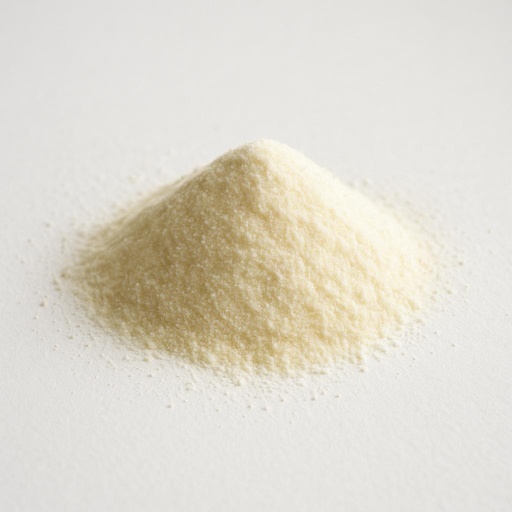
Ascorbic Acid Suppliers & Prices in Peru — Market Overview 2026
Parent Product
Vitamin C
Derived Products
Blackcurrant Drink, Plum Juice Drink, Long Life Fruit Juice Drink, Orange Fruit Cups, +3
Last Updated
2026-09-17
Key takeaways for search and sourcing teams
- Page data last updated on 2026-09-17.
Sourcing diagnosis
Could you be importing Ascorbic Acid from Peru yourself?
Just tell us your spec and the volume you need. We'll check whether it's actually sourceable, and which origins and suppliers fit.
Free diagnosis, no account required.
Ascorbic Acid Import Buyer Intelligence and Price Signals in Peru: Buyers, Demand, and Trade Partners
6 import partner companies are tracked for Ascorbic Acid in Peru. Exporters and importers can use Supply Chain Intelligence company profiles and analytics to analyze buyer demand, partner density, and downstream channels.
Scatter points are sampled from 100.0% of the full transaction dataset.
Sample Import Transaction and Price Records for Ascorbic Acid in Peru
5 sampled Ascorbic Acid import transactions in Peru provide date, origin, and trade-country context to benchmark price levels and demand-side trading patterns.
Ascorbic Acid sampled import transaction unit prices by date in Peru: 2026-07-25: 66.93 USD / kg, 2026-05-16: 63.95 USD / kg, 2026-04-18: 58.02 USD / kg, 2026-04-01: 40.98 USD / kg, 2026-03-20: 71.50 USD / kg.
| Date | Reported Product | Unit Price | Exporter | Importer | Origin | |
|---|---|---|---|---|---|---|
| 2026-07-25 | VIT**** ** ********** *** ***** *** **** ********* ******** ********* ******* * **** **** *** ******** **** ********* | 66.93 USD / kg | (-) | (-) | - | |
| 2026-05-16 | VIT**** ** ********** *** ***** *** **** ********* ******** ********* ******* * **** **** *** ******** **** ********* | 63.95 USD / kg | (-) | (-) | - | |
| 2026-04-18 | VIT**** ** ********** *** ***** *** **** ********* ******** ********* ******* * **** **** *** ******** **** ********* | 58.02 USD / kg | (-) | (-) | - | |
| 2026-04-01 | VIT * **** *** ****** ***** *** ****** *** * **** ** * *** **** ***** ********** ** ******* **** ** ****** *** * **** ** **** **** ******** ********** ******* | 40.98 USD / kg | (-) | (-) | - | |
| 2026-03-20 | VIT**** ** ********** *** ***** *** **** ********* ******** ********* ******* * **** **** *** ******** **** ********* | 71.50 USD / kg | (-) | (-) | - |
Top Ascorbic Acid Buyers, Importers, and Demand Partners in Peru
Review leading buyer profiles and compare them with 6 total import partner companies tracked for Ascorbic Acid in Peru. Exporters and importers can use Supply Chain Intelligence company profiles and analytics to evaluate demand-side partner fit.
(Peru)
Latest Import Transaction: 2026-08-17
Recently Import Partner Companies: 2
Employee Size: 101 - 500 Employees
Sales Revenue: USD 10M - 50M
Industries: Food ManufacturingFood PackagingFood Services And Drinking Places
Value Chain Roles: Distribution / WholesaleFood ManufacturingTrade
(Peru)
Latest Import Transaction: 2026-08-17
Recently Import Partner Companies: 1
Industries: Food ManufacturingFood Services And Drinking PlacesOnline Retail And Fulfillment
Value Chain Roles: Distribution / WholesaleFood ManufacturingTrade
(Peru)
Latest Import Transaction: 2026-08-17
Recently Import Partner Companies: 3
Employee Size: 11 - 50 Employees
Sales Revenue: USD 1M - 5M
Industries: Animal ProductionFood Manufacturing
Value Chain Roles: Farming / Production / Processing / PackingFood ManufacturingTrade
(Peru)
Latest Import Transaction: 2026-08-17
Industries: Food ManufacturingFood PackagingOthers
Value Chain Roles: Distribution / WholesaleTrade
(Peru)
Latest Import Transaction: 2026-08-17
Industries: Beverage ManufacturingFood ManufacturingFood Packaging
Value Chain Roles: Distribution / WholesaleFood Manufacturing
(Peru)
Latest Import Transaction: 2026-08-17
Industries: Others
Value Chain Roles: Logistics
Peru Import Partner Coverage
6 companies
Import partner company count highlights demand-side visibility for Ascorbic Acid in Peru.
Use Supply Chain Intelligence analytics and company profiles to identify active Ascorbic Acid importers, distributors, and buyer networks in Peru.
Export diagnosis
Your Ascorbic Acid — could it sell to these buyers in Peru?
Just tell us what you make. We'll see whether you're ready to export today and which markets suit your offer.
Free diagnosis, no account required.
Price data
Which Ascorbic Acid prices in Peru do you need?
We'll open up the full price history and competitor benchmarks. Just tell us which numbers you need and we'll walk you through them.
Classification
Product TypeIngredient
Product FormBulk crystalline powder
Industry PositionFood, beverage, and nutraceutical ingredient (vitamin/antioxidant)
Market
Ascorbic acid (vitamin C) in Peru is primarily an import-supplied ingredient used for dietary (supplement) products and as a food additive/antioxidant in food and beverage manufacturing. UN Comtrade data via WITS shows Peru imported HS 293627 (Vitamin C and its derivatives, unmixed) in 2024 with imports dominated by China. Market access and clearance risk is driven more by correct product classification and required sanitary controls (DIGEMID for dietetic products; DIGESA for food safety/inocuidad) than by domestic production dynamics. Importers typically route compliance through VUCE processes and standard SUNAT customs documentation workflows.
Market RoleImport-dependent consumer and manufacturing input market (net importer)
Domestic RoleFunctional ingredient for supplements (dietetic products) and food/beverage formulations
Specification
Primary VarietyL-ascorbic acid (vitamin C; Codex INS 300)
Secondary Variety
- Sodium ascorbate (derivative; often traded under the same HS6 family in statistics)
- Calcium ascorbate (derivative; often traded under the same HS6 family in statistics)
Physical Attributes
- White to slightly yellow crystalline powder (typical commercial appearance)
- Moisture- and oxidation-sensitive; protection from humidity and excessive light helps preserve potency
Compositional Metrics
- Identity and purity commonly controlled against recognized specifications (e.g., JECFA/Codex-linked specifications for food additive use and pharmacopeial specifications for regulated product use)
- Batch Certificate of Analysis (CoA) is a standard buyer expectation for traceability and quality release
Grades
- Food additive grade aligned to Codex/JECFA specification expectations for INS 300 use-cases
- Pharmaceutical/regulatory grade where the product is imported/used within DIGEMID-regulated dossiers
Packaging
- Moisture-barrier inner liner within a rigid outer pack (drum/carton) for bulk shipments
- Lot coding on outer and inner packaging to support batch traceability
Supply Chain
Value Chain
- Overseas manufacturer → bulk packaging → international freight → SUNAT customs clearance → importer/distributor warehousing → delivery to food/supplement manufacturers
Temperature
- Ambient logistics with humidity control emphasis; avoid prolonged exposure to high heat and moisture
Atmosphere Control
- Keep tightly sealed; limit exposure to air to reduce oxidative degradation risk after opening
Shelf Life
- Shelf life is supplier-specific; importers typically rely on manufacturer-declared shelf life and storage conditions shown on the CoA/label
Freight IntensityLow
Transport ModeSea
Risks
Regulatory Compliance HighA trade-stopping risk is regulatory misclassification and missing sectoral control documents: depending on presentation and declared end-use, vitamin C may be processed under DIGEMID pathways for dietetic products (via VUCE restricted-goods processes) or under DIGESA-aligned food safety context for food use. SUNAT explicitly notes that restricted goods require "documentos de control" (e.g., sanitary registrations/permits from competent sectors such as DIGEMID); missing or incorrect documentation can trigger holds, physical inspection, or non-release.Lock the intended end-use and regulatory category before contracting; align HS classification, labeling, and dossier language; secure required DIGEMID/VUCE authorizations or DIGESA-aligned food documentation as applicable before shipment; run a pre-arrival document checklist against SUNAT’s required documents and restricted-goods controls.
Supply Concentration MediumSupply continuity risk is elevated by import-origin concentration: UN Comtrade via WITS indicates Peru’s 2024 HS 293627 imports were dominated by China, increasing exposure to origin-specific disruptions (manufacturing interruptions, export logistics shocks, or supplier compliance failures).Pre-qualify at least one secondary origin/supplier (e.g., alternative supplier countries shown in WITS trade flows); maintain safety stock for supplement/food production schedules; use dual-source specifications to avoid single-supplier lock-in.
Quality MediumQuality deviations (identity/purity or stability loss from moisture/oxidation) can lead to downstream product non-compliance or recalls in supplement and food applications; quality expectations are typically anchored to recognized additive and regulatory specifications (e.g., Codex/JECFA-linked specifications for INS 300 use-cases).Require batch CoA with identity/purity testing; specify packaging and storage controls in the purchase contract; implement incoming QC (including stability-relevant checks) and retain samples for traceability.
Labor & Social
- No widely documented Peru-specific labor controversy is uniquely associated with ascorbic acid as an imported chemical ingredient; social risk is more likely to be managed through supplier qualification and audit practices upstream.
FAQ
What are the main import origins for vitamin C (HS 293627) into Peru?UN Comtrade data via the World Bank’s WITS indicates that in 2024 Peru imported HS 293627 primarily from China, with additional (smaller) imports from Costa Rica, the United Kingdom, Colombia, and India.
Which Peruvian authorities matter most for importing vitamin C for supplements versus for food manufacturing?For dietetic (supplement-type) products, DIGEMID’s registration pathways apply and are processed through VUCE (restricted-goods workflows). For food use, MINSA/DIGESA’s food safety (inocuidad) context and DIGESA import-orientation guidance for foods is relevant, while SUNAT handles customs clearance and requires control documents for restricted goods when applicable.
Which basic documents does SUNAT list for simplified import processing that are relevant to vitamin C shipments?SUNAT lists items such as the simplified import declaration format, the commercial invoice (or equivalent value document), the transport document (bill of lading/air waybill/carta porte), insurance document (if insured), and—when applicable—control documents for restricted goods (e.g., sanitary registrations/permits from competent authorities such as DIGEMID) and certificates of origin.
Sources


Export & sourcing diagnosis
Ascorbic Acid in Peru — are you buying, or selling?
Either way it's a few questions. We'll come back with where you could buy it, or who you could sell it to.
Free diagnosis, no account required.
Related Ascorbic Acid Product Categories
Browse parent, sub, derived, and raw-material product market pages related to Ascorbic Acid.
Parent product: Vitamin C
By clicking “Accept Cookies,” I agree to provide cookies for statistical and personalized preference purposes. To learn more about our cookies, please read our Privacy Policy.