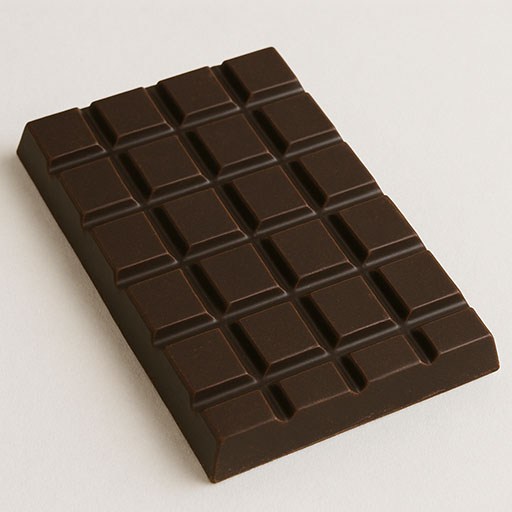
Dark Chocolates Prices & Trade in Egypt — Market Overview 2026
Sub Product
70% Cocoa Dark Chocolate, 75% Cocoa Dark Chocolate, 80% Cocoa Dark Chocolate, 90% Cocoa Dark Chocolate, +2
Derived Products
Chocolate Mousse, Pain au Chocolat, Chocolate Truffles, Chocolate Jam
Raw Materials
Cocoa Butter, Cocoa Paste, Vanilla Extract, White Sugar
HS Code
180690
Last Updated
2026-10-19
Key takeaways for search and sourcing teams
- 5 export partner countries and 5 import partner countries are ranked.
- Latest reference year in this page dataset is 2024.
- Page data last updated on 2026-10-19.
Dark Chocolates Export Supplier & Manufacturer Intelligence, Price Trends, and Trade Flows in Egypt
Use Supply Chain Intelligence company profiles and analytics to validate Dark Chocolates exporter coverage, partner quality, and route priorities in Egypt.
Annual Export Value, Volume, and Supplier Market Size for Dark Chocolates in Egypt (HS Code 180690)
Analyze 3 years of Dark Chocolates export volume and value in Egypt to evaluate supplier market growth, seasonality, and trade volatility.
| Year | Volume | Value |
|---|---|---|
| 2024 | 3,352,798 | 26,213,865 USD |
| 2023 | 3,315,867 | 24,886,283 USD |
| 2022 | 8,518,571 | 57,140,449 USD |
Top Destination Markets for Dark Chocolates Exports from Egypt (HS Code 180690) in 2024
For 2024, compare export volume and value across the top 5 destination countries for Dark Chocolates exports from Egypt.
| Rank | Country | Volume | Value |
|---|---|---|---|
| 1 | Saudi Arabia | 766,758.804 | 6,003,819.55 USD |
| 2 | Yemen | 601,596.616 | 4,730,193.57 USD |
| 3 | Jordan | 429,452.034 | 3,312,273.72 USD |
| 4 | Sudan | 289,859.154 | 2,288,757.698 USD |
| 5 | Palestine | 261,919.518 | 2,024,179.953 USD |
Tridge Ark · Sourcing Feasibility Check
Could you be importing Dark Chocolates from Egypt yourself?
Just tell us your spec and the volume you need. We'll check whether it's actually sourceable, and which origins and suppliers fit.
Free feasibility check, no account required.
Dark Chocolates Import Buyer Intelligence and Price Signals in Egypt: Buyers, Demand, and Trade Partners
Exporters and importers can use Supply Chain Intelligence company profiles and analytics to analyze Dark Chocolates buyer demand, partner density, and downstream channels in Egypt.
Annual Import Value, Volume, and Demand Size for Dark Chocolates in Egypt (HS Code 180690)
Track 3 years of Dark Chocolates import volume and value in Egypt to assess demand growth and market momentum.
| Year | Volume | Value |
|---|---|---|
| 2024 | 1,441,492 | 10,880,333 USD |
| 2023 | 1,793,450 | 13,233,839 USD |
| 2022 | 3,224,173 | 20,100,424 USD |
Top Origin Supplier Countries Supplying Dark Chocolates to Egypt (HS Code 180690) in 2024
For 2024, compare import volume and value across the top 5 origin supplier countries supplying Dark Chocolates to Egypt.
| Rank | Country | Volume | Value |
|---|---|---|---|
| 1 | Italy | 572,926.042 | 4,305,584.11 USD |
| 2 | Poland | 192,507.831 | 1,446,731.191 USD |
| 3 | Netherlands | 148,244.576 | 1,114,100.969 USD |
| 4 | Germany | 117,203.685 | 882,370.713 USD |
| 5 | Greece | 111,347.191 | 865,149.153 USD |
Tridge Ark · Export Feasibility Check
Your Dark Chocolates — could it sell to these buyers in Egypt?
Just tell us what you make. We'll see whether you're ready to export today and which markets suit your offer.
Free feasibility check, no account required.
Classification
Product TypeProcessed Food
Product FormPackaged (bars/tablets)
Industry PositionFinished Consumer Confectionery Product
Market
Dark chocolate in Egypt is a packaged confectionery category supplied by domestic manufacturers (e.g., Corona) and by imports retailed through modern trade and online grocery. Market access for imported chocolates is strongly shaped by GOEIC’s factory/brand-owner registration regime under Decree 43/2016 (and amendments), which can block release for trading if the producer/brand is not registered. Food import operations are also governed by NFSA food-importer licensing under NFSA Decision No. 6/2020, with facilitated clearance mechanisms for qualified importers ("white list"). Current assortments visibly include higher cocoa-percentage dark bars (e.g., 72–85%) and reduced-sugar variants sweetened with stevia.
Market RoleDomestic consumer market with local manufacturing and imported dark chocolate supply
Domestic RoleRetail confectionery category with both locally manufactured and imported dark chocolate products
Market GrowthNot Mentioned
Specification
Physical Attributes
- Heat sensitivity during storage and last-mile handling (risk of softening and fat bloom)
- Bar/tablet format with portioning (single bars and multipacks present in retail)
Compositional Metrics
- Declared cocoa solids percentage on dark chocolate ranges
- Ingredient list scrutiny for emulsifiers and vegetable fats in some mass-market formulations (e.g., E442 and E476 appear on retail ingredient listings)
Packaging
- Primary wraps (foil/plastic) with outer sleeves or printed wraps for retail sale
- Cartons/cases for wholesale distribution
Supply Chain
Value Chain
- Manufacturer (domestic or foreign) → distributor/importer → port/customs & food-control clearance (for imports) → importer warehouse → wholesale/modern trade DC → retail and e-commerce fulfillment
Temperature
- Chocolate is heat-sensitive; temperature discipline in warehousing and last-mile distribution reduces softening and quality defects (e.g., bloom).
Shelf Life
- Shelf life is sensitive to storage temperature, humidity, and packaging integrity; hot conditions can accelerate quality loss and consumer complaints.
Freight IntensityMedium
Transport ModeSea
Risks
Regulatory Compliance HighImports of chocolates and cocoa-containing foods intended for trading can be blocked from release if the producing factory (or trademark owner/distribution center) is not registered in GOEIC’s Decree 43/2016 register (and amendments).Before contracting production and shipping, verify GOEIC registration eligibility and active status for the exact factory/brand and ensure the shipment paperwork matches the registered entity details.
Regulatory Compliance MediumImporter-side licensing and import-control processes under NFSA Decision No. 6/2020 can create clearance delays or increased sampling/hold times if the importer is not properly licensed or not treated as a qualified ("white list") importer.Work only with an NFSA-licensed importer; align product dossiers, label files, and document sets to the importer’s NFSA clearance workflow.
Labor And Human Rights MediumDark chocolate supply chains can carry upstream cocoa input exposure to child labor/forced labor risks documented in major cocoa-origin countries, creating reputational and buyer-audit risk for products sold in Egypt (especially for modern trade and export-oriented brands).Implement cocoa due diligence: supplier codes, third-party audits where feasible, and preference for certified/traceable cocoa programs aligned with recognized sector initiatives.
Logistics MediumHeat exposure during port handling, warehousing, or last-mile delivery can degrade dark chocolate quality (softening/bloom), increasing returns and disputes even when regulatory clearance succeeds.Use heat-mitigation packaging, temperature-controlled storage where feasible, and seasonal route/handling SOPs during hot periods.
Sustainability
- Cocoa deforestation risk screening and preference for forest-safe cocoa sourcing (Cocoa & Forests Initiative frameworks are relevant upstream)
- Supply-chain transparency for cocoa origin and land-use compliance
Labor & Social
- Upstream cocoa supply-chain child labor and forced labor risk exposure (notably documented for cocoa in Côte d’Ivoire and Ghana) requiring due diligence and responsible sourcing
FAQ
What is a common deal-breaker compliance issue for importing chocolate into Egypt?For product categories covered by GOEIC Decree 43/2016 (including chocolates and foods containing cocoa), shipments intended for trading may not be released unless they are produced by factories registered with GOEIC (or imported via registered trademark owners/distribution centers). Verifying GOEIC registration before shipping is a critical step.
Does Egypt require a licensed food importer for importing packaged chocolate products?Yes. NFSA Decision No. 6/2020 sets rules for licensing Egyptian food importers and indicates imports are permitted subject to the importer holding an NFSA food importer license, with a "white list" mechanism that can reduce hold times for qualified importers.
Which labeling reference is relevant for prepackaged dark chocolate sold in Egypt?EOS publishes ES 1546/2024 as a general standard for labeling of prepackaged foods, and its main reference includes Codex CXS 1-1985 on prepackaged food labeling. Exporters typically align label content to the importer’s checklist using these references.
Sources
Other Dark Chocolates Country Markets for Supplier, Manufacturer, Export, and Price Comparison from Egypt
Compare Dark Chocolates supplier coverage, trade flows, and price benchmarks across countries related to Egypt.


Tridge Ark · Export & Sourcing Feasibility Checks
Dark Chocolates in Egypt — are you buying, or selling?
Either way it's a few questions. We'll come back with where you could buy it, or who you could sell it to.
Free feasibility check, no account required.
Related Dark Chocolates Product Categories
Browse parent, sub, derived, and raw-material product market pages related to Dark Chocolates.
By clicking “Accept Cookies,” I agree to provide cookies for statistical and personalized preference purposes. To learn more about our cookies, please read our Privacy Policy.