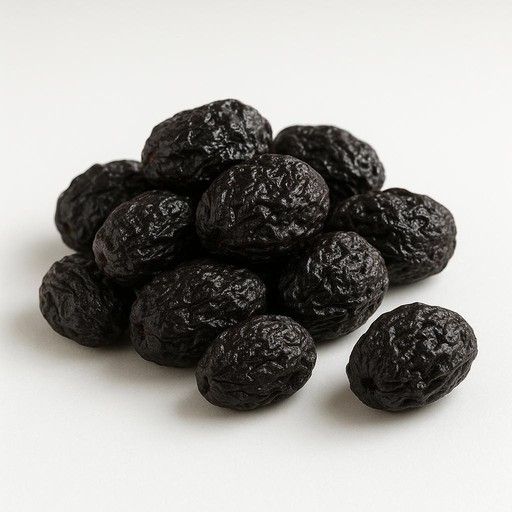
Dried Java Plum Suppliers & Prices in India — Market Overview 2026
Raw Materials
Fresh Java Plum
Last Updated
2026-09-13
Key takeaways for search and sourcing teams
- 5 sampled export transactions for India are summarized.
- Page data last updated on 2026-09-13.
Dried Java Plum Export Supplier Intelligence, Price Trends, and Trade Flows in India
6 export partner companies are tracked for Dried Java Plum in India. Use Supply Chain Intelligence company profiles and analytics to validate exporter coverage, partner quality, and route priorities.
Explore Dried Java Plum export intelligence in India, including 5 sampled supplier transactions, monthly unit-price ranges, and partner-country trade flow patterns for HS Code -.
Scatter points are sampled from 36.9% of the full transaction dataset.
Sample Export Supplier Transaction Records for Dried Java Plum in India
5 sampled Dried Java Plum transactions in India include date, origin, and partner-country context to benchmark export prices and supplier trading patterns.
Dried Java Plum sampled transaction unit prices by date in India: 2026-07-25: 50.50 USD / kg, 2026-07-24: 5.07 USD / kg, 2026-07-20: 1.97 USD / kg, 2026-07-12: 5.07 USD / kg, 2026-07-04: 5.68 USD / kg.
| Date | Reported Product | Unit Price | Exporter | Importer | |
|---|---|---|---|---|---|
| 2026-07-25 | SYZ***** ********** ***** ***** ********* ******** *** *** ******** | 50.50 USD / kg | (India) | (Germany) | |
| 2026-07-24 | JAM** **** ****** *** ** * ** **** * * ***** | 5.07 USD / kg | (India) | (Qatar) | |
| 2026-07-20 | HAR** ************** ******** ******* ** * * **** *** ******* ** ******** ***** | 1.97 USD / kg | (India) | (United States) | |
| 2026-07-12 | JAM** **** ****** *** ** * ** **** * * ***** | 5.07 USD / kg | (India) | (Qatar) | |
| 2026-07-04 | ALO* ******* | 5.68 USD / kg | (India) | (Philippines) |
Top Dried Java Plum Export Suppliers and Companies in India
Review leading exporter profiles and benchmark them against 6 total export partner companies tracked for Dried Java Plum in India. Use Supply Chain Intelligence company profiles and analytics to shortlist sourcing and export partners faster.
(India)
Latest Export Transaction: 2026-08-13
Industries: Food Wholesalers
Value Chain Roles: Distribution / WholesaleTrade
(India)
Latest Export Transaction: 2026-08-13
Employee Size: Over 1000 Employees
Sales Revenue: USD Over 1B
Industries: Beverage ManufacturingFood ManufacturingFood PackagingFood Services And Drinking PlacesOnline Retail And Fulfillment
Value Chain Roles: Distribution / WholesaleFood ManufacturingRetailTrade
(India)
Latest Export Transaction: 2025-09-22
Recently Export Partner Companies: 4
Employee Size: Over 1000 Employees
Industries: Beverage ManufacturingFood ManufacturingOthers
Value Chain Roles: Distribution / WholesaleFood ManufacturingOthersRetailTrade
(India)
Latest Export Transaction: 2026-08-13
Recently Export Partner Companies: 1
Industries: Food WholesalersOthers
Value Chain Roles: Distribution / WholesaleTrade
(India)
Latest Export Transaction: 2026-08-13
Industries: Food PackagingOthers
Value Chain Roles: Food ManufacturingOthers
(India)
Latest Export Transaction: 2026-08-13
Industries: Others
Value Chain Roles: Trade
India Export Partner Coverage
6 companies
Total export partner company count is a core signal of India export network depth for Dried Java Plum.
Exporters and importers can open Supply Chain Intelligence company profiles and analytics to assess Dried Java Plum partner concentration, capacity signals, and trade relevance in India.
Sourcing diagnosis
Could you be importing Dried Java Plum from India yourself?
Just tell us your spec and the volume you need. We'll check whether it's actually sourceable, and which origins and suppliers fit.
Free diagnosis, no account required.
Export diagnosis
Your Dried Java Plum — could it sell to these buyers in India?
Just tell us what you make. We'll see whether you're ready to export today and which markets suit your offer.
Free diagnosis, no account required.
Price data
Which Dried Java Plum prices in India do you need?
We'll open up the full price history and competitor benchmarks. Just tell us which numbers you need and we'll walk you through them.
Classification
Product TypeProcessed Food
Product FormDried
Industry PositionValue-added Processed Fruit Product
Market
Dried java plum (jamun) in India is a niche processed fruit product derived from a seasonal, domestically available fruit and positioned primarily for shelf-life extension and off-season availability. The market is typically fragmented, with small and mid-scale processors supplying domestic retail and ingredient channels rather than a single dominant national brand structure. Where traded internationally, the main constraints tend to be food-safety assurance (mold risk in dried products) and regulatory compliance around labeling and product classification. Evidence for national-scale trade volumes specific to dried jamun is limited in public, product-granular sources, so market sizing and concentration metrics are treated as data gaps here.
Market RoleDomestic consumption market with niche processed production; limited, compliance-sensitive export potential
Domestic RoleNiche dried fruit/ingredient product supplied by small and mid-scale processors for domestic retail and ingredient use
Market Growth
SeasonalityInput fruit availability is seasonal, while dried product availability is less seasonal when adequate storage and moisture control are maintained.
Specification
Physical Attributes
- Free from visible mold, insect infestation, and foreign matter
- Uniform drying with minimal stickiness/clumping (moisture management dependent)
- Color consistency within lot (natural dark coloration; avoid smoke/overheating damage where applicable)
Compositional Metrics
- Moisture/aw control as a primary stability parameter (buyer specification dependent)
- Microbiological limits and mycotoxin risk screening as buyer/market-entry requirements (market dependent)
Grades
- Whole vs pieces
- Seeded vs de-seeded (where applicable)
- Unsweetened vs sweetened (where applicable and declared)
Packaging
- Moisture-barrier primary packaging (e.g., laminated pouches) for retail
- Food-grade bulk liners within cartons for wholesale/ingredient trade
- Desiccant/oxygen management where required by shelf-life target and humidity exposure
Supply Chain
Value Chain
- Seasonal fruit procurement → sorting and washing → pitting/slicing (as applicable) → dehydration → grading → packaging → ambient storage with humidity control → wholesale/retail distribution
Temperature
- Ambient distribution is typical; humidity control is more critical than refrigeration for dried stability.
- Avoid heat and moisture exposure that can trigger condensation, mold growth, and quality loss.
Atmosphere Control
- Low-moisture packaging and moisture/oxygen barrier management reduce oxidation and mold risk during storage and transport.
Shelf Life
- Shelf life is highly sensitive to final moisture level, packaging barrier performance, and exposure to humid conditions (especially during monsoon logistics).
Freight IntensityMedium
Transport ModeSea
Risks
Food Safety HighMoisture ingress and inadequate dehydration control can enable mold growth and potential mycotoxin or microbial non-compliance in dried fruit shipments, leading to border rejection, recalls, or delisting in stringent markets.Implement validated drying endpoints (moisture/aw targets), GMP/HACCP controls, humidity-protective packaging, and batch-based testing aligned to buyer and destination requirements.
Regulatory Compliance MediumMisclassification (food vs other regulated category in certain destinations) and labeling non-compliance (ingredient/additive declaration, lot identification, claims) can trigger detention or relabeling costs.Lock product description, HS classification approach, and label content with the importer before production; maintain documented specs and COAs per lot.
Logistics MediumContainer humidity/condensation events and extended transit times can degrade dried product quality (clumping, mold) even without refrigeration requirements.Use moisture-barrier packaging, desiccants where appropriate, and container loading practices that reduce condensation risk; monitor transit conditions when feasible.
Documentation Gap LowIncomplete batch documentation (linking production, testing, and shipment lots) can weaken incident response and buyer audit outcomes.Adopt standardized batch records and shipment document checklists; retain records for buyer-specified periods.
Sustainability
- Energy source and efficiency of dehydration (sun/solar vs mechanical) influences emissions footprint and product consistency.
- Packaging waste management (multi-layer moisture-barrier materials) can be a buyer scrutiny point for processed foods.
Labor & Social
- Informal or small-scale processing environments can create auditability and worker safety compliance gaps unless formal GMP/HACCP systems are implemented.
Standards
- HACCP
- ISO 22000
- FSSC 22000
- BRCGS Food Safety
FAQ
What is the biggest trade-stopping risk for dried jamun shipments from India?Food-safety non-compliance driven by moisture and mold risk is typically the most critical blocker for dried fruit shipments, because it can lead to border rejection, recalls, or immediate delisting in strict markets.
Which quality systems do buyers commonly ask for when sourcing processed dried fruit from India?Buyers commonly request documented food-safety systems such as HACCP or certifications like ISO 22000/FSSC 22000 or BRCGS, along with lot-level traceability and batch-linked test documentation where required.
What practical logistics control matters most for dried jamun compared with refrigerated foods?Humidity and moisture control is usually more important than cold chain, because condensation or moisture ingress during storage or sea transit can trigger clumping and mold even if the product is shelf-stable.
Other Dried Java Plum Country Markets for Supplier, Export, and Price Comparison from India
Compare Dried Java Plum supplier coverage, trade flows, and price benchmarks across countries related to India.


Export & sourcing diagnosis
Dried Java Plum in India — are you buying, or selling?
Either way it's a few questions. We'll come back with where you could buy it, or who you could sell it to.
Free diagnosis, no account required.
Related Dried Java Plum Product Categories
Browse parent, sub, derived, and raw-material product market pages related to Dried Java Plum.
Raw materials: Fresh Java Plum
By clicking “Accept Cookies,” I agree to provide cookies for statistical and personalized preference purposes. To learn more about our cookies, please read our Privacy Policy.