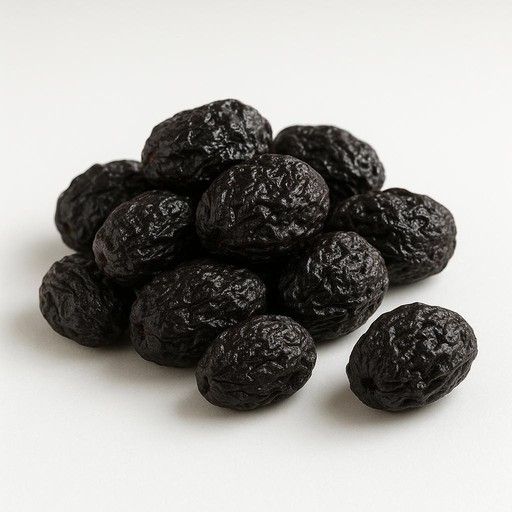
Dried Java Plum Suppliers & Prices in China — Market Overview 2026
Raw Materials
Fresh Java Plum
Last Updated
2026-09-13
Key takeaways for search and sourcing teams
- 1 sampled export transactions for China are summarized.
- Page data last updated on 2026-09-13.
Dried Java Plum Export Supplier Intelligence, Price Trends, and Trade Flows in China
1 export partner companies are tracked for Dried Java Plum in China. Use Supply Chain Intelligence company profiles and analytics to validate exporter coverage, partner quality, and route priorities.
Explore Dried Java Plum export intelligence in China, including 1 sampled supplier transactions, monthly unit-price ranges, and partner-country trade flow patterns for HS Code -.
Scatter points are sampled from 100.0% of the full transaction dataset.
Sample Export Supplier Transaction Records for Dried Java Plum in China
1 sampled Dried Java Plum transactions in China include date, origin, and partner-country context to benchmark export prices and supplier trading patterns.
Dried Java Plum sampled transaction unit prices by date in China: 2025-12-14: 0.42 USD / kg.
| Date | Reported Product | Unit Price | Exporter | Importer | |
|---|---|---|---|---|---|
| 2025-12-14 | ДЖА**** ********* | 0.42 USD / kg | (China) | (Kazakhstan) |
Top Dried Java Plum Export Suppliers and Companies in China
Review leading exporter profiles and benchmark them against 1 total export partner companies tracked for Dried Java Plum in China. Use Supply Chain Intelligence company profiles and analytics to shortlist sourcing and export partners faster.
(China)
Latest Export Transaction: 2026-08-13
Industries: Others
Value Chain Roles: Trade
China Export Partner Coverage
1 companies
Total export partner company count is a core signal of China export network depth for Dried Java Plum.
Exporters and importers can open Supply Chain Intelligence company profiles and analytics to assess Dried Java Plum partner concentration, capacity signals, and trade relevance in China.
Sourcing diagnosis
Could you be importing Dried Java Plum from China yourself?
Just tell us your spec and the volume you need. We'll check whether it's actually sourceable, and which origins and suppliers fit.
Free diagnosis, no account required.
Export diagnosis
Your Dried Java Plum — could it sell to these buyers in China?
Just tell us what you make. We'll see whether you're ready to export today and which markets suit your offer.
Free diagnosis, no account required.
Price data
Which Dried Java Plum prices in China do you need?
We'll open up the full price history and competitor benchmarks. Just tell us which numbers you need and we'll walk you through them.
Classification
Product TypeProcessed Food
Product FormDried
Industry PositionValue-Added Processed Food Product
Market
Dried java plum (jamun) is a niche dried-fruit product in China, typically traded as a shelf-stable snack or ingredient rather than a fresh-produce item. Market entry is driven primarily by import compliance (e.g., overseas manufacturer registration where applicable) and conformance to China’s national food safety standards for additives, contaminants, residues, and microbiological criteria. Because the product is low-moisture but hygroscopic, quality performance in-market is highly sensitive to moisture-barrier packaging and humidity control during storage and distribution. Publicly accessible, product-specific market size and production statistics for dried java plum in China are limited; buyers often rely on supplier documentation and test results for acceptance.
Market RoleDomestic consumer market with niche demand; trade role not well-documented in public statistics
SeasonalityTypically available year-round due to shelf-stable dried form; availability depends on inventory cycles and import logistics rather than harvest season.
Specification
Physical Attributes
- Uniform dark purple-brown appearance typical of dried java plum; absence of visible mold
- Low foreign matter and minimal extraneous plant material
- Controlled stickiness/clumping (indicator of excess moisture or sugar coating, if used)
Compositional Metrics
- Moisture / water-activity control to prevent mold during storage
- Sulfite level control when sulfiting is used as an anti-browning/preservative treatment
Grades
- Buyer-defined grades commonly set by size, cut style, moisture, defect tolerance, and microbiological results (no single China-wide grade standard commonly cited for this niche product).
Packaging
- Moisture-barrier inner packs (sealed plastic/laminate pouches) with outer cartons for transport
- Use of desiccants/oxygen absorbers may be specified by buyer for humidity-prone routes
Supply Chain
Value Chain
- Fruit sourcing → washing/sorting → pitting/slicing (as applicable) → drying → sorting → metal detection → packaging → export dispatch → China customs/import inspection → importer warehousing → retail/e-commerce fulfillment
Temperature
- Ambient distribution is typical; prioritize cool, dry storage to limit condensation and moisture uptake.
Atmosphere Control
- Moisture-barrier packaging and humidity control are critical; oxygen management may be used to reduce oxidative quality loss depending on formulation.
Shelf Life
- Shelf life depends primarily on moisture control, packaging integrity, and storage humidity; moisture ingress can drive mold risk and texture degradation.
Freight IntensityMedium
Transport ModeSea
Risks
Regulatory Compliance HighNon-compliance with China import food requirements (including GACC overseas manufacturer registration where applicable, and/or documentation and labeling alignment to applicable GB standards) can trigger detention, relabeling orders, rejection, or return/destruction at import or during market supervision.Verify GACC eligibility/registration status prior to shipment; run a pre-shipment compliance checklist covering label, ingredient/additive declaration, and test evidence against applicable GB limits; keep importer-ready documentation packs consistent across invoice, packing list, and product specs.
Food Safety HighDried fruit products are vulnerable to mold growth and microbiological non-conformance if moisture control fails; additive exceedances (e.g., sulfites where used) or contaminant/residue non-compliance against applicable GB limits can also result in border issues or domestic recalls.Control water activity/moisture with validated drying and moisture-barrier packaging; apply lot-based testing and retain COAs aligned to relevant GB standards for additives, contaminants, residues, and microbiological criteria.
Logistics MediumHumidity exposure during sea freight, port handling, or warehousing can cause moisture uptake, clumping, and elevated mold risk, leading to claim disputes and quality downgrades even when temperature is acceptable.Use moisture-barrier liners, desiccants where appropriate, and humidity-controlled storage; specify maximum moisture at loading and verify packaging seal integrity and container condition before dispatch.
FAQ
What is the most common reason a dried fruit shipment faces problems when importing into China?The most common blockers are regulatory compliance issues—such as missing or incorrect GACC-related eligibility/registration information where applicable, documentation inconsistencies, or labeling and test evidence that do not align with China’s applicable GB food safety standards.
Which compliance areas should an importer prioritize for dried java plum sold as a prepackaged snack in China?Prioritize Chinese label compliance for prepackaged foods, plus a documentation pack that includes a clear ingredient/additive declaration and lot-based test results/COAs demonstrating conformance to applicable GB limits for additives, contaminants/residues, and microbiological criteria.
Sources
Other Dried Java Plum Country Markets for Supplier, Export, and Price Comparison from China
Compare Dried Java Plum supplier coverage, trade flows, and price benchmarks across countries related to China.


Export & sourcing diagnosis
Dried Java Plum in China — are you buying, or selling?
Either way it's a few questions. We'll come back with where you could buy it, or who you could sell it to.
Free diagnosis, no account required.
Related Dried Java Plum Product Categories
Browse parent, sub, derived, and raw-material product market pages related to Dried Java Plum.
Raw materials: Fresh Java Plum
By clicking “Accept Cookies,” I agree to provide cookies for statistical and personalized preference purposes. To learn more about our cookies, please read our Privacy Policy.