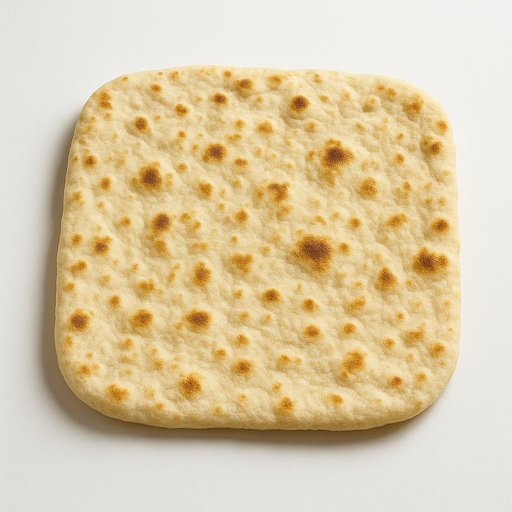
Flatbread Prices & Trade in Poland — Market Overview 2026
Raw Materials
Cow Milk, Cow Milk Butter, Milk Powder, Olive Oil, +3
HS Code
190590
Last Updated
2026-09-21
Key takeaways for search and sourcing teams
- 5 export partner countries and 5 import partner countries are ranked.
- Latest reference year in this page dataset is 2024.
- Page data last updated on 2026-09-21.
Flatbread Export Supplier & Manufacturer Intelligence, Price Trends, and Trade Flows in Poland
Use Supply Chain Intelligence company profiles and analytics to validate Flatbread exporter coverage, partner quality, and route priorities in Poland.
Annual Export Value, Volume, and Supplier Market Size for Flatbread in Poland (HS Code 190590)
Analyze 3 years of Flatbread export volume and value in Poland to evaluate supplier market growth, seasonality, and trade volatility.
| Year | Volume | Value |
|---|---|---|
| 2024 | 579,402,651 | 1,746,388,157 USD |
| 2023 | 538,167,990 | 1,730,068,840 USD |
| 2022 | 511,188,637 | 1,321,017,382 USD |
Top Destination Markets for Flatbread Exports from Poland (HS Code 190590) in 2024
For 2024, compare export volume and value across the top 5 destination countries for Flatbread exports from Poland.
| Rank | Country | Volume | Value |
|---|---|---|---|
| 1 | Germany | 150,328,800 | 450,355,378 USD |
| 2 | United Kingdom | 42,808,520 | 174,176,175 USD |
| 3 | Czechia | 61,557,830 | 147,157,284 USD |
| 4 | Romania | 22,438,090 | 72,144,152 USD |
| 5 | Hungary | 27,830,810 | 65,917,074 USD |
Sourcing diagnosis
Could you be importing Flatbread from Poland yourself?
Just tell us your spec and the volume you need. We'll check whether it's actually sourceable, and which origins and suppliers fit.
Free diagnosis, no account required.
Flatbread Import Buyer Intelligence and Price Signals in Poland: Buyers, Demand, and Trade Partners
Exporters and importers can use Supply Chain Intelligence company profiles and analytics to analyze Flatbread buyer demand, partner density, and downstream channels in Poland.
Annual Import Value, Volume, and Demand Size for Flatbread in Poland (HS Code 190590)
Track 3 years of Flatbread import volume and value in Poland to assess demand growth and market momentum.
| Year | Volume | Value |
|---|---|---|
| 2024 | 180,769,925 | 636,595,051 USD |
| 2023 | 165,706,242 | 551,814,621 USD |
| 2022 | 163,436,060 | 455,446,571 USD |
Top Origin Supplier Countries Supplying Flatbread to Poland (HS Code 190590) in 2024
For 2024, compare import volume and value across the top 5 origin supplier countries supplying Flatbread to Poland.
| Rank | Country | Volume | Value |
|---|---|---|---|
| 1 | Germany | 76,268,410 | 215,926,641 USD |
| 2 | Italy | 18,643,180 | 95,936,807 USD |
| 3 | Spain | 16,547,030 | 72,925,213 USD |
| 4 | Slovakia | 16,665,080 | 72,889,497 USD |
| 5 | Belgium | 9,528,595 | 37,871,245 USD |
Export diagnosis
Your Flatbread — could it sell to these buyers in Poland?
Just tell us what you make. We'll see whether you're ready to export today and which markets suit your offer.
Free diagnosis, no account required.
Price data
Which Flatbread prices in Poland do you need?
We'll open up the full price history and competitor benchmarks. Just tell us which numbers you need and we'll walk you through them.
Classification
Product TypeProcessed Food
Product FormPrepacked (ambient)
Industry PositionProcessed Bakery Product
Market
Flatbread in Poland (notably tortillas/wraps and similar prepacked flatbreads) is primarily an industrial bakery product produced year-round and sold through modern retail and foodservice. Domestic manufacturing capacity exists; DIJO positions itself as a leading tortilla (wrap) producer in Poland and Central & Eastern Europe and lists major retail and QSR partners. As an EU market, Poland applies harmonised rules on labeling, food additives, and maximum contaminant levels (including mycotoxins) with enforcement through EU official controls and national authorities such as the Chief Sanitary Inspectorate (GIS) and IJHARS. The most critical compliance risk for wheat-based flatbreads is contaminants non-compliance (e.g., mycotoxins) or labeling/allergen errors, which can lead to withdrawal actions or public alerts.
Market RoleDomestic production and consumption market with intra-EU trade participation
Domestic RoleMainstream convenience bakery category in retail and foodservice
Market GrowthNot Mentioned
SeasonalityYear-round industrial production; demand and promotions drive short-term variability rather than agricultural seasonality.
Specification
Physical Attributes
- Uniform size/diameter and thickness for filling/rolling performance
- Pliability (low cracking) and controlled moisture to manage mold risk
Packaging
- Prepacked retail packs with lot/batch identification and best-before date
- If packaged in a protective atmosphere (MAP), label statement may be required under EU rules
Supply Chain
Value Chain
- Ingredient sourcing (flour, fats/oils, salt, leavening) → mixing → dough resting/proofing → sheeting/portioning → baking → cooling → packing → distribution to retail DCs/QSR
Temperature
- Typically handled as ambient-stable prepacked bakery products; avoid heat and humidity that accelerate staling or mold.
Atmosphere Control
- Modified-atmosphere packaging (MAP) may be used to extend shelf life; EU labeling rules include a required statement when durability is extended by packaging gases.
Shelf Life
- Shelf life depends on formulation, packaging (including MAP), and mold-control strategy; breaks in storage conditions can shorten sellable life.
Freight IntensityHigh
Transport ModeLand
Risks
Food Safety HighWheat-based flatbreads are exposed to contaminant compliance risk from cereal ingredients (notably mycotoxins). Under EU law, foods exceeding maximum contaminant levels cannot be placed on the market, creating a hard-stop risk for Poland as an EU Member State.Implement incoming flour risk-based testing (mycotoxins) and supplier approval with certificates of analysis; verify corrective actions and maintain HACCP/FSMS records.
Regulatory Compliance MediumLabeling and allergen communication failures (e.g., incorrect or insufficient emphasis of gluten-containing cereals) can trigger enforcement actions and public warnings in Poland.Run a pre-print label legal review against Regulation (EU) No 1169/2011 and maintain controlled label change management for private label and foodservice SKUs.
Logistics MediumFlatbread is freight-intensive (bulky relative to value) and typically moves by road within Poland/EU; freight and energy-cost volatility can compress margins and disrupt service levels to retail DCs and foodservice.Use multi-DC inventory planning, optimize pallet configuration, and negotiate indexed freight contracts where feasible.
Documentation Gap MediumFor relevant agri-food imports from third countries, missing or incorrect border commercial-quality documentation or incorrect routing through national workflows (e.g., Single Window processes used by authorities) can delay clearance.Confirm control scope with the importer/broker, pre-validate dossier completeness, and align timelines with the IJHARS/KAS Single Window process when applicable.
Standards
- HACCP-based food safety plans
- ISO 22000 (Food safety management systems)
- BRCGS Global Standard Food Safety
- IFS Food Standard
FAQ
What is the most critical food-safety compliance risk for flatbread (tortillas/wraps) sold in Poland?Meeting EU maximum contaminant limits—especially mycotoxins relevant to cereal ingredients—is a hard-stop requirement. Under EU rules, food exceeding the maximum levels cannot be placed on the market, so ingredient control and testing are essential.
What labeling rules matter most for prepacked flatbread sold in Poland?EU Regulation (EU) No 1169/2011 governs mandatory food information, including emphasizing allergens such as cereals containing gluten (e.g., wheat) in the ingredients list. The regulation also requires mandatory information to be presented in a language easily understood by consumers in the Member State where the food is marketed.
Which authority in Poland publishes public warnings related to food (including allergen labeling issues)?The Chief Sanitary Inspectorate (Główny Inspektorat Sanitarny, GIS) publishes public warnings and safety communications related to food and related consumer risks.
Where can an importer check the tariff measures for bringing flatbread into Poland from a non-EU country?Because Poland applies the EU Common Customs Tariff, import measures are checked via EU tariff tools such as TARIC and the European Commission’s Access2Markets guidance, using the correct product classification.
Which EU rule governs what food additives are permitted in flatbread formulations sold in Poland?Regulation (EC) No 1333/2008 sets the EU rules and positive list for authorised food additives and their conditions of use. Any additives used must comply with this regulation and be declared appropriately on-pack under EU food information rules.
Sources
Other Flatbread Country Markets for Supplier, Manufacturer, Export, and Price Comparison from Poland
Compare Flatbread supplier coverage, trade flows, and price benchmarks across countries related to Poland.


Export & sourcing diagnosis
Flatbread in Poland — are you buying, or selling?
Either way it's a few questions. We'll come back with where you could buy it, or who you could sell it to.
Free diagnosis, no account required.
Related Flatbread Product Categories
Browse parent, sub, derived, and raw-material product market pages related to Flatbread.
By clicking “Accept Cookies,” I agree to provide cookies for statistical and personalized preference purposes. To learn more about our cookies, please read our Privacy Policy.