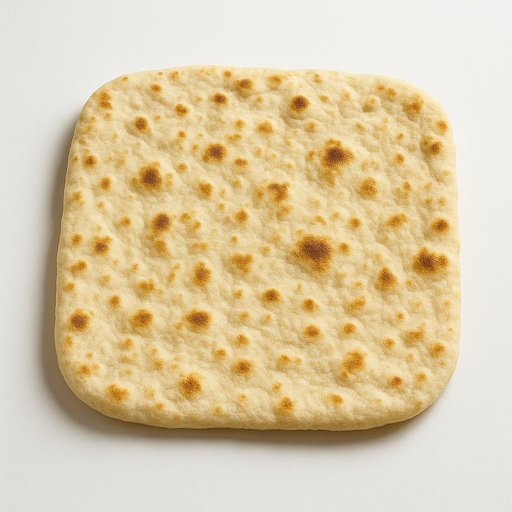
Flatbread Suppliers & Prices in Singapore — Market Overview 2026
Raw Materials
Cow Milk, Cow Milk Butter, Milk Powder, Olive Oil, +3
HS Code
190590
Last Updated
2026-09-21
Key takeaways for search and sourcing teams
- 5 sampled export transactions for Singapore are summarized.
- 57 export partner companies (including manufacturers) and 6 import partner companies are mapped for Flatbread in Singapore.
- Latest reference year in this page dataset is 2024.
- Page data last updated on 2026-09-21.
Flatbread Export Supplier & Manufacturer Intelligence, Price Trends, and Trade Flows in Singapore
57 export partner companies are tracked for Flatbread in Singapore. Use Supply Chain Intelligence company profiles and analytics to validate exporter coverage, partner quality, and route priorities.
Explore Flatbread export intelligence in Singapore, including 5 sampled supplier transactions, monthly unit-price ranges, and partner-country trade flow patterns for HS Code 190590.
Scatter points are sampled from 61.0% of the full transaction dataset. Each point is a real transaction. Sign up to see them and ask AI whether each deal was fair.
Sample Export Supplier & Manufacturer Transaction Records for Flatbread in Singapore
5 sampled Flatbread transactions in Singapore include date, origin, and partner-country context to benchmark export prices and supplier trading patterns.
Flatbread sampled transaction unit prices by date in Singapore: 2026-08-25: 3.06 USD / kg, 2026-08-25: 3.06 USD / kg, 2026-07-31: 2.38 USD / kg, 2026-07-21: 2.23 USD / kg, 2026-07-21: 2.23 USD / kg.
| Date | Reported Product | Unit Price | Exporter | Importer | |
|---|---|---|---|---|---|
| 2026-08-25 | [빵류* ********************** | 3.06 USD / kg | (Singapore) | (South Korea) | |
| 2026-08-25 | [빵류* ********************** | 3.06 USD / kg | (Singapore) | (South Korea) | |
| 2026-07-31 | [빵류* ********************** | 2.38 USD / kg | (Singapore) | (South Korea) | |
| 2026-07-21 | [빵류* ************ | 2.23 USD / kg | (Singapore) | (South Korea) | |
| 2026-07-21 | [빵류* ************ | 2.23 USD / kg | (Singapore) | (South Korea) |
These 5 rows are a sample — join Tridge to see Flatbread transactions in Singapore
See the exporter, importer and price on the records you need, ask AI whether each deal was fair, and turn them into AI Curations.
Top Flatbread Export Suppliers, Manufacturers, and Companies in Singapore
Review leading exporter profiles and benchmark them against 57 total export partner companies tracked for Flatbread in Singapore. Use Supply Chain Intelligence company profiles and analytics to shortlist sourcing and export partners faster.
(Singapore)
Latest Export Transaction: 2026-08-21
Employee Size: Over 1000 Employees
Industries: Others
Value Chain Roles: Distribution / Wholesale, Retail
(Singapore)
Latest Export Transaction: 2026-08-21
Employee Size: Over 1000 Employees
Sales Revenue: USD Over 1B
Industries: Beverage Manufacturing, Food Manufacturing, Food Packaging, Food Services And Drinking Places, Others
Value Chain Roles: Distribution / Wholesale, Food Manufacturing, Trade
(Singapore)
Latest Export Transaction: 2026-08-21
Employee Size: Over 1000 Employees
Sales Revenue: USD Over 1B
Industries: Beverage Manufacturing, Food Manufacturing, Food Packaging, Food Services And Drinking Places
Value Chain Roles: Distribution / Wholesale, Food Manufacturing
(Singapore)
Latest Export Transaction: 2026-08-21
Employee Size: Over 1000 Employees
Industries: Food Manufacturing, Food Packaging, Food Wholesalers, Others
Value Chain Roles: Distribution / Wholesale, Farming / Production / Processing / Packing, Food Manufacturing, Logistics
(Singapore)
Latest Export Transaction: 2026-08-21
Employee Size: Over 1000 Employees
Sales Revenue: USD Over 1B
Industries: Others
Value Chain Roles: Trade
(Singapore)
Latest Export Transaction: 2026-08-21
Industries: Food Manufacturing, Others
Value Chain Roles: Food Manufacturing, Others
See the full picture in Tridge Eye: full price and trade history · 725,009+ company profiles
Singapore Export Partner Coverage
57 companies
Total export partner company count is a core signal of Singapore export network depth for Flatbread.
Exporters and importers can open Supply Chain Intelligence company profiles and analytics to assess Flatbread partner concentration, capacity signals, and trade relevance in Singapore.
Annual Export Value, Volume, and Supplier Market Size for Flatbread in Singapore (HS Code 190590)
Analyze 2 years of Flatbread export volume and value in Singapore to evaluate supplier market growth, seasonality, and trade volatility.
| Year | Volume | Value |
|---|---|---|
| 2023 | 6,794,557 | 32,952,908 USD |
| 2022 | 7,281,551 | 32,389,005 USD |
Sourcing diagnosis
Could you be importing Flatbread from Singapore yourself?
Just tell us your spec and the volume you need. We'll check whether it's actually sourceable, and which origins and suppliers fit.
Free diagnosis, no account required.
Flatbread Import Buyer Intelligence and Price Signals in Singapore: Buyers, Demand, and Trade Partners
6 import partner companies are tracked for Flatbread in Singapore. Exporters and importers can use Supply Chain Intelligence company profiles and analytics to analyze buyer demand, partner density, and downstream channels.
Scatter points are sampled from 14.5% of the full transaction dataset. Each point is a real transaction. Sign up to see them and ask AI whether each deal was fair.
Sample Import Transaction and Price Records for Flatbread in Singapore
5 sampled Flatbread import transactions in Singapore provide date, origin, and trade-country context to benchmark price levels and demand-side trading patterns.
Flatbread sampled import transaction unit prices by date in Singapore: 2026-07-29: 4.80 USD / kg, 2026-07-28: 2.63 USD / kg, 2026-07-24: 2.11 USD / kg, 2026-07-20: 2.97 USD / kg, 2026-07-09: 2.72 USD / kg.
| Date | Reported Product | Unit Price | Exporter | Importer | Origin | |
|---|---|---|---|---|---|---|
| 2026-07-29 | OTH*** ***** ******* ******** ******** ********* ***** ******* *** *** | 4.80 USD / kg | (-) | (-) | - | |
| 2026-07-28 | REA** ** ***** ******** ***** ******* ****** ** | 2.63 USD / kg | (-) | (-) | - | |
| 2026-07-24 | REA** ** ***** ******** ******* ******* ****** ** | 2.11 USD / kg | (-) | (-) | - | |
| 2026-07-20 | OTH*** ***** ******* ******** ******** ********* ****** ******* *** *** | 2.97 USD / kg | (-) | (-) | - | |
| 2026-07-09 | OTH******** ******* ******** ******** ******** * ******* ******* *** *** | 2.72 USD / kg | (-) | (-) | - |
These 5 rows are a sample — join Tridge to see Flatbread transactions in Singapore
See the exporter, importer and price on the records you need, ask AI whether each deal was fair, and turn them into AI Curations.
Top Flatbread Buyers, Importers, and Demand Partners in Singapore
Review leading buyer profiles and compare them with 6 total import partner companies tracked for Flatbread in Singapore. Exporters and importers can use Supply Chain Intelligence company profiles and analytics to evaluate demand-side partner fit.
(Singapore)
Latest Import Transaction: 2026-08-21
Industries: Food Manufacturing
Value Chain Roles: Food Manufacturing
(Singapore)
Latest Import Transaction: 2026-08-21
Employee Size: 11 - 50 Employees
Sales Revenue: USD 10M - 50M
Industries: Food Manufacturing
Value Chain Roles: Food Manufacturing
(Singapore)
Latest Import Transaction: 2026-08-21
Industries: Beverage Manufacturing, Food Manufacturing, Food Packaging, Food Wholesalers
Value Chain Roles: Distribution / Wholesale, Food Manufacturing, Trade
(Singapore)
Latest Import Transaction: 2025-12-08
Recently Import Partner Companies: 2
Industries: Food Manufacturing, Food Services And Drinking Places, Others
Value Chain Roles: Food Manufacturing
(Singapore)
Latest Import Transaction: 2026-08-21
Employee Size: 101 - 500 Employees
Sales Revenue: USD 10M - 50M
Industries: Food Manufacturing, Food Packaging, Others
Value Chain Roles: Food Manufacturing, Others
(Singapore)
Latest Import Transaction: 2026-08-21
Employee Size: 101 - 500 Employees
Sales Revenue: USD 10M - 50M
Industries: Food Manufacturing, Others
Value Chain Roles: Food Manufacturing, Others
See the full picture in Tridge Eye: full price and trade history · 725,009+ company profiles
Singapore Import Partner Coverage
6 companies
Import partner company count highlights demand-side visibility for Flatbread in Singapore.
Use Supply Chain Intelligence analytics and company profiles to identify active Flatbread importers, distributors, and buyer networks in Singapore.
Annual Import Value, Volume, and Demand Size for Flatbread in Singapore (HS Code 190590)
Track 2 years of Flatbread import volume and value in Singapore to assess demand growth and market momentum.
| Year | Volume | Value |
|---|---|---|
| 2023 | 82,009,082 | 257,119,049 USD |
| 2022 | 82,863,971 | 244,751,026 USD |
Export diagnosis
Your Flatbread — could it sell to these buyers in Singapore?
Just tell us what you make. We'll see whether you're ready to export today and which markets suit your offer.
Free diagnosis, no account required.
Price data
Which Flatbread prices in Singapore do you need?
We'll open up the full price history and competitor benchmarks. Just tell us which numbers you need and we'll walk you through them.
Classification
Product TypeProcessed Food
Product FormPackaged
Industry PositionFinished Consumer Food Product
Market
Flatbread in Singapore is primarily a domestic consumption product supplied through a mix of imports and local industrial bakeries/central kitchens. The market spans multiple flatbread styles commonly sold as retail multi-packs (ambient, chilled, or frozen) and supplied to foodservice for wraps, Indian cuisine, and Middle Eastern cuisines. Singapore’s role is largely import-dependent for ingredients and many finished packaged SKUs, while local production focuses on freshness, short lead times, and foodservice formats. Market access is shaped by Singapore Food Agency (SFA) oversight, labeling and additive compliance, and channel-specific requirements such as halal certification when making halal claims.
Market RoleImport-dependent consumer market with limited domestic manufacturing
Domestic RoleStaple and convenience bread format used across retail (home meal solutions) and foodservice (wraps and ethnic cuisines), supplied via imports and local bakeries/central kitchens
Market GrowthNot Mentioned
SeasonalityYear-round availability driven by continuous retail and foodservice demand, with limited seasonality due to reliance on packaged supply and imports.
Specification
Secondary Variety
- Naan
- Pita
- Tortilla/Wrap-style flatbread
- Paratha/roti-style flatbread (often sold chilled or frozen)
Physical Attributes
- Uniform diameter/portion size and thickness for foodservice standardization
- Pliability/foldability without cracking for wrap applications
- Even browning/blistering after reheating (quality cue for naan/pita styles)
- Low defect rate (tears, excessive dryness, freezer burn on frozen SKUs)
Compositional Metrics
- Moisture balance affects softness versus mold risk and staling rate
- Salt level and fat/oil content influence taste and mouthfeel across formats
Packaging
- Retail multi-pack plastic wrap with date/lot coding
- Frozen polybag or carton formats for frozen flatbreads
- Foodservice bulk packs with batch identification for traceability
Supply Chain
Value Chain
- Imported packaged flatbread → licensed importer/wholesaler → retail distribution and/or foodservice distribution
- Local industrial bakery/central kitchen → chilled/frozen distribution → retail and foodservice
Temperature
- Frozen flatbread products require continuous frozen storage and transport to avoid texture degradation and food-safety risk.
- Chilled short-shelf-life flatbreads require tight temperature discipline to manage mold growth and staling.
Shelf Life
- Shelf-life is highly dependent on format (ambient vs chilled vs frozen), packaging integrity, and handling breaks during distribution.
- Retail channels typically require clear date coding and recall-ready batch identification.
Freight IntensityHigh
Transport ModeSea
Risks
Food Safety HighUndeclared allergens or incorrect labeling on imported packaged flatbread can trigger SFA-directed recalls/stop-sale actions and disrupt importer access to modern trade channels.Run a pre-import label and formulation compliance review (ingredients, allergens, additives) and implement documented allergen cross-contact controls plus batch-level traceability.
Logistics MediumFreight-route disruptions and container-rate volatility can raise landed cost and create supply gaps; frozen/chilled flatbread is additionally exposed to cold-chain failures during transshipment and last-mile distribution.Diversify origin/suppliers, use temperature monitoring for cold-chain SKUs, and maintain safety stock for high-turn items.
Regulatory Compliance MediumNon-compliant use of preservatives/emulsifiers or non-permitted additive combinations for the specific product category can lead to detention/rejection or forced relabeling.Map additives to Singapore food regulation requirements and align additive use to Codex GSFA where applicable; keep supplier CoAs and formulation change-control documentation.
Reputation LowHalal claim disputes or perceived cross-contamination (e.g., shared lines with non-halal ingredients) can harm brand trust in halal-relevant channels.Use certified halal supply chains where targeting halal channels, segregate production where needed, and maintain auditable halal documentation.
Sustainability
- Packaging waste (plastic wraps and multi-pack films) and limited recycling pathways can create ESG scrutiny for high-volume retail flatbread formats.
- Food waste risk from short shelf-life chilled flatbreads and overstocking in foodservice/retail.
Standards
- HACCP
- ISO 22000
- FSSC 22000
- BRCGS Food Safety
FAQ
What documents are commonly needed to import packaged flatbread into Singapore?Commonly required items include a Singapore Customs import permit (via TradeNet), a commercial invoice, packing list, and bill of lading/air waybill. Importers also typically maintain product specifications and ingredient/allergen information for compliance due diligence, and a certificate of origin is used when claiming FTA preferences.
Is halal certification required to sell flatbread in Singapore?Halal certification is not universally required for sale in Singapore, but it becomes important for Muslim consumer channels and is required if you market the product as halal. MUIS is a commonly used halal certification body in Singapore for halal assurance.
What is the biggest compliance risk for packaged flatbread in Singapore?Labeling and allergen compliance is often the most disruptive risk, because undeclared allergens or incorrect ingredient statements can trigger stop-sale actions and recalls. Strong label review, allergen controls, and batch traceability reduce this risk.
Sources
Other Flatbread Country Markets for Supplier, Manufacturer, Export, and Price Comparison from Singapore
Compare Flatbread supplier coverage, trade flows, and price benchmarks across countries related to Singapore.


Export & sourcing diagnosis
Flatbread in Singapore — are you buying, or selling?
Either way it's a few questions. We'll come back with where you could buy it, or who you could sell it to.
Free diagnosis, no account required.
Related Flatbread Product Categories
Browse parent, sub, derived, and raw-material product market pages related to Flatbread.
By clicking “Accept Cookies,” I agree to provide cookies for statistical and personalized preference purposes. To learn more about our cookies, please read our Privacy Policy.