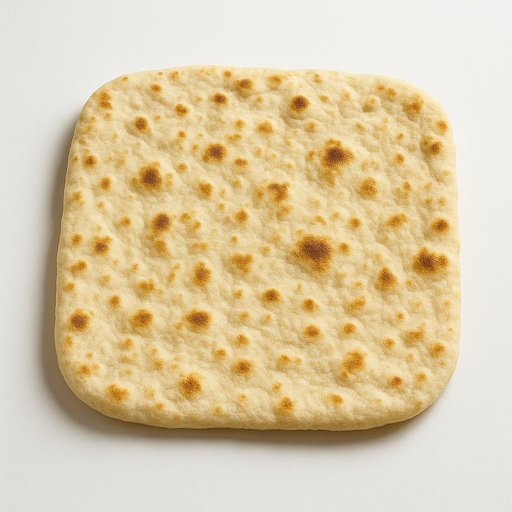
Flatbread Suppliers & Prices in Canada — Market Overview 2026
Raw Materials
Cow Milk, Cow Milk Butter, Milk Powder, Olive Oil, +3
HS Code
190590
Last Updated
2026-09-17
Key takeaways for search and sourcing teams
- 1 sampled export transactions for Canada are summarized.
- 158 export partner companies (including manufacturers) and 6 import partner companies are mapped for Flatbread in Canada.
- 5 export partner countries and 5 import partner countries are ranked.
- Latest reference year in this page dataset is 2024.
- Page data last updated on 2026-09-17.
Flatbread Export Supplier & Manufacturer Intelligence, Price Trends, and Trade Flows in Canada
158 export partner companies are tracked for Flatbread in Canada. Use Supply Chain Intelligence company profiles and analytics to validate exporter coverage, partner quality, and route priorities.
Explore Flatbread export intelligence in Canada, including 1 sampled supplier transactions, monthly unit-price ranges, and partner-country trade flow patterns for HS Code 190590.
Scatter points are sampled from 100.0% of the full transaction dataset.
Sample Export Supplier & Manufacturer Transaction Records for Flatbread in Canada
1 sampled Flatbread transactions in Canada include date, origin, and partner-country context to benchmark export prices and supplier trading patterns.
Flatbread sampled transaction unit prices by date in Canada: 2025-12-23: 0.80 USD / kg.
| Date | Reported Product | Unit Price | Exporter | Importer | |
|---|---|---|---|---|---|
| 2025-12-23 | PAT*** ** ********* ***** ****** ***** **** ***** | 0.80 USD / kg | (Canada) | (Philippines) |
Top Flatbread Export Suppliers, Manufacturers, and Companies in Canada
Review leading exporter profiles and benchmark them against 158 total export partner companies tracked for Flatbread in Canada. Use Supply Chain Intelligence company profiles and analytics to shortlist sourcing and export partners faster.
(Canada)
Latest Export Transaction: 2026-08-17
Industries: Food ManufacturingFood Services And Drinking Places
Value Chain Roles: Food ManufacturingRetail
(Canada)
Latest Export Transaction: 2026-08-17
Industries: Food ManufacturingFood Wholesalers
Value Chain Roles: Distribution / Wholesale
(Canada)
Latest Export Transaction: 2026-08-17
Industries: Beverage ManufacturingFood ManufacturingFood Packaging
Value Chain Roles: Food ManufacturingTrade
(Canada)
Latest Export Transaction: 2026-08-17
Employee Size: 101 - 500 Employees
Sales Revenue: USD 10M - 50M
Industries: Food ManufacturingFood Services And Drinking PlacesFood Wholesalers
Value Chain Roles: Distribution / WholesaleFood ManufacturingRetail
(Canada)
Latest Export Transaction: 2026-08-17
Employee Size: Over 1000 Employees
Sales Revenue: USD Over 1B
Industries: Alcohol WholesalersBeverage ManufacturingFood Manufacturing
Value Chain Roles: Farming / Production / Processing / PackingFood ManufacturingTrade
(Canada)
Latest Export Transaction: 2026-08-17
Industries: Food ManufacturingFood Services And Drinking Places
Value Chain Roles: Distribution / WholesaleFarming / Production / Processing / PackingRetail
Canada Export Partner Coverage
158 companies
Total export partner company count is a core signal of Canada export network depth for Flatbread.
Exporters and importers can open Supply Chain Intelligence company profiles and analytics to assess Flatbread partner concentration, capacity signals, and trade relevance in Canada.
Annual Export Value, Volume, and Supplier Market Size for Flatbread in Canada (HS Code 190590)
Analyze 3 years of Flatbread export volume and value in Canada to evaluate supplier market growth, seasonality, and trade volatility.
| Year | Volume | Value |
|---|---|---|
| 2024 | 848,100,643 | 4,275,205,947 USD |
| 2023 | 777,531,345 | 3,874,507,185 USD |
| 2022 | 712,610,559 | 3,373,136,415 USD |
Top Destination Markets for Flatbread Exports from Canada (HS Code 190590) in 2024
For 2024, compare export volume and value across the top 5 destination countries for Flatbread exports from Canada.
| Rank | Country | Volume | Value |
|---|---|---|---|
| 1 | United States | 817,847,940 | 4,182,236,873.467 USD |
| 2 | United Kingdom | 13,613,172 | 42,238,894.192 USD |
| 3 | Japan | 3,338,225 | 7,888,722.256 USD |
| 4 | Ireland | 1,752,783 | 5,116,422.349 USD |
| 5 | Australia | 1,435,080 | 4,870,783.472 USD |
Sourcing diagnosis
Could you be importing Flatbread from Canada yourself?
Just tell us your spec and the volume you need. We'll check whether it's actually sourceable, and which origins and suppliers fit.
Free diagnosis, no account required.
Flatbread Import Buyer Intelligence and Price Signals in Canada: Buyers, Demand, and Trade Partners
6 import partner companies are tracked for Flatbread in Canada. Exporters and importers can use Supply Chain Intelligence company profiles and analytics to analyze buyer demand, partner density, and downstream channels.
Scatter points are sampled from 4.9% of the full transaction dataset.
Sample Import Transaction and Price Records for Flatbread in Canada
5 sampled Flatbread import transactions in Canada provide date, origin, and trade-country context to benchmark price levels and demand-side trading patterns.
Flatbread sampled import transaction unit prices by date in Canada: 2026-07-26: 3.03 USD / kg, 2026-07-21: 2.39 USD / kg, 2026-07-21: 1.99 USD / kg, 2026-07-19: 2.81 USD / kg, 2026-07-07: 3.71 USD / kg.
| Date | Reported Product | Unit Price | Exporter | Importer | Origin | |
|---|---|---|---|---|---|---|
| 2026-07-26 | REA** ** ***** ***** ** *** ******** ****** **** ****** ** | 3.03 USD / kg | (-) | (-) | - | |
| 2026-07-21 | VEG****** ************* ****** *** ******* * * * *** **** *** *** * *** ***** ***** ***** *********** * ******* ******* | 2.39 USD / kg | (-) | (-) | - | |
| 2026-07-21 | E13* ****** **** **** ***** ********** ****** *** | 1.99 USD / kg | (-) | (-) | - | |
| 2026-07-19 | ALO* ******** ****** ********* ******* ** * **** **** *** **** **** ***** *********** ************** ** ******** ***** | 2.81 USD / kg | (-) | (-) | - | |
| 2026-07-07 | AMR****** ******* ****** ******** ******* * ** * *** **** ** **** **** ***** *********** ******* ****** ** ******** *** | 3.71 USD / kg | (-) | (-) | - |
Top Flatbread Buyers, Importers, and Demand Partners in Canada
Review leading buyer profiles and compare them with 6 total import partner companies tracked for Flatbread in Canada. Exporters and importers can use Supply Chain Intelligence company profiles and analytics to evaluate demand-side partner fit.
(Canada)
Latest Import Transaction: 2026-08-17
Industries: Food Manufacturing
Value Chain Roles: Distribution / WholesaleFood Manufacturing
(Canada)
Latest Import Transaction: 2026-08-17
Employee Size: 101 - 500 Employees
Industries: Beverage ManufacturingFood ManufacturingFood Packaging
Value Chain Roles: Distribution / WholesaleFood ManufacturingLogistics
(Canada)
Latest Import Transaction: 2026-08-17
Employee Size: 1 - 10 Employees
Industries: Beverage ManufacturingFood ManufacturingFood Services And Drinking Places
Value Chain Roles: Distribution / WholesaleFarming / Production / Processing / PackingTrade
(Canada)
Latest Import Transaction: 2026-08-17
Industries: Beverage ManufacturingFood ManufacturingFood PackagingFood WholesalersOthers
Value Chain Roles: Distribution / WholesaleFood ManufacturingRetailTrade
(Canada)
Latest Import Transaction: 2026-08-17
Industries: Others
Value Chain Roles: Logistics
(Canada)
Latest Import Transaction: 2026-08-17
Employee Size: 101 - 500 Employees
Sales Revenue: USD 10M - 50M
Industries: Food Manufacturing
Value Chain Roles: Food Manufacturing
Canada Import Partner Coverage
6 companies
Import partner company count highlights demand-side visibility for Flatbread in Canada.
Use Supply Chain Intelligence analytics and company profiles to identify active Flatbread importers, distributors, and buyer networks in Canada.
Annual Import Value, Volume, and Demand Size for Flatbread in Canada (HS Code 190590)
Track 3 years of Flatbread import volume and value in Canada to assess demand growth and market momentum.
| Year | Volume | Value |
|---|---|---|
| 2024 | 396,569,715 | 1,711,125,951 USD |
| 2023 | 380,439,858 | 1,641,324,188 USD |
| 2022 | 385,524,862 | 1,551,034,745 USD |
Top Origin Supplier Countries Supplying Flatbread to Canada (HS Code 190590) in 2024
For 2024, compare import volume and value across the top 5 origin supplier countries supplying Flatbread to Canada.
| Rank | Country | Volume | Value |
|---|---|---|---|
| 1 | United States | 304,682,974.447 | 1,313,217,574.998 USD |
| 2 | Italy | 8,219,527.124 | 50,267,358.394 USD |
| 3 | Mexico | 14,316,090.447 | 47,898,381.271 USD |
| 4 | China | 9,666,379.124 | 40,776,763.476 USD |
| 5 | Germany | 8,573,586.647 | 33,745,781.468 USD |
Export diagnosis
Your Flatbread — could it sell to these buyers in Canada?
Just tell us what you make. We'll see whether you're ready to export today and which markets suit your offer.
Free diagnosis, no account required.
Price data
Which Flatbread prices in Canada do you need?
We'll open up the full price history and competitor benchmarks. Just tell us which numbers you need and we'll walk you through them.
Classification
Product TypeProcessed Food
Product FormPackaged (Ambient or Frozen)
Industry PositionBakery Product
Market
Flatbread (for example, naan, pita and tortilla-style flatbreads) in Canada is supplied by domestic industrial bakeries and regional specialty bakeries, alongside imported packaged products for retail and foodservice. Notable domestic producers and brands include Stonefire (FGF Brands, Ontario), Montreal Pita (Québec), Cedar Bakery (Ontario) and Byblos Bakery (Alberta), with products sold via major grocery retailers and foodservice channels. Market access is shaped by Canada’s regulatory framework: for most commercial scenarios, importers need a Safe Food for Canadians licence and must ensure imported product is prepared, packaged and labelled to provide at least the same level of protection as Canadian requirements. Compliance hotspots for flatbread include bilingual English/French mandatory labelling, Nutrition Facts table rules, and clear declaration of priority allergens and gluten sources (notably wheat and sesame).
Market RoleDomestic consumer market with significant domestic manufacturing and ongoing imports
Domestic RoleMainstream retail and foodservice bakery category with strong multicultural product segmentation (naan, pita, tortilla wraps)
Specification
Physical Attributes
- Size/diameter and piece count are common buyer specifications for pita and wraps
- For naan-style flatbreads, blistering/char and pliability are common quality expectations
Compositional Metrics
- Common commercial variants include white and whole wheat/whole grain formulations
Packaging
- Consumer-prepackaged flatbreads typically require bilingual (English/French) mandatory labelling in Canada
- Foodservice flatbread is commonly supplied in bulk packs via distributors; frozen formats use 'Keep Frozen/Garder congelé' style storage statements where applicable
Supply Chain
Value Chain
- Domestic supply: bakery manufacturing → packaged distribution → grocery retail and foodservice
- Import supply: foreign manufacturing/packaging → border clearance (CBSA with CFIA oversight as applicable) → importer/distributor → retail/foodservice
Temperature
- Ambient-stable packaged flatbreads depend on packaging integrity and date-marking discipline
- Frozen flatbreads require frozen-chain handling and clear bilingual storage statements where applicable
Shelf Life
- Shelf-life management may rely on permitted preservatives for bakery products and on strict allergen/label controls to reduce recall risk
Freight IntensityMedium
Transport ModeMultimodal
Risks
Food Safety HighUndeclared priority allergens or gluten sources (notably wheat/gluten and sesame for flatbread products) are a common cause of recalls in Canada; non-compliant labels can trigger CFIA enforcement actions including recall and major customer delistings.Implement robust allergen controls and label verification (ingredient cross-check, bilingual label review, change-control), and maintain a documented recall plan.
Regulatory Compliance HighImporting most foods commercially into Canada generally requires a valid Safe Food for Canadians licence and correct declaration of the licence when importing; gaps can delay or block import transactions.Confirm licensing scope/commodity coverage in advance and validate import declaration data (including licence number) before shipment arrival.
Regulatory Compliance MediumBilingual (English/French) mandatory labelling is generally required for consumer prepackaged foods; non-compliance can lead to re-labelling costs, border delays or product withdrawal.Pre-clear label artwork against CFIA bilingual labelling guidance and validate any claimed exemptions (for example, specialty/local) before relying on them.
Traceability MediumTraceability documentation (one step back/one step forward) and lot-code discipline are enforceable under SFCR; missing records can expand recall scope and increase enforcement exposure.Standardize lot coding across SKUs and ensure electronic records can be produced rapidly in a single file when requested.
Logistics MediumFor frozen or long-distribution flatbreads, cold-chain breaks and freight volatility can raise landed costs and increase quality complaints (freezer burn, staling) that drive returns and delistings.Use validated packaging for the intended temperature regime, qualify carriers, and build dual sourcing (domestic + import) for continuity.
Standards
- HACCP (commonly referenced by Canadian flatbread/pita producers and aligned with preventive control expectations)
FAQ
Do I generally need a Safe Food for Canadians licence to import flatbread into Canada for commercial sale?Yes in most commercial cases: CFIA states that to import most foods into Canada, you must hold a licence issued under the Safe Food for Canadians Act and regulations, and you must ensure the licence is valid for “Importing Food” and declared correctly when importing.
What label issues are most likely to cause problems for flatbread sold in Canada?Common problem areas are bilingual (English/French) mandatory labelling on consumer prepackaged products, clear declaration of priority allergens and gluten sources (for flatbread this commonly includes wheat/gluten and may include sesame), and using the prescribed Canadian Nutrition Facts table format.
What traceability records should a Canadian flatbread importer or distributor be prepared to produce?CFIA guidance describes traceability as tracking food one step back to the immediate supplier and one step forward to the immediate customer, typically using a lot code or other identifier; records must be accessible in Canada and, upon request, provided to CFIA in English or French within required timelines (including 24 hours in standard cases).
Other Flatbread Country Markets for Supplier, Manufacturer, Export, and Price Comparison from Canada
Compare Flatbread supplier coverage, trade flows, and price benchmarks across countries related to Canada.


Export & sourcing diagnosis
Flatbread in Canada — are you buying, or selling?
Either way it's a few questions. We'll come back with where you could buy it, or who you could sell it to.
Free diagnosis, no account required.
Related Flatbread Product Categories
Browse parent, sub, derived, and raw-material product market pages related to Flatbread.
By clicking “Accept Cookies,” I agree to provide cookies for statistical and personalized preference purposes. To learn more about our cookies, please read our Privacy Policy.