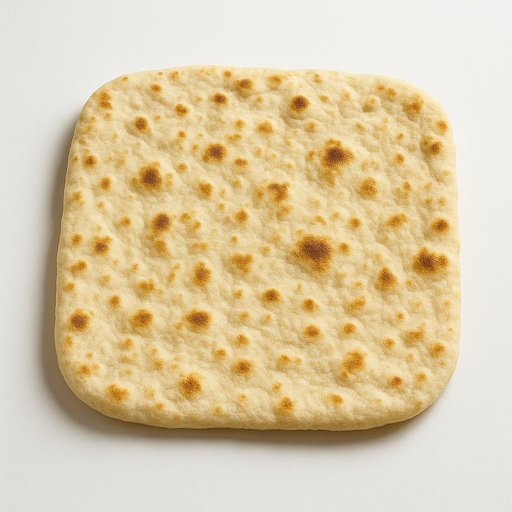
Flatbread Suppliers & Prices in South Korea — Market Overview 2026
Raw Materials
Cow Milk, Cow Milk Butter, Milk Powder, Olive Oil, +3
HS Code
190590
Last Updated
2026-09-21
Key takeaways for search and sourcing teams
- 1 sampled export transactions for South Korea are summarized.
- 62 export partner companies (including manufacturers) and 3 import partner companies are mapped for Flatbread in South Korea.
- 5 export partner countries and 5 import partner countries are ranked.
- Latest reference year in this page dataset is 2024.
- Page data last updated on 2026-09-21.
Flatbread Export Supplier & Manufacturer Intelligence, Price Trends, and Trade Flows in South Korea
62 export partner companies are tracked for Flatbread in South Korea. Use Supply Chain Intelligence company profiles and analytics to validate exporter coverage, partner quality, and route priorities.
Explore Flatbread export intelligence in South Korea, including 1 sampled supplier transactions, monthly unit-price ranges, and partner-country trade flow patterns for HS Code 190590.
Scatter points are sampled from 100.0% of the full transaction dataset. Each point is a real transaction. Sign up to see them and ask AI whether each deal was fair.
Sample Export Supplier & Manufacturer Transaction Records for Flatbread in South Korea
1 sampled Flatbread transactions in South Korea include date, origin, and partner-country context to benchmark export prices and supplier trading patterns.
Flatbread sampled transaction unit prices by date in South Korea: 2025-10-25: 2.66 USD / kg.
| Date | Reported Product | Unit Price | Exporter | Importer | |
|---|---|---|---|---|---|
| 2025-10-25 | FLA* ************ ***** ****** **** ************ ***** ***** ** ****** *********** *** ** ** * *** ** ***** *** ******** **** *** ** ******************* ******************* | 2.66 USD / kg | (South Korea) | (United States) |
These 1 rows are a sample — join Tridge to see Flatbread transactions in South Korea
See the exporter, importer and price on the records you need, ask AI whether each deal was fair, and turn them into AI Curations.
Top Flatbread Export Suppliers, Manufacturers, and Companies in South Korea
Review leading exporter profiles and benchmark them against 62 total export partner companies tracked for Flatbread in South Korea. Use Supply Chain Intelligence company profiles and analytics to shortlist sourcing and export partners faster.
(South Korea)
Latest Export Transaction: 2026-08-21
Industries: Food Manufacturing, Food Services And Drinking Places
Value Chain Roles: Distribution / Wholesale, Logistics
(South Korea)
Latest Export Transaction: 2026-08-21
Industries: Others
Value Chain Roles: Others
(South Korea)
Latest Export Transaction: 2026-08-21
Employee Size: 11 - 50 Employees
Industries: Animal Production, Food Manufacturing
Value Chain Roles: Distribution / Wholesale, Farming / Production / Processing / Packing
(South Korea)
Latest Export Transaction: 2026-08-21
Industries: Others
Value Chain Roles: Others
(South Korea)
Latest Export Transaction: 2026-08-21
Employee Size: 11 - 50 Employees
Sales Revenue: USD 10M - 50M
Industries: Food Manufacturing, Food Packaging, Others
Value Chain Roles: Food Manufacturing, Trade
(South Korea)
Latest Export Transaction: 2026-08-21
Industries: Department Stores, Grocery Stores
Value Chain Roles: Retail
See the full picture in Tridge Eye: full price and trade history · 725,009+ company profiles
South Korea Export Partner Coverage
62 companies
Total export partner company count is a core signal of South Korea export network depth for Flatbread.
Exporters and importers can open Supply Chain Intelligence company profiles and analytics to assess Flatbread partner concentration, capacity signals, and trade relevance in South Korea.
Annual Export Value, Volume, and Supplier Market Size for Flatbread in South Korea (HS Code 190590)
Analyze 3 years of Flatbread export volume and value in South Korea to evaluate supplier market growth, seasonality, and trade volatility.
| Year | Volume | Value |
|---|---|---|
| 2024 | 64,809,378 | 400,708,879 USD |
| 2023 | 62,181,050 | 367,718,178 USD |
| 2022 | 58,289,050 | 329,552,401 USD |
Top Destination Markets for Flatbread Exports from South Korea (HS Code 190590) in 2024
For 2024, compare export volume and value across the top 5 destination countries for Flatbread exports from South Korea.
| Rank | Country | Volume | Value |
|---|---|---|---|
| 1 | United States | 20,270,627.075 | 136,352,498 USD |
| 2 | China | 5,912,452 | 41,085,863 USD |
| 3 | Canada | 3,223,662 | 20,956,031 USD |
| 4 | Japan | 4,475,212 | 20,589,351 USD |
| 5 | Australia | 3,137,372 | 19,498,215 USD |
Sourcing diagnosis
Could you be importing Flatbread from South Korea yourself?
Just tell us your spec and the volume you need. We'll check whether it's actually sourceable, and which origins and suppliers fit.
Free diagnosis, no account required.
Flatbread Import Buyer Intelligence and Price Signals in South Korea: Buyers, Demand, and Trade Partners
3 import partner companies are tracked for Flatbread in South Korea. Exporters and importers can use Supply Chain Intelligence company profiles and analytics to analyze buyer demand, partner density, and downstream channels.
Scatter points are sampled from 16.6% of the full transaction dataset. Each point is a real transaction. Sign up to see them and ask AI whether each deal was fair.
Sample Import Transaction and Price Records for Flatbread in South Korea
5 sampled Flatbread import transactions in South Korea provide date, origin, and trade-country context to benchmark price levels and demand-side trading patterns.
Flatbread sampled import transaction unit prices by date in South Korea: 2026-09-09: 2.36 USD / kg, 2026-09-07: 5.97 USD / kg, 2026-09-02: 1.33 USD / kg, 2026-09-01: 3.09 USD / kg, 2026-09-01: 1.16 USD / kg.
| Date | Reported Product | Unit Price | Exporter | Importer | Origin | |
|---|---|---|---|---|---|---|
| 2026-09-09 | [빵류* ** ************** | 2.36 USD / kg | (-) | (-) | - | |
| 2026-09-07 | [빵류* ** **** ******** ******* **** | 5.97 USD / kg | (-) | (-) | - | |
| 2026-09-02 | [빵류* ** ******** **** | 1.33 USD / kg | (-) | (-) | - | |
| 2026-09-01 | [빵류* *** *** *** ********* ******* ***** **** | 3.09 USD / kg | (-) | (-) | - | |
| 2026-09-01 | [빵류* *** ************** *** ***** | 1.16 USD / kg | (-) | (-) | - |
These 5 rows are a sample — join Tridge to see Flatbread transactions in South Korea
See the exporter, importer and price on the records you need, ask AI whether each deal was fair, and turn them into AI Curations.
Top Flatbread Buyers, Importers, and Demand Partners in South Korea
Review leading buyer profiles and compare them with 3 total import partner companies tracked for Flatbread in South Korea. Exporters and importers can use Supply Chain Intelligence company profiles and analytics to evaluate demand-side partner fit.
(South Korea)
Latest Import Transaction: 2026-08-21
Employee Size: Over 1000 Employees
Industries: Beverage Manufacturing, Food Manufacturing, Food Services And Drinking Places
Value Chain Roles: Distribution / Wholesale, Food Manufacturing
(South Korea)
Latest Import Transaction: 2026-08-21
Employee Size: Over 1000 Employees
Sales Revenue: USD 500M - 1B
Industries: Beverage Manufacturing, Food Manufacturing, Food Services And Drinking Places
Value Chain Roles: Food Manufacturing, Retail, Trade
(South Korea)
Latest Import Transaction: 2026-08-21
Industries: Beverage Manufacturing, Food Manufacturing, Food Wholesalers
Value Chain Roles: Distribution / Wholesale, Food Manufacturing, Retail
See the full picture in Tridge Eye: full price and trade history · 725,009+ company profiles
South Korea Import Partner Coverage
3 companies
Import partner company count highlights demand-side visibility for Flatbread in South Korea.
Use Supply Chain Intelligence analytics and company profiles to identify active Flatbread importers, distributors, and buyer networks in South Korea.
Annual Import Value, Volume, and Demand Size for Flatbread in South Korea (HS Code 190590)
Track 3 years of Flatbread import volume and value in South Korea to assess demand growth and market momentum.
| Year | Volume | Value |
|---|---|---|
| 2024 | 83,030,571 | 389,947,775 USD |
| 2023 | 75,096,594 | 352,826,935 USD |
| 2022 | 67,587,057 | 308,561,071 USD |
Top Origin Supplier Countries Supplying Flatbread to South Korea (HS Code 190590) in 2024
For 2024, compare import volume and value across the top 5 origin supplier countries supplying Flatbread to South Korea.
| Rank | Country | Volume | Value |
|---|---|---|---|
| 1 | China | 28,286,880 | 89,282,444 USD |
| 2 | Malaysia | 12,048,237 | 65,341,587 USD |
| 3 | United States | 8,646,286.3 | 51,426,252 USD |
| 4 | Vietnam | 10,628,713 | 47,856,652 USD |
| 5 | Japan | 2,253,927 | 25,324,296 USD |
Export diagnosis
Your Flatbread — could it sell to these buyers in South Korea?
Just tell us what you make. We'll see whether you're ready to export today and which markets suit your offer.
Free diagnosis, no account required.
Price data
Which Flatbread prices in South Korea do you need?
We'll open up the full price history and competitor benchmarks. Just tell us which numbers you need and we'll walk you through them.
Classification
Product TypeProcessed Food
Product FormBaked
Industry PositionFinished Consumer Product
Market
Flatbread in South Korea is a domestic consumer bakery product sold mainly through bakery cafes, convenience stores, supermarkets, and foodservice. Demand is shaped by freshness, convenience, and growing interest in whole-grain or seed-forward bakery items, while large branded chains and industrial bakeries dominate supply. Korea remains exposed to imported wheat and energy costs upstream, so grain and freight conditions still influence bakery margins even though final consumption is local.
Market RoleDomestic consumer market with local production and import-dependent wheat inputs
Domestic RoleDaily bakery and snack product in urban retail and foodservice
Market GrowthMixed (Medium-term)Mature bakery market with growth in fresh, health-oriented, and convenience-led variants
Specification
Physical Attributes
- Even thickness and shape
- Soft or pliable texture depending on style
- Uniform browning without burning
- Minimal surface cracking or dryness
Compositional Metrics
- Wheat-flour-based formulation
- Moisture retention is critical for softness
- Protein/gluten strength affects elasticity and bite
- Salt, sugar, and fat levels vary by recipe and are label-declared
Packaging
- Flow-wrap retail packs
- Tray or carton packs for bakery-cafe sales
- Foodservice bulk packs
Supply Chain
Value Chain
- Flour sourcing or import release -> dough mixing -> sheeting or hand shaping -> baking -> cooling -> packaging -> domestic distribution -> retail or foodservice sale
Temperature
- Ambient distribution is standard for plain flatbread; heat and humidity accelerate staling and mold
- Cool-dry storage is preferred during warehousing and last-mile delivery
Atmosphere Control
- Moisture-barrier packaging and rapid turnover matter more than modified-atmosphere shipping for most SKUs
- Sealed packs help reduce drying and odor pickup
Shelf Life
- Fresh flatbread has a short shelf life and loses quality mainly through staling and moisture migration
- Par-baked or frozen formats extend reach when longer distribution is needed
Freight IntensityMedium
Transport ModeLand
Risks
Regulatory Compliance HighWrong HS classification, missing Korean labeling, or incomplete MFDS foreign-facility registration can halt customs clearance or force relabeling before sale.Lock HS code, label artwork, and importer documentation with the Korean buyer before shipment.
Food Safety MediumFresh flatbread is vulnerable to mold, texture collapse, and contamination if hygiene or humidity control slips during baking, packing, or last-mile delivery.Use validated shelf-life testing, allergen segregation, and strict warehouse hygiene controls.
Logistics MediumShort shelf life makes distribution delays expensive; product quality drops quickly in hot or humid weather or if retail replenishment is late.Use frequent replenishment and near-market production for fresh SKUs.
Market / Price Volatility MediumKorea's bakery margins are exposed to imported wheat and energy swings because domestic wheat self-sufficiency remains low.Qualify alternate flour suppliers and use forward buying or hedging where available.
Sustainability / Labor / Geopolitical MediumImported wheat sourcing, packaging waste, and shift-work labor conditions can attract ESG scrutiny even without a product-specific controversy.Track supplier audits, packaging reduction, and workplace safety performance.
Sustainability
- Imported wheat dependence and embodied transport emissions
- Packaging waste from short shelf-life bakery goods
- Energy use in baking and distribution
Labor & Social
- Night-shift and overtime safety in bakery plants
- Occupational health in high-volume bakery production
- Labor compliance in franchise retail and delivery channels
Standards
- HACCP
- FSSC 22000
FAQ
What must be on a flatbread label in Korea?The label needs the product name, ingredients, manufacturing and expiration dates, net contents, origin, and nutrition information. Wheat and other listed allergens such as milk or eggs must also be declared when present.
Can imported flatbread enter Korea without registering the overseas plant?No. A foreign food facility must be registered with MFDS before the import declaration, and MFDS can inspect the facility before the product is released.
Which safety certifications are most relevant for Korean bakery suppliers?HACCP is a core reference, and major Korean bakery producers such as Paris Baguette also cite FSSC 22000 and ISO 9001 at their plants.
Why does wheat price matter for flatbread in Korea?Korea still relies heavily on imported wheat inputs, so global grain and freight costs can pass through to bakery margins.
Sources
Other Flatbread Country Markets for Supplier, Manufacturer, Export, and Price Comparison from South Korea
Compare Flatbread supplier coverage, trade flows, and price benchmarks across countries related to South Korea.


Export & sourcing diagnosis
Flatbread in South Korea — are you buying, or selling?
Either way it's a few questions. We'll come back with where you could buy it, or who you could sell it to.
Free diagnosis, no account required.
Related Flatbread Product Categories
Browse parent, sub, derived, and raw-material product market pages related to Flatbread.
By clicking “Accept Cookies,” I agree to provide cookies for statistical and personalized preference purposes. To learn more about our cookies, please read our Privacy Policy.