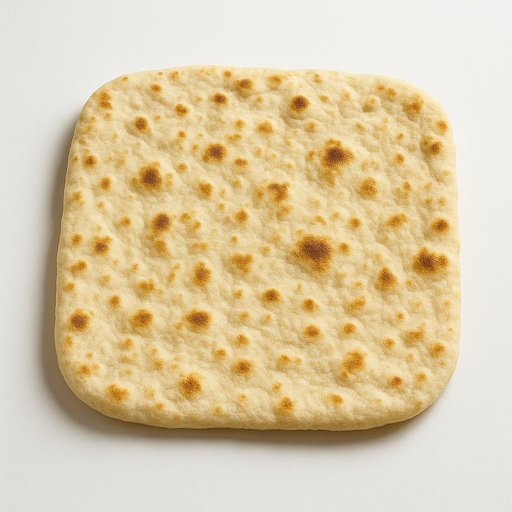
Flatbread Suppliers & Prices in Australia — Market Overview 2026
Raw Materials
Cow Milk, Cow Milk Butter, Milk Powder, Olive Oil, +3
HS Code
190590
Last Updated
2026-09-21
Key takeaways for search and sourcing teams
- 5 sampled export transactions for Australia are summarized.
- 121 export partner companies (including manufacturers) and 4 import partner companies are mapped for Flatbread in Australia.
- 5 export partner countries and 5 import partner countries are ranked.
- Latest reference year in this page dataset is 2024.
- Page data last updated on 2026-09-21.
Flatbread Export Supplier & Manufacturer Intelligence, Price Trends, and Trade Flows in Australia
121 export partner companies are tracked for Flatbread in Australia. Use Supply Chain Intelligence company profiles and analytics to validate exporter coverage, partner quality, and route priorities.
Explore Flatbread export intelligence in Australia, including 5 sampled supplier transactions, monthly unit-price ranges, and partner-country trade flow patterns for HS Code 190590.
Scatter points are sampled from 87.5% of the full transaction dataset.
Sample Export Supplier & Manufacturer Transaction Records for Flatbread in Australia
5 sampled Flatbread transactions in Australia include date, origin, and partner-country context to benchmark export prices and supplier trading patterns.
Flatbread sampled transaction unit prices by date in Australia: 2025-11-04: 2.84 USD / kg, 2025-10-10: 2.85 USD / kg, 2025-09-25: 2.88 USD / kg, 2025-09-18: 2.86 USD / kg, 2025-09-18: 2.86 USD / kg.
| Date | Reported Product | Unit Price | Exporter | Importer | |
|---|---|---|---|---|---|
| 2025-11-04 | [빵류* *** *** **** ************** ****** ********* | 2.84 USD / kg | (Australia) | (South Korea) | |
| 2025-10-10 | [빵류* *** *** **** ************** ****** ********* | 2.85 USD / kg | (Australia) | (South Korea) | |
| 2025-09-25 | [빵류* *** *** **** ************** ****** ********* | 2.88 USD / kg | (Australia) | (South Korea) | |
| 2025-09-18 | [빵류* *** *** **** ************** ****** ********* | 2.86 USD / kg | (Australia) | (South Korea) | |
| 2025-09-18 | [빵류* *** *** **** ************** ****** ********* | 2.86 USD / kg | (Australia) | (South Korea) |
Top Flatbread Export Suppliers, Manufacturers, and Companies in Australia
Review leading exporter profiles and benchmark them against 121 total export partner companies tracked for Flatbread in Australia. Use Supply Chain Intelligence company profiles and analytics to shortlist sourcing and export partners faster.
(Australia)
Latest Export Transaction: 2026-08-21
Industries: Food ManufacturingFood Wholesalers
Value Chain Roles: Trade
(Australia)
Latest Export Transaction: 2026-08-21
Employee Size: 101 - 500 Employees
Sales Revenue: USD 10M - 50M
Industries: Food ManufacturingFood Wholesalers
Value Chain Roles: Distribution / WholesaleFood Manufacturing
(Australia)
Latest Export Transaction: 2026-08-21
Industries: Food ManufacturingFood PackagingFood Wholesalers
Value Chain Roles: Distribution / WholesaleFood Manufacturing
(Australia)
Latest Export Transaction: 2026-08-21
Employee Size: 51 - 100 Employees
Sales Revenue: USD 5M - 10M
Industries: Food WholesalersOthers
Value Chain Roles: Distribution / Wholesale
(Australia)
Latest Export Transaction: 2026-08-21
Industries: Food ManufacturingFood Services And Drinking PlacesFood Wholesalers
Value Chain Roles: Distribution / WholesaleFood Manufacturing
(Australia)
Latest Export Transaction: 2026-08-21
Employee Size: 1 - 10 Employees
Sales Revenue: USD 1M - 5M
Industries: Others
Value Chain Roles: Distribution / Wholesale
See the full picture in Tridge Eye: full price and trade history · 725,009+ company profiles
Australia Export Partner Coverage
121 companies
Total export partner company count is a core signal of Australia export network depth for Flatbread.
Exporters and importers can open Supply Chain Intelligence company profiles and analytics to assess Flatbread partner concentration, capacity signals, and trade relevance in Australia.
Annual Export Value, Volume, and Supplier Market Size for Flatbread in Australia (HS Code 190590)
Analyze 3 years of Flatbread export volume and value in Australia to evaluate supplier market growth, seasonality, and trade volatility.
| Year | Volume | Value |
|---|---|---|
| 2024 | 25,741,262 | 98,641,775 USD |
| 2023 | 21,734,216 | 75,534,973 USD |
| 2022 | 23,246,896 | 76,050,633 USD |
Top Destination Markets for Flatbread Exports from Australia (HS Code 190590) in 2024
For 2024, compare export volume and value across the top 5 destination countries for Flatbread exports from Australia.
| Rank | Country | Volume | Value |
|---|---|---|---|
| 1 | New Zealand | 17,017,202.1 | 66,262,760.578 USD |
| 2 | United States | 785,619.5 | 8,027,163.666 USD |
| 3 | South Korea | 2,928,038.1 | 4,241,123.767 USD |
| 4 | Singapore | 977,706.1 | 3,867,743.362 USD |
| 5 | China | 752,298.2 | 2,514,642.018 USD |
Sourcing diagnosis
Could you be importing Flatbread from Australia yourself?
Just tell us your spec and the volume you need. We'll check whether it's actually sourceable, and which origins and suppliers fit.
Free diagnosis, no account required.
Flatbread Import Buyer Intelligence and Price Signals in Australia: Buyers, Demand, and Trade Partners
4 import partner companies are tracked for Flatbread in Australia. Exporters and importers can use Supply Chain Intelligence company profiles and analytics to analyze buyer demand, partner density, and downstream channels.
Scatter points are sampled from 2.8% of the full transaction dataset.
Sample Import Transaction and Price Records for Flatbread in Australia
5 sampled Flatbread import transactions in Australia provide date, origin, and trade-country context to benchmark price levels and demand-side trading patterns.
Flatbread sampled import transaction unit prices by date in Australia: 2026-07-21: 2.18 USD / kg, 2026-07-20: 3.62 USD / kg, 2026-07-17: 2.66 USD / kg, 2026-07-17: 2.95 USD / kg, 2026-07-07: 1.59 USD / kg.
| Date | Reported Product | Unit Price | Exporter | Importer | Origin | |
|---|---|---|---|---|---|---|
| 2026-07-21 | REA** ** *** *** ***** ** ***** ******** **** **** ******* ****** ** | 2.18 USD / kg | (-) | (-) | - | |
| 2026-07-20 | RUM*** *********** ******** ******* * ** *** ******* *** * ** ***** **** **************** * ******* ******* ** ******* | 3.62 USD / kg | (-) | (-) | - | |
| 2026-07-17 | OTH*** ***** ******* ******** ******** ********* ********** ******* *** *** | 2.66 USD / kg | (-) | (-) | - | |
| 2026-07-17 | E13* ***** ********* ********* *** | 2.95 USD / kg | (-) | (-) | - | |
| 2026-07-07 | OTH*** ***** ******* ******** ******** ********* ****** **** *** *** | 1.59 USD / kg | (-) | (-) | - |
Top Flatbread Buyers, Importers, and Demand Partners in Australia
Review leading buyer profiles and compare them with 4 total import partner companies tracked for Flatbread in Australia. Exporters and importers can use Supply Chain Intelligence company profiles and analytics to evaluate demand-side partner fit.
(Australia)
Latest Import Transaction: 2026-08-21
Employee Size: 11 - 50 Employees
Industries: Food Manufacturing
Value Chain Roles: Distribution / WholesaleFood Manufacturing
(Australia)
Latest Import Transaction: 2026-08-21
Employee Size: 11 - 50 Employees
Industries: Food Manufacturing
Value Chain Roles: Distribution / WholesaleFood Manufacturing
(Australia)
Latest Import Transaction: 2026-08-21
Industries: Food ManufacturingFood Packaging
Value Chain Roles: LogisticsTrade
(Australia)
Latest Import Transaction: 2026-08-21
Employee Size: 11 - 50 Employees
Sales Revenue: USD 1M - 5M
Industries: Beverage ManufacturingFood ManufacturingFood Services And Drinking PlacesFood Wholesalers
Value Chain Roles: Distribution / WholesaleTrade
See the full picture in Tridge Eye: full price and trade history · 725,009+ company profiles
Australia Import Partner Coverage
4 companies
Import partner company count highlights demand-side visibility for Flatbread in Australia.
Use Supply Chain Intelligence analytics and company profiles to identify active Flatbread importers, distributors, and buyer networks in Australia.
Annual Import Value, Volume, and Demand Size for Flatbread in Australia (HS Code 190590)
Track 3 years of Flatbread import volume and value in Australia to assess demand growth and market momentum.
| Year | Volume | Value |
|---|---|---|
| 2024 | 172,345,140 | 801,615,836 USD |
| 2023 | 153,113,472 | 700,147,430 USD |
| 2022 | 151,519,048 | 718,901,822 USD |
Top Origin Supplier Countries Supplying Flatbread to Australia (HS Code 190590) in 2024
For 2024, compare import volume and value across the top 5 origin supplier countries supplying Flatbread to Australia.
| Rank | Country | Volume | Value |
|---|---|---|---|
| 1 | New Zealand | 18,555,208.65 | 104,836,332.859 USD |
| 2 | France | 14,033,654.02 | 78,126,139.932 USD |
| 3 | Malaysia | 20,128,211.95 | 74,962,488.733 USD |
| 4 | United Kingdom | 6,062,426.61 | 56,508,128.6 USD |
| 5 | China | 17,389,586.23 | 56,383,248.09 USD |
Export diagnosis
Your Flatbread — could it sell to these buyers in Australia?
Just tell us what you make. We'll see whether you're ready to export today and which markets suit your offer.
Free diagnosis, no account required.
Price data
Which Flatbread prices in Australia do you need?
We'll open up the full price history and competitor benchmarks. Just tell us which numbers you need and we'll walk you through them.
Classification
Product TypeProcessed Food
Product FormPackaged
Industry PositionConsumer Packaged Food (Bakery)
Market
Flatbread in Australia is primarily a domestically manufactured packaged bakery category spanning wraps/tortillas, pita, naan and similar formats sold through grocery retail and foodservice. Imports are feasible for shelf-stable and frozen flatbread, but market access is strongly shaped by Australia’s biosecurity conditions (via BICON) and imported food inspection and labelling compliance expectations. Allergen and ingredient declarations are a practical compliance focus for flatbread because wheat/gluten and sesame are common inputs and must be declared in prescribed ways on labels. Overall availability is year-round and demand is supported by convenient meal occasions (wraps, kebabs/gyros, quick-service and café use).
Market RoleDomestic production market with supplementary imports (ambient and frozen)
Domestic RoleConvenience-oriented staple bakery product sold in retail and foodservice channels
Market Growth
SeasonalityYear-round manufacturing and availability; no meaningful seasonality signal for a packaged bakery product.
Specification
Physical Attributes
- Soft, pliable texture to wrap/fold without cracking
- Consistent diameter/sizing for foodservice (e.g., common 10–12 inch formats) and portion control
- Free from excessive dryness, mould, or packaging damage at receipt
Compositional Metrics
- Wholemeal/mixed-grain and fibre-positioned formulations are common in retail and foodservice wrap ranges.
Packaging
- Sealed retail packs with lot coding and storage instructions
- Foodservice packs sold as fresh or frozen (supplier-specific)
- Label presentation must meet Australia and New Zealand Food Standards Code requirements, including prescribed allergen declarations when relevant (e.g., wheat, sesame).
Supply Chain
Value Chain
- Flour and bakery inputs → industrial dough mixing and forming → baking → cooling → packing (retail packs or foodservice packs) → national distribution to retail DCs/wholesalers
- For imports: overseas manufacture → sea freight (ambient or frozen) → customs entry and DAFF referral (if applicable) → label/visual inspection and/or testing under IFIS → importer distribution
Temperature
- Ambient packaged wrap/flatbread products may be stored at room temperature per supplier instructions (example guidance: 15°C to 25°C for a wrap product).
- Frozen flatbread programs require temperature control across port-to-warehouse and wholesale distribution (specifications vary by supplier).
Shelf Life
- Shelf life and eating quality are sensitive to moisture management, packaging integrity, and adherence to storage instructions.
- For imported product, delays during inspection/holds can reduce remaining shelf life, particularly for short-dated or chilled/frozen SKUs.
Freight IntensityHigh
Transport ModeSea
Risks
Biosecurity Import Conditions HighImport clearance can be blocked if a flatbread product is incorrectly assessed against BICON biosecurity conditions (for example, products that trigger import permit requirements due to composition such as uncooked dairy/egg thresholds or inclusion of restricted animal-origin ingredients). DAFF guidance in BICON indicates that goods requiring a valid import permit that arrive without one can be directed for export from Australia or destroyed.Classify the SKU in BICON before shipping; verify composition thresholds (e.g., uncooked dairy/egg, meat content) and obtain any required DAFF import permit and manufacturer declarations prior to dispatch.
Regulatory Compliance HighLabel non-compliance (especially allergen declarations for common flatbread inputs such as wheat/gluten and sesame) can trigger border holds under IFIS, relabelling requirements, or product rejection/recall actions.Run a pre-import label review against the FSANZ Food Standards Code requirements (including allergen summary statement and required allergen names) and ensure artwork/print runs match the final ingredient formulation.
Logistics MediumFreight disruption and inspection-related holds can reduce remaining shelf life and increase wastage risk for short-dated or frozen flatbread programs, while freight-rate volatility can materially affect landed cost for bulky bakery products.Build lead-time buffers for IFIS inspection, use robust packaging to protect against crushing/tears, and align Incoterms and pricing to manage freight volatility exposure.
Climate MediumAustralia’s variable climate and drought risk can contribute to volatility in domestic grain production outcomes, which can flow through to flour and bakery input costs for locally manufactured flatbread.Use multi-mill procurement strategies, review flour specification flexibility with QA, and maintain contingency sourcing plans for key bakery inputs.
Sustainability
- Climate variability and drought risk affecting Australian broadacre agriculture (relevant to wheat/flour input availability and cost volatility).
Labor & Social
- Modern Slavery Act 2018 reporting expectations for large entities in the Australian market can drive due diligence on upstream agricultural and ingredient supply chains (including imported inputs used in packaged bakery).
FAQ
What is the biggest deal-breaker risk when importing flatbread into Australia?Misalignment with Australia’s biosecurity import conditions is a key deal-breaker. BICON requirements for cooked bakery products can vary by composition (for example, thresholds for uncooked dairy/egg and restrictions around meat content), and some cases require an import permit; BICON also warns that goods requiring a permit that arrive without one can be directed for export or destroyed.
What label compliance issues commonly matter for flatbread in Australia?Allergen declarations are a major focus because flatbread commonly contains wheat/gluten and can include sesame. FSANZ requires specified allergen names and presentation, including declaring allergens in the ingredients list and providing a separate bold allergen summary statement beginning with “contains”.
How does Australia check imported flatbread for compliance?DAFF monitors imported food through the Imported Food Inspection Scheme (IFIS). Consignments can be referred for label and visual inspection and, where applicable, testing, with goods held under directions (Food Control Certificates) until the inspection outcome is finalised.
Sources
Other Flatbread Country Markets for Supplier, Manufacturer, Export, and Price Comparison from Australia
Compare Flatbread supplier coverage, trade flows, and price benchmarks across countries related to Australia.


Export & sourcing diagnosis
Flatbread in Australia — are you buying, or selling?
Either way it's a few questions. We'll come back with where you could buy it, or who you could sell it to.
Free diagnosis, no account required.
Related Flatbread Product Categories
Browse parent, sub, derived, and raw-material product market pages related to Flatbread.
By clicking “Accept Cookies,” I agree to provide cookies for statistical and personalized preference purposes. To learn more about our cookies, please read our Privacy Policy.